
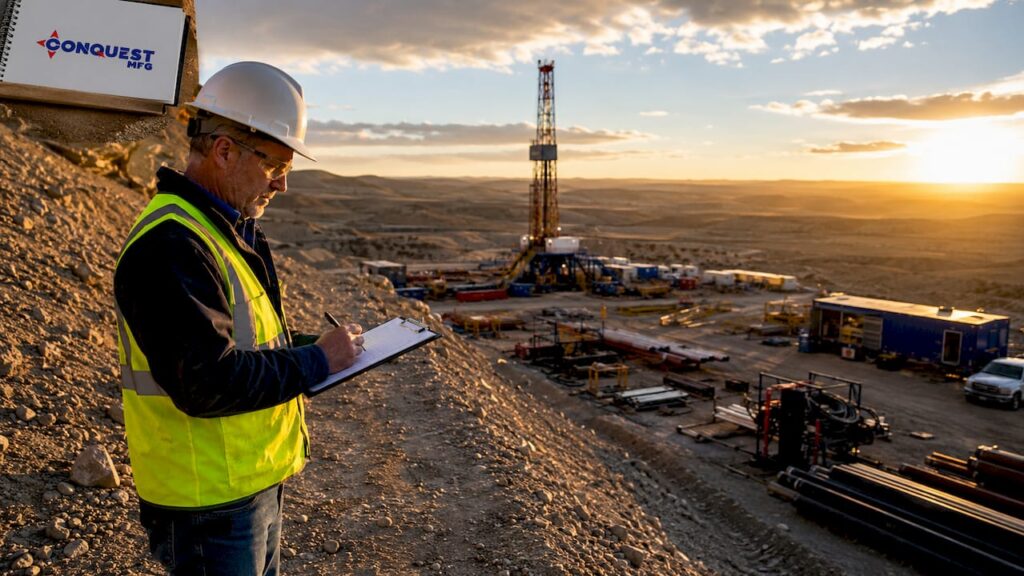
Oilfield logistics equipment is defined as the specialized machinery used to lift, transport, and support operations across oil and gas sites. Understanding oilfield logistics equipment basics is the foundation every logistics manager needs before making sourcing, rental, or deployment decisions. The industry term for this discipline is oilfield supply chain management, and it covers everything from crane trucks moving drill pipe to vacuum tankers clearing waste fluid. Get the equipment categories wrong and you create delays, compliance failures, and capital loss before a single barrel is produced.
Which equipment categories form the core of oilfield logistics?
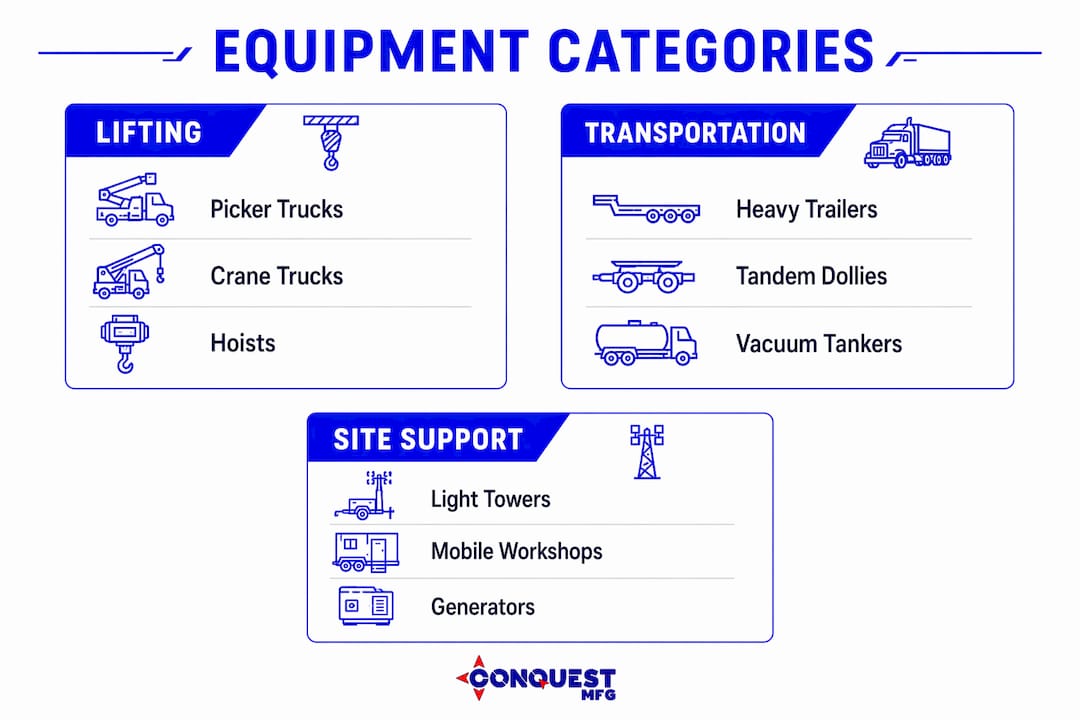
Oilfield logistics equipment divides into three primary categories: lifting, transportation, and site support. Each category serves a distinct operational role, and logistics managers who treat them as interchangeable create scheduling conflicts and safety risks.
Lifting equipment
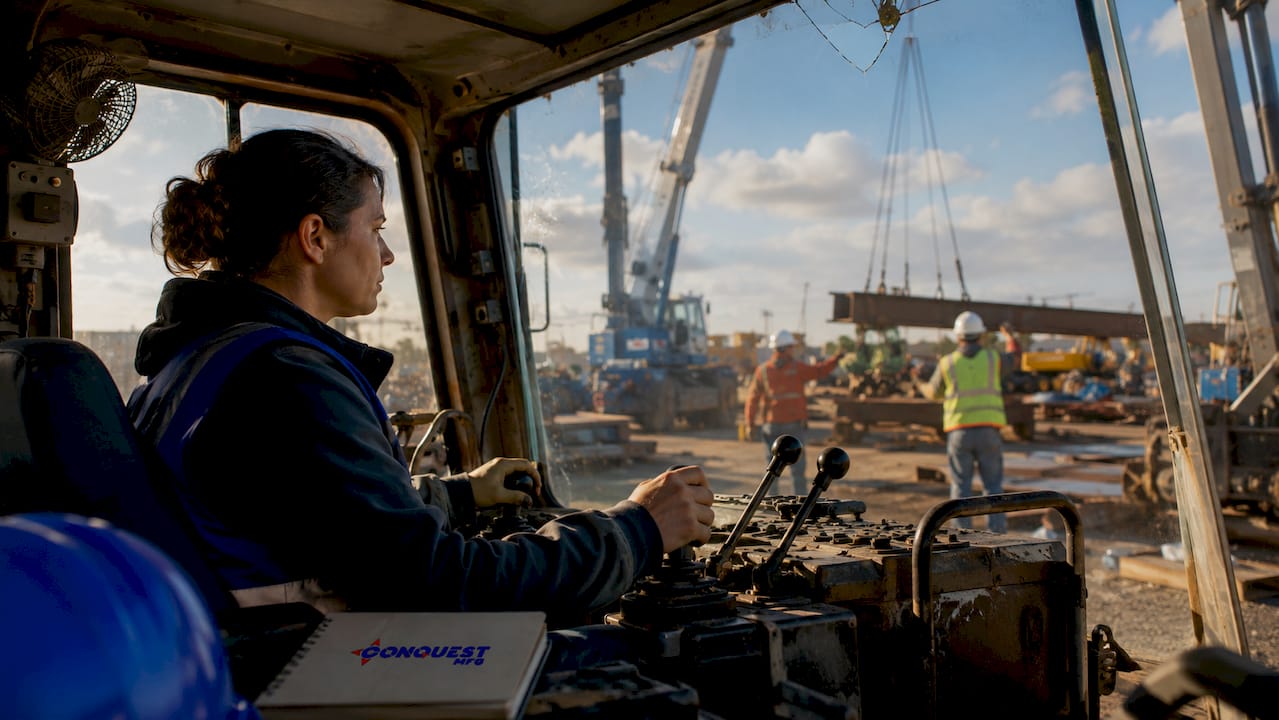
Crane trucks and picker trucks handle the vertical movement of heavy components across the site. Picker trucks range from 5 to 140 tons in lifting capacity, covering everything from light pipe bundles to large pressure vessels. The right tonnage selection depends on the load weight, boom reach, and ground bearing capacity at the specific well pad.
Transportation equipment
Transportation solutions for oilfields center on trailers built for heavy, irregular, and hazardous loads. Tandem highboys carry standard equipment and machinery on flat decks. Gooseneck trailers handle oversized loads that require a lower deck height for clearance under bridges and power lines. Vacuum tankers move produced water, drilling fluids, and waste materials. Semi trailers in oil operations are not interchangeable with standard freight trailers. Each configuration is matched to a specific load type and road condition.
Site support equipment
Site support equipment keeps the operation running between major lifts and hauls. Light towers provide illumination for 24-hour operations. Mobile workshops carry 1,000–5,000 L diesel tanks and 25 kVA generators, functioning as self-contained maintenance units in remote locations. Mud skips handle drilling waste and can reach 26,000 kg gross weight. These assets are often overlooked in initial planning, yet their absence shuts down night shifts and delays waste disposal.
| Equipment Category | Key Examples | Typical Use Case |
|---|---|---|
| Lifting | Picker trucks, crane trucks | Moving drill pipe, pressure vessels, BOP stacks |
| Transportation | Highboys, goosenecks, vacuum tankers | Hauling machinery, oversized loads, fluids |
| Site support | Light towers, mobile workshops, mud skips | Illumination, field maintenance, waste handling |
Pro Tip: When planning a new well pad, map each equipment category to a specific project phase. Lifting needs peak during rig-up and rig-down. Transportation demand is highest during pipe delivery and equipment mobilization. Site support runs continuously. Staggering rental contracts to match these phases cuts idle asset costs significantly.
What certifications and standards ensure safe equipment operation?
Certification compliance covering API, IADC, and OSHA is not optional. Sourcing uncertified equipment or equipment without documented maintenance histories causes compliance failures, project delays, and potential regulatory shutdowns. Logistics managers must verify certification status before any asset reaches the site.
The key standards governing equipment handling in oilfield logistics are:
- OSHA 1910 and 1926: Cover general industry and construction safety, including lifting equipment operation and personal protective equipment requirements.
- API 6D and API RP 54: API 6D governs pipeline valves used in transport systems. API RP 54 covers drilling operations safety, including equipment inspection protocols.
- IADC standards: The International Association of Drilling Contractors sets training and competency benchmarks for drilling equipment operators.
- OGP guidelines: The International Association of Oil and Gas Producers publishes risk assessment frameworks that inform equipment selection and inspection frequency.
The most common sourcing mistake is accepting a vendor’s verbal assurance of compliance. Require documented inspection records, operator training certificates, and maintenance logs for every piece of equipment before it leaves the yard.
Vacuum tank transport standards illustrate this clearly. A vacuum tanker moving produced water must meet DOT hazmat transport regulations in addition to API and OSHA standards. Missing one layer of compliance exposes the operator to fines and the company to liability.
Pro Tip: Maintain a centralized digital certification register for both owned and rented equipment. Use a shared platform where inspection dates, operator credentials, and maintenance records are stored with automatic expiry alerts. This single practice prevents the most common cause of compliance-related project delays.
How does technology enhance oilfield logistics equipment management?
Supply chain control towers are the most significant development in oilfield logistics management in the past decade. In 2026, control towers unify GPS, ERP, and telemetry data to give logistics managers real-time visibility across operations spanning pipelines that exceed one million miles worldwide. That scale makes manual tracking not just inefficient but operationally impossible.
The four technology layers that matter most for equipment management are:
- GPS asset tracking: Provides real-time location data for every trailer, crane truck, and mobile workshop. Eliminates the time lost searching for misplaced assets across large multi-pad operations.
- ERP integration: Connects equipment availability data to procurement, scheduling, and invoicing systems. A logistics manager can see in one view which assets are deployed, which are in maintenance, and which are available for the next phase.
- Telemetry and condition monitoring: Sensors on engines, hydraulics, and structural components transmit performance data continuously. Condition-based maintenance uses this data to schedule repairs before failures occur, reducing unplanned outages and balancing maintenance budgets.
- Automated logistics platforms: The transition from paper ticketing to automated platforms solves manual invoice reconciliation problems and improves carrier payment accuracy. Nomination tracking becomes auditable and consistent.
“Inventory black holes caused by poor tracking are the primary source of working capital loss in complex oilfield operations. Integrating telemetry into unified digital control towers is the direct solution.” — Logistics Viewpoints, 2026
Batch plant efficiency in oil operations follows the same principle. When equipment data flows into a central system, managers stop reacting to failures and start preventing them. The shift from reactive to predictive management is the measurable difference between high-performing and average oilfield supply chains.
What practical tips help logistics managers optimize equipment use and rental?
Equipment rental in oilfield logistics is a risk management decision, not just a cost decision. Vendors offering 24/7 dispatch reduce downtime and operational disruptions when equipment fails or project timelines accelerate unexpectedly. A rental partner without around-the-clock support is a liability on a 24-hour drilling operation.
The following practices consistently improve equipment availability and reduce idle asset costs:
- Use surplus ready-to-deploy inventory: Surplus units like mud skips and tubulars bypass multi-month manufacturing lead times. For rapid project starts, this agility is the difference between hitting first-oil targets and missing them by a quarter.
- Coordinate deliveries with project phases: Schedule equipment arrivals to match the specific phase requiring them. A crane truck sitting idle for two weeks before rig-up costs money and occupies laydown yard space.
- Audit rental partners before contract signing: Verify that the vendor maintains auditable digital certification histories. Equipment that arrives without current inspection records cannot be deployed without creating a compliance gap.
- Apply condition-based maintenance to owned assets: Integrating maintenance planning into your supply chain process balances budget constraints and reduces unplanned outages. This approach is particularly effective for high-utilization assets like vacuum tankers and mobile generators.
Pro Tip: When evaluating rental partners, ask specifically for their mean time to repair (MTTR) data on field breakdowns. A vendor who tracks and shares this metric manages their fleet proactively. A vendor who cannot provide it likely manages reactively.
Key takeaways
Effective oilfield supply chain management starts with knowing your equipment categories, verifying certifications, and integrating digital tracking before assets reach the field.
| Point | Details |
|---|---|
| Know your three categories | Lifting, transportation, and site support each serve distinct roles and require separate planning. |
| Verify certifications before deployment | Require API, IADC, and OSHA documentation for every asset to avoid compliance delays. |
| Adopt digital control towers | GPS, ERP, and telemetry integration prevents inventory black holes and enables predictive maintenance. |
| Choose rental partners strategically | Select vendors with 24/7 dispatch and auditable maintenance records to protect project timelines. |
| Use surplus inventory for speed | Ready-to-deploy assets bypass manufacturing lead times and accelerate first-oil milestones. |
What I’ve learned from years of watching equipment decisions go wrong
The most expensive mistake I see logistics managers make is treating equipment procurement as a purchasing exercise rather than an operational planning exercise. They focus on unit cost and availability date, then discover on day three of rig-up that the picker truck’s certification expired two weeks ago. The project stops. The cost of that delay dwarfs any savings from the cheaper rental rate.
The second pattern I’ve observed is underinvestment in site support equipment. Light towers and mobile workshops rarely appear in the headline budget, but their absence creates cascading delays. A crew that cannot work after dark or cannot perform field repairs on-site loses hours that compound across a multi-week operation.
The technology shift is real and it matters. Logistics managers who have moved to unified digital platforms tell me the same thing: they stopped fighting fires and started managing schedules. That is not a small improvement. It changes the entire character of the job. The managers still using spreadsheets and phone calls to track assets are operating with a structural disadvantage.
My advice to logistics managers new to oilfield operations is direct. Build your equipment knowledge from the ground up. Understand what each asset category does, what it costs when it fails, and what certification it requires. Then find vendors who share your standards. The oil industry equipment types available today are more capable than ever, but capability only matters when the asset is certified, tracked, and deployed on schedule.
— Sam
How Conquest Mfg supports your oilfield logistics equipment needs
Conquest Mfg manufactures specialist equipment built for the demands of oil and gas operations across the United States. From steel and aluminum vacuum tanks to dry bulk pneumatic trailers, bottom dumps, sand hoppers, and intermodal chassis, every product is engineered to meet the certification and durability standards your operation requires.
If you are evaluating semi trailers for oil operations or need a complete view of available equipment and trailer configurations, Conquest Mfg provides detailed specifications and buying guidance tailored to oilfield logistics demands. Explore the full range of oilfield-ready equipment solutions and request a quote matched to your project requirements.
FAQ
What is oilfield logistics?
Oilfield logistics is the planning, movement, and management of equipment, materials, and personnel required to support oil and gas drilling and production operations. It covers lifting, transportation, and site support functions across the full project lifecycle.
What are the main types of logistics equipment for oilfields?
The three core categories are lifting equipment such as picker trucks and crane trucks, transportation equipment including gooseneck trailers and vacuum tankers, and site support equipment like light towers and mobile workshops. Each category addresses a specific operational function on the well site.
Which certifications matter most for oilfield equipment?
OSHA, API, and IADC certifications are the primary compliance requirements for oilfield logistics equipment. Sourcing equipment without current documentation from these bodies creates compliance failures and project delays.
How does condition-based maintenance reduce oilfield equipment costs?
Condition-based maintenance uses sensor data to schedule repairs before failures occur. This approach reduces unplanned outages and balances maintenance budgets more effectively than fixed-interval service schedules.
Why should logistics managers use surplus ready-to-deploy inventory?
Surplus units like mud skips and tubular goods bypass multi-month manufacturing lead times. For projects with tight first-oil targets, this agility directly reduces startup delays and protects project economics.