
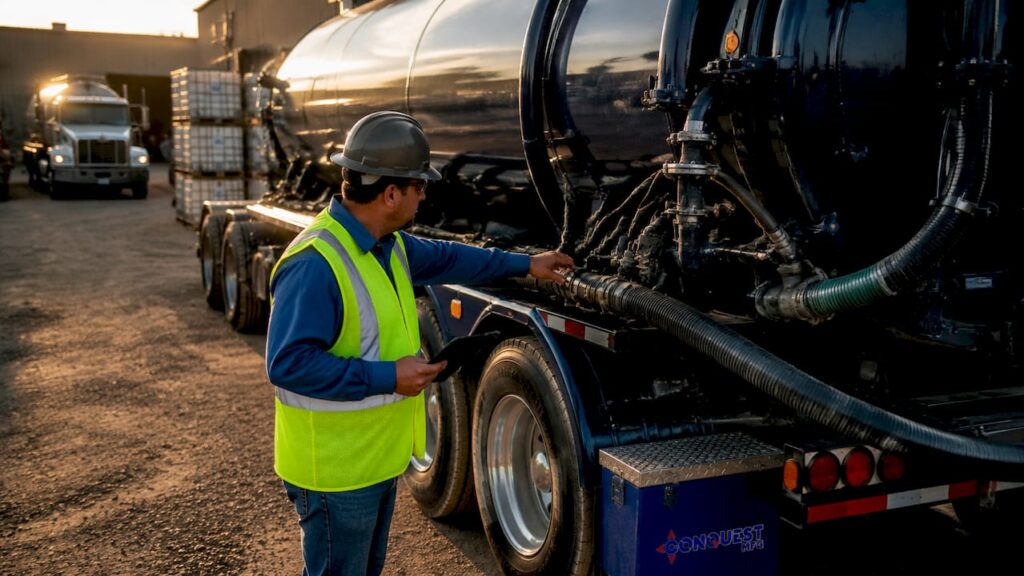
Liquid waste trailer operation is the process of safely collecting, transporting, and disposing of liquid waste using specialized vacuum tankers, vacuum boxes, and dump trailers. Every phase of this process carries regulatory weight. OSHA and DOT set the compliance floor, and operators who miss even one step face out-of-service orders, fines, or worse. This guide covers the equipment, procedures, troubleshooting, and 2026 compliance standards you need to run a safe, efficient liquid waste transport operation.
What equipment does liquid waste trailer operation require?
The right trailer type determines your operational efficiency before the first load is pulled. Vacuum tankers handle liquid and slurry waste through suction-based loading. Vacuum boxes suit industrial sludge and mixed-consistency materials. Dump trailers outperform vacuum tankers for high-volume semi-solid wastes because they load and unload faster with higher capacity per cycle. Matching the trailer to the waste profile is the first decision every manager must get right.
Critical components every operator must know
Beyond the trailer body, three components define safe operation:
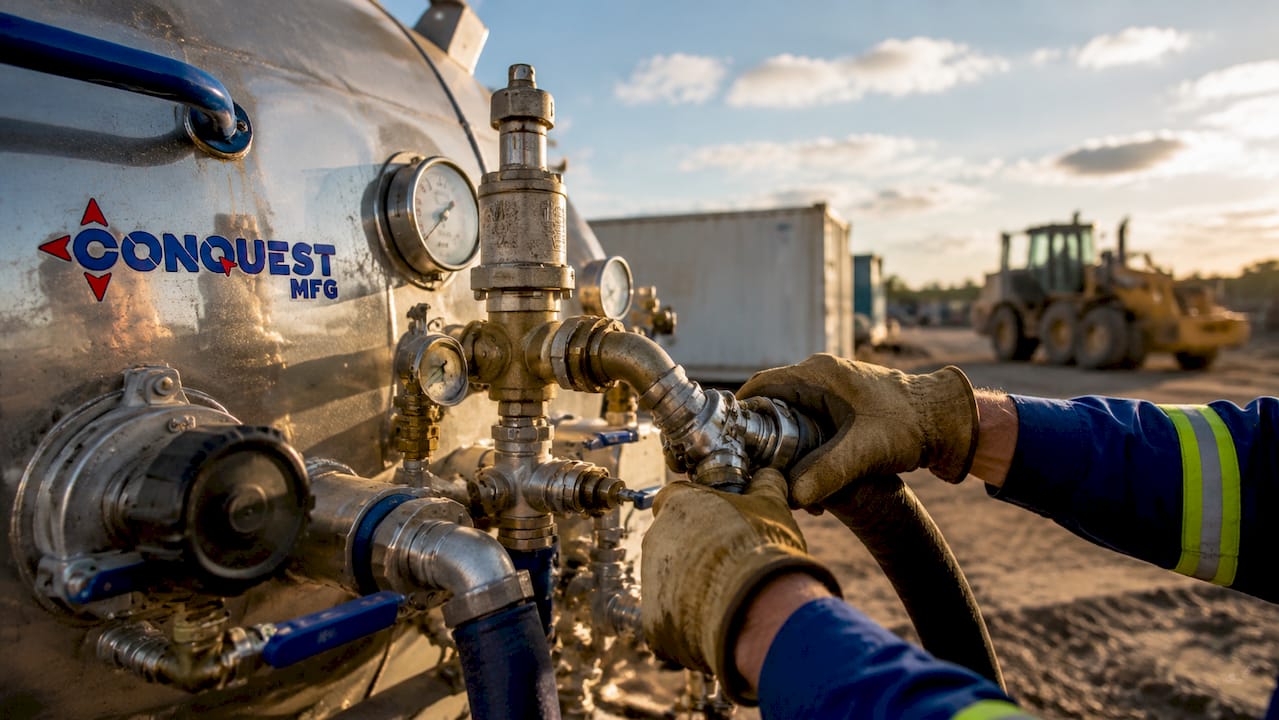
- Vacuum pump: The pump drives all loading and unloading. Vacuum parameters like CFM and inches Hg must match the waste characteristics. CFM controls suction speed; inches Hg controls lift capacity. Mismatched specs cause premature wear and operational failures.
- Safety relief valves: These prevent tank overpressure and implosion. Monthly testing and documentation of relief valves is required to maintain regulatory compliance. Missing test records is a leading cause of out-of-service orders.
- Gas detection monitors: 32% of vacuum truck fatalities involve engulfment or hazardous atmospheric exposure. A calibrated gas detector is non-negotiable on every job site.
Conquest Mfg builds steel and aluminum vacuum tanks engineered to meet these operational demands. Their tanks are designed with durability and field performance as the baseline, not an afterthought. Reviewing a liquid waste equipment checklist before each deployment keeps your fleet compliant and your crew protected.
Pro Tip: Inspect your safety relief valve seat for debris before every shift. A partially blocked valve will not open at the correct pressure, which creates tank collapse risk even when the valve appears functional.
How do you operate a liquid waste trailer step by step?
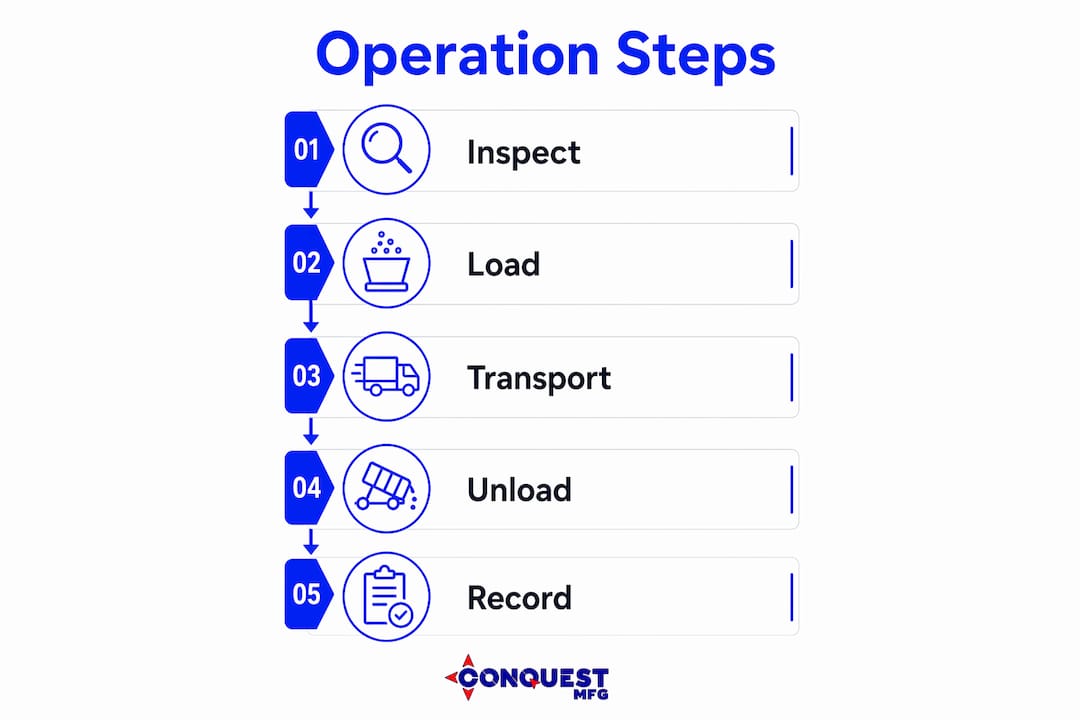
Structured procedure is what separates a safe operation from a preventable incident. The industry term for this process is vacuum tanker operation protocol, and it covers four distinct phases.
Phase 1: pre-operation inspection
- Inspect the tank exterior for cracks, corrosion, and valve integrity.
- Verify the safety relief valve test date is current.
- Confirm the gas detector is calibrated and functional.
- Check hose connections for wear, cracking, and secure fittings.
- Review the load manifest and confirm the trailer is rated for the waste type.
Phase 2: loading
- Position the trailer on stable, level ground before connecting suction hoses.
- Open the intake valve slowly to build vacuum gradually.
- Never fill a vacuum tank beyond 80% capacity to protect the pump from liquid ingestion.
- Monitor the sight glass or level indicator throughout loading.
- Close the intake valve and bleed residual vacuum before disconnecting hoses.
Phase 3: transport
- Secure all valves and hatches before moving the vehicle.
- Complete a Waste Identification Form for every load to maintain full traceability.
- Carry ADR-approved documentation if transporting hazardous waste.
- Observe posted weight limits and route restrictions for your load class.
Phase 4: unloading
- Confirm the receiving site is authorized for the waste type.
- Connect discharge hoses and open the outlet valve in a controlled sequence.
- Use pressure assist only within the tank’s rated operating range.
- Flush hoses and rinse the tank interior after each hazardous load.
Pro Tip: Log every load’s fill level, transport time, and disposal site in a digital record. FleetRabbit and similar fleet management platforms automate this documentation and flag compliance gaps before they become violations.
| Operational Phase | Key Action | Risk if Skipped |
|---|---|---|
| Pre-operation inspection | Verify valve integrity and gas detector calibration | Equipment failure, atmospheric exposure |
| Loading | Cap fill at 80% of tank volume | Pump damage, tank overpressure |
| Transport | Complete Waste Identification Form | Legal liability, traceability failure |
| Unloading | Control pressure and flush hoses post-discharge | Cross-contamination, hose whip injury |
What common challenges arise during trailer waste disposal?
Operational problems in liquid waste handling follow predictable patterns. Knowing the cause before it happens is what keeps your crew safe and your equipment running.
Tank implosion is the most serious structural risk. Improper venting causes tank implosion when residual vacuum is not bled before opening hatches or disconnecting lines. The fix is procedural: always equalize pressure before any access point is opened. Strict lockout/tagout procedures must be followed before servicing any pneumatic component.
Vacuum pump damage follows directly from overfilling. Liquid entering the pump causes immediate mechanical failure. The 80% fill rule exists specifically to maintain an air buffer that protects the pump during transport on uneven terrain.
Hose whip occurs when a pressurized hose disconnects under load. This is a direct injury risk. Operators must depressurize lines completely before disconnecting any fitting. Using hose restraint cables on all connections adds a physical backup to the procedural control.
Hazardous atmospheric exposure is the silent risk on every job. Gas detectors must be active before any hatch is opened, particularly on tanks that previously held hydrogen sulfide-generating waste like septic sludge or industrial effluent.
“Errors in collection cascade downstream to legal and environmental risks.” — Franchini Servizi, Liquid Waste Management
This principle applies directly to troubleshooting. A skipped step at loading creates a compliance problem at disposal. Treat each phase as dependent on the one before it.
How do safety and compliance standards shape your operation?
OSHA and DOT regulations define the legal minimum for every liquid waste transport operation in the United States. Meeting those minimums is not optional. Falling short triggers out-of-service orders, civil penalties, and potential criminal liability for managers.
Key 2026 compliance requirements include:
- Hydrostatic testing: Tanks operating above 15 psi require hydrostatic testing every 2–5 years depending on service classification. Testing intervals must be documented and available for inspection.
- Operator training: OSHA mandates a training refresh every two years for personnel handling flammable or hazardous liquids. Documented completion records are required, not just verbal confirmation.
- Relief valve certification: Monthly testing of safety relief valves with written records is the standard. Lack of test records is a primary trigger for regulatory shutdown.
- ADR compliance: Transporting hazardous waste requires ADR-approved equipment and certified operators. This applies to the trailer, the vehicle, and the driver credentials.
Digital compliance platforms like FleetRabbit centralize maintenance logs, test records, and training documentation in one system. That single-source record reduces the risk of a missing document triggering a violation during a roadside inspection. Pairing that with a structured vacuum tank maintenance workflow gives your operation a defensible compliance record at every level.
Understanding safe vacuum tank transport standards is equally important for managers who oversee multiple units. Consistent protocol across your fleet is what prevents one driver’s shortcut from becoming a company-wide liability.
Key takeaways
Effective liquid waste trailer operation requires matched equipment, strict procedural discipline, and documented compliance at every phase of collection, transport, and disposal.
| Point | Details |
|---|---|
| Match trailer to waste type | Select vacuum tankers for liquids and dump trailers for high-volume semi-solids to maximize efficiency. |
| Cap fill at 80% | Never exceed 80% tank capacity to protect the pump and prevent overpressure during transport. |
| Test relief valves monthly | Document every test to maintain compliance and prevent tank collapse or regulatory shutdown. |
| Complete a Waste ID Form every load | Full traceability documentation is legally required for every hazardous or regulated waste load. |
| Refresh operator training every two years | OSHA requires documented retraining for all personnel handling flammable or hazardous liquids. |
What i’ve learned running liquid waste operations in the field
The gap between operators who run clean, compliant fleets and those who don’t usually comes down to one thing: they treat procedures as checklists, not as understanding. I’ve seen experienced drivers skip the 80% fill rule because the job was running late. The result was a pump replacement that cost more in downtime than the time they saved.
The other pattern I see consistently is managers who treat trailer selection as a cost decision rather than an operational one. Choosing the right trailer type matched to waste consistency does more for your cost-per-load than any other single variable. A vacuum tanker on a semi-solid job is slower, harder on equipment, and more expensive per cycle than a purpose-built dump trailer.
What actually works is treating collection, transport, and disposal as one connected system. True efficiency in liquid waste management comes from coordinating all three phases, not optimizing each one in isolation. A fast collection that generates bad documentation creates a disposal problem. A clean transport with an unverified receiving site creates a legal problem.
Technology helps, but it does not replace procedural discipline. Digital logs and fleet management tools are only as good as the data your operators enter. Build the habit first, then automate it.
— Sam
Conquest mfg builds trailers for this work
Conquest Mfg designs and manufactures steel and aluminum vacuum tanks and dry bulk pneumatic trailers built specifically for the demands of industrial liquid waste transport. Every unit is engineered for durability, field serviceability, and compliance with DOT and OSHA standards.
If you are evaluating equipment for your fleet, the vacuum tank buyer’s guide covers tank types, capacity ratings, and material selection for different waste profiles. For operations that handle industrial materials alongside liquid waste, Conquest Mfg’s industrial trailer solutions cover the full range of transport needs. Contact Conquest Mfg directly to discuss your exact operational requirements and get a configuration matched to your fleet.
FAQ
What is the maximum fill level for a vacuum waste trailer?
Operators must never fill a vacuum tank beyond 80% of its rated capacity. Exceeding this limit risks liquid ingestion into the pump and tank overpressure during transport.
How often must safety relief valves be tested on liquid waste trailers?
Safety relief valves require monthly testing with written documentation. Missing test records is a primary cause of regulatory out-of-service orders during inspections.
What documents are required for every liquid waste transport load?
A Waste Identification Form must be completed for every load to maintain full traceability. Hazardous waste transport also requires ADR-approved equipment and certified operator credentials.
What causes tank implosion on vacuum trailers?
Tank implosion results from improper venting when residual vacuum is not bled before opening hatches or disconnecting lines. Lockout/tagout procedures must be followed before servicing any pneumatic component.
How do you choose between a vacuum tanker and a dump trailer?
Select a vacuum tanker for liquid and slurry waste that requires suction-based loading. Use a dump trailer for high-volume semi-solid waste where faster loading cycles and higher capacity per load reduce overall operating cost.