

Bulk material hauling terminology is the specialized vocabulary that defines equipment, processes, and operational standards for transporting bulk goods efficiently and safely. Logistics managers and fleet operators who command this language reduce miscommunication, cut costly delays, and stay compliant with industry standards. This guide covers the terms that matter most, from payload capacity and bulk density to pneumatic trailers and aggregate loadout, drawing on sources including Pit & Quarry, Truck Equipment Atlas, and Conquestmfgusa to give you definitions grounded in real operations.
What are the essential bulk material hauling terms?
Every logistics professional working in bulk transport needs a working bulk materials glossary before stepping onto a job site or dispatching a load. The terms below form the operational foundation of the industry.
Payload capacity is the maximum weight a vehicle can legally and safely carry, distinct from gross vehicle weight, which includes the truck itself. Exceeding payload capacity creates liability, accelerates wear, and risks load failure.
Bulk density is the mass of a material per unit volume, including the air spaces between particles. This single figure determines how much material fits in a trailer and directly shapes freight cost calculations.
Haul road refers to a purpose-built or designated road used for heavy material transport within a site or between extraction points and processing facilities. Haul road cross-slope is engineered at 2 to 4 percent to manage drainage and prevent surface erosion, which directly affects vehicle stability and maintenance costs.
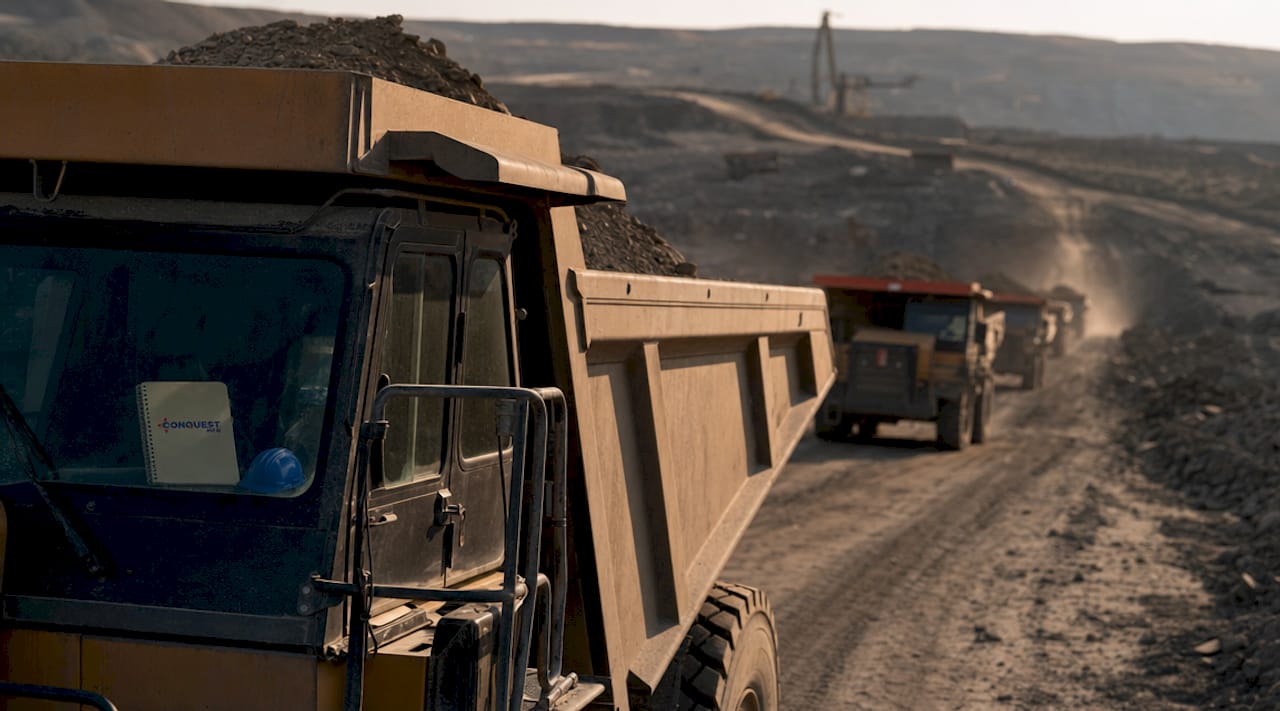
Backhaul is a return trip where a vehicle carries a load rather than running empty. Aggregate distribution is typically limited to a 20 to 25 mile radius due to hauling costs, making backhaul planning a direct profitability lever for regional operators.
Full truckload (TL) shipments generally exceed 10,000 lbs to qualify for TL freight rates, separating them from less-than-truckload (LTL) pricing structures. Knowing this threshold prevents misbilling and helps dispatchers consolidate loads correctly.
Here is a quick-reference glossary of additional core terms:
- Rigid hauler: A fixed-frame truck used for high-capacity, off-road bulk transport, typically in mining or quarry environments.
- Articulated hauler: A two-section truck with a pivot joint, offering better maneuverability on uneven terrain.
- FIBC (Flexible Intermediate Bulk Container): Also called a bulk bag, with standardized load capacities between 500 and 2,000 kilograms, used for granular or powdered materials.
- Aggregate loadout: The process of moving material from stockpiles into trucks, including weighing and ticketing. This step is a critical control point for accuracy and compliance.
- Bulk cargo: Freight transported without individual unit tracking, using vehicles designed for continuous discharge rather than discrete handling.
How do different trailer and truck types compare in bulk hauling?
Choosing the wrong trailer type for a material or job site is one of the most expensive mistakes in bulk logistics. The comparison below clarifies the functional differences between the most common configurations.
| Equipment type | Primary use | Loading method | Unloading method | Key constraint |
|---|---|---|---|---|
| Pneumatic trailer | Dry bulk powders, cement, fly ash | Top-fill hatches | Pressurized air discharge | Requires air compressor; operator training critical |
| Bottom dump trailer | Sand, gravel, aggregate | Top-loaded | Gravity via bottom gates | Needs flat, stable surface for discharge |
| End dump trailer | Aggregate, demolition debris | Top-loaded | Hydraulic tipping | Height clearance required at dump site |
| Hopper trailer | Grain, fertilizer, dry bulk | Top-loaded | Gravity via rear hopper | Material must flow freely; not suited for sticky loads |
| Rigid hauler | Mining, quarry overburden | Shovel or conveyor | Gravity tip | Off-road only; not street-legal |
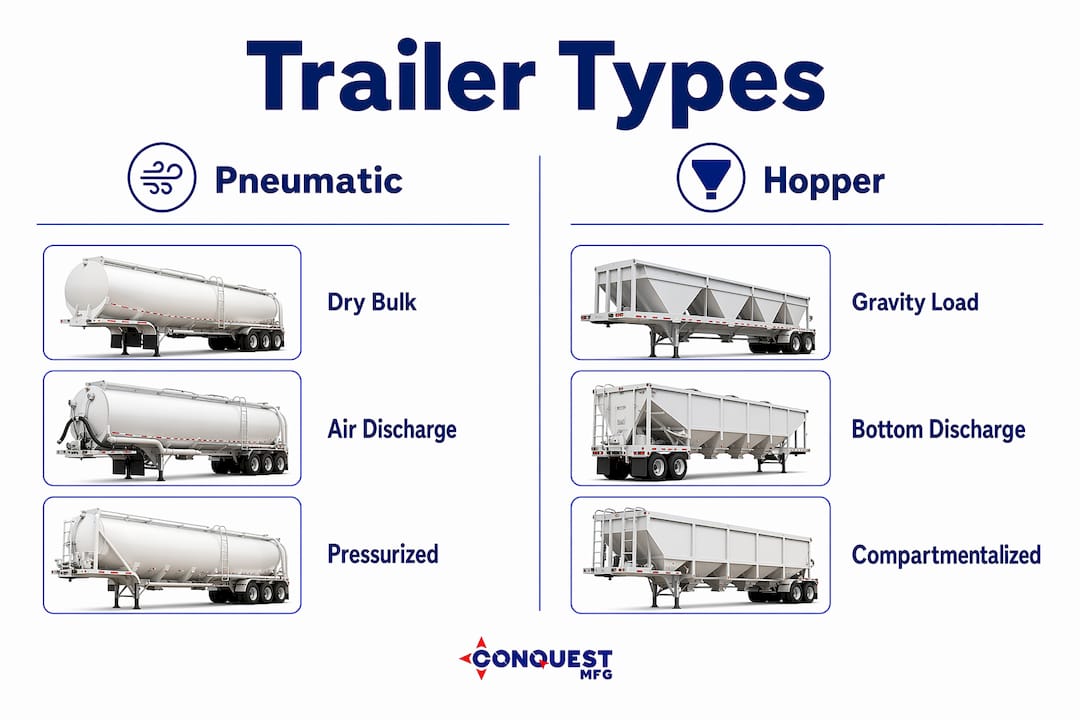
Pneumatic trailers and hopper trailers are often confused because both handle dry bulk materials. The key difference is the unloading mechanism. Hopper trailers rely on gravity through a gate or chute, while pneumatic trailers use pressurized air to push material through a hose into a silo or storage vessel. Pneumatic systems are faster and more precise for fine powders like cement or fly ash, but they require specialized pneumatic trailer knowledge that hopper operations do not demand.
Multi-compartment hopper trailers allow a single load to carry multiple material types or grades simultaneously. This configuration is common in ready-mix concrete supply chains where sand, aggregate, and admixtures must arrive together but stay separated until batching.
Pro Tip: When specifying a trailer for a new material, always request the material’s bulk density and flowability data before selecting between a pneumatic and a gravity-discharge system. A mismatch here causes blockages, pressure failures, and contaminated loads.
Why does bulk density matter so much in hauling operations?
Bulk density is the single most misunderstood property in freight handling definitions, and getting it wrong costs money at every stage of the supply chain. Bulk density directly informs material behavior in automated systems and freight costs, making it non-negotiable knowledge for logistics managers.
There are two distinct measurements logistics professionals must distinguish. Loose bulk density, sometimes called as-poured density, is measured when material is poured freely into a container without settling. Tapped bulk density is measured after the container has been mechanically vibrated or tapped to settle the material. Low-density materials incur higher freight costs because they fill trailer volume before reaching the legal weight limit, meaning you are paying to haul air.
Consider fly ash versus gravel as a practical example. Fly ash has a loose bulk density of roughly 60 to 80 lbs per cubic foot, while gravel runs 90 to 110 lbs per cubic foot. A pneumatic trailer rated for 1,000 cubic feet will hit its volume limit with fly ash long before it reaches its weight limit. With gravel, the opposite is true. Dispatchers who ignore this distinction routinely under-load or overload trailers.
Bulk density also controls flowability, which determines whether a material will discharge cleanly from a hopper or pneumatic system. Materials with poor flowability, such as damp sand or certain industrial powders, can bridge across hopper openings or clog pneumatic lines, causing unplanned downtime.
- High bulk density materials (gravel, iron ore): weight-limited loads; prioritize payload capacity in equipment selection.
- Low bulk density materials (fly ash, perlite, expanded polystyrene): volume-limited loads; prioritize trailer cubic capacity.
- Variable bulk density materials (wet sand, recycled concrete): require density testing at point of loading to avoid compliance violations.
Pro Tip: Always specify whether a bulk density figure is loose or tapped when communicating with carriers or equipment suppliers. Ambiguity here is the root cause of more freight billing disputes than any other single factor.
What safety and operational nuances matter in pneumatic freight?
Pneumatic trailer operation is the highest-skill area in bulk logistics, and the terminology around it reflects that complexity. Pneumatic trailer operation requires specialized knowledge of air compressors, internal pressure, and contamination prevention. Drivers who treat a pneumatic trailer like a standard hopper create serious hazards.
The following operational steps define safe pneumatic unloading practice:
- Verify pressure ratings. Confirm the trailer’s maximum allowable working pressure (MAWP) matches the receiving silo’s inlet specifications before connecting hoses.
- Inspect hoses and couplings. Worn or cracked hoses under pressure can fail violently. Visual inspection before every unload is non-negotiable.
- Open air valves gradually. Sudden pressure surges can cause material blockages in the discharge line or damage silo inlet filters.
- Monitor the air compressor output. Air pressure management is the top operational nuance in pneumatic freight. Pressure that exceeds line capacity causes blowbacks and material contamination.
- Purge lines after discharge. Residual material left in pneumatic lines causes cross-contamination on the next load, a critical failure point in food-grade or pharmaceutical bulk transport.
- Document every unload. Record pressure readings, discharge time, and any anomalies for maintenance and compliance records.
Common errors in pneumatic operations include connecting to the wrong silo inlet, skipping the pressure equalization step before disconnecting hoses, and failing to check for moisture in the air supply. Moisture in a pneumatic system carrying cement or fly ash causes immediate caking and line blockage.
Pro Tip: Require drivers to complete a pre-unload checklist that includes silo inlet confirmation and hose condition sign-off. This single practice eliminates the majority of contamination and pressure failure incidents.
How can logistics professionals use terminology to improve efficiency?
Standardized material transport vocabulary is a direct operational tool, not just a communication nicety. When dispatchers, drivers, and site managers use the same terms with the same definitions, scheduling errors drop and equipment utilization improves.
The practical applications of precise bulk logistics terminology include:
- Load specifications: Using “payload capacity” and “bulk density” correctly in load orders prevents under-loading and overloading, both of which carry financial and legal consequences.
- Equipment requests: Specifying “pneumatic trailer” versus “bottom dump” in dispatch instructions eliminates the wrong equipment arriving at a job site, a delay that can cost hours of downtime.
- Backhaul coordination: Dispatchers who understand backhaul as a defined operational concept, not just “a return trip,” actively schedule return loads and reduce empty miles, which directly improves cost per ton.
- Documentation accuracy: Freight bills, delivery tickets, and compliance reports that use standardized terms are easier to audit, dispute, and reconcile.
- Safety briefings: Site safety protocols that use precise terms like “MAWP,” “discharge line,” and “aggregate loadout” leave no room for interpretation errors.
Industry slang exists alongside formal terminology and logistics managers need to recognize both. Terms like “eye-to-the-sky” refer to load orientation for overhead clearance, while “conestoga” describes a specific roll-tarp trailer type. Knowing the slang equivalent of a formal term prevents miscommunication when working with drivers who use informal language on the job. The professional standard is to use formal terms in documentation and accept slang in verbal coordination, as long as both parties share the same understanding.
Key takeaways
Mastering bulk material hauling terminology reduces operational errors, lowers freight costs, and keeps every team member working from the same set of definitions.
| Point | Details |
|---|---|
| Bulk density drives cost | Always distinguish loose from tapped bulk density to prevent billing disputes and load compliance failures. |
| Pneumatic trailers demand specialized skills | Drivers must understand pressure management and contamination prevention before operating pneumatic systems. |
| Backhaul is a profitability tool | Scheduling return loads within the 20 to 25 mile distribution radius directly reduces cost per ton. |
| Standardized terms prevent downtime | Using precise equipment names in dispatch orders eliminates wrong-equipment arrivals and scheduling delays. |
| Payload vs. volume limits vary by material | High-density materials hit weight limits first; low-density materials hit volume limits first. |
Why terminology mastery is the most underrated skill in bulk logistics
I have spent years working alongside logistics managers who know their equipment inside out but lose hours every week to communication failures rooted in terminology gaps. A dispatcher calls for a “hopper” when the job needs a pneumatic trailer. A driver interprets “payload capacity” as gross vehicle weight. A site manager uses “bulk density” without specifying loose or tapped, and the carrier bills for a half-empty load.
The pattern I see consistently is that operations with strong terminology discipline, where every team member from the scale house to the driver uses the same definitions, run tighter schedules and file fewer freight claims. It is not a soft skill. It is a measurable operational advantage.
My recommendation for 2026 is to treat your construction material hauling terms reference as a living document, not a one-time onboarding handout. Update it when new equipment enters your fleet. Review it when you onboard new carriers. And test it when you see recurring dispatch errors, because nine times out of ten, a terminology gap is the root cause.
The bulk transport environment is adding complexity every year, with new material types, tighter weight compliance enforcement, and more specialized trailer configurations entering the market. The teams that invest in shared vocabulary now will spend less time correcting errors and more time moving material.
— Peter
Conquestmfgusa equipment built for every bulk hauling need
Conquestmfgusa designs and manufactures the equipment that makes bulk material hauling terminology real in the field. From dry bulk pneumatic trailers and bottom dumps to end dumps, sand hoppers, and portable cement pig silo trailers, every unit is custom-built to match the operational demands of logistics managers who cannot afford downtime. Our bulk material handling equipment serves construction, oil, and industrial sectors across the USA. If you are specifying equipment for a new operation or replacing aging trailers, our team is ready to match the right configuration to your material, route, and payload requirements. Get a Quote today and put the right equipment behind your operation.
FAQ
What is bulk material hauling terminology?
Bulk material hauling terminology is the set of defined terms covering equipment types, material properties, and operational processes used in transporting bulk goods. It includes terms like payload capacity, bulk density, pneumatic trailer, and aggregate loadout.
What is the difference between a pneumatic trailer and a hopper trailer?
A pneumatic trailer uses pressurized air to discharge dry bulk materials through a hose into a silo, while a hopper trailer relies on gravity through a gate or chute. Pneumatic systems are better suited for fine powders like cement; hopper trailers work well for free-flowing aggregates.
Why does bulk density affect freight costs?
Low bulk density materials fill trailer volume before reaching the legal weight limit, meaning carriers charge for space rather than weight. Distinguishing between loose and tapped bulk density gives logistics managers accurate data for load planning and cost control.
What does backhaul mean in bulk transport?
Backhaul is a return trip where a vehicle carries a paying load instead of running empty. In aggregate distribution, where haul distances are typically limited to 20 to 25 miles, effective backhaul scheduling is a direct driver of profitability.
What is a full truckload (TL) threshold in bulk freight?
A full truckload shipment generally exceeds 10,000 lbs to qualify for TL freight rates, separating it from less-than-truckload pricing. Dispatchers use this threshold to consolidate loads and avoid paying LTL premiums on shipments that could qualify for lower TL rates.