
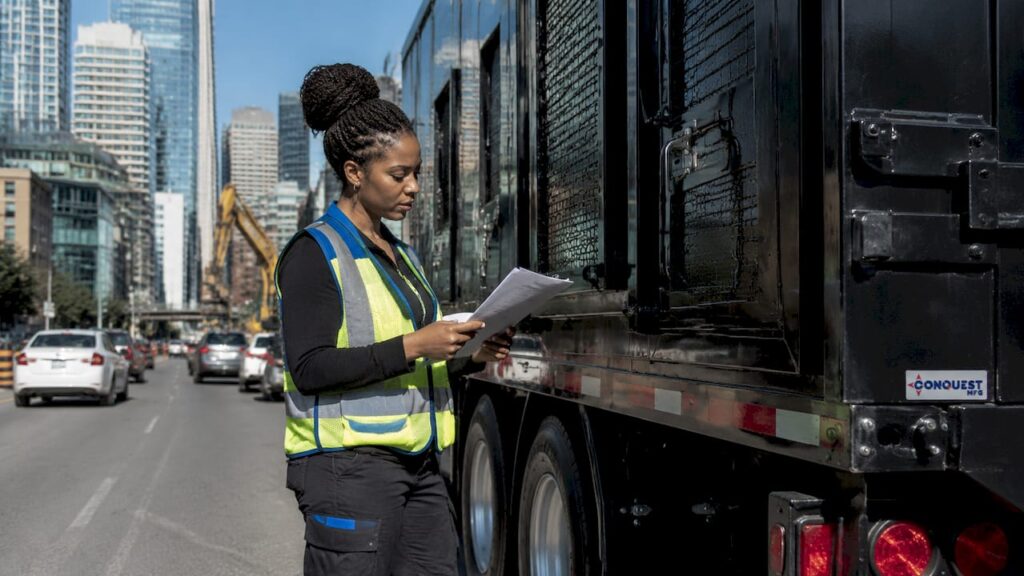
A security semi trailer is a specialized transport and surveillance platform designed to protect sensitive cargo and enhance site surveillance through layered physical and technological security measures. This guide to selecting security semi trailers covers every decision point logistics managers and security professionals face: trailer types, essential hardware, mobile surveillance integration, parking discipline, and the operational workflows that separate effective protection from passive evidence collection. The right selection depends on matching your threat profile to the correct combination of physical locks, camera systems, and monitoring policies.
What types of security semi trailers are available?
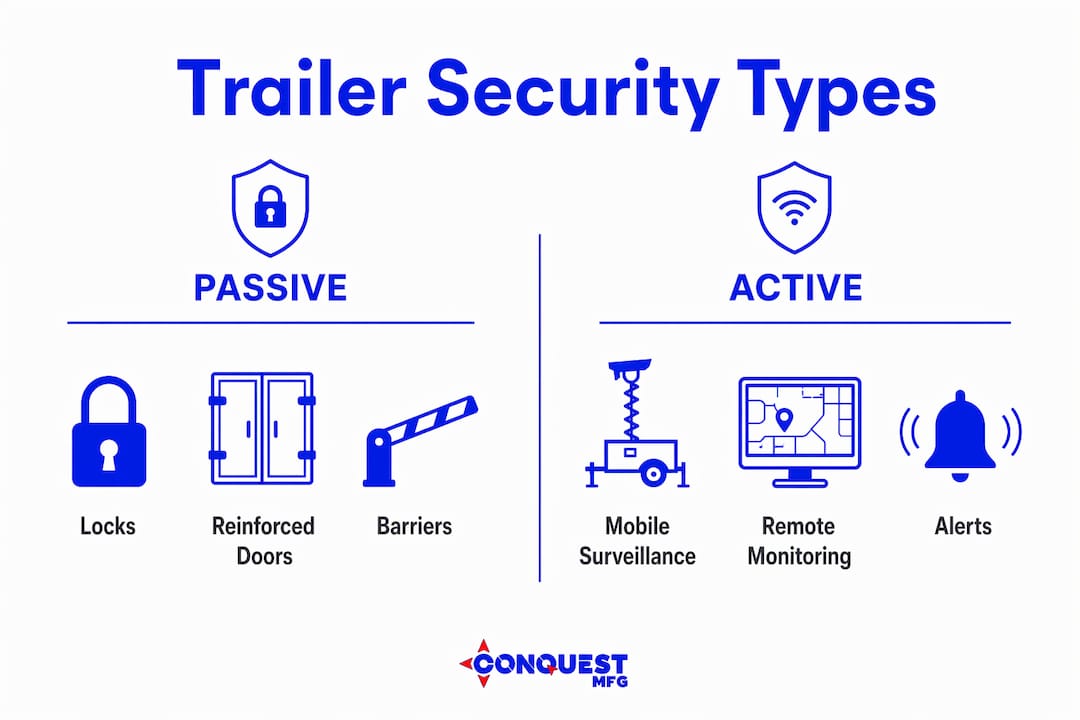
Security semi trailers fall into two broad categories: passive physical security units and actively monitored mobile surveillance platforms. Understanding the distinction is the first step in any security trailer buying guide, because the two serve fundamentally different operational purposes.
Passive trailers rely entirely on physical deterrents: hardened locks, reinforced doors, and structural barriers. They carry no cameras or connectivity. Actively monitored trailers, by contrast, integrate cameras, cellular or satellite connectivity, onboard power, and remote monitoring workflows. Mobile surveillance trailers deploy elevated camera coverage with solar, battery, and cellular connectivity, with typical deployment in 2 to 4 hours and no electrical infrastructure required. That speed makes them the preferred choice for temporary construction sites, remote oil field operations, and intermodal yards.
Cargo type also drives trailer selection. The table below maps common trailer configurations to their primary security vulnerabilities and recommended countermeasures.
| Trailer type | Primary vulnerability | Recommended countermeasure |
|---|---|---|
| Curtainsider | Side curtains easily cut | Anti-slash curtains, EN 12642 XL rating |
| Rigid container | Rear door forced entry | Heavy-duty door locks, container seals |
| Flatbed | Open cargo exposure | Cargo netting, GPS tracking, surveillance |
| Mobile surveillance unit | Power and connectivity loss | Dual power source, LTE plus satellite backup |
Curtainsider trailers are particularly vulnerable because side curtains can be cut quickly and quietly. Anti-slash curtains embed mesh or reinforcing fibers to resist cutting, while EN 12642 XL-rated curtains add structural durability. Selecting the correct curtain specification is a non-negotiable step when transporting high-value or sensitive materials.
On the rental versus purchase question: active monitoring rentals run $2,000 to $3,500 per month, while a dedicated overnight security guard costs approximately $7,665 per month per post. For most logistics operations, a monitored trailer delivers superior coverage at less than half the labor cost.
Which security hardware devices are essential for trailer security?
Physical security hardware is the foundation of any secure trailer deployment. No surveillance system compensates for an unlocked king pin or an unprotected air line connection.
The core hardware stack for any security trailer includes:
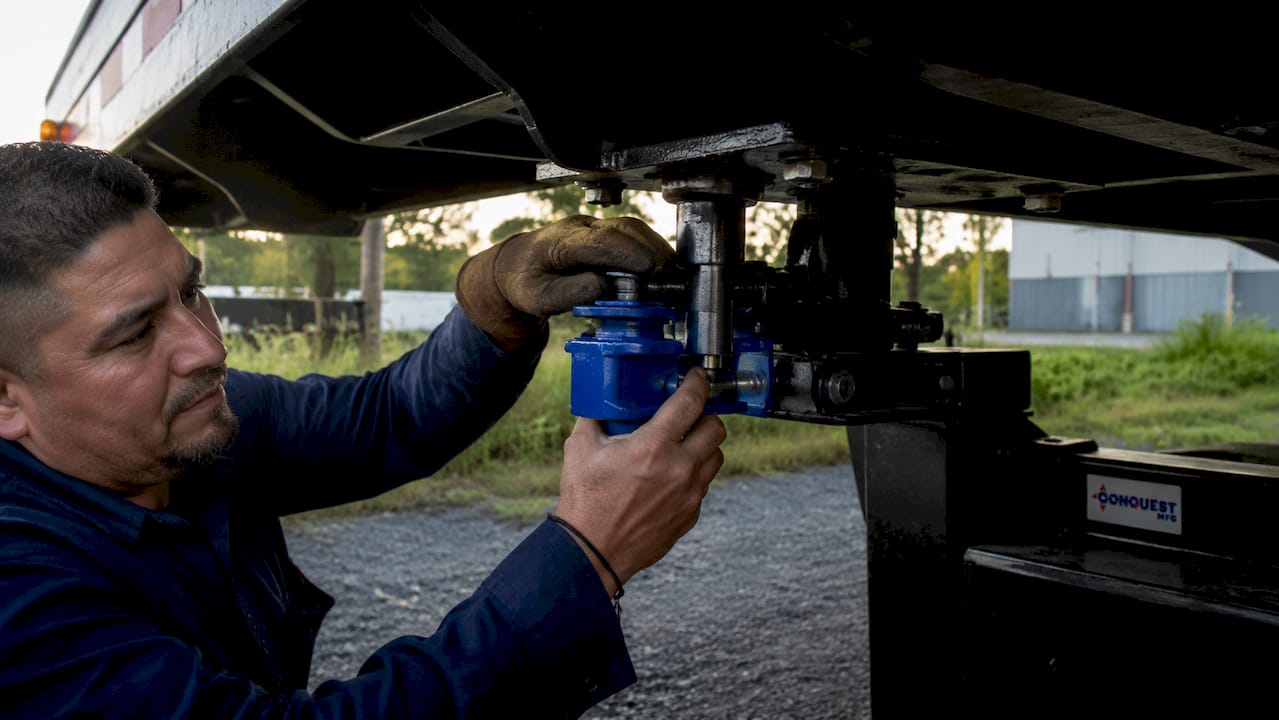
- King pin locks. High-quality king pin locks feature complex, tamper-resistant keyways and hardened steel construction to resist cutting, drilling, and hammer attacks. Disc detainer mechanisms are the preferred standard. Locks without these features can be bypassed quickly by experienced thieves.
- Suzie (airline) locks. Suzie locks prevent thieves from releasing trailer spring brakes by blocking air line connections. Trailer spring brakes depend on air supply, so a thief who connects their own airline can release the brakes even when the king pin is locked. Suzie locks close this gap directly.
- Container and door locks. Rear cargo doors require independent locking beyond the trailer’s factory latches. Heavy-duty padlocks with shrouded shackles and hardened steel bodies are the minimum standard for sensitive cargo.
- Wheel chocks and steering wheel locks. These serve as supplemental deterrents that slow opportunistic theft and signal that the trailer is actively secured.
TAPA-compliant operations require seal and lock verification at each cargo hand-off. If your operation moves pharmaceuticals, electronics, or other high-value freight, TAPA TSR certification sets the hardware baseline you must meet.
Pro Tip: Never rely on a single lock type. King pin locks and suzie locks address different attack vectors. Deploying both together is the minimum standard for any uncoupled trailer left unattended overnight.
How to integrate mobile surveillance technology effectively
Active monitoring transforms a surveillance trailer from a recording device into a crime prevention tool. The distinction matters because failing to integrate mobile surveillance trailers into active monitoring workflows results in passive evidence collection rather than deterrence. Evidence is useful after a theft. Prevention stops the loss entirely.
Follow this deployment sequence to maximize effectiveness:
- Define the monitoring workflow before deployment. Assign clear responsibilities for alarm verification, footage review, and incident response. Security teams without defined roles default to passive review, which eliminates the deterrence value of the system.
- Position cameras for deterrence, not just coverage. Mount cameras at elevation to maximize field of view and place visible signage indicating active monitoring. Visible surveillance deters opportunistic theft more reliably than hidden cameras.
- Select connectivity based on site conditions. LTE or 5G is the primary standard for urban and suburban sites. Remote deployments in oil fields or rural logistics yards require satellite backup to maintain continuous monitoring. A connectivity gap during overnight hours is a known exploitation window.
- Implement false alarm filtering policies. Wide outdoor scenes generate significant noise from wind, animals, and ambient movement. Policy-driven decision layers, including motion zone configuration and AI-assisted filtering, increase verified threat detection and reduce alert fatigue in your monitoring team.
- Test the full system before the site goes live. Verify camera angles, connectivity handoff between LTE and satellite, and alarm-to-response time under realistic conditions.
Pro Tip: When evaluating vendor camera specifications, prioritize wide-angle coverage and reliable connectivity over maximum megapixel count. In outdoor trailer contexts, practical camera value comes from consistent uptime and field coverage, not resolution specs that rarely matter at operational distances.
The importance of surveillance equipment extends beyond theft prevention. Monitored trailers also document compliance events, support insurance claims, and provide chain-of-custody evidence for sensitive material transport.
What parking and operational practices enhance trailer security?
Hardware and surveillance technology only perform as well as the operational discipline surrounding them. A layered security approach combines physical locks, parking strategies, and surveillance to eliminate attack vectors rather than simply detect them.
Apply these parking and operational standards consistently:
- Back trailers against walls, fences, or other equipment to block rear and side access. Parking against physical barriers greatly reduces theft risk by eliminating the access points thieves rely on for quick coupling and departure.
- Use secure, well-lit, monitored truck parks whenever possible. Avoid isolated parking areas, even for short stops.
- Conduct lock inspections at every driver handoff. Consistent application of king pin and suzie locks is more protective than the quality of the locks themselves if application is irregular.
- Limit cargo information disclosure. Drivers and logistics coordinators should share manifest details only on a need-to-know basis. Cargo intelligence is frequently the precursor to targeted theft.
- Vary routes and departure times for high-value loads. Predictable patterns allow thieves to plan interceptions with precision.
“Operational discipline, including driver training, consistent application of locks, and audit procedures, is as important as hardware specifications for preventing theft.” — HGV Yard Security best practices
Spot-check audits conducted by security managers, not just drivers, are the most reliable method for identifying gaps in lock application. Schedule audits randomly rather than on a fixed calendar to reflect real-world compliance levels.
What are common mistakes when selecting and deploying security trailers?
Even well-resourced logistics operations make predictable errors when selecting secure trailers. Recognizing these mistakes before deployment saves both cost and cargo.
- Relying on a single security measure. A king pin lock alone does not stop a thief who connects their own airline. Passive surveillance alone does not stop theft in progress. Layered security is not optional for sensitive cargo operations.
- Treating surveillance trailers as standalone solutions. A common gap is deploying a camera-equipped trailer without a defined monitoring workflow. The trailer records the theft but does not prevent it. Active monitoring with clear incident response protocols is the operational requirement.
- Ignoring the suzie lock. Many operations deploy king pin locks correctly but overlook air line protection entirely. This leaves a direct path to releasing the spring brakes and moving the trailer.
- Underestimating power and connectivity limitations. Remote deployments with solar-only power and no satellite backup create predictable monitoring gaps. Assess site power availability and cellular signal strength before finalizing trailer selection.
- Skipping regular security audits and driver training. Hardware degrades, locks get skipped under time pressure, and new drivers may not apply protocols consistently. Quarterly audits and structured onboarding for drivers are the controls that keep hardware investments performing as intended.
Key takeaways
Selecting the right security semi trailer requires combining physical hardware, active surveillance, and operational discipline into a single, policy-driven security program.
| Point | Details |
|---|---|
| Match trailer type to threat | Curtainsiders need anti-slash curtains; rigid containers need independent door locks. |
| Layer physical hardware | Deploy king pin locks and suzie locks together to close the spring brake vulnerability. |
| Activate your surveillance | Integrate cameras into monitored workflows with defined incident response, not passive recording. |
| Enforce parking discipline | Back trailers against barriers and conduct random lock audits to maintain consistent protection. |
| Audit and train regularly | Quarterly security audits and structured driver training sustain hardware performance over time. |
Why layered security is the only strategy worth deploying
I’ve reviewed enough cargo theft incident reports to recognize a pattern that almost never changes. The theft did not happen because the hardware failed. It happened because one layer was missing, skipped, or never deployed in the first place. A king pin lock was on the trailer but the suzie lock was not. A surveillance trailer was on-site but nobody was monitoring the feed. A parking protocol existed on paper but was never audited.
The logistics industry has access to genuinely good security technology in 2026. Mobile surveillance trailers from providers like Arcadian AI and Drone Strategic Partners deliver verified threat detection at a fraction of the cost of a security guard. Physical hardware from manufacturers meeting TAPA TSR standards provides real resistance to the most common attack methods. The technology is not the gap.
The gap is almost always operational. Security culture, driver accountability, and management follow-through determine whether a $4,000 per month surveillance trailer prevents theft or simply documents it. I’d argue that a logistics manager who invests in driver training and random audits gets more security value per dollar than one who upgrades to thermal imaging without addressing the workflow around it.
The future of industrial trailers points toward tighter integration between physical hardware and AI-assisted monitoring. That direction is correct. But the organizations that will benefit most are those that have already built the operational discipline to act on what their systems detect.
— Peter
How Conquestmfgusa supports your security trailer requirements
Conquestmfgusa manufactures mobile security infrastructure built for the operational demands of logistics, construction, and oil industry environments across the USA. Our mobile security infrastructure includes Portable Rapid-Deployed Video Surveillance Towers and a full range of semi trailers engineered for durability and tailored performance in demanding field conditions.
Whether you need a surveillance platform for a remote oil field site or a purpose-built trailer for sensitive material transport, Conquestmfgusa delivers equipment matched to your exact operational requirements. Our manufacturing capabilities cover customization, structural integrity, and the connectivity specifications that active monitoring workflows demand. Explore our full product range to find the security trailer configuration that fits your operation.
FAQ
What is a security semi trailer?
A security semi trailer is a transport or surveillance platform equipped with physical locks, cameras, and connectivity systems to protect cargo and monitor sites. It combines structural security hardware with active or passive surveillance technology.
How much does a monitored security trailer cost per month?
Active monitoring trailer rentals run $2,000 to $3,500 per month, compared to approximately $7,665 per month for a dedicated overnight security guard. Premium units with thermal imaging and license plate recognition reach $5,000 or more per month.
What is the difference between a king pin lock and a suzie lock?
A king pin lock prevents a tractor from coupling to the trailer. A suzie lock blocks the air line connection, stopping thieves from releasing the spring brakes even when the king pin is secured. Both are required for complete immobilization.
How quickly can a mobile surveillance trailer be deployed?
Most mobile surveillance trailers deploy within 2 to 4 hours with no electrical infrastructure or permits required. Solar and battery power systems support immediate operation in remote locations.
What is the most common mistake in security trailer deployment?
The most common mistake is treating surveillance trailers as standalone solutions without integrating them into active monitoring workflows. Without defined alarm verification and incident response procedures, surveillance trailers collect evidence rather than prevent theft.