
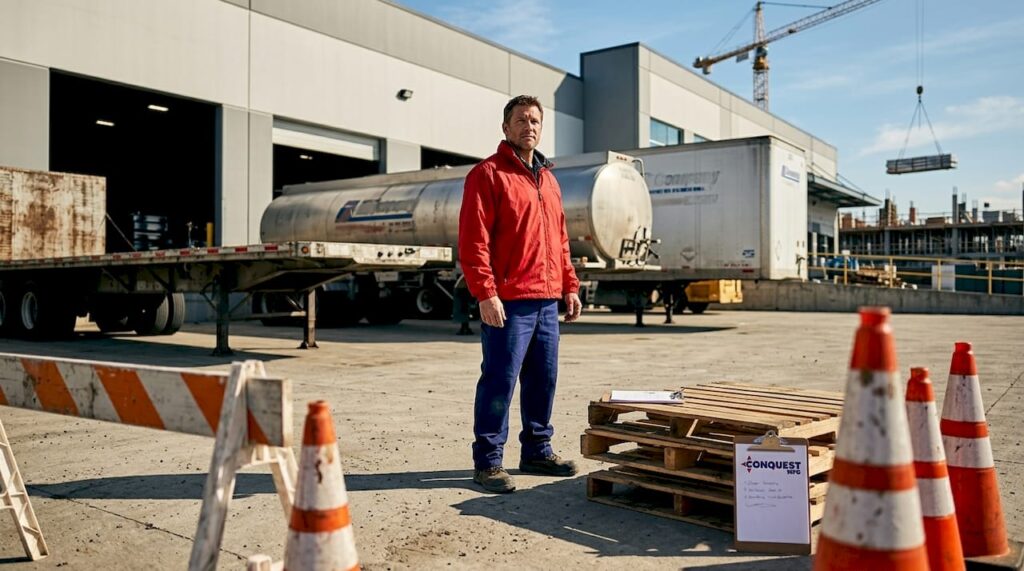
The future of industrial trailers 2026 is not playing out the way many fleet operators expected. Rather than aggressive expansion, the market is forcing a harder question: are you getting the most from the assets you already have? Smart trailer capabilities that once counted as premium options are now baseline requirements in advanced freight and construction networks. Digital connectivity, predictive maintenance, and compliance tracking are no longer optional. This article breaks down the market forces, technology shifts, and strategic decisions that will define how logistics and construction professionals compete through 2026 and beyond.
Table of Contents
- Key Takeaways
- Market forces shaping industrial trailer trends 2026
- Technology innovations driving the future of trailer design
- Adoption challenges that decision-makers cannot ignore
- Practical strategies for trailer decision-makers in 2026
- My take on where this industry is actually headed
- How Conquestmfgusa supports your 2026 trailer strategy
- FAQ
Key Takeaways
| Point | Details |
|---|---|
| Market caution drives strategy | Backlog contraction and financing pressure mean smart utilization matters more than fleet size. |
| Smart tech is now baseline | Telematics, electronic braking, and axle monitoring are becoming compliance requirements, not upgrades. |
| Refurbishment beats replacement | In high-interest markets, repair and lifecycle extension often deliver better ROI than new procurement. |
| Interoperability is a real barrier | Mixed-age fleets need middleware investment to normalize data across trailer types and brands. |
| Digital readiness is a prerequisite | Trailer specs must include connectivity standards to remain competitive in modern freight networks. |
Market forces shaping industrial trailer trends 2026
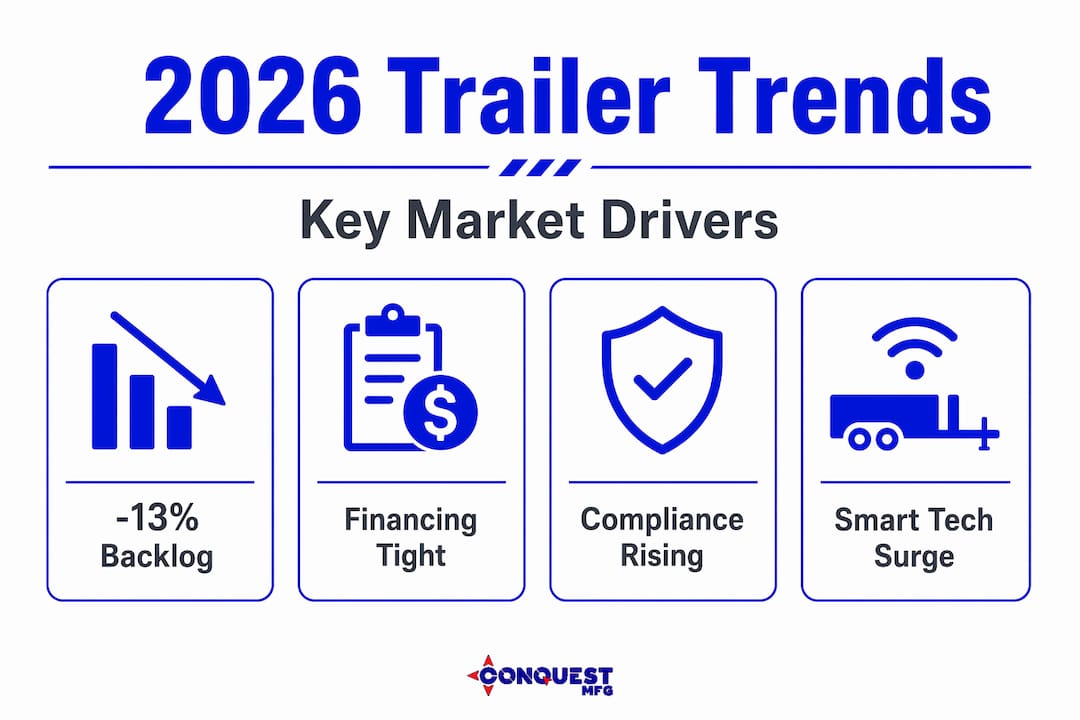
The market heading into 2026 is not in expansion mode. Backlogs contracted more than 13% compared to 2025 levels, and fleet managers are prioritizing Class 8 tractors over new trailer procurement in the first half of the year. That tells you something important about where capital is going and where it is not.
Yes, there is a cautious uptick. Net orders climbed 3% month over month in April 2026, and year-over-year comparisons look dramatic against the suppressed 2025 numbers. But experienced operators know that a 126% year-over-year jump off a low baseline is not a signal to expand aggressively. It is a signal to watch carefully while keeping your balance sheet clean.
Here is what that context means practically for industrial trailer decision-makers:
- Financing is tighter. Lenders are applying more scrutiny to trailer assets, which pushes operators toward refurbishment and repair rather than new purchases.
- Replacement cycles are lengthening. The traditional 7 to 10 year cycle is giving way to extended service life strategies in most fleet segments.
- Fleet consolidation is real. Operators are running leaner pools with fewer idle assets, putting more pressure on each trailer to perform reliably.
- Asset liquidity matters. Resale values and utilization rates are factoring into procurement decisions in ways they simply did not five years ago.
Pro Tip: Before authorizing any trailer procurement in 2026, run a full lifecycle cost analysis that includes financing costs, projected maintenance, and expected residual value. The math often favors refurbishment over replacement when interest rates stay elevated.
The 2026 trailer market analysis points to a sector recalibrating after years of demand volatility. Operators who understand this shift will make better procurement decisions than those chasing fleet growth numbers alone.
Technology innovations driving the future of trailer design
The technology story in industrial trailers is moving fast, and the gap between digitally connected fleets and those still running analog systems is widening by the quarter. Smart trailer technologies including integrated telematics, smart axle sensors, and electronic braking systems are transitioning from competitive differentiators to operational necessities.
Connectivity and sensing systems
Real-time monitoring is now table stakes. Tire pressure sensors, axle load monitors, and cargo condition trackers feed continuous data back to fleet management platforms. Electronic braking systems go beyond stopping power. They carry diagnostic capabilities that flag wear patterns, identify brake imbalances, and integrate with compliance documentation systems automatically.
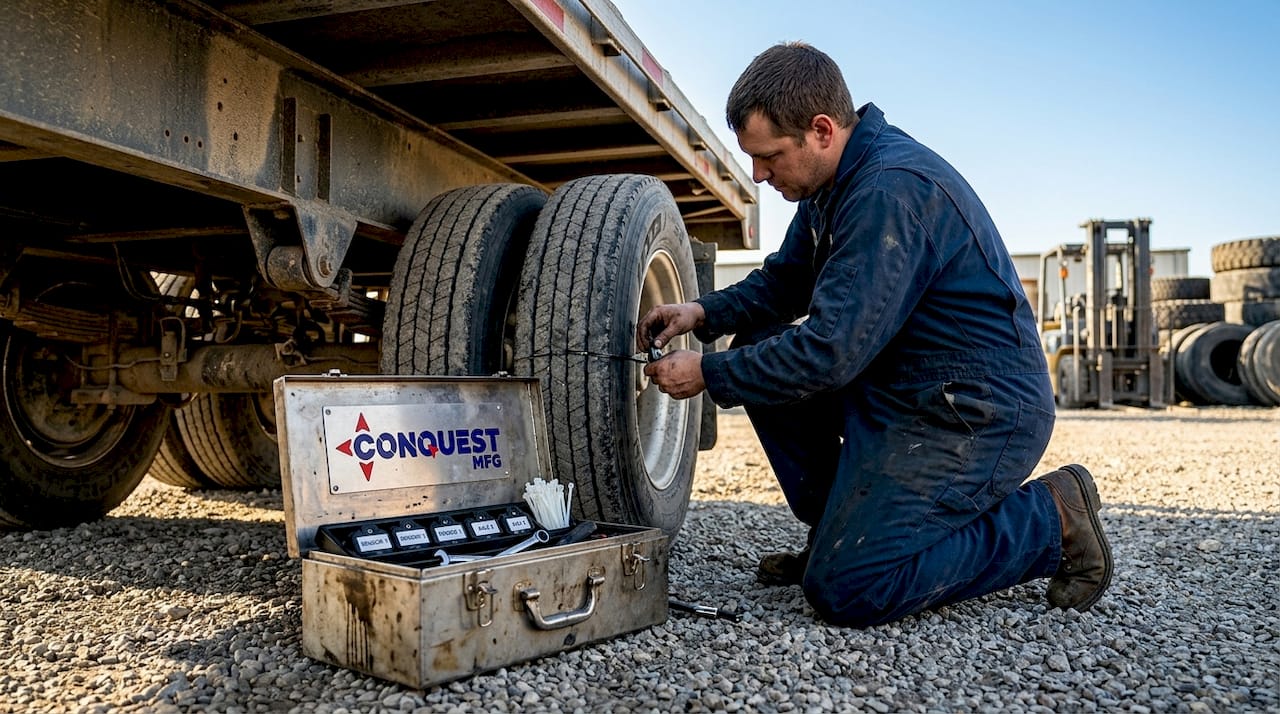
One of the more significant developments worth watching is Volvo Trucks North America’s work on a wireless truck-trailer connector designed to expand data capacity far beyond what the legacy 7-pin system can carry. The design maintains backward compatibility, which matters enormously for mixed-fleet operators. This kind of connectivity standard, if adopted broadly, would transform how trailer data integrates with dispatch, maintenance, and compliance systems.
AI-driven maintenance and fleet management
AI and predictive logistics tools embedded in freight and maintenance platforms are delivering real results: reduced idle time, better route optimization, and dynamic load matching that keeps assets productive rather than parked. The difference between AI-assisted maintenance scheduling and reactive repair is measured in uptime days per year, and in heavy-haul or bulk transport operations, that number adds up quickly.
Here is a comparison of where trailer technology stands today versus where future trailer technology is headed:
| Capability | Current standard | 2026 and beyond |
|---|---|---|
| Braking systems | Electronic with basic diagnostics | Full predictive diagnostics with compliance auto-reporting |
| Telematics | GPS tracking and basic alerts | AI-filtered, actionable alerts with fleet platform integration |
| Truck-trailer connectivity | 7-pin analog connector | Wireless high-capacity data connector |
| Maintenance scheduling | Time-based intervals | Condition-based via real-time sensor data |
| Weight and load monitoring | Manual axle checks | Automated axle load alerts with regulatory documentation |
Pro Tip: When evaluating future trailer technology for procurement, ask vendors specifically about fleet management system compatibility. A trailer with advanced sensors that cannot integrate with your existing platform creates more work, not less.
Lightweight materials and aerodynamic design are also progressing. High-strength aluminum and composite panels reduce tare weight on dry bulk pneumatic trailers and end dumps, which directly improves payload capacity within legal axle limits. That is a bottom-line gain without adding a single asset to your fleet.
Adoption challenges that decision-makers cannot ignore
Understanding the innovations in industrial trailers is one thing. Getting them to work inside a real fleet operation with mixed-age assets, multiple brands, and constrained IT budgets is another challenge entirely. Here are the interoperability and operational hurdles that matter most heading into 2026.
-
Interoperability gaps across brands and platforms. Mixed-age fleets need middleware to normalize data from different trailer generations and manufacturers. Without it, your telematics dashboard shows fragments rather than a complete picture, and decision-making suffers accordingly.
-
Data overload and alert fatigue. More sensors mean more data, and more data means more alerts. AI filtering is not optional in advanced telematics deployments. Systems that escalate only critical, actionable alerts to dispatchers outperform those that push every data point to the same inbox. Alert fatigue is a documented operational risk.
-
Capital allocation under financial pressure. Refurbishment strategies often yield better ROI than new trailer purchases in high-interest markets. But deciding when to refurbish versus replace requires honest lifecycle data, which many fleets still do not track systematically.
-
Regulatory and compliance complexity. Environmental regulations and safety standards are increasing operational complexity across the board. Brake validation, emission tracking, and axle load documentation are no longer one-time compliance checks. They are continuous processes that require digital documentation systems to manage efficiently.
-
Software platform investment. Buying smart hardware without investing in the software layer that makes it useful is a common mistake. Fleet visibility platforms and maintenance management systems are not incidental costs. They are the foundation that determines whether advanced trailer technology pays off or just adds overhead.
The fleet security checklist for 2026 approach applies here: systematic, documented, and built around continuous review rather than one-time setup.
Practical strategies for trailer decision-makers in 2026
Knowing how trailers will evolve by 2026 is only useful if that knowledge translates into decisions you can act on now. The following strategies are grounded in current market realities, not ideal-world assumptions.
-
Lead with ROI, not specifications. The competitive edge in 2026 lies in deploying fewer trailers more intelligently with strong digital visibility and financial discipline. Every procurement decision should connect directly to utilization rates and revenue per asset.
-
Treat digital readiness as a procurement requirement. Digital readiness is a procurement prerequisite in modern freight networks. Trailers that cannot communicate with your fleet management system are a liability, not an asset, regardless of how new they are.
-
Build refurbishment into your asset strategy. Extending trailer service life through targeted refurbishment keeps capital available for technology investments, which deliver broader operational improvements than simply adding new units.
-
Match trailer specs to your actual operations. A bulk transportation equipment decision looks very different for a cement distribution fleet than for a construction aggregates operation. Precision in spec selection reduces unnecessary costs across the asset lifecycle.
-
Invest in the middleware layer. If your fleet includes trailers from multiple manufacturers and different model years, middleware that normalizes telematics data across the fleet is not optional. It is what converts raw sensor output into decisions.
-
Monitor compliance proactively. Use telematics diagnostic data to stay ahead of brake system validations and axle load documentation before inspections happen, not after.
My take on where this industry is actually headed
I have watched fleet operators chase trailer count as a performance metric for years, and the 2026 market is finally delivering a correction to that thinking. In my experience, the fleets that are genuinely ahead right now are not the ones with the most units on the road. They are the ones with the clearest visibility into how each trailer is performing, what it costs to operate, and when to service it before it causes a failure.
The technology exists to run a leaner, smarter operation today. The challenge I see most often is not technology access. It is the organizational willingness to invest in the software and integration layer that makes the hardware worth the spend. Buying a telematics-equipped trailer and then not integrating it with your dispatch or maintenance platform is the equivalent of purchasing a diagnostic scanner and leaving it in the box.
What I believe strongly is that compliance capability is becoming a competitive advantage that most operators have not yet priced into their procurement thinking. The fleets that can auto-generate brake validation documentation, axle load records, and emission tracking reports are going to move through regulatory audits faster and with lower administrative cost. That is a real operational edge.
The operators who will struggle are those waiting for market conditions to return to the 2021 to 2022 demand environment. That window has closed. The new game is about precision, digital integration, and getting more productive miles from the assets already on the ground.
— Peter
How Conquestmfgusa supports your 2026 trailer strategy
At Conquestmfgusa, we build equipment for operators who need precision and reliability in demanding environments. Our product line is directly aligned with the trends shaping the future of industrial trailers in 2026, from dry bulk pneumatic trailers designed for efficient material handling to end dumps, bottom dumps, and sand chassis built for the rigors of construction and aggregates work.
Whether you are managing a construction fleet, running bulk materials for industrial operations, or supporting oil field logistics, we design and manufacture trailers that meet current compliance requirements and are built to work within modern fleet management frameworks. Explore our construction industry solutions to see how our equipment maps to your specific operational needs. Our semi trailer applications in oil operations and pneumatic trailer designs for bulk transport reflect the same engineering philosophy: custom-built for purpose, built to last, and ready to integrate with the technology your fleet depends on. Contact our team to discuss specifications and get a quote tailored to your operation.
FAQ
What is driving the shift in industrial trailer priorities for 2026?
The primary drivers are tighter financing conditions, backlog contraction, and rising compliance demands. Fleet operators are focused on maximizing productivity from existing assets rather than expanding fleet size.
Are smart trailer technologies required or optional in 2026?
Smart technologies like telematics, electronic braking diagnostics, and axle load monitoring are increasingly required for regulatory compliance and operational efficiency, not simply optional upgrades for advanced fleets.
How does the wireless truck-trailer connector change fleet operations?
Volvo’s wireless truck-trailer connector expands data capacity far beyond the traditional 7-pin system, enabling richer real-time communication between tractor and trailer platforms while maintaining compatibility with existing infrastructure.
When does refurbishing a trailer make more sense than buying new?
In high-interest rate markets, refurbishment typically delivers better ROI than new procurement for trailers with sound structural integrity. The key factor is having accurate lifecycle cost data to make the comparison honestly.
What is the biggest operational risk with advanced telematics systems?
Alert fatigue from data overload is the most documented operational risk. Successful deployments rely on AI filtering that escalates only critical, actionable alerts rather than forwarding every sensor data point to dispatchers.