
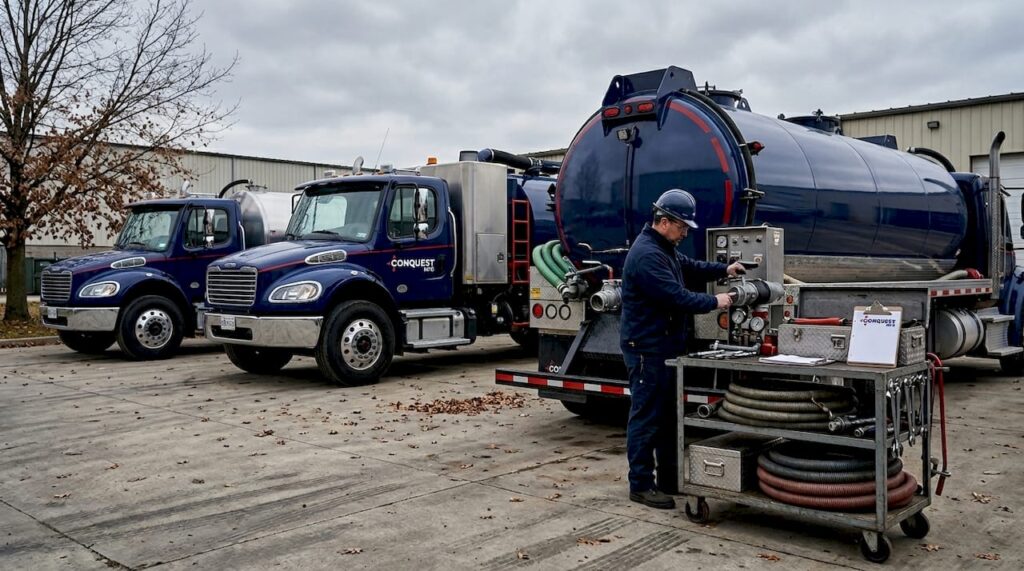
Vacuum tanks are sealed vessels engineered to operate under negative internal pressure, making them the standard solution for collecting, holding, and transporting liquid waste, sludge, and debris across municipal, industrial, and construction environments. Understanding the distinct types of vacuum tanks is not optional for fleet managers and operations professionals. It directly determines whether your equipment handles the job safely, efficiently, and within compliance. This guide covers the primary vacuum tank categories, their structural requirements, design considerations, and how to match each type to your specific operational demands.
1. What are the main types of vacuum tanks?
Vacuum trucks and tank systems are classified into four primary service categories, each engineered for a distinct operational profile. Selecting the wrong category means mismatched pump capacity, inadequate filtration, or structural failure under field conditions. Here is how each type breaks down.
Liquid Vacuum Trucks
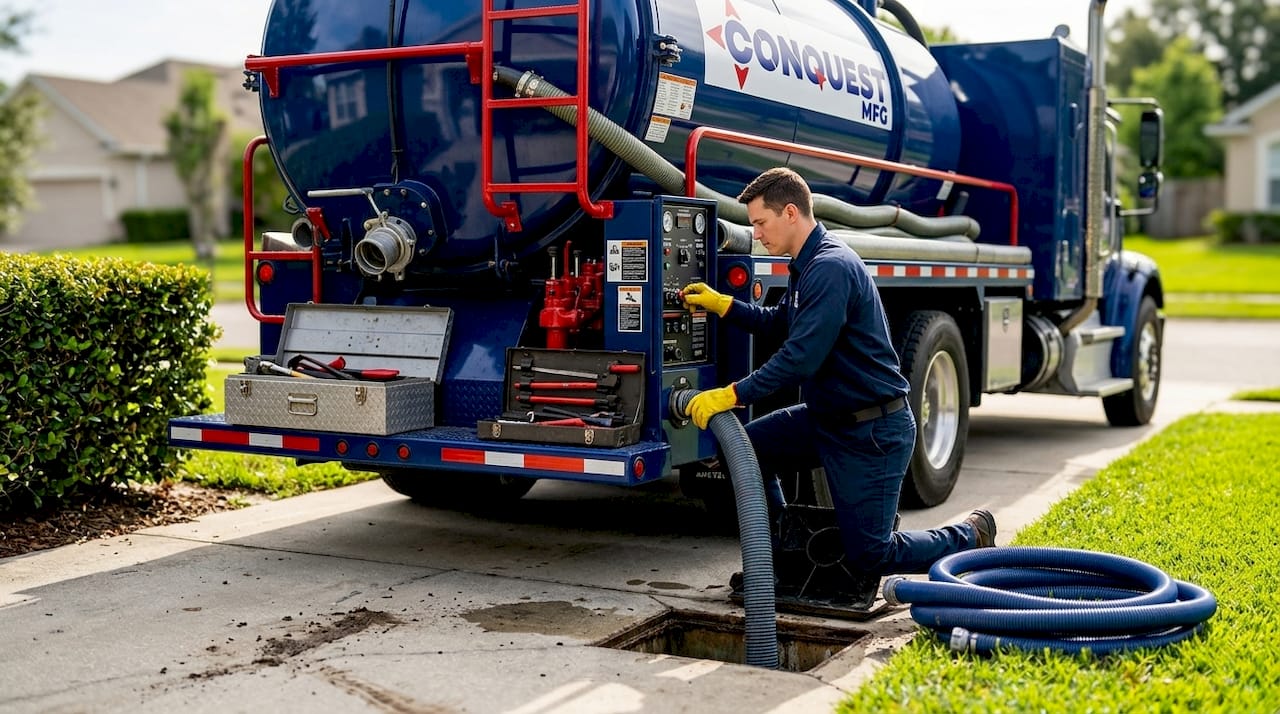
Liquid vacuum trucks are designed specifically for pumping and transporting liquid waste such as septic tank contents, grease trap material, and portable toilet waste. These units typically use positive displacement pumps, including rotary vane or liquid ring pumps, and feature tanks ranging from 1,500 to 5,000 gallons. The tank body is a sealed, airtight steel vessel connected via suction hoses to the waste source, with the vacuum pump maintaining negative pressure throughout collection.
Combination Vacuum Trucks
Combination units integrate both high-pressure water jetting and vacuum suction in a single chassis. These are the workhorses of municipal sewer maintenance, storm drain cleaning, and hydro-excavation. Tank sizes commonly range from 800 to 2,500 gallons for the debris body, with a separate water tank for jetting operations. The dual-function design makes them more expensive but significantly more versatile for contractors handling varied job types.
Industrial Vacuum Trucks
Industrial vacuum trucks handle heavier, more abrasive materials including drilling mud, industrial sludge, chemical waste, and construction debris. These units use high-capacity positive displacement blowers or liquid ring pumps capable of generating deeper vacuum levels. Tank construction uses heavy-gauge steel with reinforced baffles to manage the weight and abrasiveness of the material. Filtration systems on industrial units are more robust, often incorporating multi-stage separators to protect the pump from debris ingestion.
Vacuum Tanker Trucks
Vacuum tanker trucks are purpose-built for bulk liquid transport over long distances. Unlike service-oriented vacuum trucks, tankers prioritize volume capacity, often exceeding 6,000 gallons, and are engineered for highway transport compliance. These units appear in oil field waste transport, chemical hauling, and large-scale municipal contracts. The tank classification for each type depends on pump type, tank size, filtration design, and hose configuration rather than brand naming alone.
2. How vacuum tanks differ structurally from pressure tanks
The structural engineering of a vacuum tank is fundamentally different from a pressure tank, and confusing the two has real consequences in procurement and field operation.
Vacuum tanks resist collapse from external atmospheric pressure pushing inward, while pressure tanks resist rupture from internal pressure pushing outward. This reversal of load direction changes everything about how the tank is built. Vacuum tanks require thicker wall sections, internal support ribs, and structural stiffeners to prevent buckling under the pressure differential. Pressure tanks, by contrast, are designed to contain internal force, so their reinforcement strategy focuses on weld integrity and end cap geometry rather than collapse resistance.
| Feature | Vacuum tank | Pressure tank |
|---|---|---|
| Pressure direction | External (inward collapse risk) | Internal (outward rupture risk) |
| Structural reinforcement | Support ribs, stiffeners, thick walls | Weld integrity, end cap geometry |
| Primary failure mode | Buckling or collapse | Rupture or joint failure |
| Seal requirement | Airtight for vacuum integrity | Pressure-rated gaskets and flanges |
| Typical material | High-strength steel, aluminum alloys | Carbon steel, stainless steel |
Material selection also diverges. High-strength steel is the standard for most industrial vacuum tanks because it provides the yield strength needed to resist collapse forces. Aluminum alloys are used where weight reduction is a priority, particularly in vacuum tanker trailers where payload capacity and fuel economy matter. Airtight sealing is non-negotiable for vacuum tanks. Any breach in the seal degrades vacuum performance immediately, while a pressure tank leak is dangerous but does not necessarily stop the system from functioning.
Pro Tip: When evaluating a used vacuum tank, check the tank body for any visible deformation or rippling along the side walls. These are early signs of vacuum collapse stress and indicate the tank has been operated beyond its rated vacuum level.
3. Critical design and maintenance considerations for reliable performance
Leak-free performance is the single most important design outcome for any vacuum tank system. Proper seal selection, isolation strategy, and elimination of trapped volumes are the three engineering disciplines that determine whether a vacuum system stays reliable or becomes a constant maintenance problem.
Here is a structured approach to design and maintenance that reduces operational risk:
-
Standardize flange and seal selection. Using KF, ISO, or CF flange families consistently across a system eliminates the need for adapter chains, which are a primary source of vacuum leaks. Each adapter joint is a potential failure point. Standardizing interfaces at the procurement stage costs nothing and saves significant downtime.
-
Eliminate trapped volumes. Virtual leaks, caused by gas trapped in blind holes, unvented cavities, or poorly designed weld joints, are among the most difficult operational problems to diagnose. Experienced vacuum system designers vent all enclosed volumes and avoid dead-end tubing runs during the fabrication stage.
-
Implement a scheduled component replacement timeline. Worn hoses, valves, and seals directly compromise vacuum stability and create leak risk. Hoses should be inspected every 250 operating hours. Pump seals and valve seats require replacement on a defined schedule based on material type handled, not just calendar time.
-
Conduct leak testing before deployment. Helium leak detection is the most sensitive method available for identifying micro-leaks in vacuum systems before they become field failures. Pressure decay testing is a practical alternative for larger tank bodies where helium testing is cost-prohibitive.
-
Account for material abrasiveness in filtration design. Industrial vacuum tanks handling abrasive slurries or debris-laden materials experience accelerated wear on pump internals and filter elements. Robust filtration management and wear component tracking are not optional for these applications. They are the difference between a 10-year asset and a 4-year replacement cycle.
Pro Tip: Build a component log for every vacuum tank in your fleet. Record replacement dates for hoses, pump seals, valves, and filters. This data reveals wear patterns specific to your materials and job environments, allowing you to shift from reactive repairs to planned maintenance.
4. How to choose the right vacuum tank for your operation
Optimal vacuum tank selection is driven by the physical characteristics of the material being handled and the work environment, not by brand preference or generic model categories. Professionals who start with material properties and work backward to tank specifications consistently make better procurement decisions.
Key factors to evaluate before specifying a vacuum tank:
- Material characteristics. Viscosity, particle size, chemical composition, and temperature all determine pump type and tank lining requirements. Thin liquid waste suits rotary vane pumps. Dense slurry or debris requires positive displacement blowers with higher torque capacity.
- Tank orientation and chamber configuration. Horizontal tanks offer lower center of gravity for transport stability and are standard for road-going vacuum tanker trailers. Vertical tanks maximize footprint efficiency in stationary or semi-stationary industrial applications. Dual-chamber designs allow simultaneous collection and discharge, improving cycle times on high-volume jobs.
- Filtration system compatibility. The filtration train between the tank and the pump must match the material. Coarse debris requires primary separation before the filter stage. Chemical waste may require activated carbon or specialty media. Mismatched filtration is the leading cause of premature pump failure in industrial vacuum trucks.
- Automation and control integration. Operations running multiple units or requiring remote monitoring benefit from PLC or SCADA integration. Vacuum tank control systems that include automated level sensing, pressure monitoring, and alarm outputs reduce operator error and improve uptime.
- Steel versus aluminum construction. Steel tanks offer superior strength and are better suited for abrasive materials and high-vacuum applications. Aluminum tanks reduce trailer weight by 20 to 30 percent, increasing legal payload capacity on highway routes. The steel vs. aluminum decision depends on your material type, route requirements, and total cost of ownership over the asset’s service life.
- Regulatory and transport compliance. Vacuum tanker trailers operating on public roads must meet DOT weight and dimension limits. Tank design must account for surge baffles to manage liquid movement during braking. Compliance requirements should be confirmed before finalizing tank volume and axle configuration.
Key takeaways
Selecting the right vacuum tank type requires matching the tank’s structural design, pump system, and filtration configuration to the specific material and operational environment it will handle.
| Point | Details |
|---|---|
| Four primary tank types | Liquid, combination, industrial, and tanker trucks each serve distinct operational profiles. |
| Structural design matters | Vacuum tanks resist collapse from outside; support ribs and wall thickness are non-negotiable. |
| Leak-free design starts at procurement | Standardized flanges, vented cavities, and planned leak testing prevent the most common failures. |
| Material drives selection | Viscosity, abrasiveness, and chemical properties determine pump type, lining, and filtration needs. |
| Maintenance extends asset life | Scheduled component replacement for hoses, seals, and filters converts reactive repairs into planned uptime. |
What I’ve learned about vacuum tank selection after years in the field
The most common mistake I see professionals make is treating vacuum tank procurement as a purchasing decision rather than an engineering decision. They compare price and tank volume, then wonder why the unit underperforms or requires constant repair within the first two years.
The real work happens before the purchase order. You need to know your material’s viscosity at operating temperature, the maximum particle size entering the system, and whether the job environment exposes the tank to corrosive chemicals or extreme temperatures. Those three data points alone will eliminate most of the wrong options from your shortlist.
I also think the industry underestimates the value of integrated maintenance workflows. A vacuum tank that is well-maintained for five years costs significantly less than two tanks replaced on a reactive cycle. The operators who track component wear and schedule replacements proactively are the ones who get 10 to 15 years of reliable service from their equipment.
Automation is the other area where I see a growing gap between operators who are thriving and those who are struggling. PLC-based control systems on vacuum tanks are no longer a luxury for large fleets. They reduce operator error, provide real-time performance data, and make compliance documentation far easier. If you are specifying a new vacuum tank today and not considering control system integration, you are building a maintenance problem into the asset from day one.
My recommendation is to work with a manufacturer who understands your application before they recommend a product. The right partner asks about your material, your routes, your maintenance capacity, and your compliance requirements. If the conversation starts with tank volume and price, find a different conversation.
— Peter
Custom vacuum tank solutions from Conquestmfgusa
Conquestmfgusa manufactures steel and aluminum vacuum tanks built to the specific demands of construction, industrial, and liquid waste transport operations across the United States. Every unit is engineered with the structural integrity, sealing standards, and configuration options that professionals in demanding environments require.
Whether you need a standard liquid vacuum tank, a high-capacity vacuum tanker trailer, or a custom configuration for a specialized application, Conquestmfgusa delivers equipment built for long-term reliability. Our team works directly with fleet managers and operations professionals to specify the right tank design, material, and control integration for your job. Explore our construction industry solutions or review our liquid waste equipment checklist to start the conversation.
FAQ
What are the four main types of vacuum trucks?
The four primary types are liquid vacuum trucks, combination vacuum trucks, industrial vacuum trucks, and vacuum tanker trucks. Each type differs in pump capacity, tank size, filtration design, and intended material based on service category.
How does a vacuum tank work?
A vacuum tank is a sealed, airtight vessel connected to a vacuum pump that removes air from the tank interior, creating negative pressure. This negative pressure draws liquid waste, sludge, or debris through suction hoses into the tank for collection and transport.
What is the structural difference between a vacuum tank and a pressure tank?
Vacuum tanks are engineered to resist external atmospheric pressure pushing inward, requiring support ribs and thicker walls to prevent collapse. Pressure tanks resist internal pressure pushing outward, so their design focuses on weld integrity and end cap strength instead.
How often should vacuum tank components be replaced?
Hoses should be inspected every 250 operating hours, with pump seals, valve seats, and filter elements replaced on a schedule tied to material type and operating hours rather than calendar time alone. Worn components directly compromise vacuum stability and increase leak risk.
What is the best material for a vacuum tank, steel or aluminum?
Steel is preferred for abrasive materials and high-vacuum industrial applications due to its superior strength and collapse resistance. Aluminum reduces trailer weight by 20 to 30 percent, making it the better choice for highway vacuum tanker trailers where payload capacity and fuel economy are priorities.