
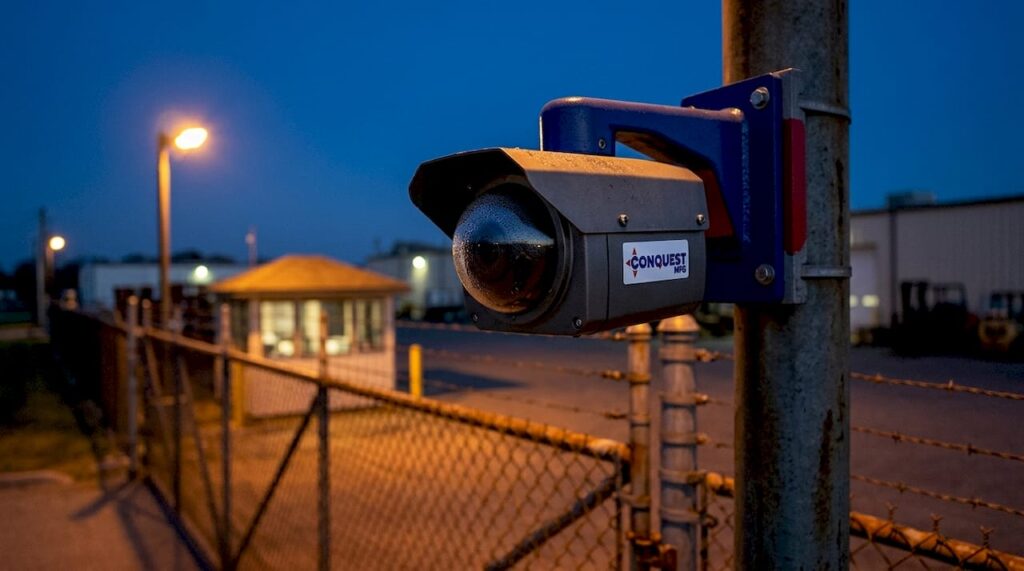
Surveillance equipment is defined as any technology deployed to monitor, record, and analyze activity across a physical environment for the purpose of protecting assets, deterring threats, and supporting operational decisions. Understanding why surveillance equipment is vital goes beyond crime prevention. Modern systems built on AI-powered cameras, edge computing, and centralized monitoring platforms now give decision-makers in construction, manufacturing, retail, and industrial operations a real-time intelligence layer that passive recording never could. The difference between watching and acting is where the real value lives.
Why surveillance equipment is vital for crime prevention
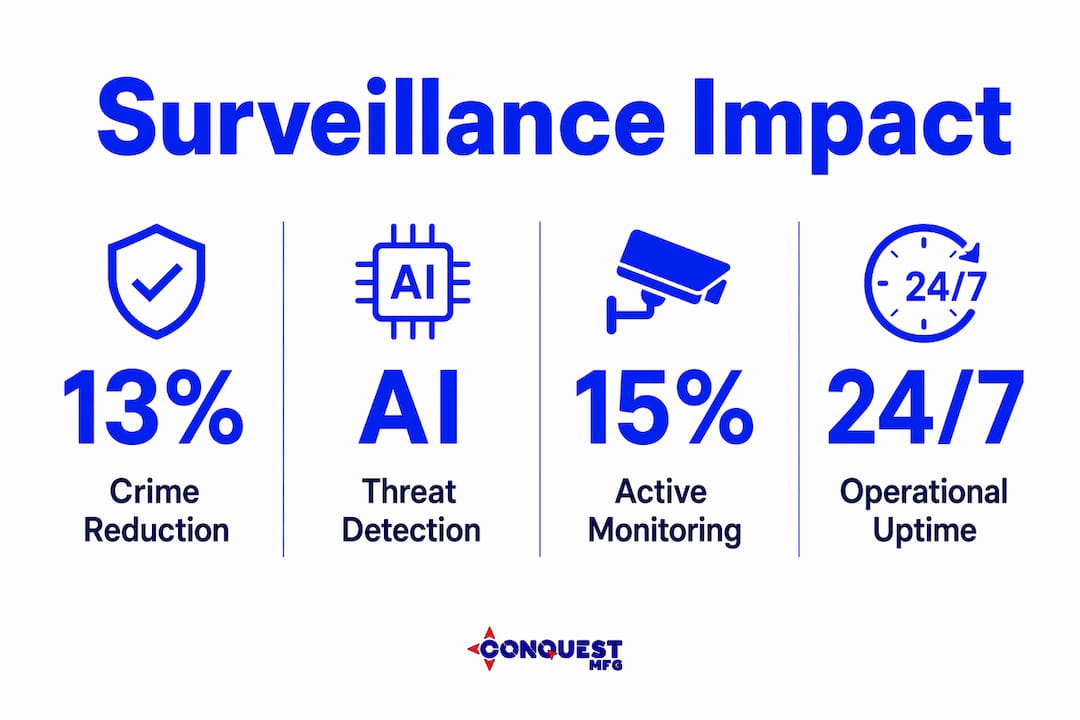
The evidence on surveillance and crime reduction is direct. CCTV reduces overall crime by about 13%, and that figure climbs to 34% when cameras are paired with complementary measures like improved lighting and visible signage. That gap between 13% and 34% tells you something critical: a camera alone is a deterrent, but a camera inside a coordinated security system is a force multiplier.
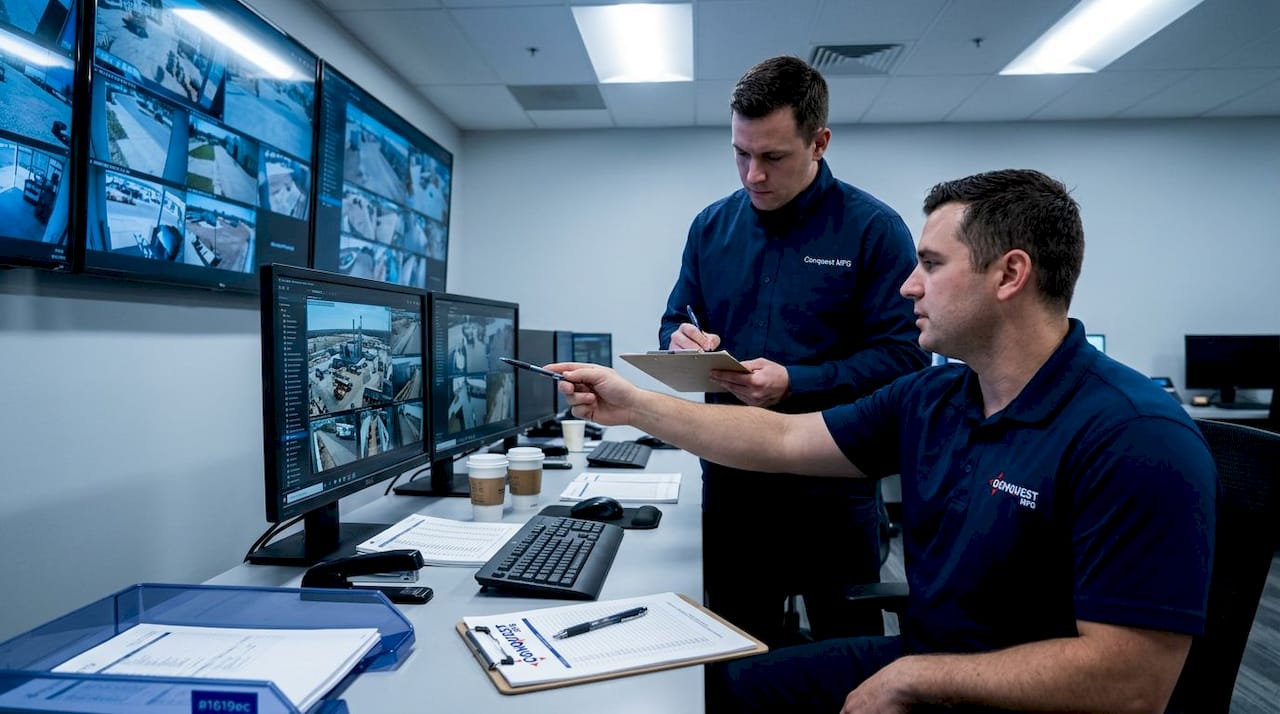
The distinction between active and passive surveillance is equally significant. Actively monitored CCTV reduces crime about 15% more than systems that simply record for later review. This means the monitoring center model, where trained operators watch live feeds and can issue audio warnings or dispatch security personnel, produces measurably better outcomes than footage that only gets reviewed after an incident. Decision-makers who treat surveillance as a recording archive are leaving a substantial share of its protective value unused.
Consider what active monitoring actually enables:
- Real-time audio warnings that interrupt criminal behavior before it completes
- Immediate dispatch of security or law enforcement based on live observation
- Visible camera placement and signage that signals active monitoring to potential offenders
- Documented evidence chains that support prosecution and insurance claims
“The value of surveillance amplifies when it is part of a coordinated, layered security approach rather than a standalone system.” This principle applies equally to a retail distribution center, a concrete batch plant, or a remote oil field installation.
Cameras combined with good lighting produce stronger reductions in property crime, particularly at night. For industrial sites operating across multiple shifts, this layered approach is not optional. It is the baseline for effective perimeter security.
How AI and edge computing transform modern surveillance
Traditional surveillance systems captured footage and stored it. AI-powered surveillance systems analyze footage as it happens. AI and edge computing enable cameras to analyze and predict activities in real time, triggering alerts and facilitating responses before an incident escalates. This transition from reactive documentation to proactive prevention is the single most significant shift in the role of surveillance technology over the past decade.
Edge computing moves the processing power directly to the camera rather than routing footage to a distant server. The result is faster detection, lower bandwidth consumption, and the ability to operate effectively even in remote locations with limited connectivity. For construction sites, warehouses, and industrial facilities where network infrastructure may be inconsistent, this matters enormously.
| Feature | Traditional surveillance | AI-powered surveillance |
|---|---|---|
| Threat detection | Manual review after the fact | Automated real-time alerts |
| False alarm rate | High, operator fatigue common | Reduced by accurate threat classification |
| Response capability | Passive recording only | Active alerts, audio warnings, dispatch |
| Remote site suitability | Limited by bandwidth needs | Edge processing enables off-grid use |
| Operational insight | None beyond security footage | Behavioral analytics, workflow data |
AI-powered surveillance reduces false alarms by accurately distinguishing genuine threats from routine activity. Fewer false alarms mean operators stay focused on real events rather than chasing noise. In high-volume environments like warehouses or manufacturing floors, this accuracy directly affects how quickly your team responds when something actually goes wrong.
Pro Tip: When evaluating AI camera systems, ask vendors specifically about their false positive rates in environments similar to yours. A system trained on retail footage may perform poorly on a construction site with heavy machinery and variable lighting.
Operational benefits beyond security
Surveillance systems built for industrial and commercial environments do more than prevent theft. They generate data that improves how facilities operate. When a site manager can review footage to understand how a workflow bottleneck developed or why a safety incident occurred, surveillance becomes an operational tool, not just a security one.
Here is how decision-makers are using surveillance data operationally:
- Incident reconstruction. Footage provides an objective record of equipment failures, workplace accidents, and contractor disputes, reducing liability exposure and accelerating insurance claims.
- Workflow analysis. Reviewing camera feeds from loading docks, production lines, or batch plant operations reveals inefficiencies that are invisible from a management office.
- Compliance verification. Surveillance confirms that safety protocols, PPE requirements, and access control procedures are being followed consistently across shifts.
- Multi-site coordination. Centralized monitoring platforms allow a single security team to manage coverage across multiple facilities without proportionally increasing headcount.
Centralized device health monitoring platforms ensure surveillance uptime and provide prompt alerts on critical failures. Hanwha Vision’s HealthPro platform, for example, monitors camera status across an entire network and flags issues before they result in coverage gaps. A camera that goes offline undetected is worse than no camera at all, because it creates a false sense of security.
Pro Tip: Schedule quarterly audits of your surveillance system’s device health reports. Cameras in dusty industrial environments, particularly near concrete batch plants or aggregate handling areas, are prone to lens fouling and housing seal failures that degrade image quality long before the camera stops transmitting.
For manufacturing and construction operations, reviewing your industrial equipment safety checklist alongside your surveillance coverage map is a practical way to identify blind spots in both physical safety and monitoring.
Balancing surveillance benefits with privacy and legal obligations
Surveillance equipment delivers security and operational value, but deploying it without governance creates legal and reputational risk. Footage captured by surveillance cameras is personal data and must comply with data protection regulations, including requirements for a lawful basis and defined retention limits. This applies whether you are operating under US state privacy laws, GDPR-aligned frameworks, or sector-specific regulations.
Pervasive or arbitrary surveillance can create chilling effects that undermine civic freedoms and mental well-being. UN human rights experts have specifically called for safeguards against systematic digital interference. For employers, this translates to a practical obligation: surveillance of workers must be proportionate, transparent, and purposeful.
Digital surveillance can have both positive and negative effects on workers’ physical health, safety, and mental health depending on how it is designed and communicated. The US Government Accountability Office’s review of digital surveillance effects found that transparency and worker awareness are the primary factors separating beneficial monitoring from harmful surveillance.
Best practices for responsible deployment include:
- Publishing a clear surveillance policy that explains what is monitored, why, and how footage is stored
- Limiting camera placement to areas where monitoring is operationally justified
- Setting defined retention periods and enforcing automatic deletion of footage beyond that window
- Providing workers and visitors with visible notice of surveillance through signage
- Conducting periodic reviews to confirm that surveillance scope remains proportionate to the stated purpose
Privacy-by-design principles not only keep you legally compliant but build trust with employees, contractors, and the public. That trust is a business asset, not just a legal checkbox.
Choosing and managing surveillance equipment for long-term effectiveness
Selecting the right surveillance equipment for your environment requires matching technology to operational context. A fixed dome camera suited for a retail floor performs differently than a bullet camera on a construction perimeter or a mobile surveillance tower deployed to a remote batch plant site. The equipment type, mounting position, and monitoring configuration all affect whether your system delivers on its security and operational promises.
Key considerations for decision-makers evaluating surveillance systems:
- Coverage continuity. Identify every access point, asset storage area, and high-risk zone before specifying camera positions. Gaps in coverage are the most common failure mode in surveillance deployments.
- Environmental durability. Industrial environments demand cameras rated for dust, moisture, vibration, and temperature extremes. IP67 or IP68 ratings are the baseline for outdoor industrial use.
- Scalability. Choose platforms that support adding cameras and sites without requiring a full system replacement. Proprietary ecosystems that lock you into a single vendor create long-term cost and flexibility problems.
- Monitoring model. Decide upfront whether your system will be actively monitored, passively recorded, or a hybrid. This decision drives staffing, technology, and response protocol requirements.
- Maintenance planning. Budget for regular cleaning, firmware updates, and hardware replacement cycles. Surveillance systems that are not maintained degrade silently.
Common pitfalls include underspecifying storage capacity, failing to test night vision performance before installation, and neglecting to integrate surveillance with access control and alarm systems. A layered approach, where cameras, lighting, access control, and monitoring work together, consistently outperforms any single technology deployed in isolation.
Key takeaways
Surveillance equipment is vital because it actively reduces crime, supports operational decisions, and protects assets when deployed as part of a coordinated, actively monitored, and properly governed security system.
| Point | Details |
|---|---|
| Active monitoring multiplies value | Actively monitored CCTV reduces crime 15% more than passive systems, making monitoring model a critical decision. |
| AI transforms detection capability | Edge-computing cameras detect and alert on real threats in real time, reducing false alarms and response delays. |
| Operational data is a secondary benefit | Surveillance footage supports incident reconstruction, workflow analysis, and compliance verification beyond security. |
| Governance is non-negotiable | Data retention policies, worker transparency, and proportionate deployment protect legal standing and employee trust. |
| Layered systems outperform standalone cameras | Combining CCTV with lighting, signage, and access control raises crime reduction from 13% to 34%. |
Why active surveillance is the standard every industrial operation should meet
I have spent years working with industrial and manufacturing clients who installed cameras and assumed the job was done. The cameras were there. The footage was recording. And then an incident happened, and the investigation revealed a camera pointed at the wrong angle, a hard drive that had been full for three weeks, or a system that had never been integrated with the site’s access control. The equipment existed. The security did not.
The shift to active, AI-assisted monitoring is not about buying more expensive cameras. It is about committing to a model where surveillance is a live operational tool rather than a post-incident archive. Decision-makers who make that commitment get measurably better outcomes. The data is clear on this. The gap between passive recording and active monitoring is 15 percentage points in crime reduction. That is not a marginal improvement. That is a different category of protection.
The ethical dimension matters too. Surveillance deployed without transparency erodes the trust of the workforce it is meant to protect. The most effective programs I have seen are the ones where employees understand the purpose, see the signage, and know the retention policy. Transparency does not weaken surveillance. It makes the entire program more defensible and more durable.
My recommendation to any decision-maker reading this: audit your current system against the criteria in this article before you spend a dollar on new equipment. You may find that reconfiguring what you already have, adding active monitoring, and closing coverage gaps delivers more value than a full technology refresh.
— Peter
How Conquestmfgusa supports your security infrastructure
Conquestmfgusa designs and manufactures equipment built for demanding industrial environments, including Portable Rapid-Deployed Video Surveillance Towers purpose-built for construction sites, batch plant operations, and remote industrial locations where fixed infrastructure is not an option.

Our surveillance towers deploy quickly, operate independently of fixed power and network infrastructure, and integrate with active monitoring workflows. For operations that need flexible, reliable security coverage across multiple sites or temporary locations, they provide the kind of protection that fixed systems cannot. Explore our construction industry solutions to see how our equipment supports security and operational control from the ground up. Contact Conquestmfgusa to discuss a configuration tailored to your site requirements.
FAQ
What is the most effective type of surveillance for industrial sites?
Actively monitored systems that combine fixed cameras, mobile surveillance towers, and AI-powered detection consistently outperform passive recording setups. Crime reduction rates rise from 13% with cameras alone to 34% when surveillance is paired with lighting, signage, and active monitoring.
How does AI improve surveillance system performance?
AI-powered cameras analyze footage in real time and distinguish genuine threats from routine activity, reducing false alarms and keeping operators focused on actual security events. Edge computing allows this processing to occur on the camera itself, making the system effective even in remote or low-connectivity environments.
What legal obligations apply to surveillance equipment deployment?
Surveillance footage is classified as personal data under most data protection frameworks, requiring a lawful basis for collection, defined retention limits, and visible notice to individuals being recorded. Organizations should publish a clear surveillance policy and conduct periodic reviews to confirm that monitoring scope remains proportionate.
Why does active monitoring outperform passive recording?
Actively monitored CCTV allows operators to intervene during an incident through audio warnings or security dispatch, rather than reviewing footage after the fact. This real-time intervention capability is the primary reason active systems reduce crime approximately 15% more than passive recording alone.
How often should surveillance equipment be maintained?
Industrial surveillance systems should be audited quarterly at minimum, with particular attention to lens condition, storage capacity, firmware currency, and device health alerts. Cameras in dusty or high-vibration environments, such as concrete production or aggregate handling sites, require more frequent physical inspection to maintain image quality and uptime.