
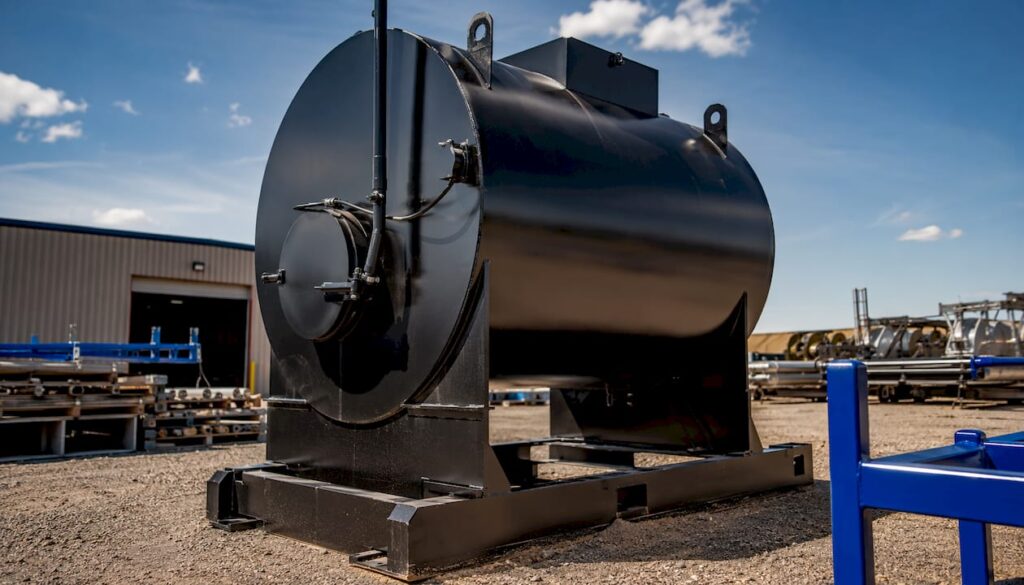
Steel tanks with factory-applied coatings are the right default for most aggressive or variable industrial waste applications in the U.S. Fusion Bonded Epoxy (FBE) handles a wide pH range suitable for most waste streams, while glass-fused-to-steel (GFS) provides extended chemical resistance for more demanding streams. Pair that chemical resilience with modular bolted construction that relocates or expands without hot work, and steel’s total cost of ownership (TCO) consistently beats poured concrete and fiberglass-reinforced plastic (FRP) over a full asset life.
Quick suitability check — steel is likely your best fit when:
- Waste pH falls outside the range that uncoated alternatives typically tolerate
- H2S or microbial-induced corrosion (MIC) risk is present in the headspace
- The site requires future capacity expansion or tank relocation
- Secondary containment, leak detection, and venting must be integrated at the factory
Pro Tip: Insist on separate lining specifications for headspace and immersion zones, and require factory non-destructive holiday testing reports before accepting any shipment.
Table of Contents
- What should your RFQ specify for steel industrial waste tanks?
- Which coatings make steel compatible with aggressive waste streams?
- What failure modes and compliance pitfalls should U.S. buyers avoid?
- Why does lifecycle cost matter more than purchase price?
- Steel vs. other materials: which fits your waste application?
- How Conquest Mfg supports your industrial waste containment needs
- Key Takeaways
- Ready to spec your custom steel tank? Contact Conquest Mfg
- Standards, data references, and useful U.S. regulatory sources
What should your RFQ specify for steel industrial waste tanks?
Getting the spec right at the RFQ stage prevents costly field modifications. The table below gives procurement teams a working reference for plate thickness, joint materials, and factory QC requirements by application type.

| Spec Category | Typical Range / Requirement | Procurement Checkoff |
|---|---|---|
| Plate thickness | — | Confirm corrosion allowance is included |
| Corrosion allowance | — | Require finite element analysis reference |
| Gasket material | EPDM (pH 4–10), Viton (pH 1–13+) | Match to waste chemistry data sheet. For waste with pH approaching 1.0 or 14.0, confirm gasket compatibility through manufacturer data, as lining options (GFS) may cover pH 1.0–14.0 but gaskets should be individually verified. |
| Fastener grade | — | Specify torque records in QC package |
| Surface prep | SSPC SP-10 Near-White Blast | Require photographic documentation |
| Holiday testing | Complete dielectric sweep per panel | Demand panel serial numbers tied to QC records |
| Secondary containment | Bunding to over tank volume | Confirm leak detection sensor ports are factory-installed |
Beyond the table, require that every panel carries a traceable serial number mapped to factory QC records. Factory holiday testing eliminates microscopic coating voids that cause sub-film corrosion long before visible failure appears. Venting and access specifications should also be locked in at the RFQ stage: specify vent sizing for your maximum fill rate, and confirm that manway locations align with your maintenance workflow.
Pro Tip: Demand that the vendor supply panel serial numbers that map directly to factory QC records. If a supplier cannot provide traceable holiday test documentation, treat that as a disqualifying gap.
Which coatings make steel compatible with aggressive waste streams?
Coating selection is where most procurement errors happen. A single generic lining rarely covers the full exposure profile of an industrial waste tank.
Procurement steps to match your waste chemistry to the right coating:
- Compile a complete chemical profile of your waste stream, including pH range, H2S concentration, suspended solids content, and temperature extremes.
- Request pH test reports or chemical attack simulations from the coating manufacturer for your specific compounds.
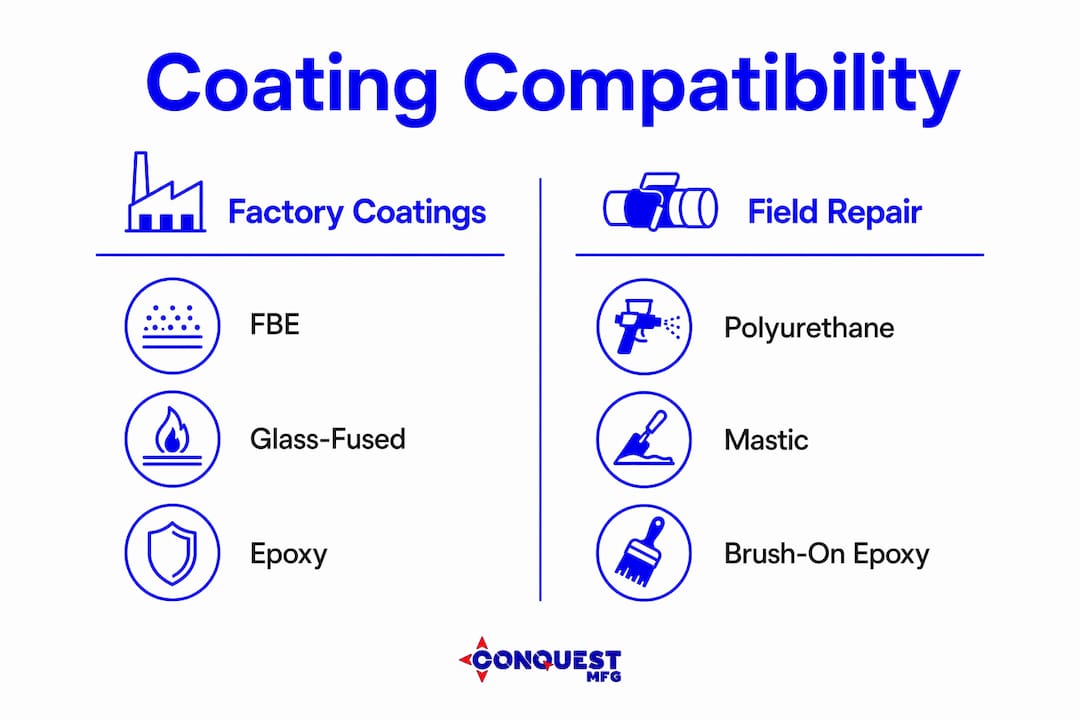
- Specify FBE for streams in the pH 2–13 range; specify GFS where pH approaches 1.0 or 14.0, or where abrasion resistance is critical.
- Write separate lining specs for headspace and immersion zones. Headspace corrosion from H2S and MIC often exceeds submerged-surface attack rates, so the two zones need different systems.
- Require factory cure method documentation (temperature, dwell time, and cure verification) for every coating batch.
- Confirm 100% holiday/dielectric testing thresholds in the purchase order before fabrication begins.
Coating pH Quick Reference
FBE: rated pH 2–13 (typical factory-applied, immersion service)
Glass-fused-to-steel: pH 1.0–14.0 (extreme chemical stability, fired ceramic bond)
Both require separate headspace lining specs when H2S or vapor-phase corrosion is present.
Coating selection must be matched to the exact chemical profile and exposure zones. A single universal lining applied to both headspace and immersion areas is one of the most common and expensive specification errors in industrial waste storage.
What failure modes and compliance pitfalls should U.S. buyers avoid?
Steel tanks fail for predictable reasons, and most of those reasons are addressable at the specification stage.
Common failure modes:
- Under-specified coating: A lining rated for pH 5–9 applied to a pH 2 waste stream will degrade within months.
- Headspace MIC: H2S condensation attacks unprotected steel and concrete above the liquid line faster than submerged surfaces.
- Abrasive solids: High-solids slurries erode thin linings; specify abrasion-resistant topcoats or GFS for these streams.
- Mechanical impact damage: Field impacts dent steel rather than crack it (unlike FRP), but dents that breach the coating create corrosion initiation points requiring prompt repair.
U.S. Regulatory Touchpoints
EPA RCRA (40 CFR Part 264/265) governs hazardous waste storage tank standards, including secondary containment, inspection frequency, and recordkeeping. SPCC (40 CFR Part 112) applies when oil-containing waste is stored above threshold quantities. Both programs require documented inspection logs and written response procedures. Consult the EPA’s current guidance and a qualified environmental professional for your specific waste classification and storage volume.
The number-one enforcement trigger is poor waste management, not tank material. Mislabeled containers, open lids, and incompatible wastes stored together generate more EPA enforcement actions than coating failures. Your liquid waste equipment checklist and operations SOP must address labeling, segregation, and container closure protocols as rigorously as the tank specification itself.
Pro Tip: Include your operations SOP and inspection checklist in the RFQ. Suppliers who see your maintenance workflow can design fittings, access points, and vent locations to match it, reducing field modifications after delivery.
Why does lifecycle cost matter more than purchase price?
The lowest-bid tank rarely delivers the lowest lifetime cost. Bolted steel tanks avoid long site curing, reduce hot-work safety risk during expansion, and allow ring additions without replacing the entire structure. Those factors shift the TCO calculation decisively in steel’s favor versus poured concrete.
Inspection schedule template:
| Milestone | Activity | Frequency |
|---|---|---|
| Factory baseline | Holiday testing, coating cure verification, panel QC sign-off | Pre-shipment |
| Post-installation | Visual inspection, gasket torque check, secondary containment test | Within a short period |
| Annual inspection | Full interior visual, holiday spot-check, vent and fitting integrity | Regularly each year |
| Relining assessment | Coating thickness measurement, adhesion test | Every several years |
| Cathodic protection check | Potential measurement (where applicable) | Regularly each year |
Maintenance priorities ranked by cost impact:
- Coating touch-up at mechanical damage points before corrosion initiates
- Gasket replacement on a schedule matched to chemical exposure (Viton typically outlasts EPDM in aggressive streams)
- Headspace gas monitoring to detect H2S buildup before it accelerates MIC
- Cathodic protection verification for buried or partially buried installations
- Spare-parts inventory for gaskets, vent assemblies, and level sensors to minimize unplanned downtime
Tracking these activities in a maintenance management system creates the documented inspection record that EPA RCRA and SPCC programs expect. Gaps in that record are what inspectors cite, not the tank material itself.
Steel vs. other materials: which fits your waste application?
Steel’s ductility and impact resistance outperform FRP under field stress. Steel dents rather than cracks or shatters, making it the safer choice for transport exposure and active construction or oilfield sites.
| Decision Axis | Steel (coated) | Aluminum | FRP | Concrete |
|---|---|---|---|---|
| Chemical resistance | pH 1.0–14.0 with GFS; pH 2–13 with FBE | Limited (avoid strong acids/bases) | Good for mild streams | Moderate; degrades below pH 5 |
| Impact resistance | High (ductile, dents) | Moderate | Low (brittle fracture) | Low (cracks) |
| Mobility / relocatability | High (bolted modular) | High (lighter weight) | Moderate | Very low (fixed) |
| Repairability | High (weld, patch, reline) | Moderate | Difficult | Difficult |
| Inspection difficulty | Low (accessible panels) | Low | Moderate | High |
| Expected service life | Several decades with maintenance | Multiple decades | About two decades | Several decades (fixed) |
Decision rules:
- Choose steel when you need wide chemical compatibility, mechanical durability, field repairability, and the option to relocate or expand. It is the default for construction and oilfield waste.
- Consider aluminum when transport weight is the binding constraint and waste chemistry is mild. Review the steel vs. aluminum tradeoffs for your specific fleet before committing.
- FRP suits light-duty, non-aggressive streams in fixed installations where weight matters and impact risk is low.
- Concrete works for permanent, high-volume basins where relocation is never required and pH stays above 5.
How Conquest Mfg supports your industrial waste containment needs
Conquest Mfg manufactures custom steel vacuum tank trailers, frac tank trailers, water tank trailers, and stationary containment solutions for construction, transportation, and oilfield operators across the U.S. Every unit is built to your chemical profile, site constraints, and regulatory requirements.
Typical customization options buyers request:
- Internal lining system matched to waste pH and H2S exposure (FBE or GFS)
- Separate headspace treatment specified independently from immersion lining
- Sample-porting and instrumentation packages (level sensors, pressure/vacuum gauges)
- Modular ring expansion provisions for future capacity growth
- Secondary containment integration and factory-installed leak detection ports
RFQ checklist for Conquest Mfg:
- Complete chemical profile of your waste stream (pH range, H2S concentration, solids content, temperature)
- Required capacity and design flow rate
- Site constraints (footprint, access, transport route limits)
- Preferred coating type and any existing facility standards
- Required factory test reports (holiday testing, cure records, panel QC documentation)
- Regulatory classification of waste (RCRA hazardous or non-hazardous, SPCC applicability)
Contact Conquest Mfg with your chemical datasheet and site parameters to begin the specification process. The types of vacuum tanks available cover a wide range of liquid waste transport and stationary containment needs.
Key Takeaways
Steel tanks with factory-applied coatings deliver the widest chemical compatibility, the strongest field repairability, and the lowest TCO for most industrial waste applications in the U.S. when procurement teams specify the right lining, demand factory QC documentation, and maintain a documented inspection record.
| Point | Details |
|---|---|
| Coating pH ranges | FBE covers pH 2–13; glass-fused-to-steel covers pH 1.0–14.0 for extreme streams. |
| Zone-specific lining | Specify separate headspace and immersion linings; headspace H2S attack often exceeds submerged rates. |
| Compliance priority | EPA RCRA and SPCC require documented inspections; mislabeling and open containers trigger more enforcement than tank material. |
| TCO over CAPEX | Bolted steel tanks are repairable, expandable, and relocatable, lowering lifetime cost versus concrete or FRP. |
| Conquest Mfg capability | Custom steel vacuum, frac, and water tank trailers built to your chemical profile, with factory holiday testing and full QC documentation. |
The detail most buyers miss on steel containment systems
Specifying the right coating is necessary but not sufficient. The detail that consistently gets overlooked is the transition zone between headspace and immersion, where condensation cycles and vapor-phase chemistry create the most aggressive attack conditions in the entire tank. Most buyers write a single lining spec and assume it covers both zones. It rarely does.
The other gap is post-install commissioning. Before accepting delivery, require a wet commissioning check: fill the tank to operating level, hold for 24 hours, and inspect every fitting, gasket, and weld seam for seepage. Require the supplier to be present or to provide a written acceptance protocol. That single step catches installation defects that would otherwise surface as warranty disputes months later.
Ready to spec your custom steel tank? Contact Conquest Mfg
Conquest Mfg builds custom steel containment solutions for buyers who cannot afford a specification error. For construction contractors, oilfield operators, and industrial facility managers, that means a tank engineered to your exact waste chemistry, with factory coating verification and full QC documentation included in the delivery package.
Getting a quote starts with your chemical datasheet. Prepare the following before reaching out:
- Waste stream chemical profile (pH, H2S, solids, temperature range)
- Required capacity and site footprint
- Regulatory classification (RCRA hazardous, SPCC-applicable, or non-hazardous)
- Preferred coating type and any existing facility standards
Visit the construction industry equipment page to review Conquest Mfg’s full range of steel tank trailers and containment solutions, or go directly to the vacuum tank maintenance workflow resource to understand what a properly specified maintenance program looks like before your RFQ goes out. Request a quote today and share your sample chemistry so Conquest Mfg can confirm the right coating specification for your application.
Standards, data references, and useful U.S. regulatory sources
Factory test documentation, coating pH data, and regulatory compliance expectations should all be verified against primary sources before finalizing any tank specification.
- AWWA D103: Standard for factory-coated bolted carbon steel tanks; governs design loads, coating requirements, and joint specifications for bolted steel storage.
- EPA RCRA (40 CFR Part 264/265): Hazardous waste storage tank standards covering secondary containment, inspection frequency, and recordkeeping. Access current guidance at epa.gov.
- EPA SPCC (40 CFR Part 112): Spill Prevention, Control, and Countermeasure rule for oil-containing waste storage above threshold quantities.
- STI/SPFA: Steel tank lifetime value guidance and mechanical property comparisons for procurement reference.
- SSPC SP-10: Near-white blast cleaning standard; require this as the minimum surface preparation specification in your RFQ.
- Holiday testing standard: Require 100% dielectric sweep per coating panel with results tied to panel serial numbers in the QC package.
- MPulse CMMS: Maintenance recordkeeping software that supports the documented inspection logs EPA RCRA and SPCC programs expect.
This article is general information for procurement planning purposes, not legal or environmental compliance advice. Confirm current regulatory requirements with the EPA or a qualified environmental professional for your specific waste classification, storage volume, and facility location.