
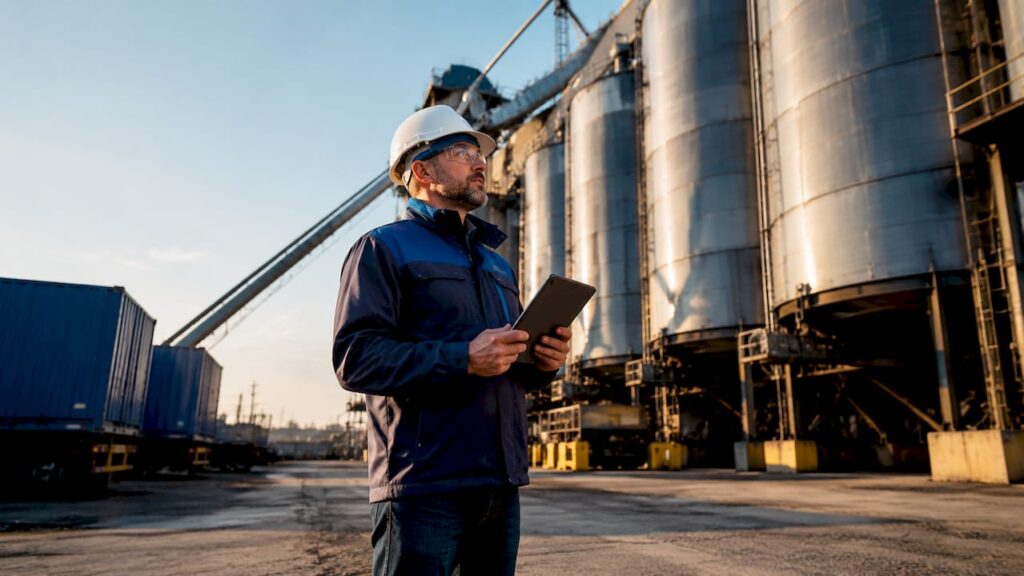
A bulk material transport workflow is the coordinated sequence of processes, equipment, and digital systems that move large volumes of industrial materials from initial unloading through storage to final delivery or production integration. Logistics managers who treat this as a single, connected system rather than a series of isolated steps consistently achieve lower handling costs, fewer delays, and better compliance outcomes. The five-stage handling process covering unloading, conveying, storage, feeding, and automation forms the accepted industry framework. Transportation Management Systems (TMS) sit at the center of modern workflow automation, replacing manual dispatch and spreadsheet reconciliation with real-time data. This guide breaks down each stage, the technology that ties them together, and the field-tested practices that separate efficient operations from costly ones.
What are the essential stages of a bulk material transport workflow?
A standard bulk handling workflow moves through five defined stages, and each one creates a dependency for the next. Skipping or underinvesting in any stage creates a bottleneck that compounds downstream.
Stage 1: Unloading and initial handling
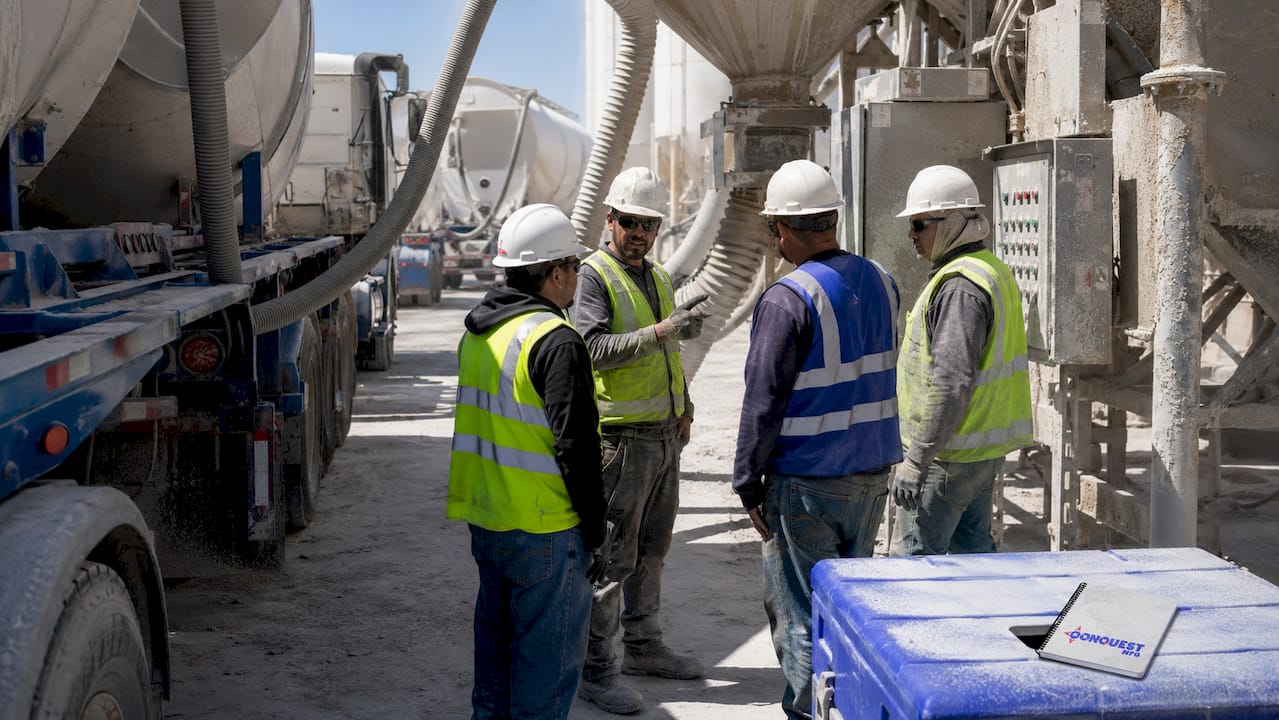
Unloading sets the pace for everything that follows. Dry bulk materials like cement, fly ash, and frac sand typically arrive by pneumatic trailer, bottom dump, or end dump. Liquid bulk materials arrive in vacuum tankers or ISO tanks. The unloading method must match the receiving infrastructure exactly. A mismatch here, such as a pressure-discharge trailer arriving at a gravity-fed hopper, stops the entire line.
Stage 2: Conveying
Two primary conveying technologies move bulk materials after unloading. Pneumatic conveying uses either negative pressure (vacuum) or positive air pressure through closed pipelines, making it the preferred choice for fine powders like cement and silica flour where contamination control matters. Mechanical conveying uses belt conveyors, screw conveyors, or bucket elevators for coarser, heavier materials like aggregates and grain. The right choice depends on material density, particle size, and required transfer distance.
Stage 3: Controlled storage
Silos, tanks, and hoppers hold material between process steps. Controlled storage is not passive. Bin activators, vibrators, and aeration pads prevent bridging and rat-holing in fine powders. For liquids, temperature control and agitation maintain product integrity. The role of bulk material handling in storage design directly affects throughput capacity and material quality at the point of use.
Stage 4: Automated feeding and dosing
Feeders and dosing systems meter material from storage into production at controlled rates. Loss-in-weight feeders, rotary valves, and screw feeders each suit different material characteristics. Accuracy at this stage directly affects product quality in concrete batching, chemical processing, and food manufacturing.
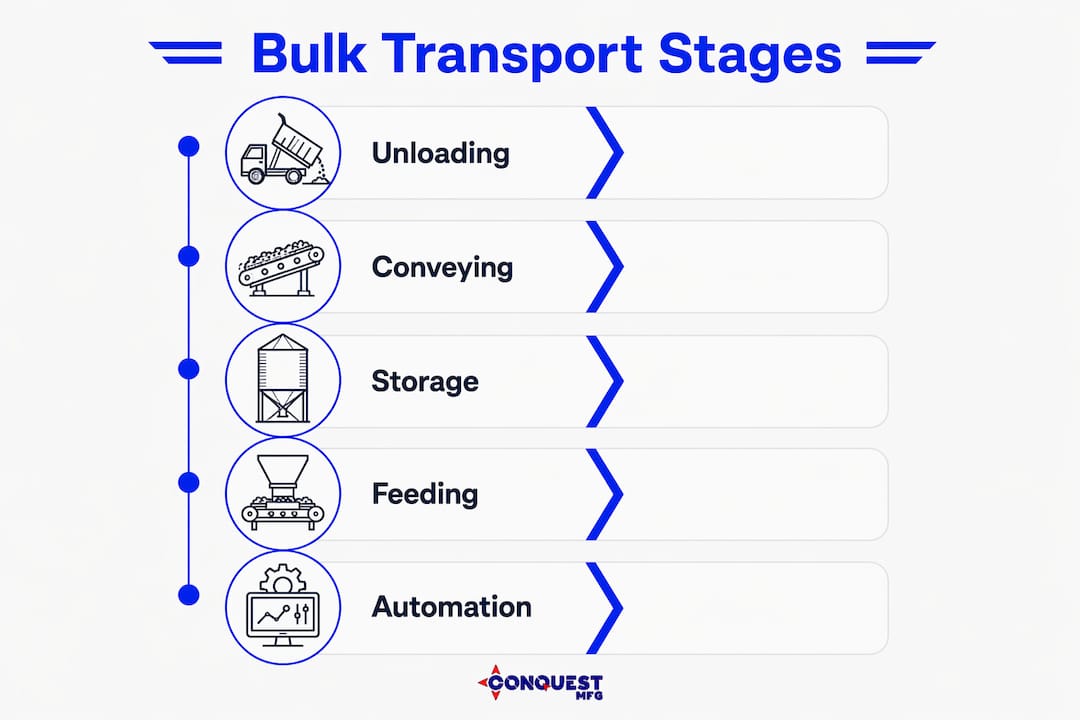
Stage 5: Process-integrated automation
Automation ties the previous four stages into a continuous flow. PLCs, SCADA systems, and TMS platforms monitor throughput, trigger replenishment, and flag deviations. Continuous uninterrupted flow is the design goal because every pause in material movement adds cost and contamination risk.
Pro Tip: Map your current workflow against these five stages before purchasing any new equipment. Most operations have one weak stage that limits the entire system, and identifying it first prevents expensive mismatches.
How can Transportation Management Systems (TMS) enhance bulk material transport workflows?
TMS platforms are the single most impactful technology upgrade available to bulk logistics operations today. A modern TMS reduces order preparation time from roughly 15 minutes per manual entry to seconds through automated scheduling and dispatch. That time saving scales significantly across high-frequency bulk shipments where dozens of loads move daily.
The core TMS capabilities that matter most for bulk operations include:
- Automated recurring orders. Bulk commodities like cement, sand, and liquid chemicals ship on predictable schedules. TMS platforms automate these repeat orders, eliminating manual re-entry and reducing dispatch errors.
- Real-time price recalculation. TMS replaces end-of-month spreadsheet reconciliation by linking driver field data to automated price recalculation modules. Invoices reflect actual delivered quantities, not estimated loads, which cuts billing disputes.
- Digital signature capture and compliance alerts. Manual paper dispatching is no longer viable under current regulatory scrutiny. Digital TMS platforms capture electronic proof of delivery, flag hazard classifications, and generate compliance documentation automatically.
- Real-time tracking and visibility. Dispatchers and customers see load location, estimated arrival, and any delay triggers in real time. This visibility reduces inbound calls and allows proactive rerouting.
- Field-to-office data integration. Driver inputs on weight, condition, and delivery confirmation feed directly into invoicing and inventory systems, closing the gap between field operations and back-office accounting.
Pro Tip: When configuring a TMS for bulk commodities, build separate workflow templates for each material type. Cement, frac sand, and liquid chemicals each carry different weight limits, discharge requirements, and compliance rules. A single generic template creates errors across all three.
The compliance dimension of TMS adoption deserves direct attention. Digital hazard classification alerts and electronic dispatch records now function as mandatory operational tools, not optional upgrades. Operations still running paper-based dispatch face increasing audit exposure and customer rejection at receiving sites. You can explore how digital compliance tools integrate with bulk transport equipment to understand the full picture.
What transport mode transitions and transloading considerations optimize bulk shipments?
Transloading is the process of transferring bulk materials from one transport mode to another at an intermediate facility. It exists because no single transport mode serves every origin-to-destination combination efficiently. Rail moves high volumes economically over long distances. Trucks provide last-mile flexibility. Tankers handle liquid bulk at scale. When these modes cannot connect directly, transloading bridges the gap.
Transloading services handle transfers between tankers, railcars, ISO tanks, and hopper trailers for both dry and liquid bulk commodities. Common materials processed through transload facilities include cement, potash, liquid chemicals, plastics pellets, and HAZMAT products. Each commodity type requires specific equipment: pressure-discharge systems for dry powders, pump-and-hose setups for liquids, and sealed transfer systems for hazardous materials.
The operational benefits of transloading are concrete:
- Regulatory compliance. HAZMAT shipments often require mode-specific certifications. Transloading allows each leg to use the appropriate certified carrier rather than forcing a single carrier to hold all permits.
- Seasonal volume management. Agricultural and construction bulk commodities spike seasonally. Transload facilities absorb volume surges that direct-haul networks cannot accommodate without adding permanent fleet capacity.
- Infrastructure flexibility. Not every plant or job site has rail access. Transloading converts rail economics into truck-accessible delivery without building new infrastructure.
- Reduced empty miles. Regional transload hubs allow carriers to reload closer to their home territory, cutting deadhead runs and improving fleet utilization.
The primary challenge in transloading is transfer time and contamination risk. Every additional handling step adds time and a potential contamination point. Facilities with dedicated equipment per commodity type and strict cleaning protocols between loads manage this risk most effectively.
What are common pitfalls and practical tips for optimizing bulk material transport workflows?
The most common workflow failures in bulk operations share a pattern: they are invisible until they become expensive. Identifying them early requires deliberate process review, not just faster equipment.
-
Dock cross-traffic is the most underestimated bottleneck. Intersecting inbound and outbound material flows at receiving docks inflate handling costs more than slow transport speeds do. A facility where inbound raw materials and outbound finished goods share the same dock lanes creates constant interference. The fix is a non-intersecting layout with dedicated inbound and outbound zones.
-
Failing to synchronize internal handling with outbound logistics. Material handling within a facility and logistics between facilities are distinct disciplines that must operate on the same schedule. When internal conveying or storage falls behind, outbound trucks wait. When trucks arrive early, storage overflows. Synchronization requires shared scheduling data, not just faster equipment on either side.
-
Skipping the capacity audit before automation. Rushing technology deployment without first auditing true mechanical, human, and digital capacity produces systems that fail under peak loads. A capacity audit identifies whether the constraint is a conveyor speed, a storage volume limit, or a staffing gap. Automation that addresses the wrong constraint wastes capital.
-
Accumulating unnecessary touch points. Every material transfer or waiting period adds cost and contamination risk. Workflows designed around continuous flow from unloading to storage to production consistently outperform those built around batch movement and intermediate staging.
“The goal is not to move material faster at each individual step. The goal is to remove the steps that should not exist at all.” This principle drives the most effective bulk workflow redesigns.
- Adopting technology in large, simultaneous rollouts. Phased adoption with pilot testing on one commodity or one route before full deployment allows teams to identify integration failures before they affect the entire operation. Start with the highest-volume, most predictable flow and expand from there.
Key takeaways
An efficient bulk material transport workflow requires integrating standardized handling stages, TMS automation, and deliberate mode transition planning to reduce costs and maintain compliance.
| Point | Details |
|---|---|
| Follow the five-stage framework | Structure your workflow around unloading, conveying, storage, feeding, and automation for consistent results. |
| Deploy TMS for automation | TMS cuts order prep from 15 minutes to seconds and replaces manual reconciliation with real-time invoicing. |
| Use transloading strategically | Transloading resolves mode incompatibilities, manages seasonal surges, and keeps HAZMAT shipments compliant. |
| Audit before automating | Run a capacity audit to identify true bottlenecks before investing in new technology or equipment. |
| Eliminate dock cross-traffic | Separate inbound and outbound material flows at the dock level to remove the most common hidden cost driver. |
What I’ve learned about bulk workflow improvements that most guides skip
The conversation around bulk material transport almost always gravitates toward equipment specs and software features. After working through enough real operations, the pattern that stands out is different. The technology is rarely the problem. The problem is deploying technology against a workflow that was never properly mapped.
I have seen operations invest in TMS platforms and then run them alongside the paper dispatch system “just in case.” That parallel operation defeats the purpose entirely. The efficiency gain from a TMS comes from full adoption, not partial use. The same applies to automation at the conveying and feeding stages. A new loss-in-weight feeder does not improve throughput if the silo above it still relies on manual level checks and phone calls to trigger refills.
The human factor matters more than most operations managers want to admit. Drivers, dock workers, and plant operators are the ones who catch the edge cases that software misses. Training them on why the new system works, not just how to use it, is what separates implementations that stick from ones that get abandoned after six months.
Iterative refinement is the correct model. Run the new workflow, measure it against the old baseline, identify the next constraint, and address it. The operations that achieve lasting efficiency gains treat workflow improvement as a continuous process, not a one-time project. The dry bulk handling operations guide from Conquest Mfg reflects this philosophy well, covering TMS integration alongside the physical handling stages rather than treating them as separate topics.
— Sam
How Conquest Mfg supports your bulk transport operations
Conquest Mfg builds the equipment that sits at the center of bulk material transport workflows across construction, oil, and industrial sectors in the USA.
The Conquest Mfg product line covers dry bulk pneumatic trailers for cement, fly ash, and frac sand transport, steel and aluminum vacuum tanks for liquid bulk, bottom dumps, end dumps, sand hoppers, and portable cement pig silo trailers. For concrete production operations, the batch plant equipment integrates directly with the storage and feeding stages of your handling workflow. Conquest Mfg also manufactures equipment for the oil industry and intermodal chassis for multi-mode transport operations. Explore the full construction and industrial equipment catalog or contact the team for a configuration matched to your exact operational requirements.
FAQ
What is a bulk material transport workflow?
A bulk material transport workflow is the integrated sequence of unloading, conveying, storage, feeding, and automated process control that moves large volumes of industrial materials from receipt to production or delivery. It combines physical equipment with digital management systems like TMS to maintain continuous, controlled material flow.
How does a TMS improve bulk transport efficiency?
A TMS automates recurring order scheduling, replaces manual dispatch with digital records, and links driver field data to real-time invoicing. This cuts order preparation time from roughly 15 minutes to seconds and eliminates end-of-month reconciliation errors.
What is transloading and when should you use it?
Transloading transfers bulk materials between incompatible transport modes, such as rail to truck or tanker to ISO tank, at an intermediate facility. Use it when direct-mode delivery is not possible due to infrastructure limits, HAZMAT compliance requirements, or seasonal volume surges.
What is the most common hidden cost in bulk material handling?
Dock cross-traffic, where inbound raw materials and outbound finished goods intersect at the same receiving area, is the most common hidden cost driver. It inflates handling time and labor costs more than slow transport speeds do, and it is corrected through layout redesign rather than equipment upgrades.
How do you start improving a bulk material transport workflow?
Start with a capacity audit to identify whether your primary constraint is mechanical, human, or digital. Map the existing workflow against the five standard stages, find the weakest stage, and address it before investing in automation or new equipment.