
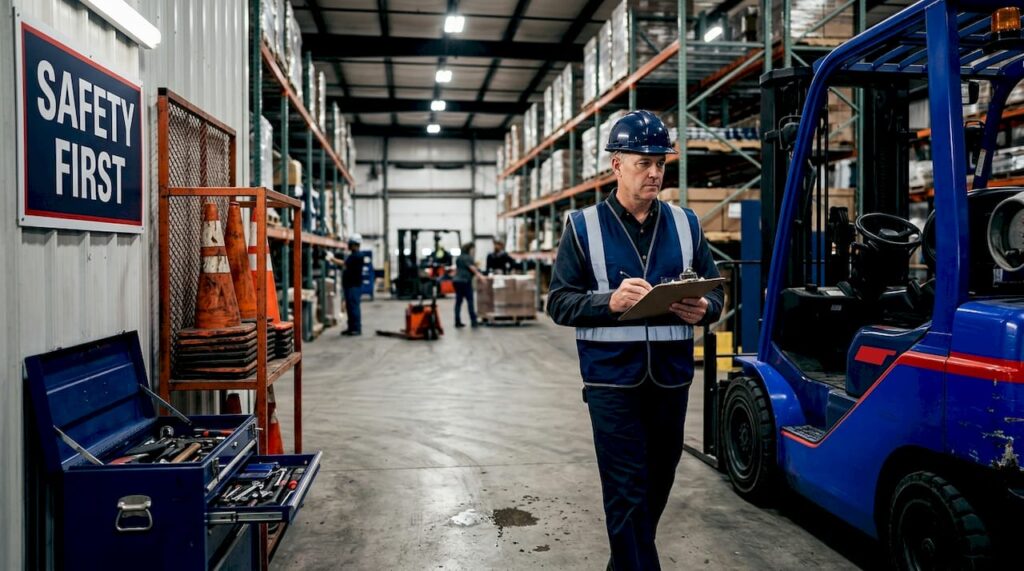
Equipment failures on industrial and construction sites are not minor inconveniences. They are life-threatening events that happen fast and leave little room for recovery. Construction accounted for nearly one-fifth of all U.S. workplace deaths in 2023, with vehicles and equipment cited as a leading cause at 23.2% of those fatalities. For safety officers and compliance managers, that number is a direct call to action. This article delivers OSHA-aligned, audit-ready checklist steps organized by equipment type, inspection frequency, and documentation requirements, covering forklifts, cranes, and general heavy equipment across construction, transportation, and manufacturing environments.
Table of Contents
- Key criteria for an effective industrial equipment safety checklist
- Essential daily checklists for powered industrial trucks (forklifts)
- Crane inspection checklist: Each-shift, monthly, and annual requirements
- Heavy equipment checklist summary: Frequency and documentation at a glance
- Why digital checklists and a proactive mindset are now essential
- Enhance your safety program with industry-leading solutions
- Frequently asked questions
Key Takeaways
| Point | Details |
|---|---|
| Daily checks required | All industrial equipment must be inspected daily before use to meet OSHA standards. |
| Proper documentation critical | Monthly and annual inspection records, and recommended daily logs, defend against compliance penalties. |
| Tailor checklists by equipment | Forklifts, cranes, and other machines have unique safety and inspection needs. |
| Digital tools improve safety | Switching to digital checklists speeds up issue resolution and streamlines audit processes. |
| Expert review prevents downtime | Hiring qualified inspectors and acting quickly on hazards reduces risks and operational losses. |
Key criteria for an effective industrial equipment safety checklist
With the risks established, let’s define what a checklist needs to cover to be both compliant and practical. A checklist that only skims the surface will not protect your team or hold up during an OSHA audit. The most effective checklists are structured, repeatable, and tailored to the specific equipment and site conditions your operators face every day.
Core safety items that every heavy equipment checklist should include are:
- Brakes and steering: Confirm full response and no unusual resistance or delay
- Horns and warning devices: Test audibility and function before each shift
- Lights and visibility aids: Check headlights, backup alarms, and mirrors
- Seat belts and operator restraints: Inspect for fraying, locking function, and secure mounting
- Fluid levels: Engine oil, hydraulic fluid, coolant, and brake fluid must all be within range
- Structural integrity: Inspect booms, frames, welds, and load-bearing components for cracks or deformation
- Tires or tracks: Check for wear, pressure, and damage
- Hydraulic systems: Look for leaks, hose damage, and slow or erratic cylinder response
- Site-specific hazards: Add items based on your specific job site, such as proximity to overhead power lines or confined spaces
OSHA mandates that inspections happen before each shift, and that any defects found are corrected before the equipment returns to service. Records of these inspections are required and must be retained to demonstrate compliance during audits. Paper logs still work, but digital inspection tools are increasingly preferred because they create time-stamped records, allow photo attachments, and generate reports automatically.
Pro Tip: Build site-specific hazard items directly into your checklist template. A general checklist is a starting point, not a finished product. If your site involves overhead crane operations near electrical lines or batch plant equipment with rotating components, those risks need dedicated check items.
Linking your checklist program to your broader safety infrastructure, including crane inspection guidelines and surveillance monitoring, creates a more complete picture of site safety and helps you catch issues before they escalate.
Essential daily checklists for powered industrial trucks (forklifts)
Once you know the core elements, it’s important to apply them precisely to different equipment. Forklifts are one of the most common sources of serious injury in warehouses, manufacturing facilities, and construction sites. They are also one of the most regulated.
OSHA 29 CFR 1910.178(q)(7) requires daily pre-shift inspections for all powered industrial trucks. If a truck is used across multiple shifts, it must be inspected at the start of each shift. Here is a practical, numbered daily checklist your operators should follow:
- Brakes: Test service brakes and parking brake for full, immediate response
- Steering: Check for play, resistance, or delayed response in the steering mechanism
- Horns and warning devices: Sound the horn and verify backup alarm function
- Lights: Confirm headlights, taillights, and strobe or warning lights are operational
- Tires: Inspect for cuts, embedded objects, low pressure, or excessive wear
- Forks and attachments: Look for cracks, bends, uneven wear, and secure mounting of any attachments
- Hydraulic system: Check for visible leaks under the truck, inspect hoses and cylinders, and test lift and tilt functions
- Fluid levels: Engine oil, hydraulic fluid, coolant, and battery water (for electric trucks)
- Seat belt and operator restraint bar: Verify the belt latches securely and the overhead guard is undamaged
- Safety decals and placards: Confirm load capacity plates and safety labels are present and legible
OSHA requirement: Under 29 CFR 1910.178(q)(7), powered industrial trucks must be examined before being placed in service each day or at the start of each shift for trucks used around the clock. Trucks found to be in need of repair, defective, or in any way unsafe must be taken out of service until restored to safe operating condition.
Documentation is not optional. Your records should capture the date, operator name, equipment ID, items checked, any defects found, and the corrective action taken. Keep daily logs for a minimum of 30 days on site, and retain records of any defect corrections for at least three months. These records are your first line of defense during an OSHA inspection.
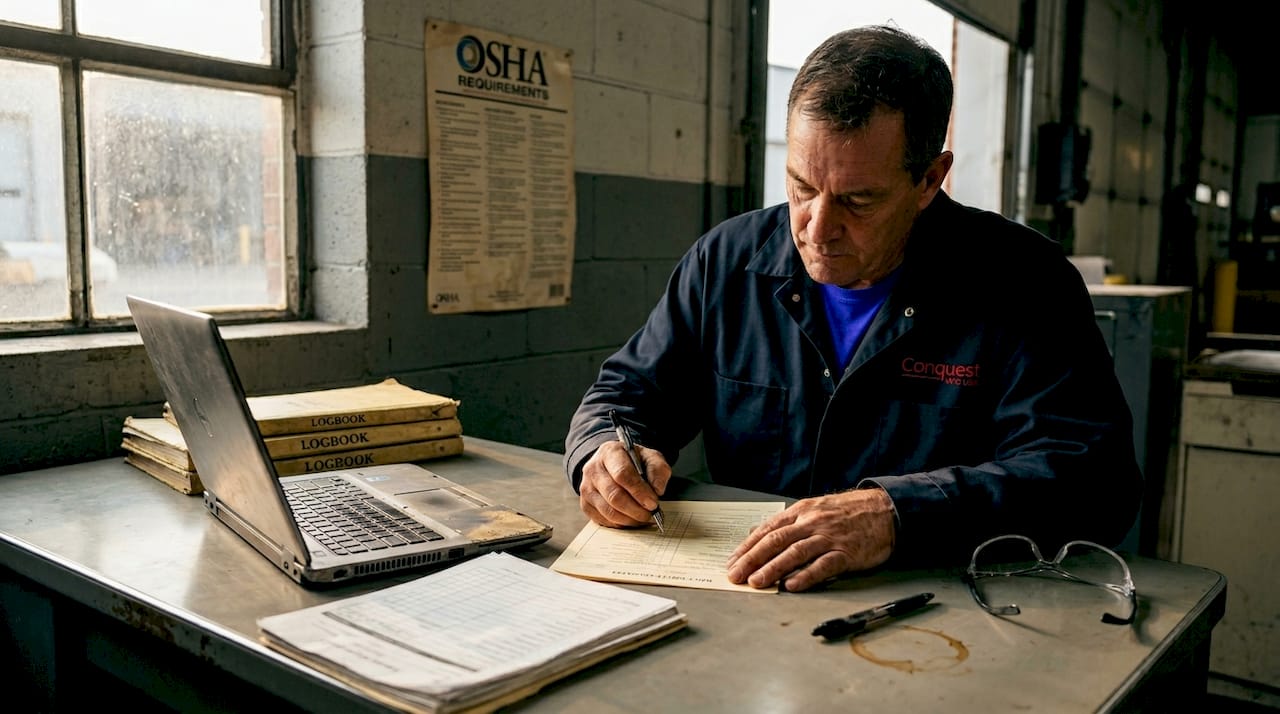
When a defect is found, the equipment comes out of service immediately. No exceptions. The defect is logged, a repair order is issued, and the equipment is re-inspected before returning to operation. Operator training and certification must also be current, because even a perfectly maintained forklift is dangerous in the hands of an untrained operator.
Pro Tip: Use a mobile inspection app that allows operators to attach photos of defects directly to the inspection record. When an OSHA compliance officer asks for documentation on a hydraulic leak that was found and repaired three weeks ago, a photo-timestamped record is far more defensible than a handwritten note.
Crane inspection checklist: Each-shift, monthly, and annual requirements
Similar detail is required for cranes, which have their own layered inspection rules and unique risk factors. A crane failure does not just injure the operator. It can bring down loads onto workers below, collapse nearby structures, and create cascading hazards across an entire job site.
OSHA 29 CFR 1926.1412 establishes a tiered inspection framework for cranes used in construction. Each tier has specific requirements and personnel qualifications.
| Inspection frequency | Who must inspect | Key items covered |
|---|---|---|
| Each shift (before use) | Competent person | Safety devices, wire rope, hooks, hydraulics, electrical systems, tires/tracks, structure |
| Monthly | Competent person | All shift items plus detailed review of wire rope condition, hook deformation, and load indicators |
| Annual | Qualified person | Full structural assessment, load testing review, all mechanical and electrical systems |
| Post-incident | Qualified person | Full inspection after any collision, overload, or structural contact |
The distinction between a “competent person” and a “qualified person” matters significantly here. A competent person can identify hazards and has the authority to take corrective action. A qualified person has specialized training, credentials, or experience that meets OSHA’s higher threshold for complex assessments. Annual crane inspections and post-incident reviews require that higher standard.
Key items your shift inspection must cover include:
- Wire rope and rigging: Look for kinks, broken wires, corrosion, and wear at contact points
- Hooks: Check for cracks, deformation, and functional safety latches
- Load indicators and moment limiters: Verify they are calibrated and operational
- Hydraulic systems: Inspect for leaks and confirm cylinder response
- Electrical systems: Check for exposed wiring, damaged controls, and proper grounding
- Structural components: Inspect boom sections, pins, and connecting hardware for cracks or wear
- Tires or outrigger pads: Confirm stability and proper deployment before any lift
Edge cases matter just as much as routine checks. After extreme weather events such as high winds, lightning, or heavy ice loading, a full inspection is required before the crane returns to service. Equipment that has been idle for three months or more also requires a full inspection before use. These are not optional steps. They are defined requirements under OSHA’s framework, and skipping them creates both safety risk and serious liability exposure.
Statistic: Crane-related incidents account for a significant share of construction fatalities each year, making manufacturing crane inspection checklists and rigorous shift-by-shift documentation a top priority for compliance managers overseeing multi-crane job sites.
Heavy equipment checklist summary: Frequency and documentation at a glance
With the equipment sections covered individually, here’s a side-by-side view and quick-reference summary for inspection routines. This table helps compliance managers build standardized programs across multiple equipment types and ensures nothing falls through the cracks.
| Equipment type | Daily/shift inspection | Monthly inspection | Annual inspection | Records required |
|---|---|---|---|---|
| Forklifts | Required (OSHA 29 CFR 1910.178) | Recommended | Recommended | Daily logs, defect corrections |
| Cranes (construction) | Required (OSHA 29 CFR 1926.1412) | Required | Required | Shift logs, monthly reports, annual certification |
| General heavy equipment | Required (best practice) | Recommended | Recommended | Daily logs, maintenance records |
| Concrete batch plant equipment | Required (site-specific) | Required | Required | Operational logs, maintenance history |
Inspection frequency standards confirm that daily pre-shift inspections are the baseline across all equipment types, with monthly and annual inspections layered on top depending on equipment complexity and regulatory classification.
Practical takeaways for maintaining a strong audit trail:
- Log every inspection, even when no defects are found. A clean record is still a record.
- Assign a unique equipment ID to every asset so records are traceable across operators and shifts.
- Date and sign every entry. Anonymous or undated records carry little weight during audits.
- Track corrective actions separately from inspection logs so you can demonstrate close-out timelines.
- Archive records digitally with automatic backups to prevent loss from paper damage or misplacement.
Pro Tip: Keep daily digital logs as your primary compliance defense. When an OSHA inspector requests documentation for a specific piece of equipment over a 90-day window, a searchable digital archive saves hours of scrambling and demonstrates a culture of accountability.
Why digital checklists and a proactive mindset are now essential
Here is something we have observed consistently across industrial and construction environments: organizations that treat safety checklists as a compliance checkbox tend to miss the real value. They fill out the form. They file the record. And then they are surprised when an incident happens despite having “done the inspections.”
The shift that actually reduces incidents is moving from reactive documentation to proactive resolution. A paper checklist filed in a binder does not alert a supervisor when a hydraulic hose is flagged for the third consecutive shift. A digital system does. Real-time safety monitoring tools that integrate with inspection workflows allow managers to see patterns across equipment and operators before those patterns become failures.
We also believe the “competent person” standard deserves more attention than it typically gets. Many organizations assign shift inspections to whoever is available rather than someone who genuinely understands what they are looking at. A competent person is not just someone who has read the checklist. It is someone who can recognize a marginal hydraulic hose, understand the difference between acceptable wire rope wear and a rejection criterion, and make a confident call to pull equipment from service.
The uncomfortable truth is that most inspection failures are not failures of the checklist. They are failures of the person holding it. Investing in inspector training, not just operator training, is one of the highest-return safety investments a compliance manager can make. Pair that with digital tools that create accountability and you have a system that actually works under pressure.
Enhance your safety program with industry-leading solutions
Your checklists and compliance protocols are only as strong as the equipment and infrastructure supporting them. For teams in construction, transportation, and manufacturing who want to move beyond basic compliance and build a genuinely reliable safety program, the right solutions make a measurable difference.

At Conquest MFG USA, we design and manufacture equipment built for demanding industrial environments, from concrete batch plants and bulk pneumatic trailers to Portable Rapid-Deployed Video Surveillance Towers that support real-time site monitoring. Our safety products for construction and transportation safety solutions are engineered to integrate with your existing compliance programs and reduce the operational gaps that lead to incidents. If you are ready to standardize your equipment safety protocols or explore how our solutions fit your specific operation, contact us today for a consultation.
Frequently asked questions
How often must industrial equipment safety checklists be completed?
OSHA requires daily pre-shift inspections as the baseline, with additional periodic inspections such as monthly and annual checks required based on equipment type and applicable regulation.
What records should be kept after a safety inspection?
You should maintain daily inspection logs on site and retain records of defect corrections for at least three months, with monthly and annual inspection reports archived for the duration of the equipment’s service life.
Who is responsible for conducting each-shift crane inspections?
A competent person must perform visual crane inspections at every shift, while monthly and annual inspections and post-incident reviews require a qualified person with specialized credentials.
What is the most common equipment failure hazard flagged in daily checks?
Hydraulic failures, brake deficiencies, and missing or non-functional safety devices are consistently among the top hazards identified during daily pre-shift inspections across forklift and heavy equipment categories.
Why are digital inspection checklists preferred?
Digital checklists provide real-time issue flagging, photo documentation, automatic time-stamping, and searchable audit records that paper-based systems simply cannot match during OSHA compliance reviews.