
Construction plant setup is defined as the coordinated process of mobilizing equipment, configuring site infrastructure, and positioning plant machinery to enable safe, compliant, and efficient construction operations. Getting this process right from day one separates projects that run on schedule from those that bleed cost overruns and safety violations. The construction plant setup explained in this guide covers every critical phase: site boundary verification, equipment layout planning, specialized machinery installation, and digital connectivity standards. Conquest Mfg manufactures the batch plants, semi trailers, and specialized equipment that project managers rely on when these decisions matter most.
What are the critical steps for mobilizing a construction site?
Site mobilization is the foundation of every successful construction plant setup. A poorly mobilized site forces expensive corrections later, including equipment repositioning, compliance retrofits, and schedule resets that compound daily.
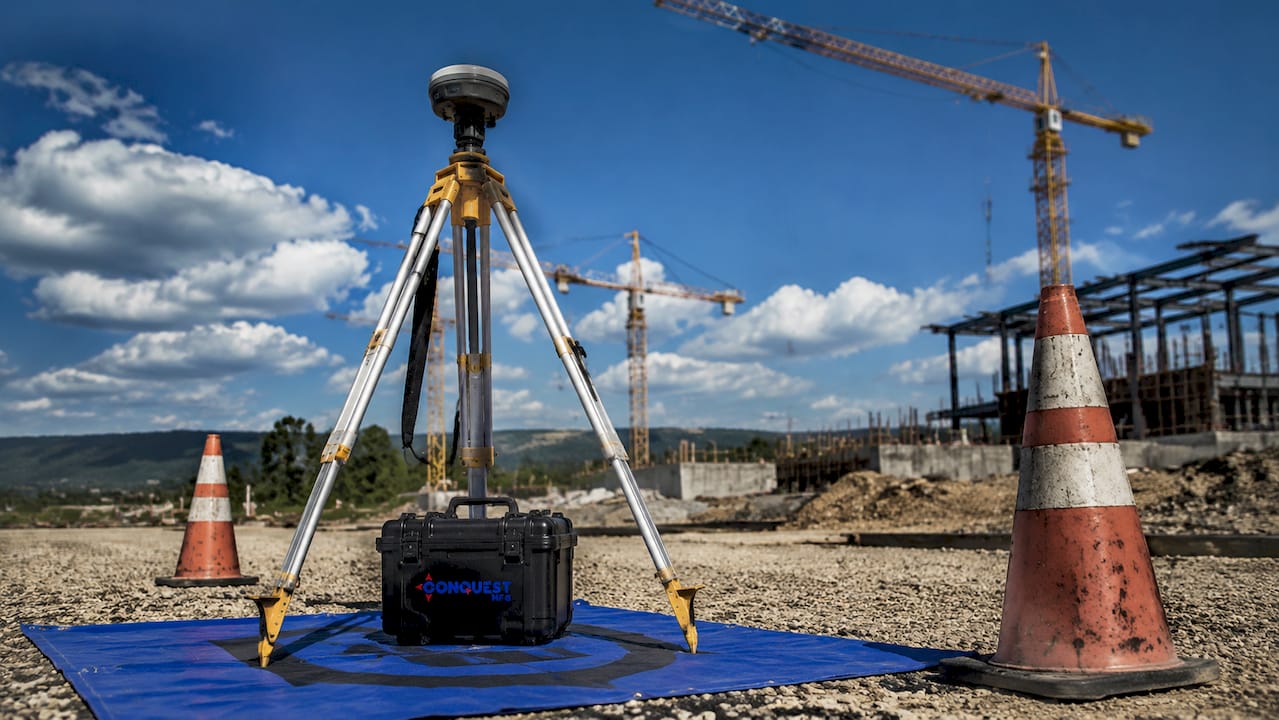
The first task is boundary verification. Site boundaries must be verified within a tolerance of ≤ 50 mm using GNSS or total station equipment before any work begins. That level of precision matters because even small boundary errors cause structural misalignment, permit violations, and neighbor disputes that halt progress.
Temporary fencing comes next. Fencing must stand at least 2.4 m high with posts spaced no more than 3.0 m apart. These specifications are not suggestions. They define the legal perimeter of your work zone and protect both workers and the public.
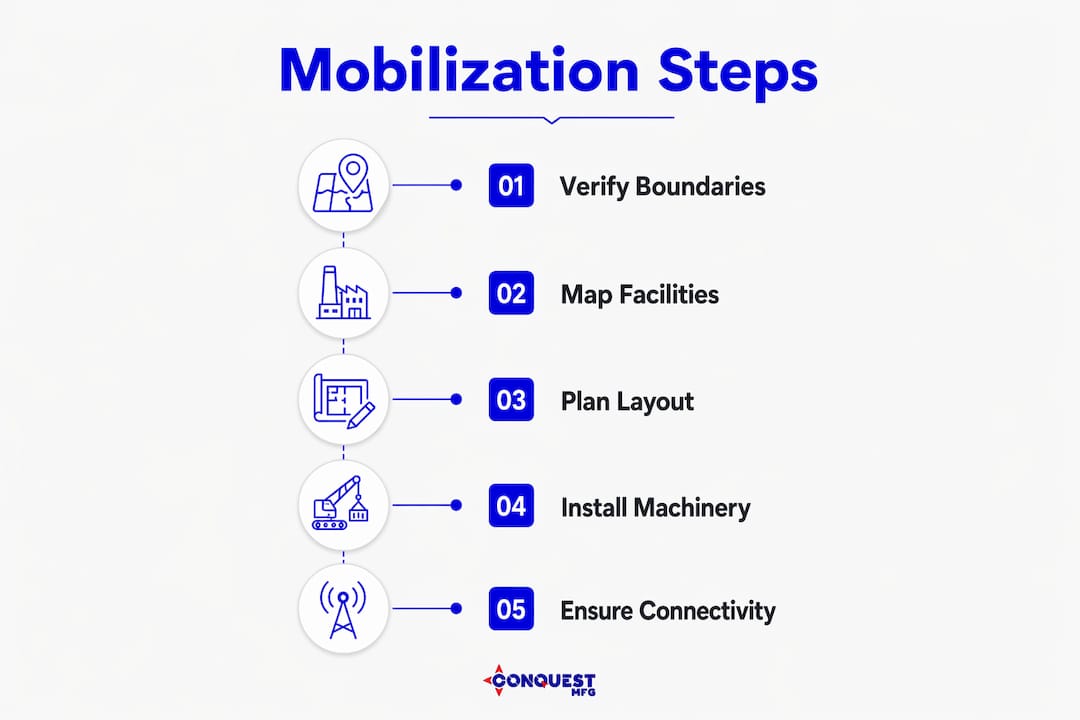
Follow this sequence for a compliant site mobilization:
- Verify site boundaries using GNSS or total station equipment to ≤ 50 mm tolerance.
- Install perimeter fencing at ≥ 2.4 m height with posts at ≤ 3.0 m spacing.
- Establish traffic management with designated entry and exit flows and a 10 km/h site speed limit enforced throughout the work zone.
- Connect temporary utilities including power, potable water, and drainage before any crew occupies the site.
- Place sanitation facilities per OSHA requirements. Handwash stations adjacent to toilet clusters are a compliance requirement. Missing them triggers immediate work stoppages.
- Size temporary generators to handle peak electrical demand. Earthing resistance must meet ≤ 5 Ω and pass a 75% load test before energizing the site.
Pro Tip: Map every temporary facility location on your site layout plan before mobilization day. Placing a site office or welfare block in a zone earmarked for permanent construction forces double handling that costs far more than the time saved by skipping the planning step.
A detailed mobilization plan translates contract requirements and site constraints into operational reality. It is not simply a drawing of where things go. It is the operational logic that sequences every setup decision.
How to plan and layout construction plant machinery for optimal efficiency
Equipment layout planning is where most project managers either protect their schedule or destroy it. The decisions made on paper before a single machine arrives determine whether your plant runs efficiently or grinds through avoidable delays.
Site layout plans that map cranes, storage, offices, and utilities before mobilization prevent costly mistakes and iterative redesigns. The construction sequence itself heavily influences where each piece of plant goes. A batch plant positioned without accounting for concrete truck circulation will create traffic conflicts on the first pour day.
Key principles for construction equipment layout:
- Cover all lift zones with crane placement. Improper crane positioning causes schedule delays that include re-testing and certification fees. Position tower cranes so their working radius covers every required lift point before you anchor them.
- Consult load charts at every lift phase. Load charts must be reviewed before every heavy lift to confirm crane capacity matches the load at the required radius. This is non-negotiable.
- Keep temporary facilities out of permanent structure zones. Placing offices or welfare blocks in areas intended for permanent construction creates avoidable double handling and increased costs.
- Match material handling equipment to surface conditions. Rough or unstable ground requires tracked equipment. Paved or compacted surfaces support wheeled loaders and forklifts. Mismatching equipment to terrain damages both the machine and the surface.
- Separate storage zones by material type. Aggregate, reinforcing steel, formwork, and fuel all require distinct storage areas with clear access routes to prevent cross-contamination and congestion.
Early, well-coordinated site layout planning is the single most effective way to prevent costly equipment repositioning and project delays. Projects that skip this step consistently pay for it during the first major construction phase.
Pro Tip: Use your site layout plan as a living document. Update it every time a major piece of plant moves or a new delivery zone opens. A static plan becomes a liability within weeks on an active site.
For project managers evaluating stationary vs. mobile plant options, the layout implications differ significantly. Mobile plants offer repositioning flexibility. Stationary plants demand precise, permanent placement from the start.
What are the best practices for specialized machinery installation?
Specialized machinery installation is a distinct discipline from general construction plant setup. Standard construction crews do not carry the skills required for tight machinery tolerances, precision alignment, or industrial electrical integration.
Process machinery installation requires coordinated involvement from millwrights, industrial electrical contractors, and EPC firms. Each trade handles a specific phase, and gaps in coordination between them cause the most expensive failures. A millwright who completes precision alignment before the electrical contractor has finalized conduit routing will face rework.
Follow this installation sequence for process machinery:
- Verify foundations. Confirm that concrete pads meet design specifications for load, levelness, and anchor bolt placement before rigging begins.
- Rig and set the machine. Use certified rigging equipment sized to the machine’s weight and center of gravity. Never improvise rigging for heavy plant.
- Perform precision alignment. Laser shaft alignment and vibration analysis significantly improve machinery lifespan. These methods detect misalignment that visual inspection misses entirely.
- Connect electrical and control systems. Industrial electrical contractors must terminate all power and control wiring per the manufacturer’s specifications and local electrical codes.
- Commission and test. Run the machine through its full operating range before handing it over. Document all readings and compare them against design parameters.
“Specialized trades’ involvement in process plant installation is vital. Standard construction crews often lack the skills for tight machinery tolerances, and the consequences of improper installation compound over the machine’s entire service life.”
Procurement timing also affects installation quality. Prioritizing long-lead items like HVAC units during Front-End Engineering Design prevents site idle time when installation crews are ready but equipment has not arrived. Idle crews on a commissioned site cost money every day.
Controlling ambient dust during installation phases protects precision components from contamination before commissioning. Dust ingress into bearings, seals, and control panels during installation causes premature failures that appear months later and are difficult to trace back to the root cause.
How does digital connectivity impact construction plant operations?
Digital connectivity is now a baseline infrastructure requirement for construction plant setup, not an optional upgrade. Sites that lack reliable connectivity lose time on documentation, reporting, and logistics coordination every single day.
The 2026 standard for temporary site Wi-Fi sets a minimum of 20 Mbps download and 5 Mbps upload to support construction documentation and reporting. That threshold supports cloud-based project management platforms, video reporting, and real-time communication simultaneously.
| Digital Infrastructure Element | Minimum Standard | Purpose |
|---|---|---|
| Wi-Fi download speed | 20 Mbps | Documentation and reporting platforms |
| Wi-Fi upload speed | 5 Mbps | Video reporting and cloud sync |
| Backup router | Required | Network continuity and troubleshooting |
| Network diagram | Required | Fault isolation and IT support |
| Delivery booking system | Digital platform | Traffic and congestion management |
Strong digital connectivity enables efficient delivery scheduling, congestion management, and real-time site coordination. Without it, delivery conflicts pile up at the gate and ripple through the entire day’s schedule.
Key digital infrastructure requirements for a compliant site setup:
- Install backup routers and document network diagrams before crew arrival.
- Integrate a digital delivery booking system to manage vehicle flow and reduce gate congestion.
- Provide site-wide radio coverage as a backup to Wi-Fi for safety-critical communications.
- Connect site cameras and surveillance systems to the network for real-time monitoring.
Mobile security infrastructure that integrates with site networks gives project managers real-time visibility across the entire work zone. Conquest Mfg’s Portable Rapid-Deployed Video Surveillance Towers are designed specifically for this application, providing coverage where fixed infrastructure is not yet in place.
Best practices for dust prevention during plant setup also protect sensitive digital equipment. Control panels, network switches, and communication hardware installed in dusty environments fail faster and require more maintenance.
Key Takeaways
Successful construction plant setup requires precise site verification, strategic equipment layout, specialized installation trades, and compliant digital infrastructure working together from mobilization day one.
| Point | Details |
|---|---|
| Verify boundaries first | Use GNSS or total station equipment to achieve ≤ 50 mm tolerance before any work begins. |
| Plan equipment layout before mobilization | Map cranes, storage, offices, and utilities on paper to prevent costly repositioning later. |
| Use specialized trades for process machinery | Millwrights and industrial electrical contractors are required for precision alignment and commissioning. |
| Meet digital connectivity standards | Site Wi-Fi must deliver at least 20 Mbps download and 5 Mbps upload to support operations. |
| Keep temporary facilities out of permanent zones | Placing welfare blocks in future structure areas creates double handling and added cost. |
What I’ve learned from watching plant setups go wrong
The mistakes I see most often on construction sites are not technical failures. They are planning failures that show up as technical problems.
Equipment positioning is where projects lose the most time. A crane anchored 10 meters from its ideal position because no one checked the load chart against the site layout will force the crew to work around its limitations for the entire project. That is not a one-day problem. It compounds every lift, every pour, and every delivery sequence until the plant is demobilized.
The facilities placement issue surprises project managers every time. OSHA handwash station requirements feel like a minor detail until an inspector shuts down the site over a missing unit next to a toilet cluster. The cost of that stoppage, including lost crew time, re-inspection fees, and schedule recovery, far exceeds the cost of placing the station correctly on day one.
What I have found actually works is treating the site layout plan as the most important document in the mobilization phase, not the contract. The contract tells you what to build. The layout plan tells you how to build it without destroying your schedule. Project managers who invest two extra days in layout planning before mobilization consistently recover that time within the first two weeks of construction.
Digital tools belong in the mobilization plan from the start. Retrofitting connectivity infrastructure after crews are on site is expensive and disruptive. Specify your Wi-Fi, backup routers, and delivery booking system in the mobilization plan, and commission them before the first crew day.
— Sam
Conquest Mfg equipment built for professional plant setup
Project managers who take construction plant setup seriously need equipment that matches that standard.
Conquest Mfg manufactures stationary and mobile concrete batch plants, dry bulk pneumatic trailers, portable cement pig silo trailers, and Portable Rapid-Deployed Video Surveillance Towers built for demanding construction environments across the United States. Every piece of equipment is designed to meet the installation, capacity, and operational requirements that professional plant setup demands. Explore the full range of construction industry equipment or get detailed guidance on selecting the right batch plant for your next project. Conquest Mfg works with project managers who need equipment that performs from day one.
FAQ
What is construction plant setup?
Construction plant setup is the process of mobilizing, positioning, and configuring heavy equipment, utilities, and site infrastructure to support safe and efficient construction operations. It includes site boundary verification, equipment layout planning, and utility installation.
How accurate must site boundary verification be?
Site boundaries must be verified to within ≤ 50 mm using GNSS or total station equipment before construction work begins. Errors beyond this tolerance cause structural misalignment and permit violations.
What Wi-Fi speed does a construction site need?
The 2026 standard requires a minimum of 20 Mbps download and 5 Mbps upload for temporary site Wi-Fi to support documentation, reporting, and real-time coordination.
Why do specialized trades matter for plant machinery installation?
Standard construction crews lack the skills for precision alignment and industrial electrical integration that process machinery requires. Millwrights and industrial electrical contractors perform laser shaft alignment and vibration analysis that directly extend machinery lifespan.
What is the most common cause of construction plant setup delays?
Improper crane positioning is the leading cause of schedule delays in plant setup. Consulting load charts before every lift and verifying crane placement against the site layout plan before mobilization prevents the re-testing and certification costs that follow incorrect positioning.