
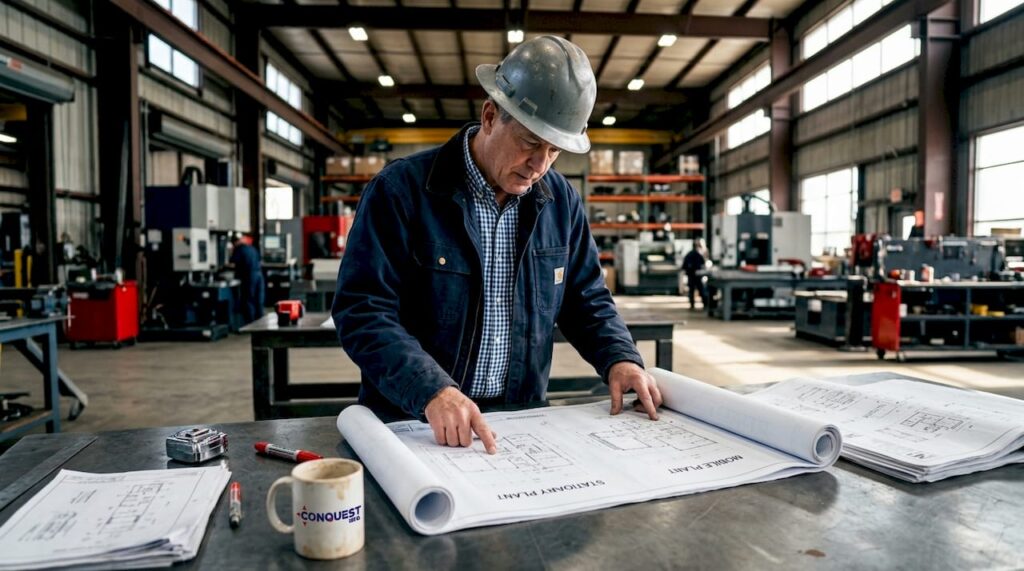
Choosing between a stationary and mobile plant shapes every major project outcome you care about: output volume, operating cost, schedule risk, and long-term profitability. The stationary vs mobile plant comparison is not a simple checklist. It requires an honest assessment of your project duration, site conditions, relocation frequency, and capital budget. This guide cuts through the noise and gives construction and industrial professionals a structured framework to make the right call, with real trade-offs explained in plain terms.
Table of Contents
- Key takeaways
- 1. Key evaluation criteria for the stationary vs mobile batch plant comparison
- 2. What stationary batch plants offer in high-demand operations
- 3. How mobile plants perform in dynamic construction environments
- 4. Side-by-side comparison across key operational parameters
- 5. How to choose between stationary and mobile plants for your project
- My take on the stationary vs mobile plant debate
- How Conquestmfgusa supports your plant selection decision
- FAQ
Key takeaways
| Point | Details |
|---|---|
| Capacity drives the decision | Stationary plants consistently handle higher throughput, making them the right fit for large, long-duration projects. |
| Mobility has a real cost | Relocation of mobile plants involves permits, route surveys, and downtime that directly reduce profitability. |
| Site duration is the key variable | Projects stable for 3 to 5 years favor stationary setups; frequent moves favor mobile configurations. |
| Hybrid options exist | Semi-mobile or modular plants offer a middle ground when sites cluster within a reasonable travel range. |
| Regulatory compliance is non-negotiable | Both plant types carry permitting obligations, but mobile moves trigger additional state and federal transport regulations. |
1. Key evaluation criteria for the stationary vs mobile batch plant comparison
Before comparing specific plant types, you need a clear picture of the factors that make one option more viable than the other on your specific project.
Production volume and throughput. Stationary plants produce larger volumes consistently, while mobile plants are better suited for moderate, variable output. If your project demands continuous high-volume production, this single criterion often determines the answer.
Project duration and site stability. A site fixed for 3 to 5 years with throughput over 500 tph points squarely toward a stationary plant. Frequent moves, whether weekly or monthly, favor mobile configurations.
Site infrastructure availability. Stationary plants require concrete foundations, utility connections, and civil engineering work. Mobile plants need level, accessible ground and route clearance for transport.
Relocation logistics complexity. Moving oversized mobile industrial equipment requires oversize permits, route surveys, and compliance with FMCSA and FHWA requirements. This is not a one-day administrative task.
Key evaluation factors include:
- Projected daily and annual production tonnage
- Expected number of site relocations per year
- Availability and cost of site preparation and foundation work
- Proximity of raw material sources to the work zone
- Local and state permitting environment for both fixed and mobile operations
- Capital budget constraints and financing structure
Pro Tip: Before you model costs, get a transport route survey done for any site you plan to use with a mobile plant. Overhead utilities, bridge weight limits, and road restrictions can eliminate a site from consideration before you spend a dollar on equipment.
2. What stationary batch plants offer in high-demand operations
Stationary plants are purpose-built for permanence and high-output reliability. Understanding what drives their advantages helps you avoid overpaying for mobility you do not need.
High throughput capacity. Stationary crushing plants reach up to 750 tons per hour, versus 500 tph for mobile units. For concrete batch plants, the capacity gap is equally significant when you are supplying continuous pours on large civil infrastructure projects.
Lower long-term operating costs. Stationary plants achieve better fuel efficiency per ton over extended production runs. Once installed, they require less attention to structural wear because they are not subjected to road transport stress.
Permanent regulatory footing. A stationary plant typically operates under a fixed environmental permit. You apply once, get approved, and operate without re-triggering permit reviews on every project cycle.
Stationary plant advantages include:
- Maximum throughput for large civil, industrial, and infrastructure projects
- Simpler maintenance profile due to fixed installation and no relocation stress
- Better fuel efficiency per ton produced at sustained output
- Long-term cost advantages when serving a fixed or regional customer base
- Permanent permits that reduce compliance friction over time
The downsides are equally real. Stationary plants need extensive civil work for foundations and infrastructure, which adds upfront engineering costs and extends your time-to-production. Resale value is lower because the plant cannot easily move to where demand exists. If the project ends early or the market shifts, you are left with a fixed asset that cannot follow the work.
Pro Tip: If you are evaluating a stationary plant purchase, factor foundation and civil engineering costs into your total capital budget from day one. Projects routinely underestimate this by 15 to 25 percent, which distorts payback period calculations.
3. How mobile plants perform in dynamic construction environments
Mobile plants solve a problem that stationary plants cannot: getting production capacity to the work zone instead of hauling material across long distances.
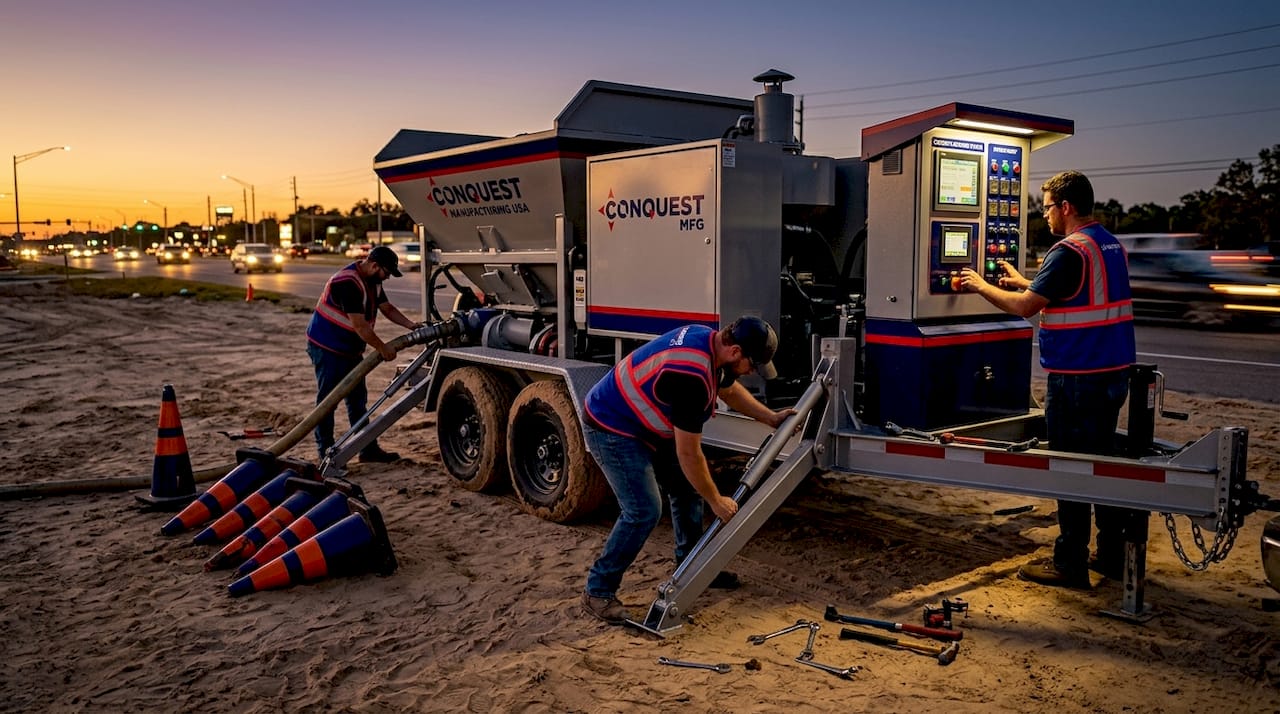
Flexibility across sites. A mobile plant can follow your project portfolio. When one job wraps up, you redeploy the plant to the next site rather than trucking finished product from a fixed location.
Reduced hauling costs. Mobile plants reduce tire and haulage costs significantly by crushing or batching at the point of need. Fewer haul trucks means less fuel, fewer operators, and less road wear on your equipment fleet.
Faster initial setup. Modular designs allow quicker assembly and teardown compared to a stationary installation requiring foundation work. This speed-to-production advantage matters on short-duration projects where every week of delay affects your margin.
Mobile plant advantages include:
- Site-to-site flexibility that tracks work instead of waiting for material delivery
- Significant reduction in product hauling distances and associated costs
- Shorter setup time relative to stationary plants with civil foundation requirements
- Ability to respond to project scope changes without committing to a fixed location
- Lower initial capital outlay in many configurations
The trade-offs are significant. Frequent assembly and disassembly introduces wear on chassis and components, requiring diligent daily inspections. Relocation downtime translates directly to lost revenue. Idle hours during transport cost operators money, and the financial impact compounds quickly if moves are poorly scheduled.
Additionally, overhead utilities, bridge clearances, and road weight limits restrict where mobile plants can actually operate. A site that looks accessible on paper can become a logistical obstacle course once you factor in real infrastructure constraints.
Pro Tip: Treat every plant relocation like a small construction project. Assign a dedicated move coordinator, apply for permits 4 to 6 weeks in advance, and build a minimum 72-hour buffer into your schedule for unexpected route issues.
4. Side-by-side comparison across key operational parameters
The table below captures the core stationary vs mobile batch plant comparison across the factors that matter most to operational planning and budget decisions.
| Parameter | Stationary plant | Mobile plant |
|---|---|---|
| Throughput capacity | Up to 750+ tph for crushing; high-volume concrete batching | Up to 500 tph; moderate concrete batching output |
| Initial capital cost | Higher, including foundation and civil engineering | Lower to moderate; modular configurations vary |
| Relocation complexity | Very high; typically permanent or semi-permanent | Moderate to high; requires permits and route surveys |
| Setup time | Weeks to months including civil work | Days to weeks depending on configuration |
| Fuel efficiency | Better per ton over long production runs | Less efficient per ton; savings come from reduced hauling |
| Maintenance profile | Lower structural wear; simpler long-term upkeep | Higher wear from transport stress; frequent inspections required |
| Permitting burden | Fixed environmental permit after initial approval | Ongoing transport permits for each move; FMCSA and FHWA compliance |
| Best project fit | Multi-year projects, fixed market, high daily demand | Short-duration projects, multiple sites, variable production needs |
For construction and industrial professionals evaluating stationary vs mobile concrete plants, this table should anchor your initial shortlist. Neither plant type wins across all parameters. Your project profile determines the fit.
Pro Tip: Use the table above as a scoring matrix. Rate each parameter from 1 to 5 based on your project requirements, then multiply by a weighting factor for priority. The option with the higher total score is almost always the right call.
5. How to choose between stationary and mobile plants for your project
The decision framework comes down to six questions asked in the right order.
-
What is your daily and annual production requirement? If you consistently need more than 500 tph or equivalent concrete output, stationary is the starting point. Mobile plants cap out below this range for most configurations.
-
How long will you occupy this site? Multi-year projects on a fixed location favor stationary installation. Projects running less than 12 months or cycling between sites favor mobile.
-
How often will you relocate? Relocation time and permit complexity often make stationary plants more cost-effective long-term when the site is stable. Each mobile move carries hidden costs in permits, downtime, and maintenance.
-
What is the site infrastructure situation? If a foundation and utilities are already in place or budgeted, stationary becomes more viable. If the site is remote or undeveloped with no infrastructure, mobile may be the only practical starting point.
-
What does your capital budget allow? Mobile plants carry a lower entry price in most configurations. But factor in the full lifecycle cost, including relocation expenses and higher per-ton operating costs over time.
-
Is a hybrid option feasible? Semi-mobile or modular plants offer a practical middle ground when projects cluster within a regional zone. You get more capacity than a true mobile unit while retaining some ability to redeploy.
Pro Tip: Do not let purchase price dominate the decision. Run a 5-year total cost model that includes foundation work, permits, relocation events, downtime, and maintenance. The cheapest plant to buy is rarely the cheapest plant to operate.
My take on the stationary vs mobile plant debate
I have worked through enough plant selection decisions to know that the biggest mistakes almost never come from choosing the wrong equipment. They come from underestimating what happens after it arrives on site.
Teams routinely treat mobile plant relocation as a logistics problem when it is actually an engineering problem. Route selection for oversize moves requires clearance measurements and structural assessments, not just a call to a trucking company. I have seen projects lose two to three weeks on a single move because the permit application did not account for a low bridge 40 miles into the route.
The other pattern I keep seeing is that people undervalue downtime. Demobilization and recommissioning are the actual cost centers of mobile plant operation, not the move itself. If your scheduling does not protect production time aggressively, those idle hours stack up fast.
My honest advice: if your project pipeline includes more than two relocations per year, run the full cost model before committing to mobile. You may find that a regional stationary plant paired with efficient bulk material transport beats mobile on total cost, even when hauling distances look unfavorable at first glance.
— Peter
How Conquestmfgusa supports your plant selection decision
Whether you are leaning toward a stationary batch plant for a long-term operation or a mobile configuration to follow your project across multiple sites, Conquestmfgusa builds equipment designed for real-world construction and industrial demands.
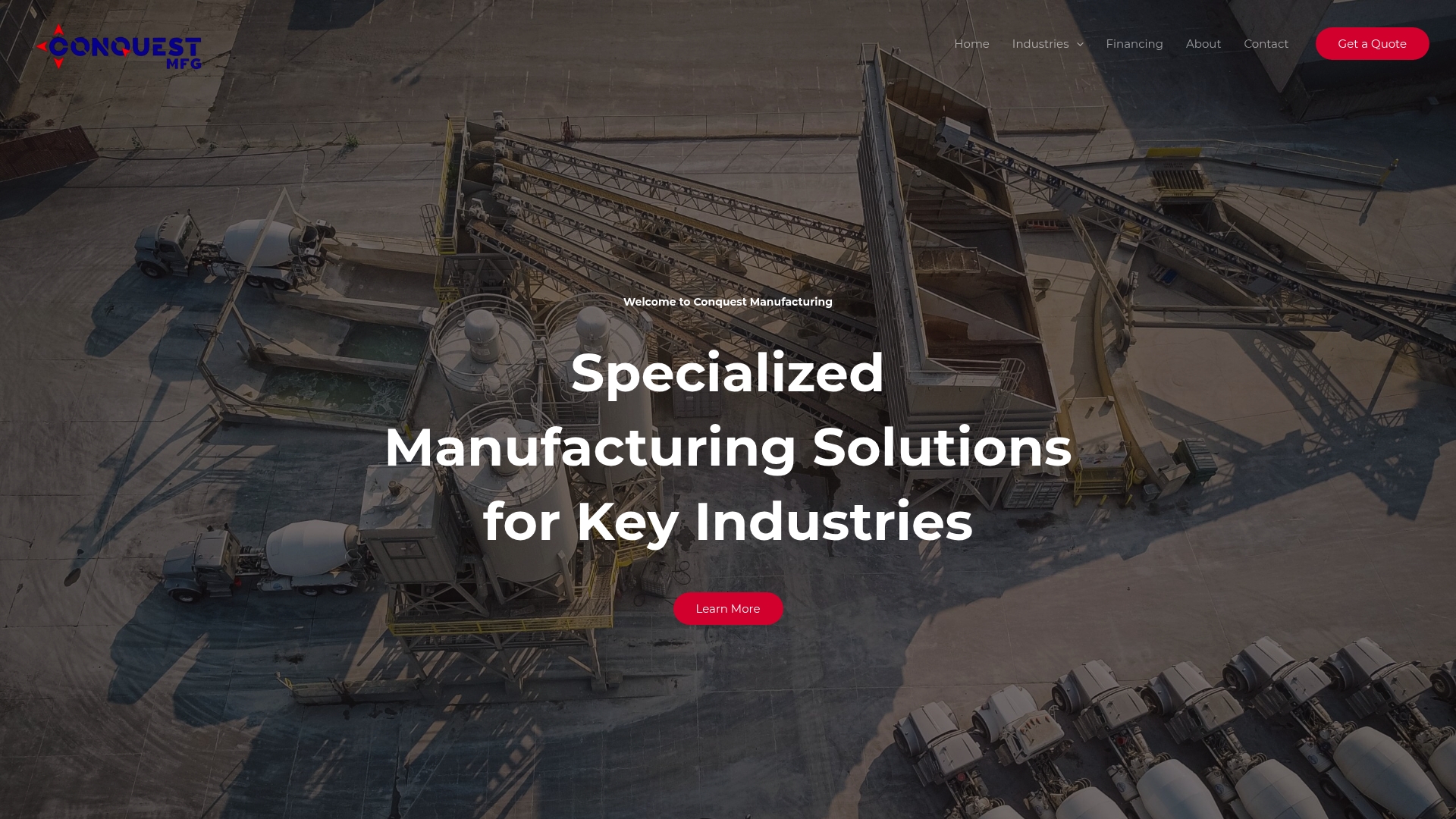
Our stationary dry and mobile concrete batch plants are custom-built to match your production requirements, site conditions, and operational goals. We back every plant with installation guidance and dedicated customer support to get you producing on schedule. Explore our construction plant solutions to see the configurations available, or review our concrete plant installation guide to plan your setup from the ground up. When you are ready to talk through your specific project, our team is here to help you find the right fit.
FAQ
What is the main difference between stationary and mobile batch plants?
Stationary batch plants are designed for fixed, high-volume production on long-term sites, while mobile batch plants offer flexibility to relocate between project locations at the cost of lower maximum throughput and higher relocation complexity.
When does a mobile plant make more financial sense than a stationary one?
Mobile plants are more cost-effective when projects require frequent site changes, production volumes are moderate, and raw materials can be sourced near each work zone, reducing haul distances and associated costs.
What permits are required to move a mobile plant?
Moving a mobile plant typically requires oversize transport permits, route surveys, and compliance with FMCSA and FHWA regulations, including potential escort vehicles and time-window travel restrictions depending on state rules.
Can a stationary plant be relocated if a project ends early?
Relocation of a stationary plant is possible but costly and time-consuming, requiring dismantling of foundations and infrastructure. In most cases, the financial and logistical burden makes early relocation impractical compared to a mobile plant.
What is a semi-mobile plant and when should I consider one?
A semi-mobile or modular plant combines higher capacity than a true mobile unit with limited relocation capability, making it a practical option for project clusters within a regional zone where full stationary commitment is not warranted.