
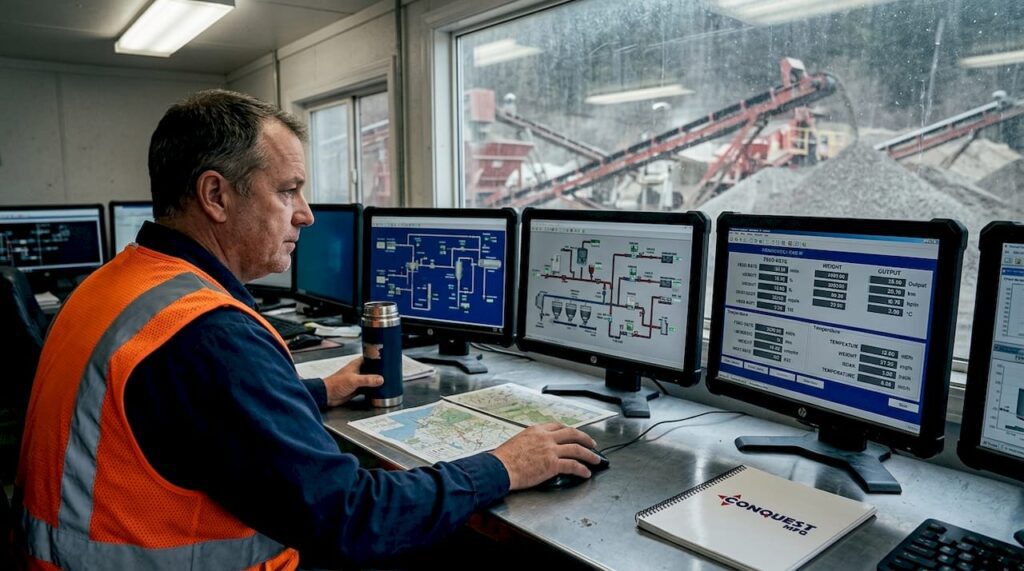
Even the most well-equipped aggregate operation can fall short of its production targets when logistics and system design are treated as secondary concerns. Batch plants, pneumatic trailers, and upstream aggregate supply don’t function in isolation. When one link in the chain is misaligned, the entire operation feels the impact. For construction and transportation managers in the U.S., understanding how these systems connect is not a theoretical exercise. It’s a daily operational reality that directly affects cost, schedule, and mix quality.
Table of Contents
- How aggregate plants power concrete production
- Batch plant mechanics and output: Beyond the nameplate
- Pneumatic trailers: The lifeline for bulk cement logistics
- Preventing blockages: Moisture, pipelines, and commissioning as operational risks
- Calibration and measurement: The foundation of mix quality
- What most managers miss about aggregate plant integration
- Take your aggregate operations to the next level
- Frequently asked questions
Key Takeaways
| Point | Details |
|---|---|
| Integration is critical | Align aggregate processing, batching, and pneumatic transport for reliable throughput. |
| Utilization over specs | Actual output is set by utilization rates, not just equipment capacity. |
| Pneumatic system reliability | Moisture and poor pipe design are top causes of downtime—address them proactively. |
| Calibration protects quality | Regular calibration of all batch plant scales ensures mix consistency and reduces costly errors. |
| Portable plants ease logistics | Mobile and single-trailer batch plants are best for frequent relocation or remote jobs. |
How aggregate plants power concrete production
Aggregate plants are the starting point for most construction supply chains. They produce the crushed stone, sand, and gravel that form the physical structure of every concrete and asphalt mix. Without a consistent, properly graded aggregate supply, downstream operations at the batch plant simply cannot perform.
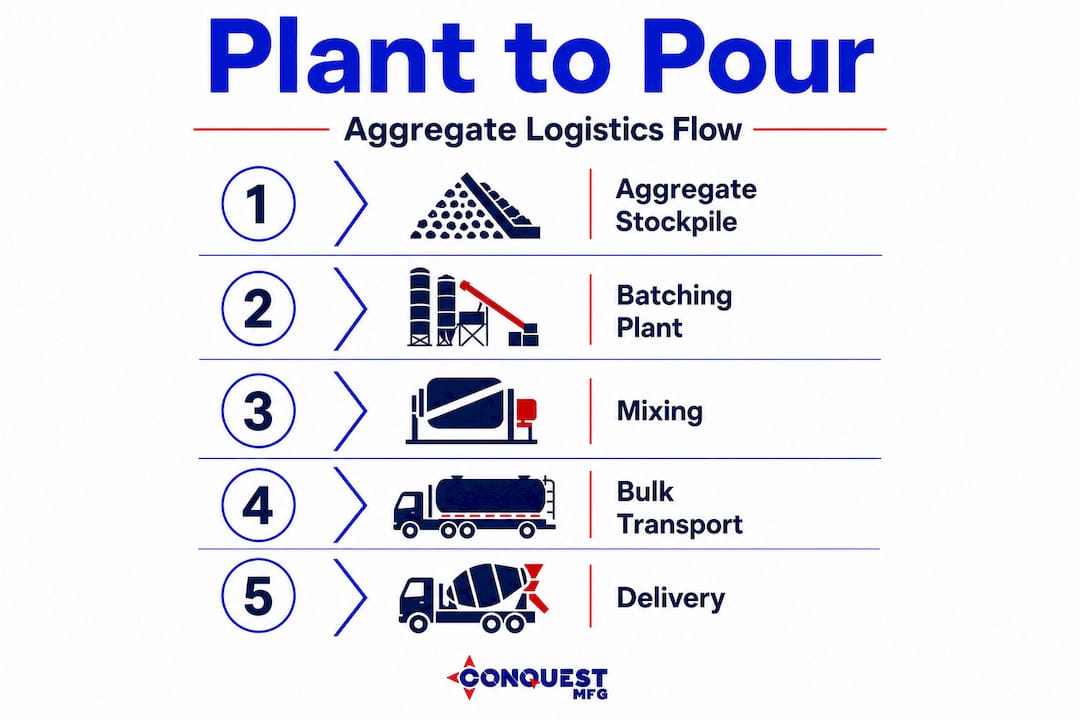
Aggregates processing equipment for concrete and asphalt markets spans crushing and screening, material handling, and washing and classifying systems. Each stage plays a role in producing the right gradation, cleanliness, and moisture content that a batch plant demands.
Key equipment types in aggregate processing include:
- Primary and secondary crushers (jaw, cone, and impact types)
- Vibrating screens for gradation separation
- Conveyors and stackers for material handling
- Sand screws and classifiers for fines management
- Wash plants for removing clay and organic material
- Storage bins and radial stackers for surge capacity
Concrete batch plants are central to aggregate logistics because they proportion and mix aggregates plus cement, water, and admixtures in precise ratios. The batch plant is the bridge between your upstream aggregate supply and the jobsite’s concrete demand.
One critical planning decision is whether to use central-plant mixing or on-site (truck) mixing. Here is how these two methods compare:
| Factor | Central-plant mixing | On-site (truck) mixing |
|---|---|---|
| Mix consistency | Very high, controlled environment | Moderate, variable drum conditions |
| Throughput potential | 35–100+ yd³/hr depending on plant | Limited by drum capacity and timing |
| Flexibility | Lower, fixed location | Higher, can move to site |
| Capital cost | Higher upfront | Lower initial investment |
| Best use case | High-volume, quality-critical pours | Remote or small-volume projects |
“Batch plant selection is not just a capacity decision. It is a logistics decision that affects every truck route, delivery window, and mix specification you manage.”
For managers planning new projects, evaluating your aggregate supply for batching needs alongside batch plant type is essential before finalizing any production schedule. Treating these as separate decisions is one of the most common and costly planning mistakes we see.
With the central role of aggregate handling clear, let’s examine how capacity and true output are managed on the batching side.
Batch plant mechanics and output: Beyond the nameplate
Every batch plant comes with a rated production capacity printed on its spec sheet. That number is real, but it almost never represents what you will actually produce in a normal operating day. Understanding the gap between nameplate capacity and effective output is where experienced managers gain a real competitive edge.
U.S. ready-mix operations average 70–80% of theoretical capacity under real-world conditions. That 20–30% gap represents money, time, and schedule risk that can be managed with the right planning approach.
Common sources of lost production capacity include:
- Truck loading delays. When trucks queue or arrive late, the plant sits idle even though it is mechanically ready to produce.
- Recipe and mix design changes. Switching between mix designs mid-shift requires flushing, re-taring scales, and reconfiguring admixture dosing.
- Unscheduled maintenance. Worn wear liners in mixers, clogged admixture lines, or scale calibration drift can stop production without warning.
- Aggregate moisture variation. High or inconsistent moisture in stockpiles forces the plant operator to compensate manually, slowing batch cycles.
- Cement silo supply interruptions. If pneumatic trailers don’t deliver on schedule, cement levels drop and production halts.
To maximize plant utilization, managers need to treat each of these loss categories as a system variable, not an isolated incident.
Actual load-per-hour benchmarks by plant configuration:
| Plant type | Mixer size | Theoretical loads/hr | Practical loads/hr (75% utilization) |
|---|---|---|---|
| Dry batch, small | 4 yd³ | 60 | 45 |
| Central mix, mid | 6 yd³ | 50 | 37–40 |
| High-output central mix | 9–12 yd³ | 35–55 loads/hr | 26–42 |
Key steps for optimizing throughput:
- Schedule truck arrivals in tight windows rather than open intervals.
- Pre-load aggregate bins before peak production periods.
- Standardize mix designs across project phases where specifications allow.
- Monitor and address cement silo levels proactively, not reactively.
- Review daily production logs weekly to identify recurring loss patterns.
Pro Tip: Track your actual loads per hour for at least two weeks before making any equipment purchasing decisions. Managers consistently find that operational improvements close more of the capacity gap than hardware upgrades.
Pneumatic trailers: The lifeline for bulk cement logistics
Cement is the most time-sensitive material in your aggregate operation. It can’t be stored open to weather, it must arrive at the silo in a controlled manner, and delivery timing directly controls whether your batch plant runs or sits idle. Pneumatic trailers are the delivery system that makes bulk cement logistics work at scale.
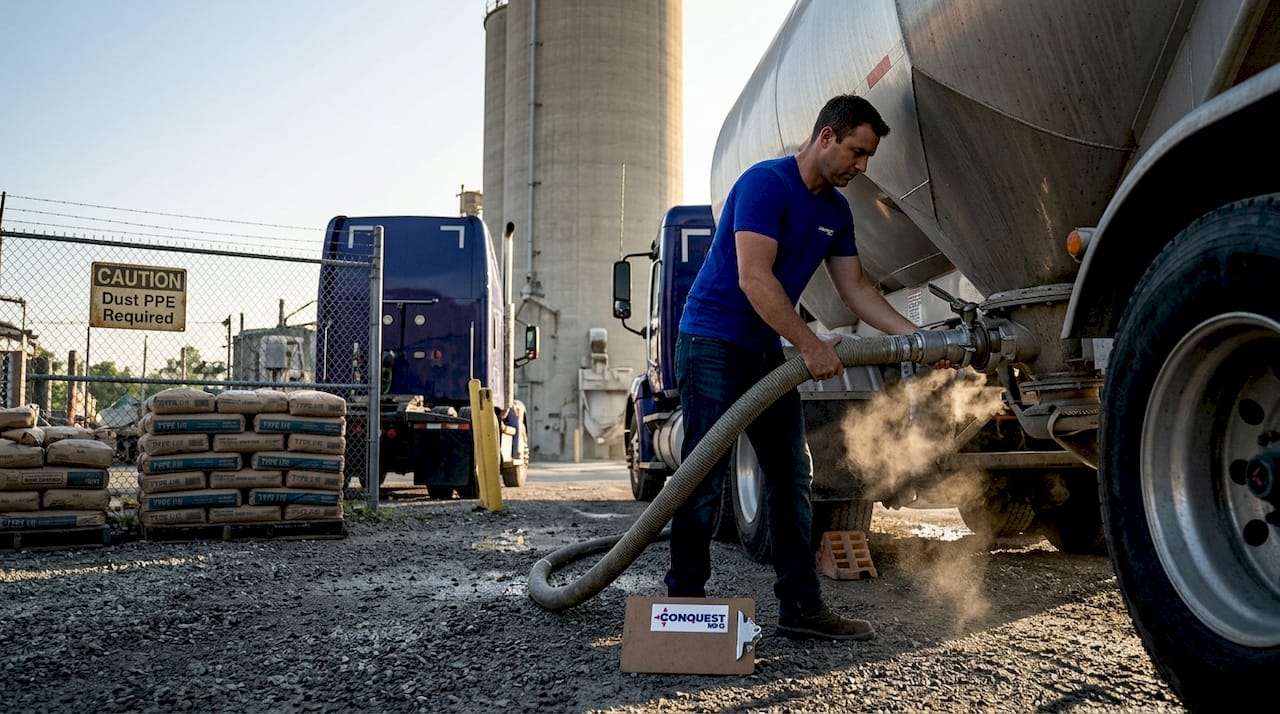
Pneumatic trailers use compressed air to fluidize and transfer bulk dry cement and other powders from the trailer tank to batch plant silos. The process is efficient, enclosed, and well suited to the dusty, high-volume environment of an active batch plant yard.
The standard pneumatic trailer unloading process follows these steps:
- Driver positions the trailer and connects the discharge hose to the silo inlet pipe.
- The truck’s PTO-driven compressor pressurizes the tank to 15–25 PSI depending on system design.
- Aeration pads fluidize the cement, converting it from a packed powder to a flowing material.
- Compressed air carries the fluidized cement through the pipe to the silo.
- A pressure relief valve and silo filter manage back-pressure and vent displaced air.
- Unloading is complete when tank pressure drops and flow stops, typically within 20–40 minutes.
Typical system pressure requirements range from 15 to 30 PSI at the trailer, with delivery pipe diameters of 4 to 6 inches being most common. Velocity through the pipe needs to stay within a range that keeps material moving without creating excessive wear or segregation.
For managers evaluating efficient pneumatic piping configurations, the layout between the trailer parking position and the silo inlet matters more than most operators realize. Every additional elbow, every unnecessary vertical lift, and every undersize pipe section reduces efficiency and increases blockage risk.
“A pneumatic trailer that consistently delivers cement in 25 minutes instead of 40 is not a minor operational win. Over a 50-week operating year, that time difference translates directly into delivery capacity, fuel savings, and driver availability.”
Pro Tip: When specifying trailer delivery routes at your plant, map the full path from the trailer connection point to the silo top. Eliminate bends, reduce vertical lifts where possible, and standardize connection fittings across all trailers that service your site.
Preventing blockages: Moisture, pipelines, and commissioning as operational risks
Pneumatic cement transfer systems work reliably when they are properly designed, operated, and maintained. They fail when any one of three factors is ignored: pipeline design, moisture control, or commissioning practice. Blockage risks in pneumatic cement transfer are directly tied to these three variables.
The most common causes of blockages in pneumatic systems include:
- Pipe routing with too many elbows or sharp direction changes
- Undersize pipe diameter for the required flow rate
- Excessive pipe length without adequate pressure support
- Moisture infiltration from condensation in air supply lines
- Wet or pre-hydrated cement loaded into the trailer
- Inadequate aeration at the trailer’s discharge cone
- Failure to flush and clear the line at the end of an unloading cycle
- Cold-weather condensation in above-ground transfer lines
Moisture is the most underrated risk in cement logistics. Even a small amount of water in the transfer line can cause cement to hydrate and harden inside the pipe. Once that happens, clearing the blockage is a significant maintenance event that can take hours and damage equipment.
Pro Tip: Install inline air dryers on your compressor output lines and check desiccant condition monthly. In humid climates or during summer operations, moisture in compressed air is a genuine production risk, not just a minor inconvenience.
Commissioning is another area where blockages are most likely to occur. New systems or recently modified piping should be thoroughly tested with a low-pressure air-only pass before introducing cement. This verifies that all connections are sealed, all valves operate correctly, and the system holds pressure without leaks.
For a thorough approach to cement transfer safety tips, including lockout procedures, PPE for dust exposure, and pressure relief requirements, review your full commissioning checklist before bringing any new pneumatic system online. Routine plant calibration practices also support system reliability by confirming that all instrumentation tied to the pneumatic circuit is reading accurately.
Calibration and measurement: The foundation of mix quality
All the throughput optimization in the world means nothing if your batch plant produces inconsistent or off-spec concrete. Calibration is the process that keeps mix designs accurate and keeps your plant in regulatory and quality compliance. It is not a one-time setup task. It is an ongoing management responsibility.
Proper calibration and measurement order matter because early errors in the batching sequence propagate through the entire mix. An aggregate scale that reads 2% high compounds with a water scale that reads 1% low, and the resulting mix may be outside specification even though no single ingredient error appears dramatic on its own.
The stepwise calibration process for a batch plant follows this sequence:
- Dead load verification. Confirm that all weigh hoppers read zero with no material present and no mechanical binding.
- Aggregate scale calibration. Use certified test weights to verify accuracy across the full working range, not just at one load point.
- Cement and fly ash scale calibration. These scales handle smaller, more precise quantities and require tighter tolerances.
- Water meter calibration. Volumetric flow meters should be checked against a known volume at the actual flow rates used in production.
- Admixture dispenser calibration. Dispenser timing and output volume should match the dispenser manufacturer’s specification.
- Full-batch check. Run a complete batch cycle with calibrated weights and compare actual discharge to the mix design target.
Why sequence matters: Aggregate errors are the largest by mass, so they dominate overall mix variation. Resolving aggregate scale accuracy first gives you a stable baseline. Calibrating cement and water against a known aggregate weight then refines the mix. Measurement for mix consistency is a discipline that supports plant reliability at every production level.
Most quality management systems require calibration records to be maintained for a minimum period. For contractors supplying DOT projects or commercial ready-mix, calibration documentation is not optional. It is a compliance requirement and a liability management tool.
What most managers miss about aggregate plant integration
Here is the insight that changes how experienced managers approach aggregate logistics: the real bottleneck is almost never the equipment. It is the system around the equipment. We have seen plants with modern, high-capacity batch equipment consistently underperform because delivery scheduling, cement silo management, and aggregate moisture control were never coordinated as a unified system.
The true throughput bottleneck is almost always utilization, not hardware limits. A plant running at 65% utilization due to poor pneumatic delivery scheduling will not improve by upgrading the mixer. It will improve when the pneumatic trailer delivery windows are aligned with production demand.
The managers who get the most from their operations treat pneumatic cement delivery, aggregate stockpile management, and batch plant scheduling as one integrated system. They schedule trailer arrivals to maintain silo levels above a minimum threshold at all times. They track aggregate moisture daily and adjust water dosing proactively. They run calibration checks at the start of every production week, not when problems appear.
Investing in flexible piping configurations, reliable moisture control equipment, and rigorous calibration practices consistently delivers better ROI than new hardware alone. We have seen this pattern repeat across project types and plant sizes.
If you are evaluating portable batch plant options for a new project, start with system design before locking in equipment specifications. The best equipment, deployed in a poorly integrated system, will underperform every time.
Take your aggregate operations to the next level
At Conquest Manufacturing, we build equipment that supports every stage of the aggregate and cement logistics chain. From specialized construction equipment for aggregate handling to advanced pneumatic trailer systems, our custom-built solutions are designed for reliability under real production demands.
Whether you need a portable batch plant for a large infrastructure project, a dry bulk pneumatic trailer for efficient cement delivery, or a cement pig silo for on-site storage, we build solutions tailored to your specific operation. Our team works directly with construction and transportation managers to match equipment specifications to your project’s logistics requirements. Explore our range of efficient cement transport solutions and review our full lineup of transport solutions to find the right fit for your next project. Get in touch with us to discuss your requirements and get a quote.
Frequently asked questions
What equipment is required for a concrete batch plant?
Core components include aggregate bins, cement silos, weigh hoppers, conveyors, mixers, and a PLC control system that manages sequencing, weigh tolerances, and production records.
How fast can a pneumatic trailer unload cement at a batch plant?
Pneumatic tankers typically need 20–40 minutes to transfer bulk cement, with actual time depending on tanker volume, system pressure, and pipe routing.
How do you prevent blockages in pneumatic cement discharge systems?
Preventing cement blockages depends on maintaining dry conditions in the air supply, using proper pipe routing and flow velocities, and commissioning the full system before introducing cement.
How often should calibration of a batch plant’s scales take place?
Routine calibration is required before production starts each week and any time a scale reads inconsistently, a component is replaced, or a quality concern is reported.
What is the most common planning figure for batch plant utilization in the U.S.?
U.S. batch plant utilization is typically planned at 70–80% of theoretical capacity, which accounts for real-world delays, scheduling gaps, and maintenance time.