
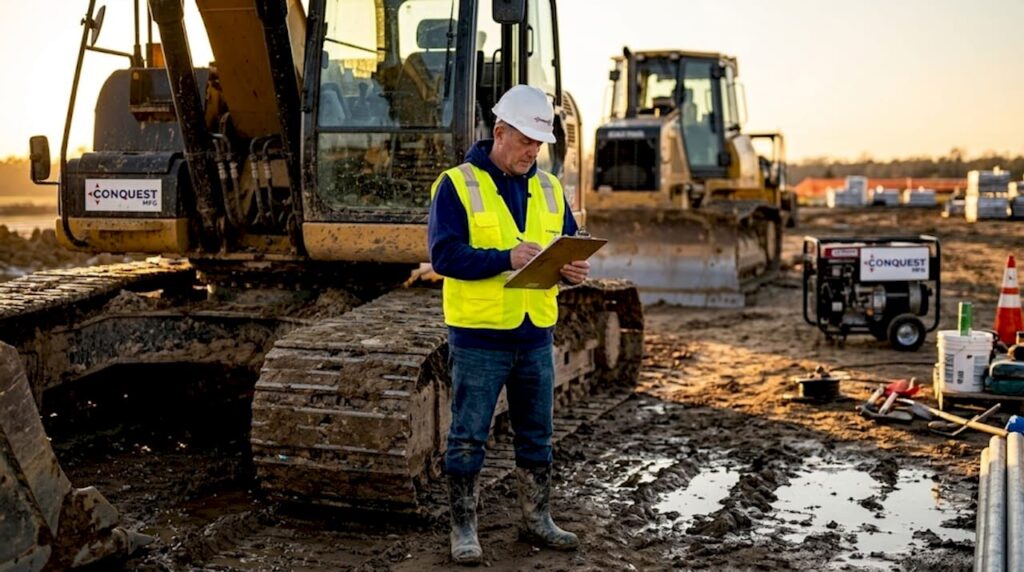
Every hour a piece of heavy equipment sits idle or breaks down unexpectedly is money draining straight out of your project budget. Knowing how to optimize construction equipment usage is not a nice-to-have — it directly determines whether projects finish on time, on budget, and with the margins you planned. Unplanned downtime averages 20-30% across most construction fleets but can be cut to under 5% with the right systems in place. This guide walks you through the specific, data-driven steps to reduce downtime, cut idle time, and get more productive hours out of every machine on your sites.
Table of Contents
- Assess your current equipment usage and maintenance practices
- Implement effective preventive and predictive maintenance programs
- Reduce idle time and improve operational efficiency
- Optimize equipment allocation and fleet right-sizing using data-driven forecasting
- Ensure operator training and compliance to maximize equipment performance and safety
- Common misconceptions and practical truths about equipment optimization
- Discover Conquest MFG USA solutions to streamline your equipment operations
- Frequently asked questions
Key Takeaways
| Point | Details |
|---|---|
| Baseline assessment | Understand current equipment usage and maintenance to identify improvement areas. |
| Maintenance layering | Combine systematic preventive maintenance with predictive analytics for best results. |
| Idle time reduction | Address operational constraints to cut fuel waste and increase productivity. |
| Data-driven allocation | Use utilization data and AI forecasting to optimize fleet size and reduce costs. |
| Operator training | Maintain regular operator certification to ensure safe and efficient equipment use. |
Assess your current equipment usage and maintenance practices
Starting with a clear picture of where you stand today is the only honest way to drive meaningful improvement. You cannot fix what you have not measured, and most facility managers are surprised by what the numbers actually reveal.
Begin by tracking actual utilization and downtime rates for each machine in your fleet. Utilization rate is the percentage of scheduled available hours that a machine is actively working. An excavator sitting at 45% utilization on a 10-hour shift is not performing — it is a cost center. Pull this data from your telematics system or, if you are not yet using one, from operator logs and maintenance records.
Next, evaluate your maintenance scheduling approach. Are you running calendar-based maintenance (every 30 days regardless of usage), or usage-based maintenance (every 250 engine hours)? Neither is wrong by default, but mismatches between schedule type and actual machine use create either over-serviced assets or machines that run past safe service intervals.
Key assessment steps:
- Record total available hours, productive hours, and idle hours per machine monthly
- Document every unplanned repair, including cause, downtime duration, and parts delay time
- Identify which machines exceed 15% unplanned downtime — those are your immediate priority
- Review current preventive maintenance (PM) compliance rates. Industry best practice targets 90% or above
- Check whether your maintenance team has access to equipment safety compliance standards relevant to your fleet type
| Metric | Industry average | Target with optimization |
|---|---|---|
| Unplanned downtime rate | 20-30% | Under 5% |
| PM compliance rate | 50-60% | 90%+ |
| Equipment utilization rate | 55-65% | 75-85% |
| Mean time between failures | Varies by machine | Increase by 30-40% |
Pro Tip: If you do not have telematics yet, a simple shared spreadsheet tracking daily machine hours, downtime events, and maintenance dates will reveal patterns within 60 days. You do not need perfect data to start — you need consistent data.
Implement effective preventive and predictive maintenance programs
With a reliable baseline in hand, you can now build a maintenance approach that prevents costly breakdowns instead of reacting to them.
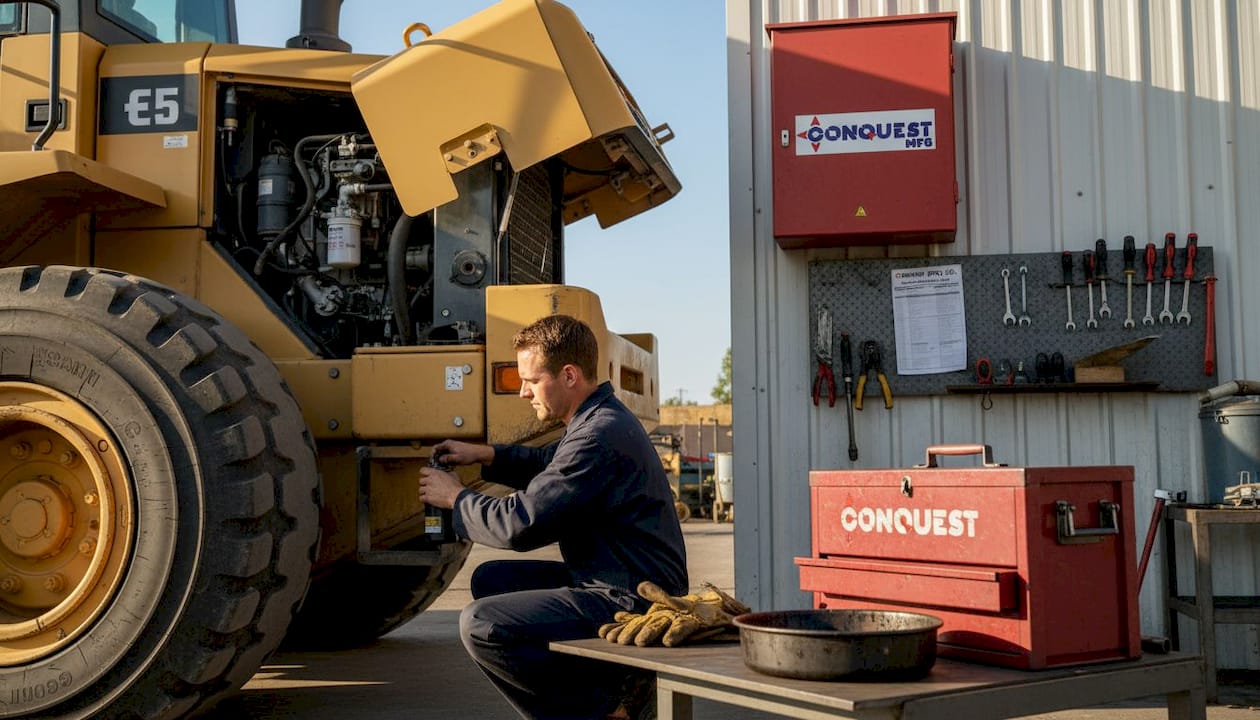
The evidence for systematic maintenance is strong. Combining telematics with a centralized CMMS (Computerized Maintenance Management System) reduces downtime by up to 48% and can improve PM compliance rates from 50% to 94%. Those are not marginal gains — that is transformational fleet performance.
Build your preventive maintenance tiers in this order:
- Define service intervals by actual usage hours, not calendar dates. A dozer working 12-hour shifts reaches 250 engine hours far faster than one working 6-hour shifts. Calendar-based scheduling will either over-service or under-serve it.
- Automate maintenance alerts from your telematics platform. Most modern systems can trigger work orders in your CMMS when a machine approaches a service threshold. Remove the human memory requirement entirely.
- Conduct daily operator walkarounds with a standardized checklist covering fluids, filters, belts, tire condition, and hydraulic lines. Operators are your first line of detection.
- Layer predictive maintenance sensors on critical failure points — engine temperature sensors, hydraulic pressure monitors, and vibration sensors on drivetrain components — once your PM program is consistently executed. As noted in construction maintenance research, predictive maintenance only works effectively when layered on top of a solid preventive foundation.
- Review your equipment maintenance workflow to identify bottlenecks in parts procurement and technician scheduling that delay completed PMs.
| Maintenance type | Cost per event | Downtime per event | Best for |
|---|---|---|---|
| Reactive (breakdown) | Very high | 8-48+ hours | Nothing — avoid it |
| Calendar-based preventive | Moderate | 2-4 hours | Low-utilization assets |
| Usage-based preventive | Moderate | 2-4 hours | High-utilization machines |
| Predictive (condition-based) | Lower long-term | Planned, minimal | High-value critical assets |
Pro Tip: Assign every machine a single “maintenance owner” on your team. When accountability is shared, it effectively belongs to nobody. One person responsible for compliance per machine changes behavior immediately.
Reduce idle time and improve operational efficiency
Beyond maintenance, cutting idle time unlocks immediate fuel savings and productivity gains by addressing root operational causes — not just symptoms.
Construction equipment idles far more than most managers realize. Idle reduction technologies can cut fuel consumption and greenhouse gas emissions by 10-17%, with 10-15% fuel cost savings achievable simply by reducing idle time from 40% to 25%. On a fleet of 20 machines burning diesel, that is a meaningful number every month.
The more important insight is that high idle time often signals operational constraints at the site level — poor truck sequencing, equipment waiting on other trades, or material delivery timing — rather than individual operator behavior. Coaching operators first without fixing the operational root cause is a common and expensive mistake.
Practical idle reduction actions:
- Use telematics reports to break down productive run time versus idle time per machine, per site, and per shift. Look for patterns, not individual incidents.
- Map your site workflow for sequences where equipment consistently idles — loading zones, haul road bottlenecks, and grade transitions are common culprits.
- Install Automatic Engine Shutdown (AES) systems that shut down engines after 5 minutes of continuous idle. Most OEMs offer this as a factory or aftermarket option.
- Use Neutral Idle technology on equipment with torque-converter transmissions to reduce fuel consumption during unavoidable waits.
- Review equipment scheduling in relation to material delivery windows. A 30-minute stagger in pour timing on a concrete project can eliminate significant pump truck idle time.
- Explore how equipment idle reduction strategies apply across your specific fleet categories, including bulk material handling and specialty trailers.
Idle time above 25% on any machine is a signal worth investigating. Above 40%, you almost certainly have a site-level workflow problem that no amount of operator training will fix.
Optimize equipment allocation and fleet right-sizing using data-driven forecasting
After reducing downtime and idle waste, allocating your fleet with precision ensures you are not carrying assets that do not earn their keep.
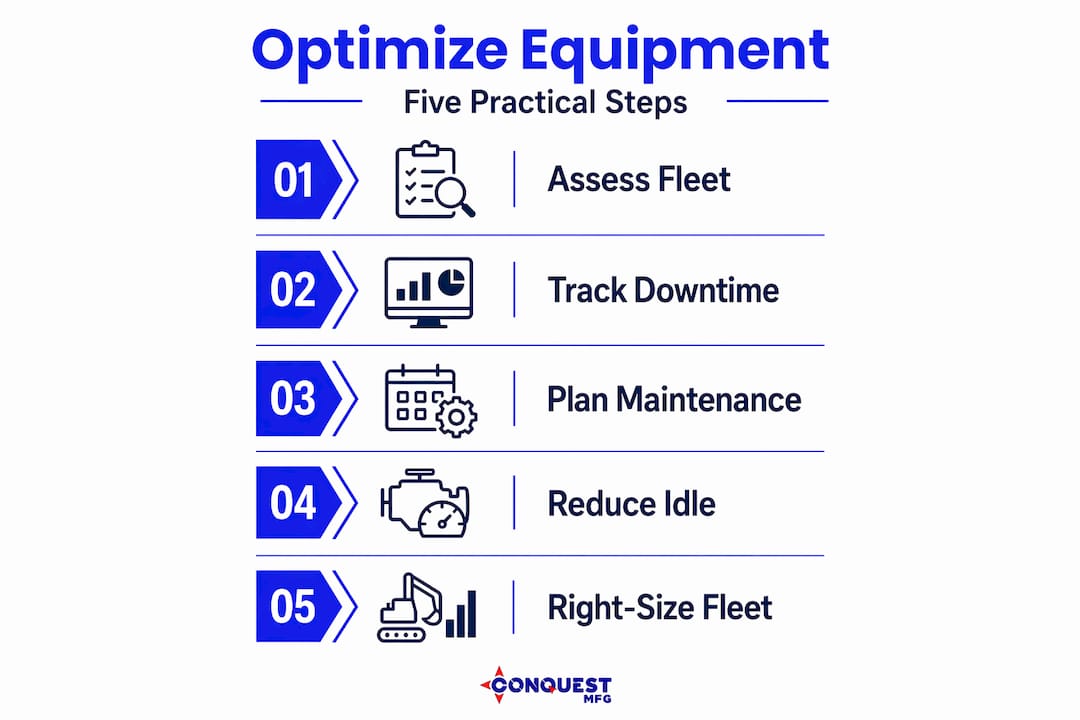
AI demand forecasting can reduce rental costs by approximately 34% by replacing panic-based procurement with phase-based scheduling. That means analyzing your project pipeline, identifying which phases require which equipment categories, and securing the right machines at the right times rather than defaulting to “bring everything, just in case.”
Fleet right-sizing process:
- Pull 12 months of telematics utilization data and calculate average utilization per machine per project type.
- Identify any asset averaging below 50% utilization across the year. That machine is a candidate for redeployment to a higher-demand site, short-term rental to another contractor, or disposal.
- Map upcoming projects against historical equipment demand by project phase — earthworks, foundation, structure, and finish phases have very different equipment needs.
- Use forecasting tools or a spreadsheet model to identify seasonal peaks and plan rental supplements in advance rather than at contract day rates.
- For each underutilized asset, build a cost comparison between continuing ownership (depreciation, insurance, storage, maintenance) and renting when needed.
Analyzing utilization and demand patterns to right-size your fleet avoids excess equipment and cuts costs by 15-25%. This is not about running a lean fleet that cannot respond to demand — it is about replacing guesswork with actual data so that every allocation decision has a clear financial rationale.
| Asset status | Action | Expected cost impact |
|---|---|---|
| Under 50% annual utilization | Redeploy or dispose | Reduce ownership cost 15-25% |
| Seasonal peak demand | Plan rental in advance | Cut rental premium 20-34% |
| Consistent 75-85% utilization | Retain, prioritize for PM | Maximize return on asset |
| Aging, high repair frequency | Replace or rent replacement | Reduce unplanned downtime cost |
Review your industrial equipment safety checklist when preparing assets for redeployment to confirm compliance before they move to a new site.
Ensure operator training and compliance to maximize equipment performance and safety
Technical optimization only delivers full results when the people operating the equipment are trained, certified, and accountable.
OSHA requires that operators of powered industrial trucks receive formal instruction, practical training, and performance evaluation at least every three years to maintain safety compliance. For construction equipment on active job sites, the same standard of structured, documented training applies.
Core operator training and compliance priorities:
- Maintain current certification records for every operator by machine type. Assign a single compliance coordinator to track expiration dates and schedule renewals before they lapse.
- Include machine-specific familiarization for any operator assigned to unfamiliar equipment. A certified excavator operator is not automatically qualified to operate a different manufacturer’s machine without a proper checkout.
- Conduct daily pre-shift walkarounds as a non-negotiable requirement, not a suggestion. Operators who inspect their own equipment catch fluid leaks, cracked hoses, and tire issues before they become breakdowns.
- Deliver refresher training after any incident, near-miss, or equipment damage event — regardless of whether the three-year renewal is due.
- Track operator training compliance alongside your maintenance records so that both asset condition and operator readiness are visible in one review.
Trained operators are not just a safety requirement — they are a direct input to equipment lifespan. Machines operated by untrained personnel experience significantly higher rates of drivetrain abuse, hydraulic misuse, and premature wear. Every dollar invested in training reduces downstream repair costs.
Operator behavior also feeds your data quality. A trained operator who understands the telematics system and daily inspection process provides the consistent reporting that makes predictive maintenance and utilization analysis work accurately.
Common misconceptions and practical truths about equipment optimization
We have worked alongside facility managers and fleet operators long enough to recognize the patterns that consistently derail optimization programs — and most of them come from reasonable-sounding but incorrect assumptions.
Misconception 1: Buy predictive maintenance technology first, then fix your processes around it.
This sequence is backward. As maintenance research confirms, predictive maintenance depends entirely on consistent preventive maintenance as its foundation. Sensors and AI alerts produce accurate warnings only when the machine has a baseline of known, well-maintained condition. Dropping predictive tools onto a poorly managed fleet generates noise, not insight.
Misconception 2: High idle time means your operators need coaching.
Sometimes true. More often, high idle time reflects site-level constraints — truck cycle imbalances, sequencing gaps, or waiting on other trades. If your telematics data shows an entire site’s fleet idling in the same two-hour window every afternoon, the problem is the afternoon shift handoff, not operator discipline.
Misconception 3: A bigger fleet means more capacity and better project outcomes.
Over-allocation is one of the most consistent cost leaks in construction operations. Equipment requested “just in case” sits idle, accumulates ownership costs, and creates congestion on active sites. Right-sizing based on utilization data — not intuition — consistently delivers better results.
The practical truth is that sustained equipment productivity comes from operational discipline applied consistently, not from buying better tools and hoping the results follow. Data must drive decisions. Maintenance must be executed, not just scheduled. And idle time must prompt an operational review, not just an operator conversation.
Discover Conquest MFG USA solutions to streamline your equipment operations
If this guide has given you a clear framework, the next step is making sure your fleet includes equipment built to support the kind of reliable, data-compatible operations you are working toward.
At Conquest MFG USA, we build specialist equipment designed for exactly the demanding environments where efficiency and uptime cannot be compromised. From concrete batch plants to bulk material handling trailers, our equipment is engineered for durability and operational clarity. Explore our construction industry products to find solutions matched to your project needs, review our guidance on how to streamline aggregate plant operations, and use our industrial equipment safety checklist to keep your fleet compliant and ready to work. Contact us to discuss your specific requirements.
Frequently asked questions
What is the most effective way to reduce construction equipment downtime?
Implementing a consistent preventive maintenance program based on actual equipment usage, supported by predictive maintenance tools, is the most effective approach. Combining telematics with a CMMS reduces downtime by up to 48% and improves PM compliance to 94%.
How much can idle time reduction save on fuel costs for construction equipment?
Reducing idle time from 40% to 25% saves between 10% and 15% on fuel costs and also cuts greenhouse gas emissions measurably across your fleet.
How often must operators of powered industrial trucks be trained according to OSHA?
OSHA mandates operator training and performance evaluation at least every three years for powered industrial truck operators to maintain safety compliance.
Why is preventive maintenance considered essential before implementing predictive maintenance?
Preventive maintenance builds the baseline data and operational consistency that predictive systems require to generate accurate failure forecasts. Without a solid PM foundation, predictive alerts lack the reference point needed to distinguish normal variation from genuine warning signals.
How can data-driven forecasting reduce equipment rental costs?
AI demand forecasting reduces rental costs by approximately 34% by replacing last-minute, panic-based procurement with phase-based scheduling that matches equipment needs to actual project timelines.