
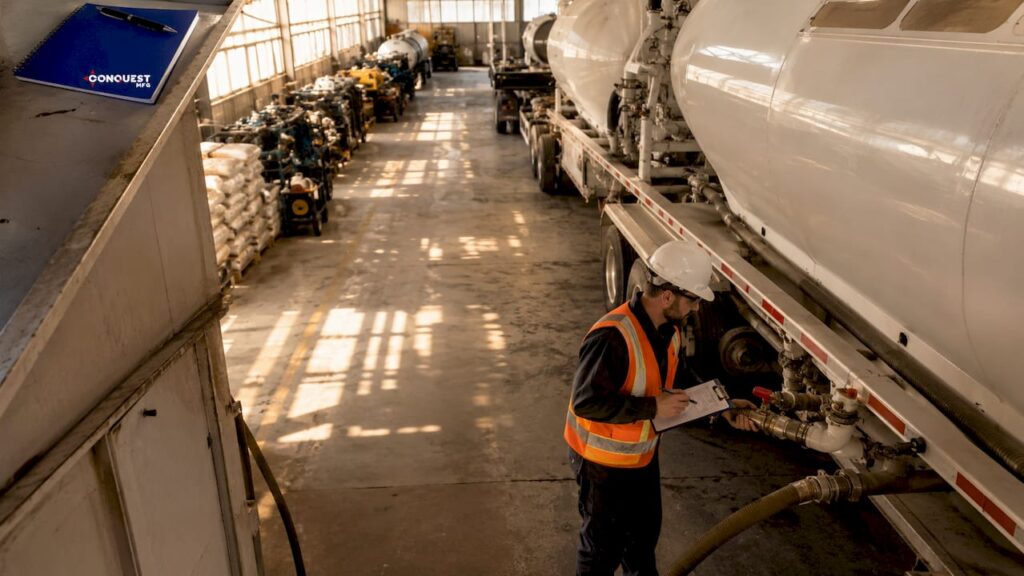
Dry bulk trailers, specifically pneumatic trailers, are the primary vehicles used to transport frac sand, cement, and dry chemicals from supply terminals to active drilling sites. The role of dry bulk trailers in drilling goes beyond simple hauling. These trailers deliver materials directly into sealed wellsite silos using pressurized air systems, keeping powdered and granular products uncontaminated from loading to discharge. Each load carries 25–26 tons of bulk material, making payload efficiency a direct factor in project economics. For drilling professionals managing tight schedules and material purity requirements, understanding how these trailers work is not optional. It is operationally necessary.
What is the role of dry bulk trailers in drilling operations?
Dry bulk transport in drilling is defined by one core requirement: delivering powdered and granular materials to the wellsite without contamination or product loss. Pneumatic trailers, also called dry bulk pneumatic trailers, are the industry standard for this task. They transport frac sand for hydraulic fracturing, Portland cement for well casing, barite for drilling fluid weight, and dry chemical additives used throughout the drilling process.
The term “dry bulk trailer” covers several trailer types, but in drilling logistics, the pneumatic trailer is the dominant tool. Unlike flatbeds or end dumps, pneumatic trailers are fully enclosed metal cylinders fitted with cone-shaped hoppers and pressurized discharge systems. This design protects materials from moisture, wind, and cross-contamination during transport.
Bulk trailers in drilling also serve a coordination function. They connect supply terminals, transload facilities, and wellsite silos into a single, uninterrupted material flow. When a drilling crew needs cement for a casing job or frac sand for a completion stage, the pneumatic trailer is the link that keeps the operation moving. Delays in trailer availability translate directly into rig downtime, which is among the most expensive outcomes in any drilling project.
How do dry bulk trailers work in drilling operations?
Pneumatic trailers combine gravity and compressed air to move material from the trailer tank into a receiving silo. The process follows a consistent sequence that drilling professionals should know in detail.
- Loading at the terminal. Material flows by gravity from an elevated storage bin into the trailer’s cylindrical tank through a top-fill hatch. The tank is sealed after loading to prevent moisture ingress and contamination during transport.
- Transport to the wellsite. The sealed tank protects the material throughout the haul. Drivers with hazmat or specialized bulk endorsements are required for certain chemical loads.
- Connection at the silo. On arrival, the driver connects a discharge hose from the trailer’s outlet valve to the receiving silo’s inlet port. The silo must be a sealed, pressurized system to accept pneumatic delivery.
- Pressurized discharge. An onboard or truck-mounted blower pressurizes the tank. Air forces material through the discharge line and into the silo. The unloading process takes 20–40 minutes per load, depending on hose length, material density, and distance to the silo inlet.
- Line clearing. After discharge, the driver purges the lines with air to clear residual material before disconnecting.
The sealed system throughout this process is what separates pneumatic trailers from open-top alternatives. Frac sand, cement, and barite are all sensitive to moisture and cross-contamination. A single compromised load can render an entire batch unusable.
Pro Tip: Verify blower pressure ratings against the receiving silo’s inlet specifications before every dispatch. A mismatch in pressure tolerance is a common cause of incomplete discharge and material waste at the wellsite.
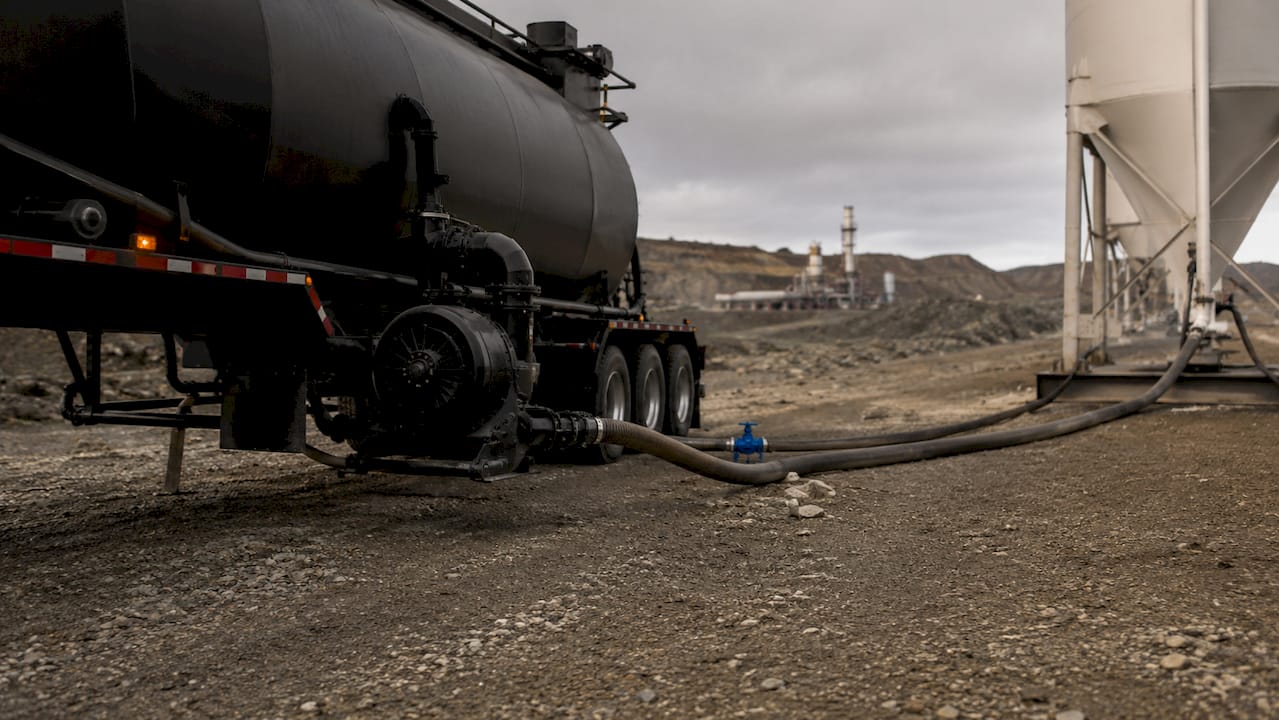
Aluminum tank construction reduces tare weight on many modern pneumatic trailers, which directly increases the legal payload per haul. For frac sand trailer operations, this weight advantage compounds across dozens of loads per week, producing measurable cost savings over a full drilling campaign.
What advantages do dry bulk trailers offer over alternative hauling methods?
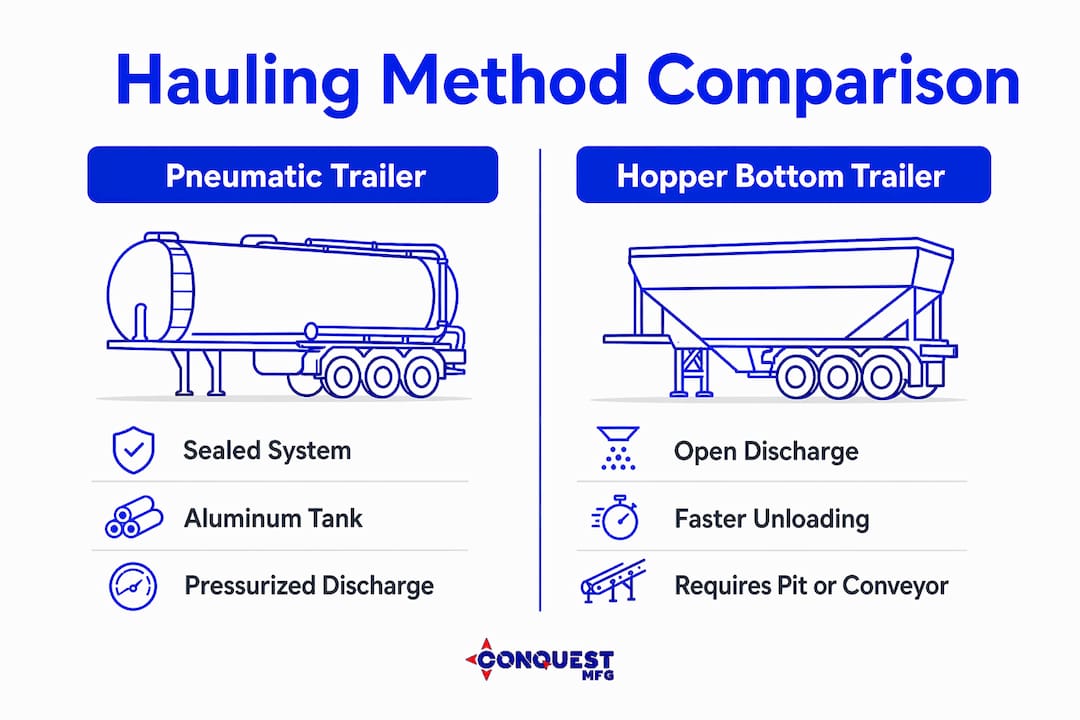
Pneumatic trailers are not the only option for moving granular materials, but they are the preferred choice for most wellsite applications. The comparison with hopper bottom trailers illustrates why.
| Feature | Pneumatic trailer | Hopper bottom trailer |
|---|---|---|
| Discharge method | Pressurized air into sealed silo | Gravity into open pit or conveyor |
| Dust control | Fully enclosed delivery | Open discharge, dust exposure |
| Silo compatibility | Required and direct | Not compatible with sealed silos |
| Unloading speed | 20–40 minutes | Faster, typically under 15 minutes |
| Material purity | High, sealed system | Lower, exposure risk during discharge |
| Site infrastructure need | Sealed silo required | Open pit or belt conveyor required |
The core advantage of pneumatic trailers is dust-controlled, enclosed delivery directly into sealed silos. This matters for two reasons. First, frac sand and cement are hazardous when airborne, creating health and regulatory risks on the wellsite. Second, sealed delivery preserves material quality, which directly affects drilling fluid performance and cement bond integrity.
The benefits of dry bulk trailers in this context include:
- Silo compatibility. Most modern wellsite sand management systems, including those from major completion service providers, are designed exclusively for pneumatic delivery.
- Payload efficiency. Aluminum tank trailers carry maximum legal payload while keeping tare weight low.
- Material integrity. Sealed transport and discharge eliminate moisture and contamination exposure from terminal to silo.
- Regulatory compliance. Enclosed systems reduce fugitive dust emissions, supporting compliance with EPA and OSHA wellsite standards.
The trade-off is unloading time. Hopper bottoms discharge faster, but they require open conveyors or pits that most modern wellsites no longer use. For operations running sealed silo systems, the pneumatic trailer is not a preference. It is the only compatible option.
What operational challenges and risks come with dry bulk trailers in drilling?
The importance of dry bulk trailers in drilling is matched by the complexity of operating them correctly. Several failure points can turn a routine delivery into a costly operational setback.
- Infrastructure incompatibility. Pneumatic trailers require sealed silo systems to discharge. If a wellsite lacks compatible receiving infrastructure, the trailer cannot unload. This causes delivery failures and project delays that ripple through the entire drilling schedule.
- Cross-contamination from improper flushing. Switching materials without fully purging the discharge lines is a serious risk. Failure to flush lines between cement and barite, for example, can contaminate an entire load and render it unusable, with significant financial consequences.
- Seal and pressure failures. Tank seal condition and pressure ratings must be verified before every load cycle. A compromised seal under pressurized discharge can cause structural failure, material loss, and safety hazards for the driver and site crew.
- Driver qualification gaps. Pneumatic trailer operation requires specific skills beyond standard CDL licensing. Drivers must understand blower operation, pressure management, hose connection protocols, and emergency shutoff procedures.
- High capital exposure. Expert operational management is a financial necessity given the high cost of pneumatic equipment. Insurance premiums, maintenance schedules, and equipment replacement cycles all require active oversight to protect the investment.
Pro Tip: Build a pre-load checklist that covers seal inspection, pressure rating verification, and line flush confirmation. Attach it to the driver’s manifest so it becomes a documented part of every load cycle, not an informal habit.
The dry bulk handling process at the wellsite level also demands coordination between the logistics team and the drilling crew. Delivery windows must align with silo capacity and completion stage timing. A trailer arriving when the silo is full creates a queue that delays subsequent loads and disrupts the material supply chain.
How do dry bulk trailers affect drilling logistics and cost efficiency?
The financial impact of pneumatic trailer operations on a drilling project is direct and measurable. Hauling rates for dry bulk drilling materials reflect both the specialized equipment required and the operational complexity involved.
| Material | Loaded rate per mile | Notes |
|---|---|---|
| Dry chemicals | $3.20–$4.50/mile | Higher rate reflects hazmat handling requirements |
| Frac sand | $2.80–$3.50/mile | Volume-driven, competitive on high-frequency routes |
These rates apply to loaded miles. Empty return miles reduce revenue per total mile driven, which is why backhaul coordination is a standard practice among experienced pneumatic fleet operators. Matching outbound drilling material loads with inbound return freight from nearby industrial sites improves revenue per mile and reduces operating cost per ton delivered.
Payload capacity is the other primary lever. At 25–26 tons per load, a pneumatic trailer maximizes the material delivered per truck movement. Reducing truck movements per ton of material delivered lowers road wear costs, driver hours, and fuel consumption across a full drilling campaign.
Reliable dry bulk transport in drilling also reduces rig downtime. A completion stage that runs short of frac sand mid-job forces a shutdown while the next load is dispatched. That downtime carries a cost that far exceeds the hauling rate for the delayed load. Drilling operations that build pneumatic trailer scheduling into their overall project timeline, rather than treating it as an afterthought, consistently achieve better material continuity.
The role of semi trailers in oil industry operations extends to fleet management decisions as well. Operators who own their pneumatic trailers face high capital costs but gain scheduling control. Those who rely on third-party carriers trade control for flexibility. The right model depends on drilling frequency, material volume, and route consistency.
What I’ve learned about dry bulk trailer management that most guides skip
Working closely with drilling logistics teams reveals a consistent pattern. The operations that run smoothly are not the ones with the newest equipment. They are the ones with the tightest pre-load protocols and the clearest communication between the dispatch team and the wellsite crew.
The contamination risk from skipping a line flush is the most underestimated hazard in pneumatic trailer operations. Cement residue in a frac sand load does not just degrade the sand. It can plug the silo inlet and shut down an entire completion stage. I have seen this happen on operations that had otherwise excellent safety records. The fix is simple: a documented flush protocol tied to the load manifest. The problem is that it gets treated as optional when schedules are tight.
The other insight worth stating plainly is that pneumatic trailer advantages are only realized when the receiving infrastructure matches the delivery system. Sending a pneumatic trailer to a site without a compatible sealed silo is not just inefficient. It is a complete delivery failure. Site compatibility verification should happen before the trailer is dispatched, not when the driver arrives.
Trailer selection also matters more than most logistics managers acknowledge. Aluminum tanks on pneumatic trailers carry more payload per legal axle weight than steel tanks. Over a 90-day drilling campaign with multiple loads per day, that payload difference adds up to significant cost savings. Equipment specification is a financial decision, not just a technical one.
— Sam
Conquest Mfg equipment built for drilling material transport
Conquest Mfg manufactures dry bulk pneumatic trailers, portable cement pig silo trailers, and sand chassis designed specifically for the demands of oil and gas drilling logistics. Each unit is built to handle the payload, pressure, and material purity requirements that wellsite operations require.
Drilling professionals looking for equipment that matches their site infrastructure and material handling needs will find relevant specifications across the Conquest Mfg oil industry equipment line. For teams managing bulk material delivery across active drilling campaigns, the construction and drilling equipment catalog covers trailer configurations for frac sand, cement, and dry chemical transport. Conquest Mfg builds to your operational requirements, not to a generic standard.
FAQ
What materials do dry bulk trailers transport to drilling sites?
Dry bulk pneumatic trailers transport frac sand, Portland cement, barite, and dry chemical additives to drilling and completion sites. These materials are loaded in sealed tanks and discharged directly into wellsite silos using pressurized air systems.
How long does it take to unload a dry bulk trailer at a wellsite?
The discharge process takes 20–40 minutes per load, depending on hose length, material density, and the distance from the trailer to the silo inlet.
Can a hopper bottom trailer replace a pneumatic trailer at a drilling site?
No. Pneumatic trailers require sealed silo systems to discharge, and hopper bottoms are not compatible with that infrastructure. Sites using sealed silos must use pneumatic delivery.
What is the biggest contamination risk with dry bulk trailers?
Failing to flush discharge lines between different materials is the primary contamination risk. Residue from cement or barite in a frac sand load can render the entire delivery unusable and damage the receiving silo’s inlet system.
What payload capacity do pneumatic trailers carry for drilling materials?
Pneumatic trailers typically carry 25–26 tons per load of bulk drilling materials. Aluminum tank construction maximizes this payload by reducing tare weight within legal axle limits.
Key takeaways
Dry bulk pneumatic trailers are the only compatible delivery method for sealed wellsite silo systems, making them a non-negotiable part of drilling logistics rather than a preference.
| Point | Details |
|---|---|
| Payload per load | Pneumatic trailers carry 25–26 tons per load, directly affecting cost per ton delivered. |
| Unloading time | Discharge takes 20–40 minutes; schedule deliveries to align with silo capacity and completion timing. |
| Contamination prevention | Flush all discharge lines between material types to prevent costly cross-contamination. |
| Infrastructure match | Verify sealed silo compatibility at the receiving site before dispatching any pneumatic trailer. |
| Cost management | Expert fleet oversight controls insurance, maintenance, and capital costs on high-value pneumatic equipment. |