

Hot shot water delivery is the expedited trucking service that gets critical equipment and materials to oilfield sites before a stalled rig turns into a financial disaster. The term “hot shot water” causes confusion in the field. It does not refer to heated or treated water. It refers to the rapid oilfield transport of time-sensitive loads using Class 3–5 trucks dispatched within minutes of a call. Understanding why hot shot water meets oilfield demand starts with one number: rig downtime costs up to $500,000 per hour. That figure alone explains why operators treat fast freight logistics as a non-negotiable line item.
Why hot shot water meets oilfield demand: the core case
Hot shot trucking is defined as expedited freight delivery of equipment and materials to oilfield sites, not a water heating or treatment process. The name comes from the oil patch tradition of sending a driver “hot” to a location the moment a part is needed. Emergency dispatch happens within 30 minutes in most cases, using trucks under 16,500 lbs gross vehicle weight rating to bypass terminal queues and freight consolidation delays.
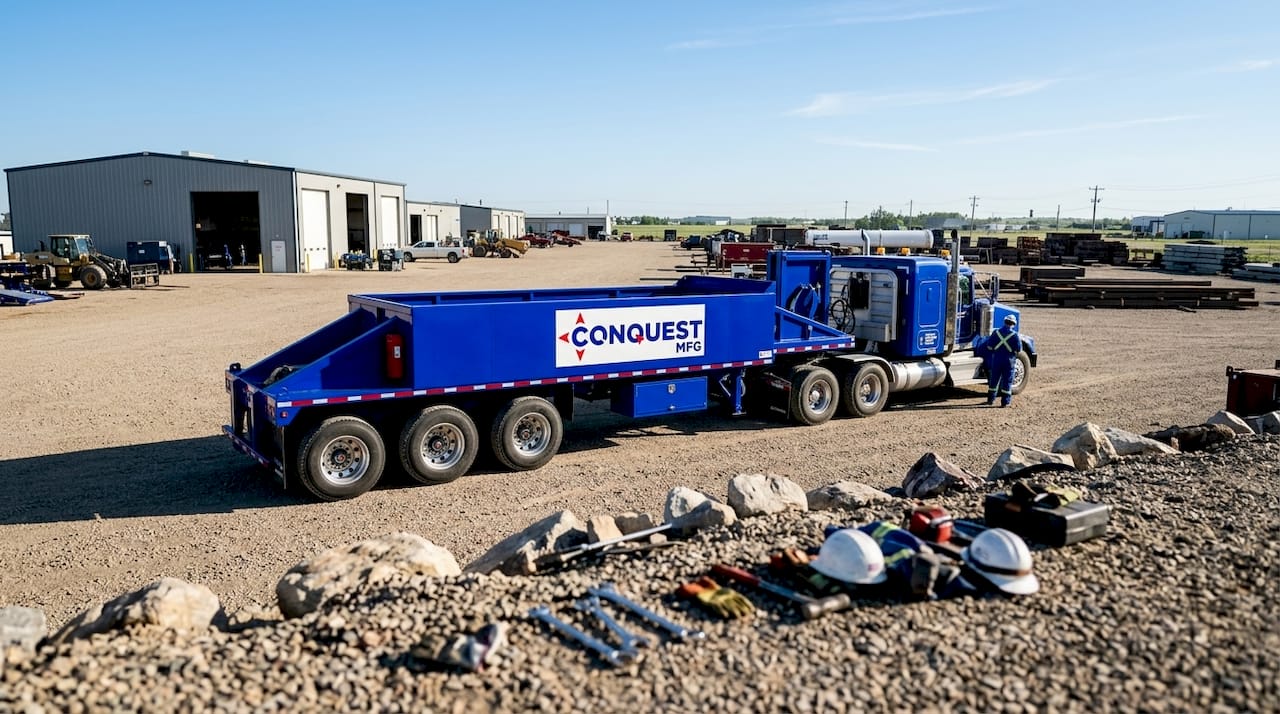
Standard freight moves on schedules built around carrier efficiency. Hot shot trucking moves on your schedule, built around production continuity. A conventional LTL shipment might sit at a terminal for 24–48 hours waiting for a full load. A hot shot truck leaves the moment it is loaded, drives direct, and delivers to the well pad without intermediate stops.
The cost math is straightforward. Emergency hot shot delivery runs $1,500–$2,000 for a 150–500-mile trip at $3–$4 per mile. Rig downtime costs $30,000–$80,000 per day at the low end. Paying $2,000 to restore production within hours versus absorbing $30,000 in idle costs is not a close decision.
Pro Tip: Always pre-qualify your hot shot provider before a breakdown occurs. Verify their dispatch speed, driver certifications, and familiarity with your specific basin before you need them at 2 a.m.
Here is what hot shot services cover in oilfield operations:
- Replacement pump components and valve assemblies
- Drill bits, BHA tools, and downhole equipment
- Chemical additives and wellsite consumables
- Safety equipment and PPE required for site access
- Control panels, sensors, and instrumentation
How hot shot logistics support oilfield equipment transport
Specialized vehicles and driver expertise are what separate effective hot shot services from ordinary courier runs. Class 3–5 trucks paired with gooseneck or flatbed trailers carry loads that a standard pickup cannot handle, but that do not require a full semi. That size range is deliberate. Flatbed alternatives penetrate tight lease roads that a full semi cannot navigate, reaching remote well pads that would otherwise require equipment transfers and added delay.
Driver knowledge is as important as the vehicle itself. Local expertise including gate codes, road conditions, weight restrictions, and safety certification requirements determines whether a load arrives on time or sits at a locked gate for two hours. Experienced drivers know which lease roads flood after rain, which routes have low-clearance crossings, and which operators require specific safety inductions before site entry.
The Permian Basin illustrates the scale of this demand. The basin produces roughly 6 million barrels per day, and rapid response logistics in that region carry a return on investment of approximately 250 to 1 compared to downtime expenses. That ratio reflects the reality that a single avoided day of downtime pays for months of hot shot service contracts.
The four operational advantages that define effective hot shot logistics in major oil basins are:
- Direct routing. Point-to-point delivery without terminal stops cuts transit time by 40–60% compared to standard freight on the same corridor.
- Dedicated dispatch. One driver, one load, one destination. No freight sharing means no schedule conflicts.
- Remote access capability. Smaller vehicle profiles reach locations inaccessible to full semis, covering the last mile that standard carriers cannot.
- Compliance readiness. Certified drivers carry required documentation for oilfield site entry, eliminating gate delays caused by missing paperwork.
Understanding the role of semi trailers in oilfield transport helps operators choose the right vehicle class for each job. Not every urgent load requires a full semi, and not every load fits a Class 3 truck. Matching load size to vehicle type is a core competency of experienced hot shot providers.
Is “hot shot water” about logistics or water treatment?
The phrase “hot shot water” means two different things depending on who is using it. Oilfield operators and logistics professionals use it to describe expedited trucking. Water management engineers use “hot water” or “produced water” to describe thermal and chemical treatment processes. Conflating the two causes procurement failures, misdirected purchase orders, and delayed operations.
Produced water treatment is a separate discipline entirely. Oilfield produced water can carry total dissolved solids up to 300,000 mg/L, requiring industrial membrane systems, evaporation technology, and chemical treatment before reuse or disposal. That process uses fixed or mobile treatment plants, not hot shot trucks. Regions like the Permian Basin use produced water treatment to reduce fresh water consumption, but the logistics of getting treatment chemicals or replacement membranes to the site is where hot shot trucking enters the picture.
Pro Tip: When writing purchase orders or dispatch requests, use “hot shot trucking” or “expedited freight” rather than “hot shot water” to avoid routing your request to a water treatment vendor instead of a logistics provider.
The table below clarifies the distinction:
| Category | Hot shot trucking | Produced water treatment |
|---|---|---|
| Primary function | Expedited equipment delivery | Water purification and reuse |
| Key equipment | Class 3–5 trucks, flatbed trailers | Membrane systems, evaporation units |
| Trigger event | Equipment failure, supply shortage | Produced water volume management |
| Cost driver | Per-mile rate, dispatch speed | Treatment capacity, chemical costs |
| Oilfield role | Logistics and supply chain | Environmental and water management |
The distinction matters for budgeting, vendor selection, and operational planning. Operators who understand oilfield equipment types for each function avoid the costly mistake of calling the wrong vendor during a production emergency.
What are the cost benefits and ROI of hot shot water services?
The economic case for hot shot trucking rests on one principle: the cost of speed is always lower than the cost of stopping. Rig downtime costs $30,000–$80,000 per day at the low end of the range. At the high end, a critical failure on a high-production well can reach $500,000 per hour in lost revenue and idle crew costs.
Hot shot delivery at $3–$4 per mile sounds expensive compared to standard freight rates. The comparison is wrong. Standard freight is not an alternative when a rig is down. The real comparison is hot shot cost versus downtime cost, and that math always favors speed.
The ROI calculation for a typical Permian Basin scenario looks like this:
- Downtime cost avoided: $30,000 (one day at minimum rate)
- Hot shot delivery cost: $2,000 (500-mile emergency run)
- Net savings: $28,000 on a single dispatch
Operators who integrate hot shot logistics into their oilfield logistics planning treat it as production insurance rather than a freight expense. The per-mile rate is a premium, but the alternative is not cheaper freight. The alternative is idle production.
Last-mile control is the other economic lever. Full part sourcing timelines can exceed six months for specialized downhole components. A 12-hour difference in delivery time on a critical replacement part can shift a well restart by days. Hot shot trucking controls that final leg of the supply chain, which is the leg that determines when production resumes.
Key financial considerations for operators evaluating hot shot services:
- Negotiate standing rate agreements before emergencies occur to avoid surge pricing
- Track downtime events by cause to identify which equipment failures most frequently trigger hot shot calls
- Build hot shot dispatch costs into well operating budgets as a fixed contingency line
- Evaluate providers on dispatch speed and local driver knowledge, not just per-mile rate
Key Takeaways
Hot shot trucking is the single most cost-effective tool for preventing oilfield rig downtime, with avoided losses routinely exceeding delivery costs by a factor of 15 or more.
| Point | Details |
|---|---|
| Hot shot is logistics, not water treatment | The term refers to expedited trucking, not heated or treated water. |
| Dispatch speed defines value | Emergency dispatch within 30 minutes prevents downtime costs of $30,000–$80,000 per day. |
| Local driver knowledge is non-negotiable | Gate codes, road conditions, and site certifications determine on-time delivery to remote wells. |
| ROI is approximately 250 to 1 | Avoided downtime in basins like the Permian far exceeds the per-mile cost of hot shot service. |
| Terminology clarity prevents procurement failures | Using “expedited freight” instead of “hot shot water” routes requests to the correct vendor. |
What I have learned about hot shot logistics after years in oilfield supply chains
The operators who get the most value from hot shot services are not the ones who call the fastest. They are the ones who have already done the work before the emergency hits. Pre-qualified providers, standing rate agreements, and drivers who have already run your lease roads once. That preparation is what separates a two-hour fix from a two-day ordeal.
The terminology confusion around “hot shot water” is more damaging than most operators realize. I have seen purchase orders routed to water treatment vendors during production emergencies because someone wrote “hot shot water delivery” on the request. That mistake costs hours. In a downtime scenario, hours cost tens of thousands of dollars.
The trend I watch most closely is the growing use of hot shot trucking as a formal supply chain tier rather than an emergency fallback. Forward-thinking operators are building hot shot dispatch into their maintenance planning cycles, not just their breakdown response protocols. That shift reflects a mature understanding of mobile equipment in oilfield operations and what it actually costs to be unprepared.
My honest advice: stop treating hot shot as a last resort. Build it into your operational plan. The providers who know your roads, your gates, and your equipment are worth more than the ones who are simply cheapest per mile.
— Sam
Conquest Mfg equipment built for oilfield transport demands
Oilfield operators need more than a fast driver. They need the right trailer behind that truck.
Conquest Mfg manufactures specialized trailers and transport equipment built for the demands of oil and gas field logistics. From steel and aluminum vacuum tanks to dry bulk pneumatic trailers, sand hoppers, and intermodal chassis, the product line covers the full range of oilfield material handling needs. Operators who rely on hot shot transport benefit from equipment engineered for durability in remote, high-demand environments. Conquest Mfg’s oilfield industry solutions are designed to match your operational requirements, not a generic catalog spec. Contact Conquest Mfg to discuss the right trailer configuration for your next oilfield logistics build.
FAQ
What does “hot shot water” actually mean in oilfield operations?
Hot shot water refers to expedited trucking of equipment and materials to oilfield sites, not heated or treated water. The term is a logistics designation, not a water management process.
How fast is hot shot dispatch for oilfield emergencies?
Hot shot providers typically dispatch within 30 minutes of a call, using Class 3–5 trucks routed directly to the well site without terminal stops.
How much does emergency hot shot delivery cost per mile?
Emergency hot shot delivery runs $3–$4 per mile, with total trip costs of $1,500–$2,000 for 150–500 mile runs. That cost is a fraction of the $30,000–$80,000 per day in rig downtime it prevents.
Why is local driver knowledge critical for oilfield hot shot runs?
Drivers familiar with lease road gate codes, road conditions, and site safety requirements avoid delays that can extend downtime by hours. Proprietary local knowledge is a core differentiator between effective and ineffective hot shot providers.
How is produced water treatment different from hot shot trucking?
Produced water treatment uses industrial membrane and evaporation systems to manage oilfield wastewater with TDS levels up to 300,000 mg/L. Hot shot trucking is the logistics service that delivers equipment and supplies to the site. The two functions are entirely separate.