
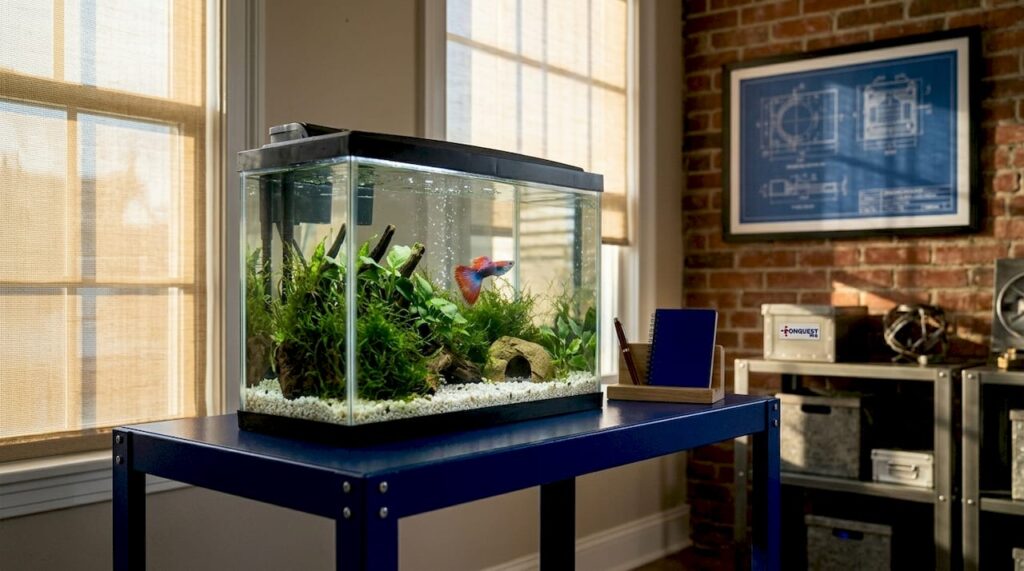
The guppy (Poecilia reticulata) is defined as a small tropical livebearing freshwater fish native to South America, and it ranks among the most widely kept aquarium species in the world. Aquarium enthusiasts prize guppies for their vivid color variations, peaceful temperament, and prolific breeding habits. A single female can produce dozens of live fry every month, which makes population management as important as basic care. Getting the fundamentals right, from tank cycling to feeding protocols, determines whether your guppies thrive or merely survive.
What is the right way to cycle a guppy tank?
Tank cycling is a biological safety requirement, not an optional setup step. Without established beneficial bacteria, toxic ammonia and nitrite accumulate rapidly and can kill guppies within days. The nitrogen cycle converts ammonia (produced by fish waste and uneaten food) into nitrite, then into the far less harmful nitrate. Your job is to build the bacterial colonies that drive those conversions before any fish enter the water.
Fishless cycling is the safest and most controlled method. You dose the empty tank with ammonia to feed developing bacteria without risking any livestock. Here is the standard process:
- Fill the tank with dechlorinated water and set the heater to 26°C to accelerate bacterial growth.
- Add pure ammonia to reach a concentration of 1 to 3 ppm, confirmed with a liquid test kit such as the API Master Test Kit.
- Test ammonia and nitrite levels every two days. Nitrite will spike first, signaling that Nitrosomonas bacteria are active.
- Continue dosing ammonia as nitrite rises. When nitrite begins to fall and nitrate appears, Nitrobacter bacteria are establishing.
- The cycle is complete when ammonia and nitrite reach zero within 24 hours of a full ammonia dose. Do not rely on calendar time alone.
- Perform a large water change to reduce nitrate below 20 ppm before adding guppies.
The full process typically takes two to four weeks. Rushing it by adding fish too early is the single most common mistake new aquarists make.
Pro Tip: Maintain stable pH throughout cycling by using a carbonate buffer. Bacterial activity slows significantly when pH drops below 7.0, which can stall or restart your cycle entirely.
What tank setup do guppies actually need?
Guppies thrive in a minimum tank length of 60 cm for a small group of six to eight fish. Smaller tanks create unstable water chemistry because dilution capacity is low, meaning a single missed water change or overfeeding event can spike ammonia fast. Larger tanks, 75 liters and above, give you a meaningful buffer against parameter swings.
Target water parameters for a healthy guppy tank setup are:
- Temperature: 22 to 26°C for adults; fry grow faster at 26 to 27°C
- pH: 6.8 to 7.8, with 7.2 to 7.4 being the sweet spot
- Hardness: Moderately hard water, around 8 to 12 dGH
- Ammonia and nitrite: Zero at all times
- Nitrate: Below 20 ppm with regular water changes
Sudden parameter fluctuations cause more harm to guppies than sustained exposure to conditions near the edge of their tolerance range. Consistency is the priority. Use a reliable digital thermometer and test water chemistry weekly.
For tank mates, guppies coexist well with Corydoras catfish, neon tetras, ember tetras, and harlequin rasboras. Avoid tiger barbs, serpae tetras, and any cichlid species that nip fins or display territorial aggression. Dense planting with species like Java fern, Vallisneria, and floating hornwort gives guppies cover and reduces stress.
Pro Tip: A larger tank does not just support more fish. It creates a more stable ecosystem where temperature and chemistry hold steady longer between maintenance sessions, which directly reduces stress-related disease.
How should you feed guppies for best health?
Guppies are omnivores, and a varied diet produces the best color, growth, and breeding results. Relying on a single flake food leaves nutritional gaps. The best guppy food approach combines several sources:
- Dry foods: High-quality micro pellets or flakes from brands like Hikari or New Life Spectrum as the daily base
- Live foods: Baby brine shrimp (Artemia nauplii), micro worms, and daphnia to stimulate natural feeding behavior and boost conditioning for breeding
- Frozen foods: Bloodworms and frozen brine shrimp as weekly supplements
- Vegetable matter: Blanched spinach or spirulina-based flakes to round out the diet
Feed guppies twice daily, offering only what they consume within 30 to 60 seconds. That rule exists because uneaten food decays and drives ammonia spikes, which directly undermines the water quality you worked to establish during cycling. Remove any visible leftovers immediately after feeding.
Fry require a different approach. Their mouths are too small for standard flake food. Feed fry three to five times daily using finely crushed flakes, powdered fry food, or freshly hatched baby brine shrimp. More frequent feeding accelerates growth but demands more frequent water changes to compensate.
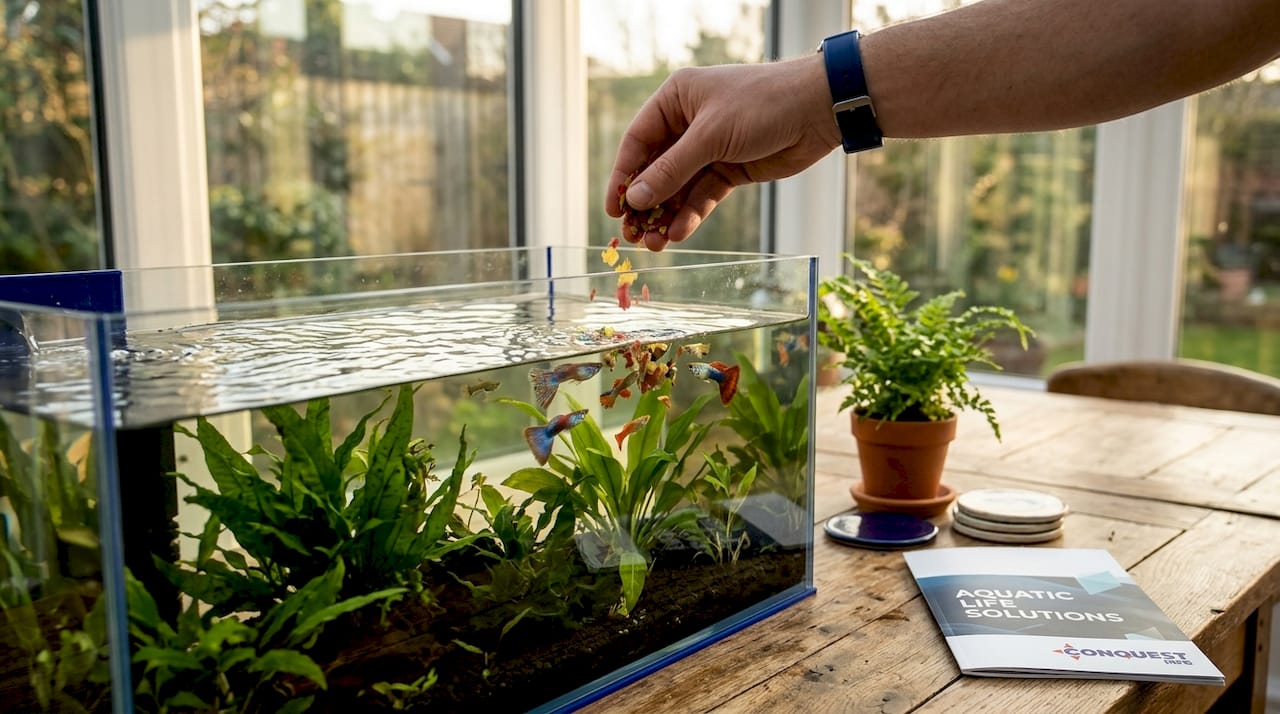
Pro Tip: Pair every feeding session with a quick visual check of the tank. Uneaten food sitting on the substrate is a reliable early warning sign that you are overfeeding or that a fish is unwell and not competing for food.
How do you breed guppies and raise healthy fry?
Breeding guppies is straightforward once you understand the reproductive cycle. Guppies are livebearers, meaning females give birth to free-swimming fry rather than laying eggs. Gestation lasts 21 to 30 days, with warmer water shortening the interval. A healthy female can produce 20 to 60 fry per birth and repeat the cycle roughly every month.
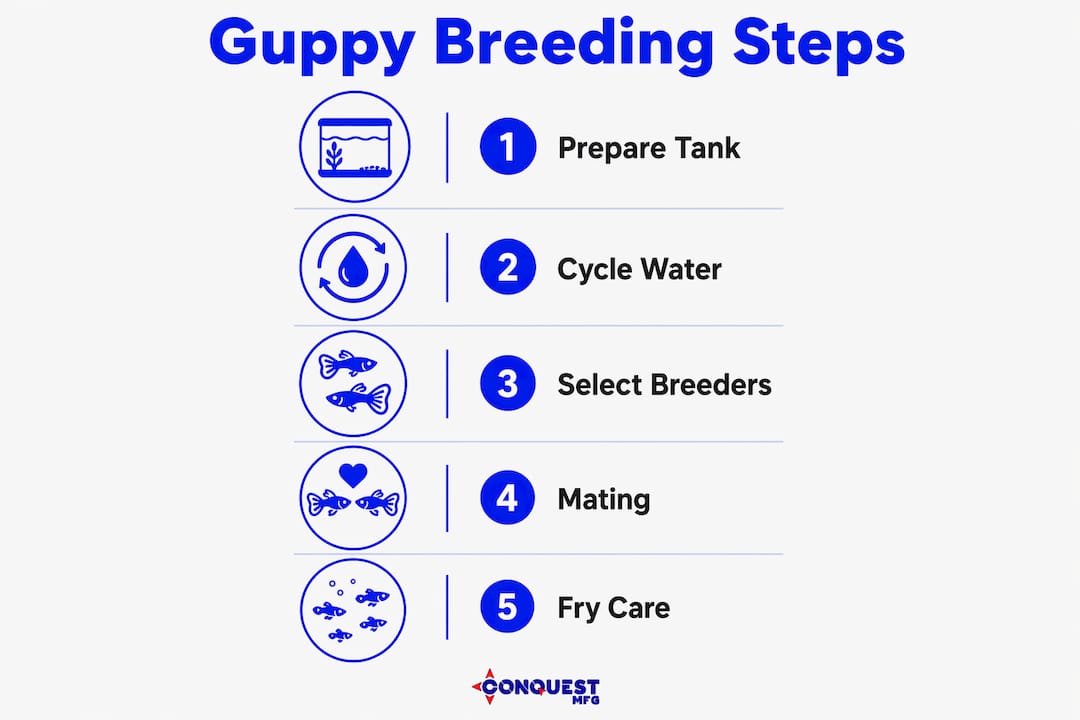
Follow these steps to manage breeding effectively:
- Identify pregnancy early. The gravid spot, a dark patch near the female’s anal fin, darkens progressively as pregnancy advances. A boxy, squared-off abdomen indicates birth is close.
- Prepare a breeding box or separate tank. Move the female when birth appears imminent, not weeks in advance.
- Limit confinement time. Keep females in breeding boxes for under 48 hours to minimize stress. Prolonged confinement causes premature birth and reduces fry viability.
- Return the female immediately after birth. Adult guppies, including the mother, will eat fry given the opportunity.
- Set up a grow-out tank. A separate tank with a sponge filter, floating plants like Salvinia or duckweed, and stable water at 26 to 27°C gives fry the best survival conditions.
| Method | Fry survival rate | Stress on female | Practical effort |
|---|---|---|---|
| Heavily planted main tank | 20 to 40% | Low | Low |
| Breeding box (short term) | 60 to 80% | Moderate | Moderate |
| Dedicated grow-out tank | 80 to 95% | Low | High |
Most breeding failures trace back to fry predation and poor water quality in the grow-out environment, not to problems during gestation. Investing in a separate fry tank pays off immediately in survival rates.
Pro Tip: Separate male and female fry at around four to six weeks of age, before males reach sexual maturity. This gives you control over breeding pace and prevents unplanned population explosions.
Common guppy care challenges and how to solve them
Most problems in guppy keeping are preventable with consistent observation and maintenance. The issues below appear most often:
- Ammonia or nitrite spikes: Perform an immediate 30 to 50% water change and dose with a product like Seachem Prime to detoxify ammonia temporarily. Identify the cause, whether overfeeding, a dead fish, or an incomplete cycle, before the next feeding.
- Fin rot: A bacterial infection signaled by ragged, discolored fin edges. Improve water quality first. Treat with an antibiotic product like API Fin and Body Cure if deterioration continues.
- White spot (ich): Caused by Ichthyophthirius multifiliis, presenting as white salt-like grains on the body. Raise temperature gradually to 28°C and treat with a copper-based medication like Seachem Cupramine.
- Fry predation: Add dense floating plants such as Java moss or Salvinia to give fry hiding cover. Move fry to a grow-out tank within 24 hours of birth for maximum survival.
- Overbreeding: Separate males and females into different tanks. Even one breeding session produces enough fry to overwhelm a small setup within months.
Pro Tip: Test water parameters every week on a fixed schedule rather than only when fish appear sick. Most disease outbreaks are preceded by detectable water quality decline days before visible symptoms appear.
Key takeaways
Successful guppy keeping depends on completing the nitrogen cycle before adding fish, maintaining consistent water parameters, and managing breeding with dedicated fry housing.
| Point | Details |
|---|---|
| Complete the nitrogen cycle first | Dose ammonia to 1 to 3 ppm and confirm zero readings before adding any guppies. |
| Match water parameters precisely | Hold temperature at 22 to 26°C and pH at 6.8 to 7.8 with no sudden fluctuations. |
| Feed small amounts twice daily | Apply the 30 to 60 second rule to prevent ammonia spikes from uneaten food. |
| Limit breeding box time | Transfer females only when birth is imminent and return them within 48 hours. |
| Use a dedicated grow-out tank | Separate fry from adults to raise survival rates from 20 to 40% up to 80 to 95%. |
What years of guppy keeping actually taught me
The advice I wish someone had given me early on is simple: the tank matters far more than the fish. I spent months troubleshooting sick guppies before I realized the problem was always the water, not the animals. Once I committed to weekly testing with a liquid kit rather than strip tests, my fish stopped dying for no apparent reason.
Breeding boxes get oversold in beginner guides. I have seen more stressed females abort fry early from confinement than I have seen fry eaten in a well-planted tank. My preference now is a heavily planted main tank for low-stress births, combined with a small dedicated grow-out tank where I move fry within the first day. That combination gives me survival rates above 70% without stressing the mother.
For anyone starting out, I recommend a group of six guppies, two males and four females, in a properly cycled 60-liter tank. That ratio reduces male harassment of females, which is a real welfare issue that most beginner guides ignore. Give yourself three months before attempting serious breeding. The patience you invest in the foundation pays back every time.
— Peter
Equipment that supports a healthy aquarium environment

Maintaining stable water quality in a guppy tank depends on reliable filtration and water management equipment. At Conquestmfgusa, we design and manufacture specialist equipment built to perform under demanding conditions, from vacuum tank systems to advanced fluid handling solutions. The same engineering principles that drive our industrial products, precision, durability, and consistent performance, apply directly to the reliability standards aquarium filtration equipment must meet. Explore our product range to see how Conquestmfgusa’s commitment to manufacturing quality translates into dependable solutions for water management challenges of every scale.
FAQ
What is the ideal water temperature for guppies?
Guppies thrive at 22 to 26°C for adults, with fry growing fastest at 26 to 27°C. Sudden temperature swings cause more harm than stable conditions near the edge of the tolerance range.
How long does a guppy pregnancy last?
Guppy gestation lasts 21 to 30 days depending on water temperature. Warmer water shortens the interval, and a healthy female can give birth roughly once per month.
How often should you feed guppies?
Feed adult guppies twice daily, offering only what they consume within 30 to 60 seconds. Feed fry three to five times daily using finely crushed food or baby brine shrimp.
How do you prevent guppy fry from being eaten?
Move fry to a dedicated grow-out tank within 24 hours of birth, or provide dense floating plant cover like Java moss in the main tank. Breeding boxes work but should not confine females for more than 48 hours.
What causes ammonia spikes in a guppy tank?
Overfeeding, a dead fish, or an incomplete nitrogen cycle are the three most common causes. Test water weekly and perform a 30 to 50% water change immediately if ammonia rises above 0.25 ppm.