
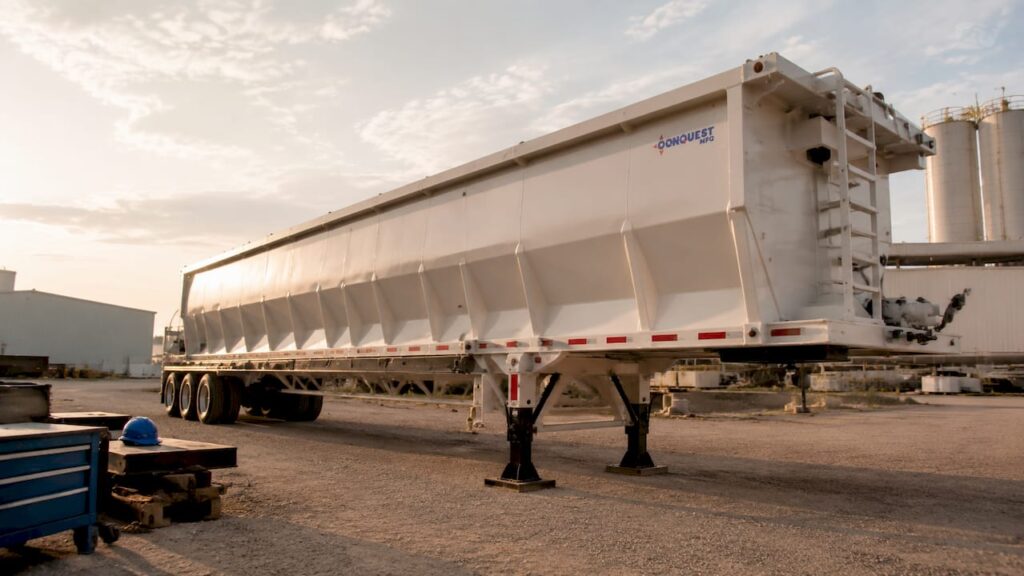
A bulk storage pig is a large, horizontal tank trailer engineered to store dry bulk powders like cement, lime, fly ash, and frac sand directly on your job site. Each unit holds approximately 100–150 tons of material, the equivalent of four to five standard pneumatic truck loads, giving you a buffer against delivery delays without the infrastructure of a permanent silo. Unlike stationary silos, a storage pig can be set up in a matter of hours and relocated once empty, making it the go-to solution for temporary, high-volume construction and industrial projects.
Key facts site managers need to know upfront:
- Material types: cement, lime, fly ash, frac sand, barite, soda ash, activated carbon
- Capacity: typically 100–150 tons per unit
- Mobility: trailer-mounted, towable by standard semi-truck when empty
- Transfer method: pneumatic blower system, electric or diesel
- Procurement: available for both rental and outright purchase
- Included equipment: blower, pressure system, safety valves, gauges, and dust filters on most units
How should you place a bulk storage pig on site?
Placement is where most operational problems start. Site managers should position storage pigs on hard, level ground with good drainage, well away from pedestrian traffic zones. The unit needs clear access for delivery trucks on at least one side, and the area around the discharge ports must stay clear for hose connections and material transfer operations.
- Ground stability: Fully lower and lock all support legs before loading. On soft or uneven terrain, place wooden or steel pads under each landing leg to distribute the load and prevent sinking.
- Drainage: Standing water under the unit accelerates corrosion and creates a slip hazard. Grade the pad or choose a naturally draining surface.
- Power proximity: Position the pig within practical reach of your generator or site power panel to minimize blower cable runs.
- Truck access: Delivery pneumatic trucks need a straight or wide-arc approach. Plan the pig location before site fencing goes up.
Pro Tip: Mark the pig footprint and leg positions on your site plan before delivery. Repositioning a loaded pig is not possible, so getting placement right the first time saves you significant rework.
What blower and generator do you need to run a storage pig?
The blower is the operational heart of any storage pig setup. Electric blowers are the preferred choice when site power or a generator is available; they are easier to operate and require less day-to-day maintenance than diesel units. Diesel blowers work well on remote sites but demand consistent fuel supply and regular filter servicing to stay reliable.
- Blower size: Most pig units use a 50 HP blower for pneumatic material transfer.
- Generator requirement: A generator capable of 175 kW is needed to handle the high startup draw of the blower motor. Once running, the blower operates on approximately 100 kW.
- Filter maintenance: Air filter and pre-cleaner upkeep is critical. Neglected filters allow dust contamination that damages the blower and contaminates stored material.
- Standalone blower rentals: Blowers are available as separate rentals if you already own a pig unit or need a backup.
Diesel blower operation adds a layer of logistics: fuel deliveries, oil checks, and filter swaps become part of your daily site routine. Factor that labor into your cost comparison before choosing diesel over electric.
Should you rent or buy a bulk storage pig?
The right answer depends almost entirely on how long your project runs and how often you need this type of storage. Renting eliminates upfront capital investment and generally eases maintenance responsibilities and typically includes a full maintenance program, so your team focuses on the project rather than equipment upkeep. Purchase makes sense when you run multiple projects per year and can keep the asset deployed continuously.
- Rent when: the project is short-term or seasonal, cash flow is a priority, or you want maintenance included in the agreement.
- Buy when: you have predictable, recurring demand across multiple sites and want full asset control.
- Rental inclusions: most rental agreements cover the trailer unit, blower, pressure system, safety valves, and maintenance support.
- Total cost of ownership: purchase price plus annual maintenance, blower servicing, and storage between projects can exceed rental costs on projects under 12 months.
Rental decisions largely depend on project duration and usage frequency. For contractors who use a pig two or three times a year, ownership often costs more than it saves.
How does a storage pig differ from a stationary silo?
The core difference is mobility versus permanence. A stationary silo is a fixed structure, typically concrete or steel, designed for long-term storage at a plant or facility. It offers larger total capacity but requires site preparation, foundation work, and permitting before it holds a single ton of material.
- Setup time: A storage pig is operational within hours of delivery. A stationary silo requires days or weeks of construction.
- Relocation: Pigs move between sites when empty. Silos do not move at all.
- Capacity: Stationary silos can exceed the 100–150 ton range of a pig, making them better suited for permanent, high-throughput facilities.
- Cost and infrastructure: Pigs require no foundation or permitting in most jurisdictions. Silos require both, plus utility connections.
- Material protection: Both protect material from moisture and contamination, but pigs do it on a temporary, deployable basis.
For highway, bridge, dam, or airport runway projects where the work site changes over months, a storage pig delivers the capacity you need without locking you into permanent infrastructure.
Comparing top bulk storage pig trailers in the US market for 2026
Three suppliers dominate the US market for portable storage pig trailers: Retesa, Mintek, and TrailersonTexas. Each takes a slightly different approach to capacity, blower integration, and procurement flexibility.
| Product | Storage capacity | Mobility | Blower type | Generator requirement | Rental availability | Best for |
|---|---|---|---|---|---|---|
| Retesa Storage Pig Trailer | Up to 150 tons | Multi-axle trailer | Electric or diesel | 175 kW startup | Yes | Large-scale construction with quick deployment needs |
| Mintek Storage PIG | 100–120 tons | Single or multi-axle | Electric (diesel on request) | 175 kW startup / 100 kW running | Yes, with maintenance program | Remote or temporary industrial sites |
| TrailersonTexas Bulk Storage Pig | Up to 150 tons | Multi-axle trailer | Electric or diesel | 175 kW startup | Yes | Contractors needing rapid setup and relocation |
Mintek Storage PIG stands out for its expert-backed rental program. Every rental includes the trailer, blower, pressure system, safety valves, gauges, and dust filters, with a full maintenance program built into the agreement. Their published FAQ is the most detailed technical resource available for site managers new to pig operations, covering generator sizing, placement, and blower selection in plain language.
Retesa Storage Pig Trailer offers in-stock availability across multiple configurations, which matters when your project timeline does not allow for a long lead time. Retesa lists varied capacity and power options, making it a practical choice for projects that need a customized pneumatic transfer setup.
TrailersonTexas carries in-stock cement pig trailers with published specs, including a 4,096 cubic foot capacity unit built on a heavy-duty chassis with Bendix ABS and DOT lighting. Their inventory is listed with model year and dimensions, which gives procurement teams the concrete data needed for compliance checks and site planning.
Best practices for getting the most from your storage pig onsite
Operational efficiency with a storage pig comes down to three things: site preparation, material matching, and blower discipline.
- Ground stability first: Use wooden or steel pads under landing legs on any surface that is not reinforced concrete or compacted gravel. Support legs carry extreme loads when the unit is fully loaded.
- Match material to equipment: Matching storage system design to bulk material properties prevents bridging and ratholing inside the pig. Coarser or wetter materials may require different hopper angles or aeration systems.
- Blower filter discipline: Check and clean air filters and pre-cleaners daily on diesel units, and at least weekly on electric units. A clogged filter reduces transfer efficiency and risks contaminating your stored material.
- Integrate early in logistics planning: Incorporating storage pigs early in project staging helps you absorb demand surges and bridge gaps between delivery schedules and production needs.
Pro Tip: Plan your pig placement and blower power source before the first delivery truck arrives. Repositioning after loading is not an option, and running extension cables across active traffic zones creates a safety hazard.
What comes with a pig rental or purchase?
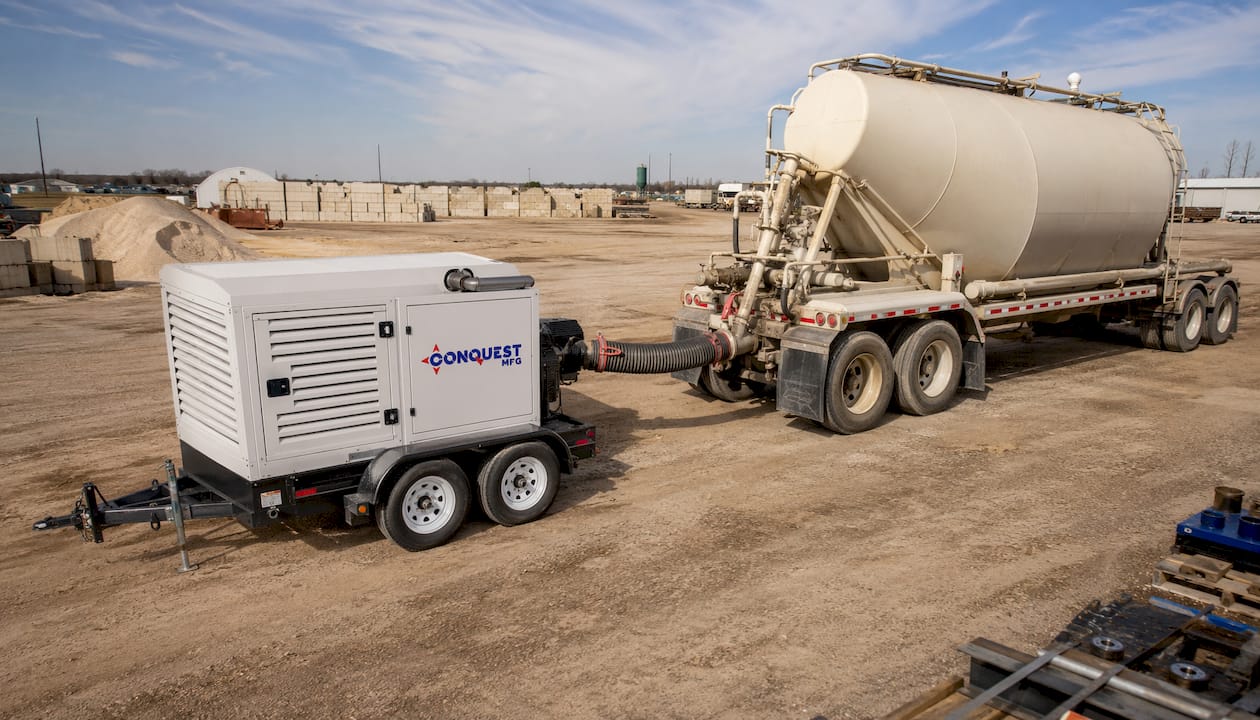
A standard Mintek pig rental includes the trailer unit, an electric or diesel blower depending on site conditions, and a built-in pressure system with safety valves, gauges, and dust filters. The unit arrives ready for dry bulk storage and pneumatic material transfer.
What you supply on your end:
- Flexible hoses for connecting delivery trucks to intake ports and for transferring material to your spreader truck or secondary silo
- Site power or a generator for electric blower operation; fuel and basic operation support for diesel units
- Wooden or steel pads if placing the unit on soft or uneven ground
Purchased units typically include the same core equipment. Confirm with your supplier whether the blower is included in the purchase price or quoted separately, as configurations vary by manufacturer.
What are the operational limits of a loaded storage pig?
The single most important operational rule: a storage pig must be completely empty before it can be relocated. Moving a loaded pig causes structural damage and creates serious safety risks, including leg failure and trailer instability during transport.
Beyond relocation, loaded pigs have other practical constraints. The unit cannot be repositioned on site once filled, so placement decisions are permanent for the duration of that fill cycle. Access for delivery trucks must remain clear at all times, as a blocked intake port means halting your material supply. Discharge rates depend on blower performance, so a failing blower on a fully loaded pig can stall your entire operation until the unit is serviced.
How do you get started with a storage pig on your project?
Getting a storage pig operational follows a straightforward sequence. Contact your supplier, confirm material type and volume requirements, and specify whether you need electric or diesel blower capability. Most suppliers can deliver within a few days for in-stock units.
Once on site, the delivery crew lowers and locks all support legs, connects the blower, and verifies pressure system integrity before the first pneumatic load arrives. Your team handles hose connections to delivery trucks and manages the transfer to your spreader or secondary storage. For a detailed walkthrough of bulk cement pig usage, Conquest Mfg publishes practical operational guidance covering the full process from delivery to discharge.
How do you size a storage pig for your project?
Sizing comes down to two variables: daily material consumption and delivery frequency. A project consuming 50 tons of cement per day with deliveries every three days needs at least 150 tons of onsite storage to maintain a continuous supply buffer.
Most standard pig units hold 100–120 tons, with some models reaching 150 tons. For projects with higher daily throughput, two pigs operating in parallel is a common solution. Material density also affects usable capacity: fly ash is lighter than cement, so a 150-ton-rated unit may hold a larger volume of fly ash by cubic feet but the same weight limit applies regardless of material. Always confirm rated capacity in tons with your supplier for the specific material you are storing, and cross-reference against your bulk material handling workflow to size correctly.
Step-by-step setup and installation process
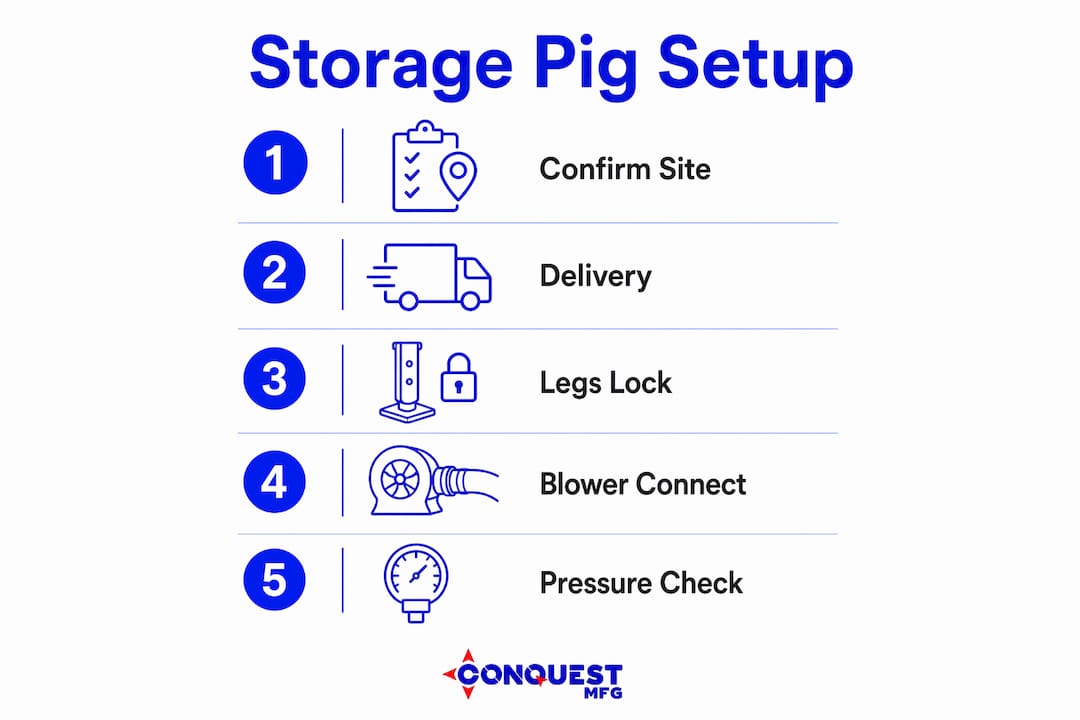
Setup follows a consistent sequence across most pig models:
- Site preparation: Confirm the pad is hard, level, and drained. Place stabilizing pads if needed.
- Delivery and positioning: The supplier delivers the pig on a semi-truck. Position it precisely before unhitching, as repositioning after setup is not practical.
- Leg deployment: Lower and lock all support legs fully. Verify each leg is seated on its pad and bearing load evenly.
- Blower connection: Connect the electric blower to your generator or site power panel, or fuel and start the diesel unit.
- Pressure system check: Verify safety valves, gauges, and dust filters are seated and functional before accepting the first load.
- First fill: Connect the delivery truck’s pneumatic hose to the pig’s intake port and transfer material. Monitor pressure gauges during fill.
The entire process from delivery to first fill typically takes two to four hours on a prepared site.
Maintenance requirements and cleaning procedures
Routine maintenance keeps a storage pig operational and protects material quality. For blower-equipped units, check air filters and pre-cleaners at every shift change on diesel units and weekly on electric units. Replace filters on schedule rather than waiting for performance to drop.
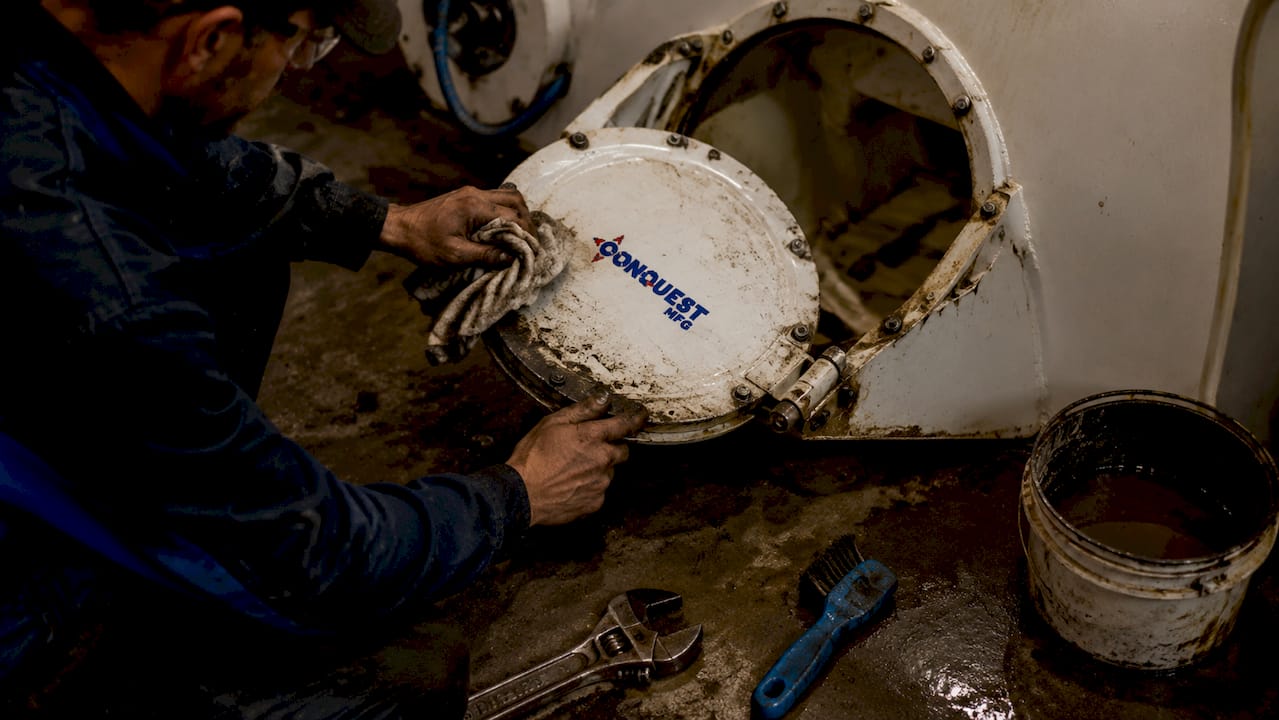
Between material types or at the end of a project, the pig interior needs to be fully emptied and blown clear of residual powder. Mixing incompatible materials, such as lime and fly ash, without a full purge between fills can cause contamination and quality failures downstream. Inspect the pressure system, safety valves, and hose connections monthly. On purchased units, grease landing leg threads and check chassis welds annually.
Safety considerations and regulatory compliance
Storage pigs operate under pressure during pneumatic transfer, which creates specific safety obligations. All pressure relief valves must be functional and rated for the system’s operating pressure before each fill cycle. Never bypass or cap a safety valve.
Personnel must stay clear of hose connections and discharge ports during active transfer. Dust from dry bulk powders like lime and fly ash poses a respiratory hazard; require appropriate PPE in the transfer zone. For safe dry bulk transport and onsite handling, follow OSHA’s standards for hazardous dust exposure and ensure your site safety plan addresses pig operations specifically. DOT regulations apply to pig trailers during road transport, including lighting, braking, and axle weight compliance.
How long does it take from order to operational use?
For in-stock units, the typical timeline runs three to seven business days from order confirmation to delivery, depending on your location and the supplier’s logistics capacity. Custom configurations or non-stock sizes extend that to four to eight weeks.
Once on site, setup takes two to four hours. The critical path item is usually generator availability or site power confirmation, not the pig itself. Order your blower power source in parallel with the pig to avoid a gap between delivery and first operational use.
Conquest Mfg builds the equipment behind your bulk storage operation
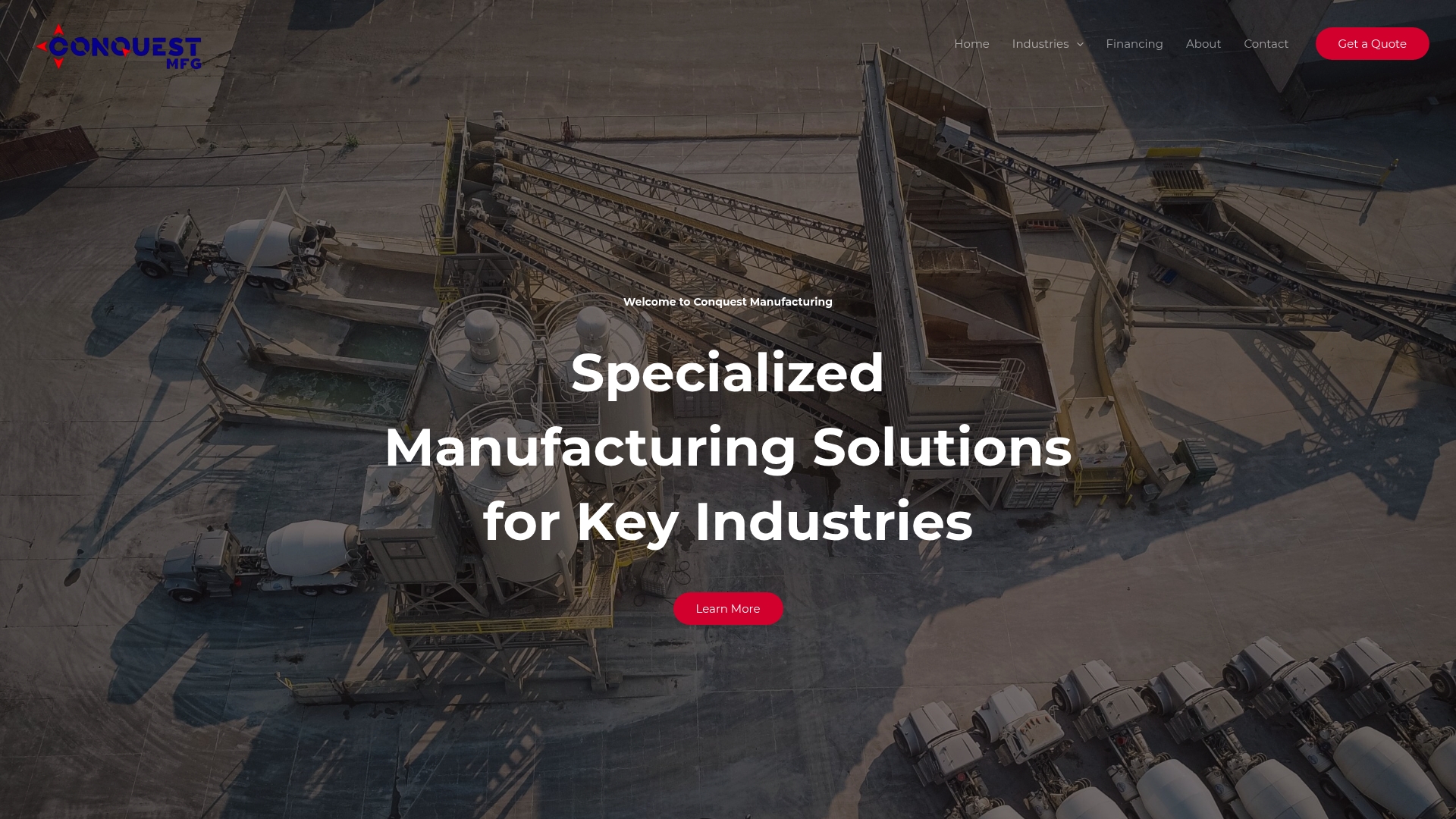
Conquest Mfg manufactures portable cement pig silo trailers, dry bulk pneumatic trailers, and a full range of semi-trailer equipment for construction, oil and gas, and industrial operations across the United States. With over 35 years of engineering experience, Conquest Mfg designs equipment built for the demands of real job sites, not showroom floors.
If you are evaluating storage pig suppliers or need a trailer solution tailored to your specific material and site conditions, Conquest Mfg offers an alternative to off-the-shelf rental programs. Explore the full construction equipment portfolio to see how Conquest Mfg’s portable pig trailers and pneumatic handling equipment fit your project requirements. For projects where pneumatic trailer performance is a deciding factor, Conquest Mfg’s engineering team can spec the right unit for your material type, volume, and site conditions.
Key Takeaways
A storage pig holds 100–150 tons of dry bulk material, sets up in hours, and must be completely empty before relocation, making placement and power planning the two decisions that determine operational success.
| Point | Details |
|---|---|
| Capacity range | Standard units hold 100–150 tons, equivalent to four to five pneumatic truck loads. |
| Generator sizing | A generator sized to cover startup power with lower running load. |
| Rent vs. buy | Rental suits short-term projects and includes maintenance; purchase pays off with continuous multi-site use. |
| No-move rule | Pigs must be fully empty before relocation; moving a loaded unit risks structural failure. |
| Conquest Mfg option | Conquest Mfg manufactures portable pig silo trailers and pneumatic bulk trailers for construction and industrial sites across the US. |