
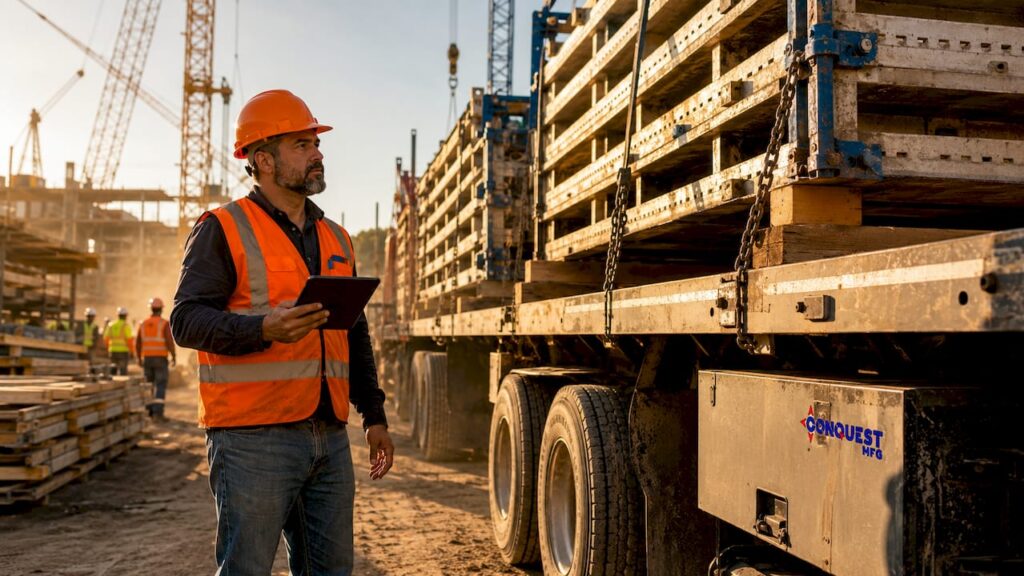
Semi trailers are defined as freight vehicles without a front axle, designed to couple with a tractor unit that bears the front load, making them the backbone of heavy equipment transport and construction logistics solutions across the United States. The role of semi trailers in construction extends far beyond moving dirt and steel. These vehicles carry excavators, concrete batch plant components, prefabricated wall panels, and mobile work units to job sites that rigid trucks simply cannot serve at scale. Transportation in construction projects depends on this flexibility. With 2026 industry data confirming dramatic cost and fuel advantages over traditional trucks, construction professionals and logistics managers who treat semi trailers as strategic assets consistently outperform those who treat them as commodity rentals.
What is the role of semi trailers in construction?
Semi trailers serve three core functions on construction projects: moving heavy machinery between sites, delivering bulk building materials, and deploying mobile work units. Each function requires a different trailer configuration, and selecting the wrong one costs time and money. The industry term for this specialized transport category is heavy haulage, and it covers everything from standard flatbed loads to oversized modular moves that require route surveys and pilot vehicles.
The structural advantage of a semi trailer over a rigid truck is payload capacity. A tractor-trailer combination distributes weight across multiple axles, allowing legal gross vehicle weights that a rigid truck cannot match. That capacity directly reduces the number of trips required to supply a job site, which cuts fuel costs, driver hours, and road wear fees.
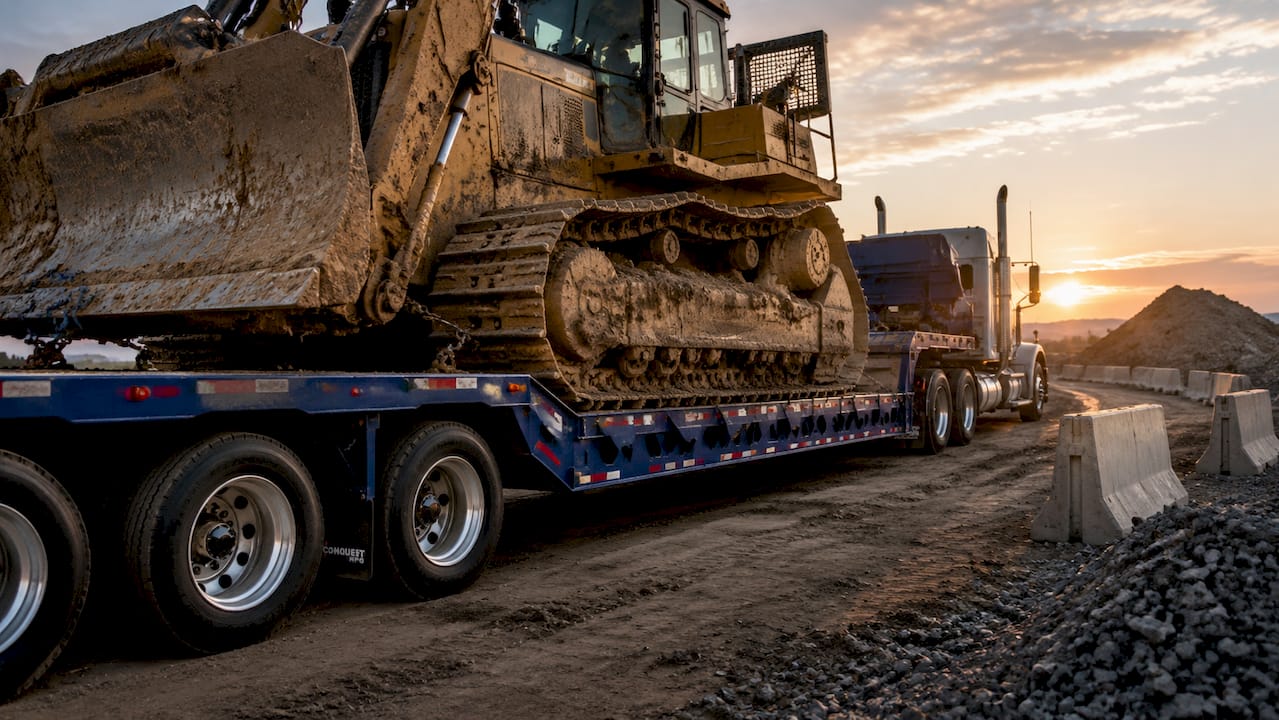
Construction logistics managers also use semi trailers to move prefabricated and modular building components. As off-site construction grows, the demand for trailers capable of carrying large, dimensionally sensitive loads increases. A flatbed or lowbed semi trailer is the standard choice for these moves because it keeps the load close to the road surface and allows crane offloading at the destination.
Which trailer types are best for construction?
Choosing the right trailer type is the single most consequential decision in construction transport planning. The four variants used most often are flatbeds, lowbeds, tippers, and box trailers. Each serves a distinct purpose.
| Trailer Type | Typical Capacity | Primary Construction Use |
|---|---|---|
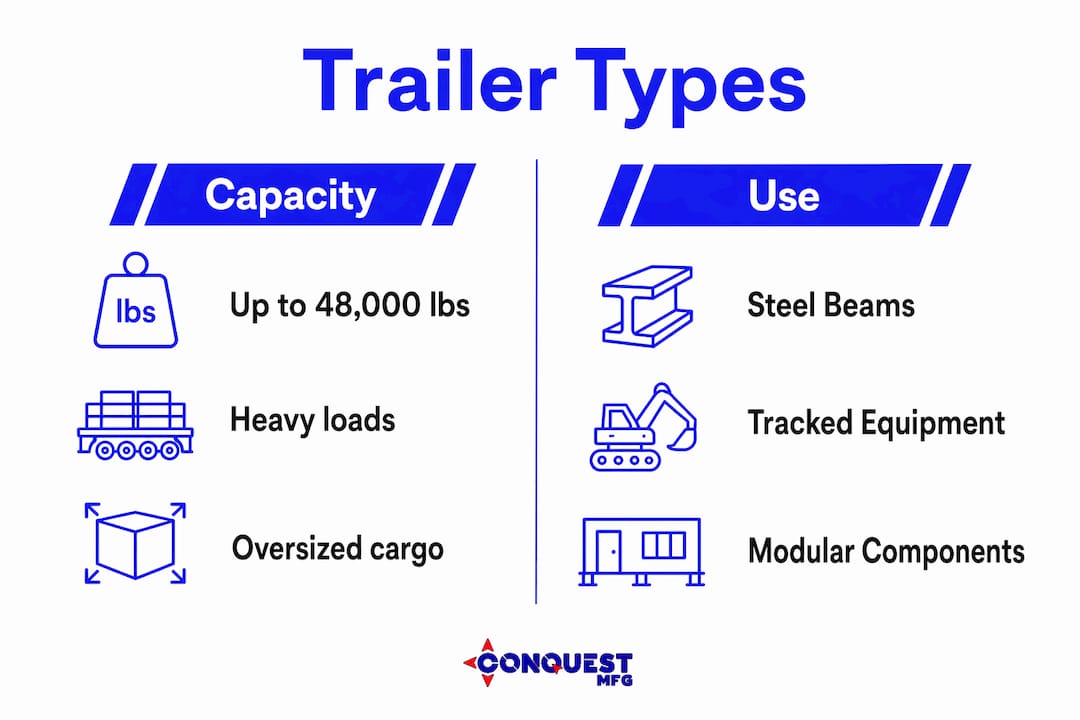
| Flatbed | Up to 48,000 lbs | Steel beams, lumber, prefab panels |
| Lowbed (Lowboy) | Up to 80,000 lbs | Excavators, cranes, bulldozers |
| Tipper (End Dump) | Up to 60,000 lbs | Aggregate, sand, demolition debris |
| Box/Enclosed | Up to 45,000 lbs | Tools, equipment, sensitive materials |
| Modular Combination | Up to 51 tonnes | Oversized plant, bridge sections |
Modular combination trailers are the most capable option for oversized construction loads. They link multiple trailer sections to distribute weight across additional axles, enabling legal transport of loads that would otherwise require special permits and road closures. Fewer than 3% of semi trailers are designed for vertical crane lifting, which limits intermodal flexibility on tight urban sites. That constraint matters when you are planning a high-rise project where crane access is restricted.
Lowbeds are the standard choice for heavy equipment transport of tracked machinery. The deck sits close to the ground, keeping the center of gravity low and reducing the risk of load shift during transit. Flatbeds remain the most versatile option for general construction materials because they allow loading from three sides and accommodate a wide range of cargo dimensions.
Pro Tip: When specifying a trailer for tracked equipment like excavators or pavers, confirm the deck height and ramp angle before booking. A deck that is too high forces a steep ramp angle, which can damage undercarriage components on low-clearance machines.
How do semi trailers improve efficiency and cut costs?
The economic case for semi trailers in construction logistics is direct and well-supported by current data. Transitioning to semi trailers reduces single transportation costs by over 30%, improves fuel efficiency per unit by up to 30%, and lowers transport costs per unit by 35–50% compared to rigid trucks. Those numbers mean a mid-size contractor running 20 material deliveries per week can realistically cut transport spend by a third without changing suppliers or schedules.
High-capacity transport systems achieve these savings by maximizing payload per trip. Fewer trips mean fewer driver hours, less fuel burned, and less wear on site access roads. For projects in remote locations where road access is expensive to maintain, that reduction in trip frequency has compounding value.
Three operational practices drive the most efficiency gains:
- Match trailer capacity to load profile. Undersized trailers force extra trips. Oversized trailers carry dead weight and increase fuel consumption. Specify the trailer after you know the heaviest single load on the project schedule.
- Use the drop and hook model. The drop and hook system keeps tractor units moving by allowing trailers to be loaded and unloaded independently. The tractor drops a loaded trailer, picks up an empty one, and returns to the supply point. This eliminates the waiting time that kills asset utilization on busy job sites.
- Schedule backhauls. A trailer returning empty from a delivery is a cost with no return. Coordinate with suppliers and subcontractors to load the trailer on the return leg whenever possible.
Pro Tip: For projects lasting more than six months, calculate the total transport cost at the planning stage using actual load schedules. The difference between a correctly specified trailer fleet and a generic one often exceeds the cost of the trailers themselves over a long project.
What safety challenges do semi trailers face on construction sites?
Semi trailers carry a 10% lower accident rate on highways compared to rigid trucks, largely because of their longer wheelbase and superior stability at speed. That advantage reverses on construction sites, where tight turning radii, uneven ground, and congested access routes create articulation hazards that rigid trucks handle more easily.
The primary safety risks for semi trailers on construction sites are:
- Articulation jackknife. When the trailer swings out of alignment with the tractor, the driver loses steering control. This risk increases on wet or loose surfaces common to active construction sites.
- Overloading and load shift. Construction materials like aggregate and rebar are dense and irregular. Improperly secured loads shift during transit and destabilize the trailer.
- Inadequate tie-down systems. Standard flatbeds often lack purpose-placed tie-down points for heavy machinery, which increases cargo damage and liability exposure.
- Ground bearing failure. Soft or recently disturbed ground on active sites may not support the axle loads of a fully loaded semi trailer.
Advanced safety features like AEBS (Automatic Emergency Braking Systems) and Electronic Stability Programs are now fundamental requirements for professional semi trailer operation. These systems detect articulation events and brake individual axles to correct alignment before a jackknife develops.
Pro Tip: For sites with soft or uneven ground, specify trailers with steerable lift axles and reinforced frames. Multi-axle steerable systems distribute load more evenly and allow tighter turning without stressing the trailer frame.
How do semi trailers support onsite logistics and uptime?
The semi trailer uses in building projects extend well beyond point-to-point material delivery. Mobile workshop trailers are a direct application of this extended role. These units carry welding equipment, tire repair tools, and hydraulic hose replacement systems directly to the job site, eliminating the downtime that occurs when equipment must leave the site for repairs.
Pairing semi trailers with mobile workshops capable of onsite welding, tire repair, and hydraulic hose replacement eliminates the financial losses caused by equipment breakdowns on active projects. A single day of downtime on a large excavator or crane can cost a contractor tens of thousands of dollars in idle labor and delayed schedules.
Mobile workshop trailers configured for construction site support typically include:
- Welding and cutting equipment for structural steel repairs
- Tire service equipment for heavy plant and site vehicles
- Hydraulic hose fabrication and replacement tools
- Electrical diagnostic and repair equipment
- Secure storage for spare parts and consumables
The future of industrial trailers points toward greater integration between transport and onsite support functions. Trailers are increasingly specified as mobile infrastructure rather than simple cargo carriers. For logistics managers, this means the trailer fleet is a direct input to project uptime, not just a line item in the transport budget.
Key takeaways
Semi trailers are production tools in construction logistics, and their specification directly determines project cost, safety, and uptime outcomes.
| Point | Details |
|---|---|
| Trailer type determines performance | Match flatbed, lowbed, tipper, or modular trailer to the specific load and site conditions. |
| Cost savings are measurable | Correctly specified semi trailers cut transport costs by 35–50% per unit compared to rigid trucks. |
| Safety requires active systems | AEBS and ESP are mandatory for safe semi trailer operation on active construction sites. |
| Drop and hook maximizes asset use | Keeping tractors moving independently of trailer loading reduces downtime and improves fleet efficiency. |
| Mobile workshops extend trailer value | Onsite repair trailers protect project schedules by eliminating equipment breakdown delays. |
Semi trailers are production assets, not just transport
I have spent years watching construction contractors make the same expensive mistake: they select trailers based on day rate rather than load profile and site conditions. The result is predictable. Undersized trailers force extra trips that blow the transport budget. Trailers without proper tie-down systems damage equipment worth far more than the trailer itself. And generic flatbeds that lack rated anchor points create liability exposure that no insurance policy fully covers.
The insight that changes how you manage construction transport is this: properly specified semi trailers protect uptime and profit margins. A trailer is not an accessory to the project. It is a production tool with a direct line to your schedule and your margin.
The contractors I have seen run the tightest logistics operations treat their trailer fleet the same way they treat their excavators. They specify to the load, they maintain to a schedule, and they track utilization. They also invest in trailers with the right safety technology. An AEBS system on a trailer costs a fraction of what a single jackknife incident costs in equipment damage, liability, and project delay.
Looking ahead, the integration of pneumatic trailers for industrial material handling and mobile workshop units into standard construction fleet planning is the next step most logistics managers have not taken yet. The contractors who take it first will have a measurable cost advantage over those who do not.
— Peter
How Conquestmfgusa supports your construction trailer needs
Conquestmfgusa manufactures semi trailers and heavy transport equipment built specifically for the demands of construction and industrial operations across the United States. The product range includes bottom dumps, end dumps, sand hoppers, sand chassis, intermodal chassis, and dry bulk pneumatic trailers, all engineered for durability under the load cycles and site conditions that standard commercial trailers are not rated for.
Every trailer Conquestmfgusa builds is configured to your exact load profile and site requirements. Whether you need a high-capacity end dump for aggregate delivery or a specialized chassis for modular construction components, the team works from your project specifications, not from a standard catalog. Explore the full range of construction transport solutions and request a quote tailored to your fleet and project schedule.
FAQ
What types of semi trailers are most used in construction?
Flatbeds, lowbeds, tippers, and modular combination trailers are the most common semi trailers for construction. Lowbeds are the standard choice for tracked heavy equipment, while modular combinations handle oversized loads up to 51 tonnes.
How do semi trailers reduce construction transport costs?
Transitioning to semi trailers cuts transport costs per unit by 35–50% and improves fuel efficiency by up to 30% compared to rigid trucks. The primary driver is fewer trips through higher payload capacity per move.
What safety systems are required for semi trailers on construction sites?
AEBS and Electronic Stability Programs are the two fundamental safety systems for professional semi trailer operation. These systems prevent jackknife events and reduce accident risk, particularly on the uneven and loose surfaces common to active construction sites.
What is the drop and hook model in construction logistics?
The drop and hook model allows a tractor unit to leave a loaded trailer at the delivery point and immediately pick up an empty one, keeping the tractor in continuous use. This maximizes asset utilization and reduces vehicle downtime on busy construction projects.
Can semi trailers serve as mobile work units on job sites?
Semi trailers configured as mobile workshops carry welding, tire repair, and hydraulic hose equipment directly to the job site. This application eliminates costly equipment downtime by bringing repair capability to the machine rather than moving the machine off site.