
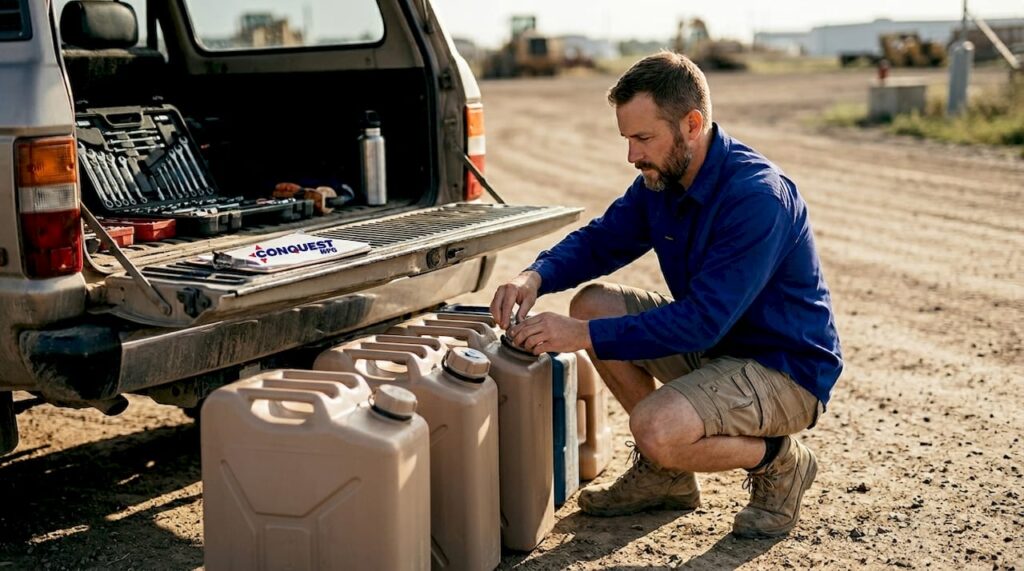
Water is heavy, bulky, and unforgiving when handled wrong. At roughly 8.3 pounds per gallon, even modest amounts create real risks: strained backs, contaminated supplies, or loads that shift and cause accidents. Knowing how to transport water safely is not just a concern for emergency responders. Construction crews, agricultural operations, and anyone hauling bulk water face the same core challenges. This guide covers container selection, physical handling, transfer methods, contamination prevention, and large-scale logistics. Every section is built for people who need practical answers, not general reminders to “be careful.”
Table of Contents
- Key Takeaways
- How to transport water safely: container selection
- Physical handling and ergonomic safety
- Water transfer methods that prevent contamination
- Preparing and storing water for transport
- Emergency and industrial water transport logistics
- What experience actually teaches you about water transport
- How Conquestmfgusa supports safe water transport
- FAQ
Key Takeaways
| Point | Details |
|---|---|
| Use food-grade containers | FDA-approved containers prevent toxic leaching and keep water safe for drinking and operational use. |
| Respect the 40-pound rule | Loads exceeding 40 lbs require mechanical aids or a second person to prevent injury. |
| Sanitize before you fill | A bleach solution applied before first use removes contaminants that compromise water quality. |
| Secure loads during transport | Ratchet straps and wedge crating prevent shifting containers from causing vehicle accidents. |
| Label everything clearly | Date and content labels reduce recontamination risk and support compliance in regulated environments. |
How to transport water safely: container selection
Choosing the right container is where safe water transport methods begin. The wrong vessel does not just spill. It can leach chemicals, crack under load, or make handling dangerous before you even leave the source.
The FDA-approved food-grade containers are the non-negotiable baseline for drinking water. These are made from high-density polyethylene (HDPE) or similar materials rated safe for food contact, meaning they will not transfer plasticizers or toxic residues into your water supply. Never repurpose containers that previously held chemicals, bleach, or pesticides. Even thorough washing cannot fully eliminate contamination risk from those materials.
Here is how the most common container types compare across key criteria:
| Container type | Capacity | Best use case | Pros | Cons |
|---|---|---|---|---|
| HDPE jerry can | 5 gallons | Emergency, field use | Durable, stackable, wide availability | Heavy when full (41+ lbs) |
| Water brick | 3.5 gallons | Storage, emergency kits | Stackable, compact, flat profile | Limited volume per unit |
| Collapsible bladder | 5–50 gallons | Temporary, portable use | Lightweight when empty, space-saving | Puncture-prone, harder to clean |
| Stainless steel drum | 15–55 gallons | Industrial, agriculture | Corrosion-resistant, long service life | Very heavy, requires mechanical handling |
| IBC tote | 275–330 gallons | Bulk transport, construction | High volume, forklift-compatible | Not portable by hand |
Beyond material and capacity, look for containers with narrow necks and secure, gasketed lids. Wide-mouth openings invite contamination during transfers. Stackability matters too, especially for vehicles with limited bed space.
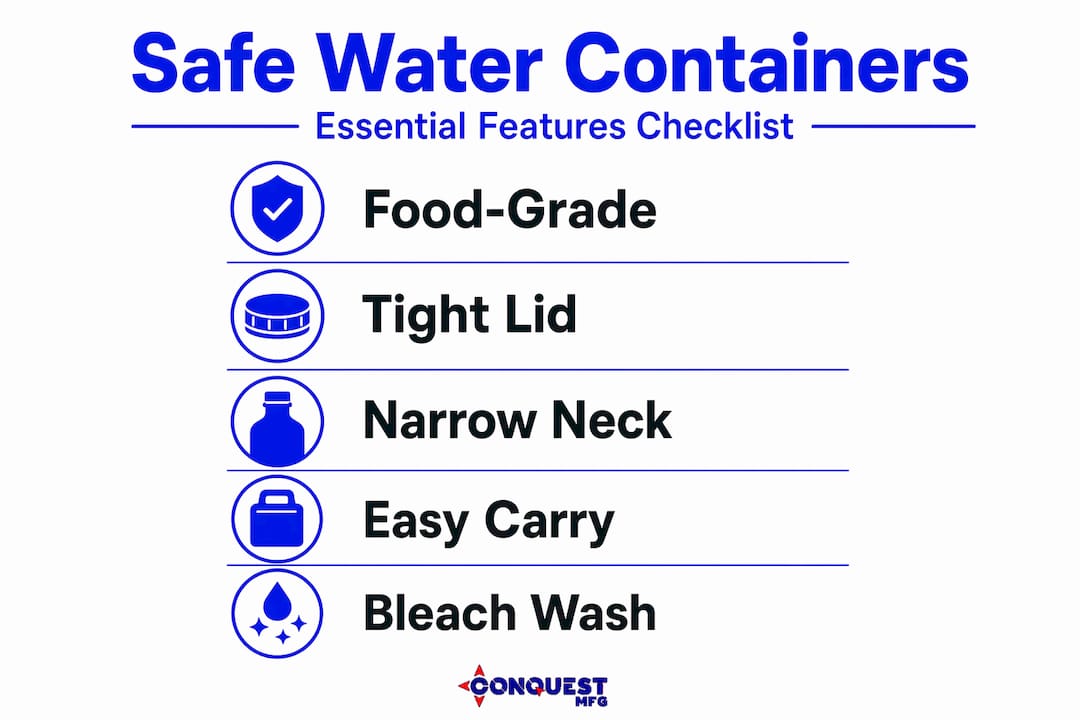
Pro Tip: Before filling any container for the first time, sanitize with bleach solution: mix one teaspoon of unscented 5% to 9% sodium hypochlorite bleach per quart of water, shake it inside the container for 30 seconds, then air dry completely before filling.
For large-scale operations, understanding the distinction between container grades and industry standards is covered well in the vacuum tank transport guide from Conquestmfgusa.
Physical handling and ergonomic safety
Water is one of the most physically demanding materials to move. Most people underestimate this until they are mid-load with a pulled muscle.
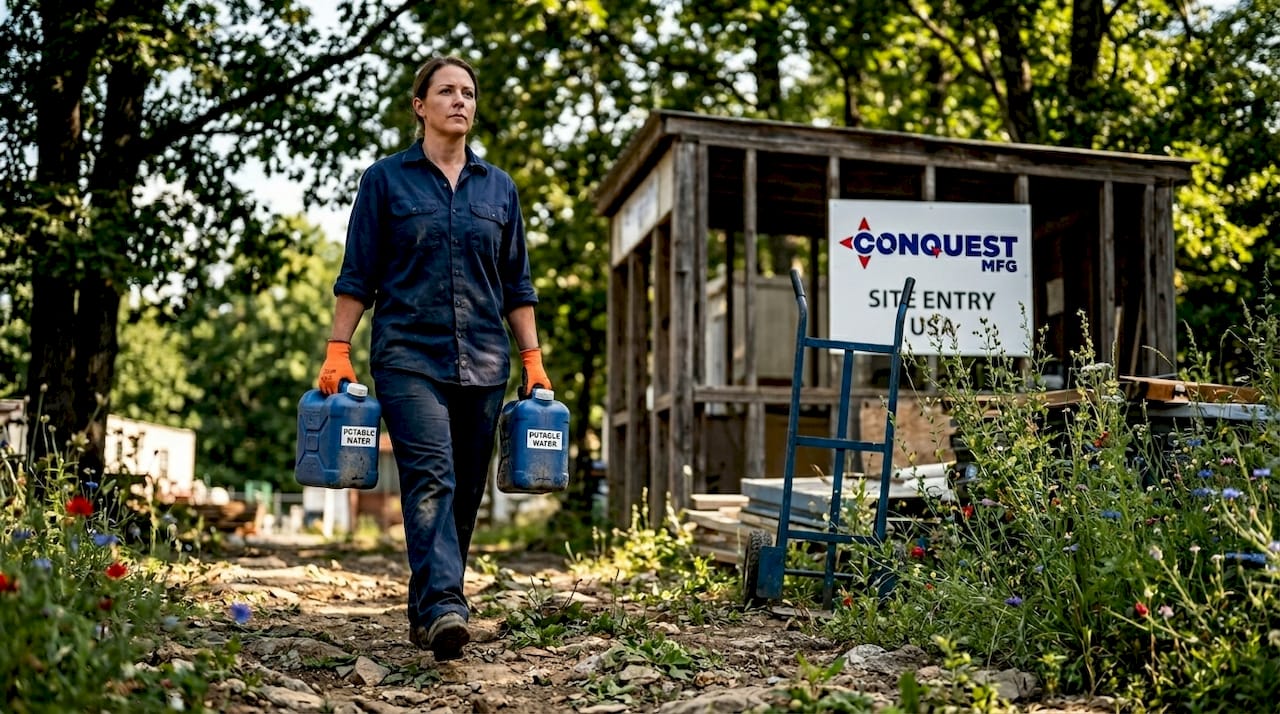
One gallon weighs 8.3 pounds. A standard five-gallon jug tops out at roughly 41.7 pounds when full. That is not a manageable single-person lift for most workers, especially repeatedly over a full shift. The rule is simple: no single-person lift over 40 lb without a mechanical aid or a second person.
Follow these steps every time you move a heavy water container:
- Assess the weight before lifting. Shake the container slightly to gauge fill level and confirm it is sealed.
- Position your feet shoulder-width apart, directly beside the load.
- Bend at the knees, not the waist. Keep your back straight and your core engaged.
- Grip the handle firmly with both hands. Avoid twisting your torso during the lift.
- Lift with your legs, keeping the container close to your body.
- Use a dolly, hand truck, or pallet jack for anything above 20 pounds when moving more than a short distance.
- For vehicle loading, use a ramp or tailgate lift. Never attempt to toss containers into a truck bed.
Carrying two smaller containers balanced across both sides of your body reduces strain far more than hauling one large container on a single arm. This applies both to individuals on foot and to crews loading vehicles.
Pro Tip: For any load over 20 pounds, use a dolly or hand cart. The few seconds it takes to retrieve the tool eliminates the cumulative back stress that builds silently over days and weeks of repetitive hauling.
Ergonomic workflow adjustments like transferring bulk water into smaller volumes at the source, rather than hauling full containers the entire distance, can dramatically cut injury rates in operations that move water daily.
Water transfer methods that prevent contamination
Getting water from one container to another is where contamination most often enters the picture. The source may be perfectly clean. The transfer process is where things go wrong.
The three primary methods for transferring water are siphoning, pumping, and gravity feed. Each has a place depending on scale and setup:
| Method | How it works | Best for | Risk to watch |
|---|---|---|---|
| Siphoning | Pressure differential via food-grade tubing | Small to mid-volume transfers | Starting siphon with mouth (use a pump bulb instead) |
| Pumping | Electric or manual pump with rated hose | High-volume, repeated transfers | Non-rated hoses leaching plasticizers |
| Gravity feed | Source elevated above receiving container | Simple, off-grid setups | Sediment entering if inlet too low |
Use NSF-51 rated or potable water-grade hoses for every transfer involving drinking water. Standard garden hoses are manufactured with plasticizers that leach into water on contact. The cost difference between a rated hose and a standard one is minor. The contamination risk is not.
When siphoning, keep the inlet above the container floor to avoid drawing sediment into the receiving vessel. Keep the outlet below the source level at all times to maintain flow. For any operation moving water regularly at scale, a dedicated manual or electric pump rated for potable water is the more reliable choice.
A few non-negotiable practices for all transfer work:
- Never use a hose or pump that has contacted non-potable water for drinking water transfers. Maintain strict potable-only equipment separation.
- Seal all containers immediately after filling. Every minute an unsealed container sits open is an opportunity for contamination.
- Inspect hose fittings before every use. Cracked fittings introduce air and particulate.
For operations involving aggregate or batch plant water supply, the logistics principles in bulk transport operations apply directly to water handling workflows.
Preparing and storing water for transport
A container filled with clean water can arrive contaminated if the preparation and storage steps are skipped. This is the part of safe water transport that gets undervalued most often.
Start with sanitation. Before any container holds drinking water, treat it with a bleach solution regardless of how new it looks. Bacteria survive on container walls. The CDC protocol specifies one teaspoon of unscented bleach per quart of water, shaken and allowed to coat all interior surfaces, then air dried before filling.
For treating water itself during emergency transport, add 16 drops of bleach per gallon of water and wait 30 minutes. If you detect a faint chlorine smell after 30 minutes, the water is safe. No smell means the contamination level was too high and the dose was not sufficient. Add more bleach, wait again, and discard if there is still no detectable chlorine.
Pro Tip: Label every container with the fill date and contents using waterproof marker or a label on the cap. The CDC recommends replacing stored water every six months. Without dates, that practice is impossible to maintain consistently.
Here is a practical do-and-don’t reference for storage and handling:
- Do store containers in a cool, dark location away from direct sunlight. UV exposure accelerates plastic degradation and promotes algae growth.
- Do keep water containers away from fuels, chemicals, and pesticides. Vapor permeation through plastic is real.
- Do use a dedicated ladle or pump for withdrawing water. Dipping hands or unsanitized cups into a stored container introduces bacteria directly.
- Don’t store water on concrete floors for extended periods. Use pallets or shelving to minimize temperature fluctuation and moisture transfer.
- Don’t use containers that previously held non-food substances, even if they appear clean.
- Don’t mix containers from different fill dates without clear labeling.
Emergency and industrial water transport logistics
At scale, how to carry water securely becomes a logistics and compliance problem, not just a physical one. Emergency response teams, construction sites, and agricultural operations all face the same pressure: moving large volumes quickly without compromising quality or safety.
Planning starts with load capacity math. Water weighs approximately 8.3 pounds per gallon, so a 300-gallon load adds nearly 2,500 pounds to your vehicle. Know your gross vehicle weight rating before loading. Overloaded vehicles handle poorly and create liability.
For securing loads, ratchet straps for drums and totes are the standard. Wedge smaller jugs using crates or cargo nets. Check strap tension after the first few miles of travel, as vibration loosens connections that felt tight at the dock.
Use this checklist before any large-scale water transport operation:
- Confirm vehicle payload rating against total water weight
- Verify container integrity: no cracks, no damaged lids, no compromised seals
- Separate potable and non-potable water equipment completely
- Identify water source certification or treatment status before loading
- Secure all loads with rated straps and verify after initial travel
- Carry spare containers, caps, and a pump on longer or multi-day operations
- Document fill date, source location, and treatment method for compliance records
Regulatory compliance matters in construction and emergency response. Most states have specific requirements for hauling potable water in bulk, particularly around tank material certifications and driver protocols. Reviewing bulk transport terminology before planning large operations helps teams speak the same language as regulators and inspectors.
What experience actually teaches you about water transport
I have worked with operations that moved water daily and seen the same mistakes repeat across industries. Here is what I have learned that rarely appears in safety guides.
Container cleanliness consistently gets treated as a one-time setup task. It is not. Contamination most often comes from poor handling after collection, not from the source itself. The container that got rinsed in a muddy field and refilled “quickly” is the one that sickens people three days later. Sanitize before every fill cycle, not just the first one.
The other mistake I see is overloading individuals to save trips. Teams that carry 40-pound jugs 20 times a day think they are being efficient. They are accumulating injury. The silent, cumulative damage from repetitive hauling shows up weeks later. The better strategy is always fewer, heavier loads moved with equipment, not more trips moved by hand.
The operations I have seen run water transport well share one trait: they treat it like any other logistics process. They have designated equipment, clear labeling, documented procedures, and they review what went wrong after every incident. Water is not glamorous freight. That is exactly why it gets handled carelessly. Giving it the same operational rigor as any other material is what separates teams that perform reliably from those that improvise.
— Peter
How Conquestmfgusa supports safe water transport

At Conquestmfgusa, we build equipment that professionals rely on when water handling is part of a larger operational picture. Whether your team is managing water supply on a construction site or coordinating liquid transport across an industrial fleet, the right equipment changes what is possible. Our steel and aluminum vacuum tanks, along with our purpose-built trailers, are designed for the demands real operations face. Explore our construction industry solutions to see how our equipment fits into water handling and bulk transport workflows. For operations tied to concrete production and batch plant water management, our 2026 batch plant guide walks through the full operational picture. Get in touch to discuss what your specific application requires.
FAQ
What containers are best for transporting drinking water?
FDA-approved food-grade HDPE containers, jerry cans, and water bricks rated for potable use are the standard choices. Never use containers previously holding chemicals or non-food substances.
How much does water weigh per gallon for load planning?
Water weighs approximately 8.3 pounds per gallon. A full five-gallon container exceeds 40 pounds, which requires mechanical assistance or a second person to move safely.
How do you sanitize a water container before use?
Mix one teaspoon of unscented 5% to 9% sodium hypochlorite bleach per quart of water, shake it inside the container for 30 seconds to coat all surfaces, then air dry completely before filling.
How often should stored transport water be replaced?
The CDC recommends replacing stored water every six months. Label every container with the fill date to track replacement cycles accurately.
What is the safest method for transferring water between containers?
A food-grade pump with NSF-51 rated hoses is the most reliable method. Siphoning with rated tubing also works for smaller volumes, provided the inlet stays clear of sediment and no mouth contact is used to start the flow.