
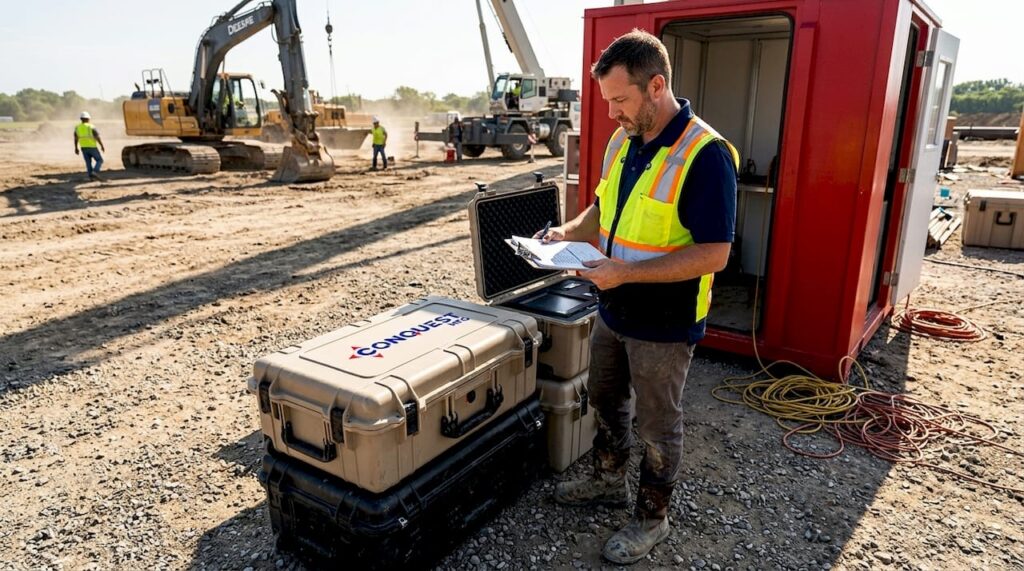
Most decision-makers in construction, transportation, and oil assume rapid-deployed equipment is reserved for disaster response. That assumption costs projects time and money. Understanding what is rapid-deployed equipment in its full operational context reveals a category of tools that serve as a strategic asset long before any emergency arises. These portable, modular systems accelerate project timelines, lower costs, and give your operation real flexibility in remote and temporary locations. This guide covers definitions, components, core benefits, and real-world applications you can act on today.
Table of Contents
- Key takeaways
- What rapid-deployed equipment actually is
- Advantages of rapid-deployed equipment in industrial sectors
- How modular and factory-preassembled designs improve deployment
- Use cases across construction, oil, and transportation
- Technical innovations reducing setup time
- My take on rapid deployment as a strategic asset
- How Conquestmfgusa supports rapid deployment needs
- FAQ
Key takeaways
| Point | Details |
|---|---|
| Rapid deployment is not emergency-only | These systems serve ongoing industrial operations in construction, oil, and transportation just as effectively. |
| Modular design drives speed | Factory-preassembled systems reduce onsite errors and get equipment running faster. |
| Deployment times vary by system | Communication kits can be operational in 15 minutes; containerized systems are ready within 24 hours. |
| Cost savings are measurable | Modular approaches can cut project timelines by up to 50%, directly reducing labor and overhead costs. |
| Technology keeps improving setup speed | Plug-and-play fiber cassettes now complete network connections in under 60 seconds. |
What rapid-deployed equipment actually is
At its core, rapid-deployed equipment refers to portable, self-contained, modular systems designed to become fully operational within minutes to 24 hours, depending on complexity and scale. The defining characteristic is not speed alone. It is the combination of pre-integration, portability, and the ability to function independently of permanent infrastructure.
Rapid-deployed systems are operational within 15 to 60 minutes for hand-carry communication kits, and within 24 hours for full containerized setups. That range matters because it means this category covers everything from a two-person field radio kit to a complete mobile concrete batch plant that rolls onto a remote site and begins producing within a day.
Here is a breakdown of the most common component categories:
| Component type | Typical deployment time | Approximate weight range |
|---|---|---|
| Communication kits (LTE/DMR radios, gateways) | 15 to 60 minutes | 20 to 150 lbs |
| Modular shelter or mobile office | 4 to 8 hours | 2,000 to 10,000 lbs |
| Portable barricades (bullet-resistant) | 1 hour for 200 linear feet | 50 to 300 lbs per panel |
| Containerized batch or processing plant | 12 to 24 hours | 20,000 to 80,000 lbs |
| Surveillance or sensor tower | 1 to 3 hours | 500 to 3,000 lbs |
Three technical features make these systems work in conditions where standard equipment fails. First, plug-and-play modules come pre-wired and pre-tested, so onsite assembly is mostly mechanical, not electrical. Second, interoperability allows different systems to communicate across LMR, LTE/5G, and satellite networks without custom configuration at the site. Third, integrated power sources, whether solar, battery, or generator, remove dependency on grid connections.
Rapid deployment communication gear typically blends LTE/DMR push-to-talk radios, portable gateways, Wi-Fi mesh nodes, and satellite terminals into a single coordinated kit. The same philosophy applies to physical equipment: every subsystem is tested and integrated before it leaves the factory.
Advantages of rapid-deployed equipment in industrial sectors
The advantages of rapid deployed equipment are most visible when you compare project costs and timelines against traditional construction or infrastructure methods.
Speed is the most cited benefit, and the numbers are concrete. Modular construction can cut project timelines by up to 50% compared to conventional methods. For a construction manager running a $10 million project, that timeline compression translates directly into reduced equipment rental costs, lower site overhead, and faster revenue realization.
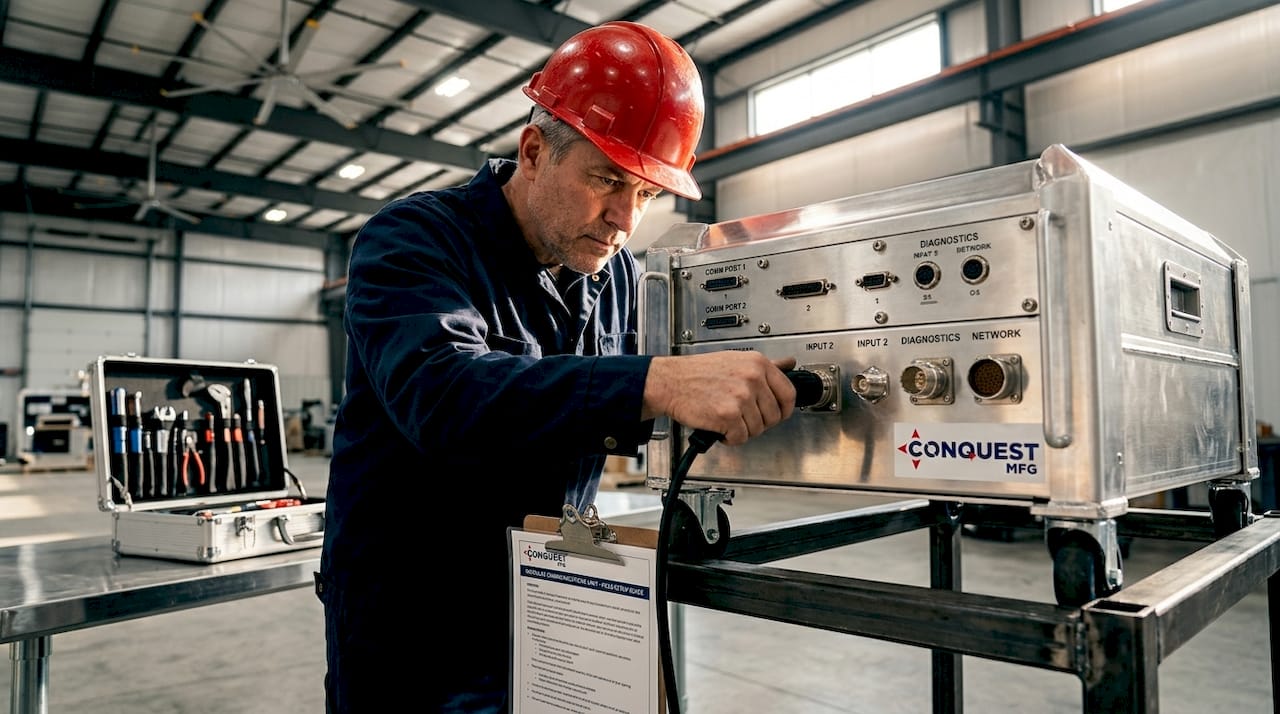
Cost-effectiveness goes beyond speed. Consider what 3D printing brought to military rapid deployment: repair lead times dropped from weeks to days, and a single three-week exercise saved $20,000 in parts and logistics. The same principle applies to industrial deployments. When replacement components can be fabricated or swapped modularly, you avoid the expensive delays of waiting for custom parts to ship from a distant supplier.
Flexibility for remote or temporary sites is the third major driver. Oil field operations, pipeline survey camps, and remote highway construction projects all share one challenge: permanent infrastructure does not exist yet. Rapid deployment gear fills that gap without committing capital to fixed installations that will be dismantled when the project ends.
Here is a summary of the core operational benefits:
- Compressed timelines. Modular setups reduce mobilization from weeks to days or hours.
- Lower sunk costs. Temporary equipment solutions avoid permanent installation expenses on short-term sites.
- Independence from infrastructure. Self-contained power and communications mean you can operate anywhere.
- Scalability. Add or remove modules as project scope changes without major re-engineering.
- Reduced onsite labor. Factory pre-integration means fewer skilled trade hours needed at the deployment site.
Pro Tip: When evaluating the ROI of rapid deployment gear, calculate the daily cost of project delay alongside the equipment cost. Most operators find that even premium rapid deployment solutions pay for themselves within the first week if they compress a timeline by five or more days.
How modular and factory-preassembled designs improve deployment
The shift from onsite fabrication to factory-controlled assembly is one of the most significant changes in rapid deployment gear over the past decade. It sounds counterintuitive at first. You might assume that building something at the factory and then shipping it adds complexity. In practice, it does the opposite.
Factory preassembly ensures quality control by completing electrical, mechanical, and structural integration in a controlled environment. Every system is tested before shipment. When the unit arrives on your oil field or construction site, you are not troubleshooting wiring problems in the field. You are connecting modules and starting operations.
This approach matters most in austere or hazardous environments. A prefabricated mobile office or worker housing unit deployed to a remote pipeline camp has been pressure-tested, insulated, and fitted with HVAC before it ever leaves the manufacturing facility. Modular construction reduces waste and supports plug-and-play installation, which is exactly what remote industrial sites require.
Best practices for successful modular deployment include:
- Confirm that all subsystems are tested and certified before shipping, not on arrival.
- Standardize connection interfaces across your equipment fleet to reduce compatibility issues.
- Plan for maintenance access in the modular design. Sealed units that cannot be serviced in the field create long-term problems.
- Work with manufacturers who understand your specific industry environment, whether that is chemical exposure in oil fields or vibration in heavy transportation.
The challenge with modular deployment is upfront design discipline. Modules that are not engineered to work together from the start can create onsite integration problems that cost more time than traditional methods. The solution is partnering with manufacturers who specialize in your industry and build to deployment specifications from day one.
Use cases across construction, oil, and transportation
Rapid-deployed equipment is strategic for ongoing remote operations, not just emergencies. Here are the most common industry applications where the value is clearest:
-
Construction sites. Mobile concrete batch plants deploy to remote locations and begin production within 24 hours. Portable surveillance towers monitor access points and equipment without requiring permanent mounting structures. Temporary communication networks keep crews coordinated across large sites.
-
Oil and gas fields. Portable cement silo trailers and vacuum tank units reach wellpad locations that lack permanent road access. Dry bulk pneumatic trailers supply materials on demand. Surveillance towers secure perimeters without the cost of permanent fencing and guard infrastructure.
-
Transportation hubs and staging areas. Sand chassis, intermodal chassis, and end dump trailers configured for rapid deployment allow logistics operations to scale up at temporary staging locations. This is common in large infrastructure projects where material handling needs shift as construction phases progress.
-
Mining and exploration camps. Modular housing, power systems, and communication networks deploy as a single integrated package to support crews operating weeks away from the nearest town.
-
Emergency and disaster response. Bullet-resistant barricades set up by two people in about one hour, covering 200 linear feet while meeting UL-752 certification standards. Communication networks with LTE, satellite, and mesh Wi-Fi integration restore connectivity within hours of a disruption.
-
Large-scale events and temporary infrastructure. Security perimeters, communications networks, and temporary power systems deploy and dismantle without permanent site modification.
Each of these applications shares a common thread: the equipment must be operational quickly, function reliably in conditions without permanent support infrastructure, and be recoverable or redeployable when the job is done.
Technical innovations reducing setup time
The physical layer of network and communications deployment has historically been the biggest bottleneck for rapid response equipment. A generator can start in seconds. A mobile office can be positioned and leveled in an hour. But getting reliable communications live used to take significantly longer.
That gap is closing fast. Robotic optical distribution frames and plug-and-play fiber cassettes have reduced cross-connect times from several minutes of manual patching to 36 to 60 seconds per connection. For a site requiring dozens of connections, that difference compounds into hours saved during initial setup.
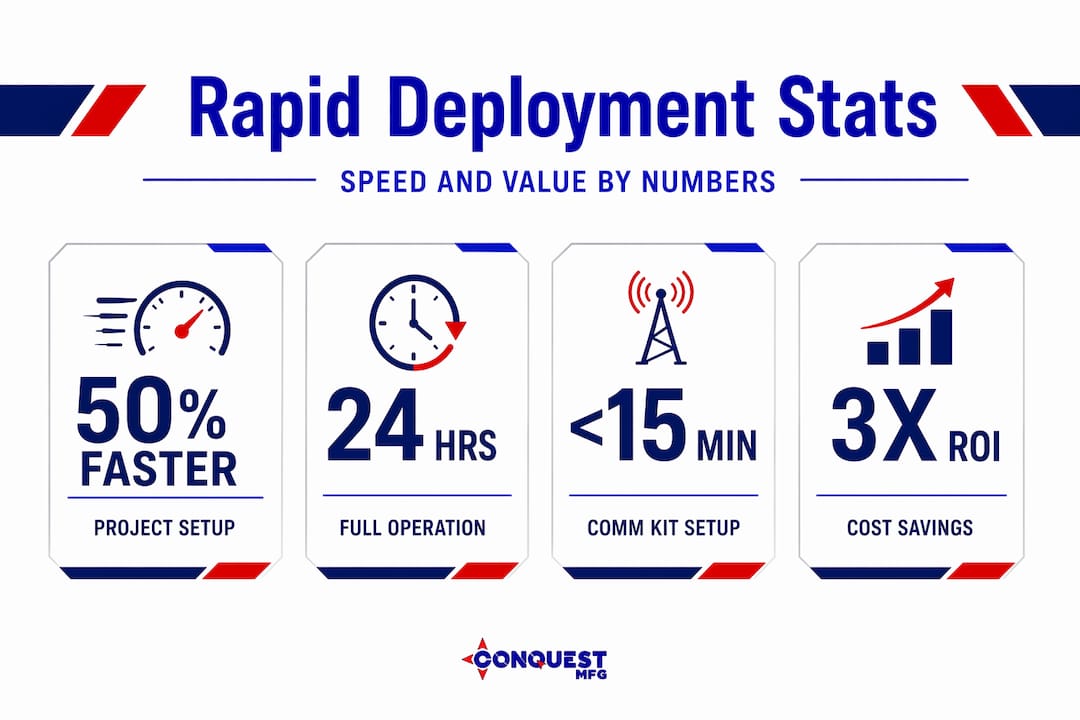
Interoperability has also improved significantly. Modern field deployable tools now integrate Land Mobile Radio (LMR), private LTE cells, 5G nodes, and satellite backhaul into a single system that technicians configure once and manage centrally. Self-healing mesh networks automatically reroute around failed nodes, which removes a major reliability concern in harsh field conditions.
On the manufacturing side, deployable 3D printing capability allows field teams to fabricate replacement parts on location, reducing dependency on supply chains for components that would otherwise require weeks to source.
Pro Tip: When scaling communications rapidly at a new field site, deploy mesh Wi-Fi nodes first to establish local coverage, then bring up satellite backhaul for external connectivity. This sequence gets your team operational faster than waiting for the full network stack to be live before granting any access.
My take on rapid deployment as a strategic asset
I have spent considerable time working with operators across construction, oil, and transportation, and the most consistent mistake I see is treating rapid-deployed equipment as a contingency plan rather than a primary operational tool.
When a project team waits until the permanent infrastructure is behind schedule to start thinking about rapid deployment options, they have already lost the window where it delivers the most value. The real strategic move is to spec your rapid deployment capability alongside your permanent infrastructure plan from the project kickoff. That way, when the permanent systems are not ready, you are not scrambling. You are executing a plan that was designed from the start.
I have also seen operations underestimate the maintenance demands of rapid deployment gear. Because these systems are built for speed and portability, teams sometimes assume they are lower maintenance than permanent equipment. In practice, the modular connections and compact integrated systems require disciplined inspection cycles. A failed connector in a permanent installation is a controlled shutdown. The same failure in a field-deployed system can cascade quickly because redundancy is often limited.
My honest recommendation is to think of rapid deployment gear not as a cheaper, faster version of permanent infrastructure, but as a different category with its own engineering logic. When you evaluate it on its own terms, as on-the-go equipment designed for operational flexibility rather than longevity, you make much better procurement decisions. You can explore how oil industry equipment follows this same design philosophy in practice.
— Peter
How Conquestmfgusa supports rapid deployment needs
At Conquestmfgusa, we manufacture equipment specifically for the operational demands of construction, transportation, and oil industries where speed of deployment and reliability in the field are non-negotiable.
Our product lines, including mobile concrete batch plants, portable cement pig silo trailers, vacuum tanks, dry bulk pneumatic trailers, and Portable Rapid-Deployed Video Surveillance Towers, are built with factory-preassembled quality and field-deployable practicality. Whether you are managing a remote oil field operation or a large-scale construction project, our construction industry solutions are engineered for fast setup and long-term reliability. For oil industry operations, our batch plant solutions are designed to maximize efficiency from the moment they arrive on site. Get in touch with our team to discuss a configuration tailored to your project requirements.
FAQ
What is rapid-deployed equipment in simple terms?
Rapid-deployed equipment refers to portable, modular, self-contained systems that become operational within minutes to 24 hours. They are designed to function without relying on permanent site infrastructure.
How fast can rapid deployment gear be set up?
Setup times depend on the system type. Hand-carry communication kits are operational in 15 to 60 minutes, while containerized systems and mobile batch plants reach full readiness within 24 hours.
Is rapid-deployed equipment only used in emergencies?
No. While emergency response is one application, these systems are widely used in construction, oil fields, mining camps, and transportation staging areas for ongoing operational efficiency.
What are the main advantages of rapid deployed equipment?
The primary advantages include compressed project timelines (up to 50% faster than traditional methods), independence from permanent infrastructure, scalability, and reduced onsite labor requirements.
How does modular design improve rapid deployment reliability?
Factory preassembly ensures every electrical and mechanical system is tested and integrated before shipment, which significantly reduces onsite errors and accelerates the transition from delivery to full operation.