
What are the top cement storage pig guppy models available in the US?
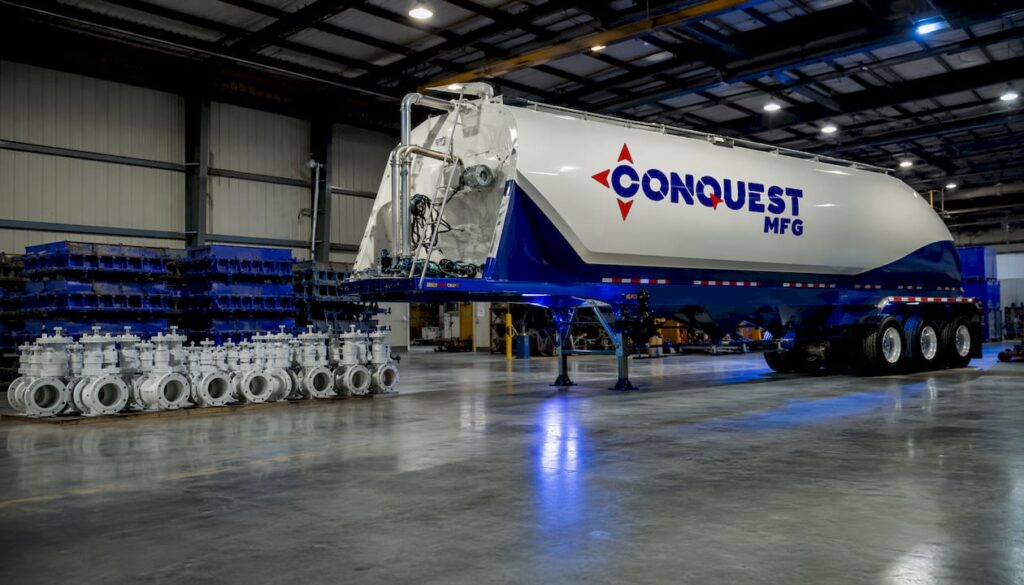
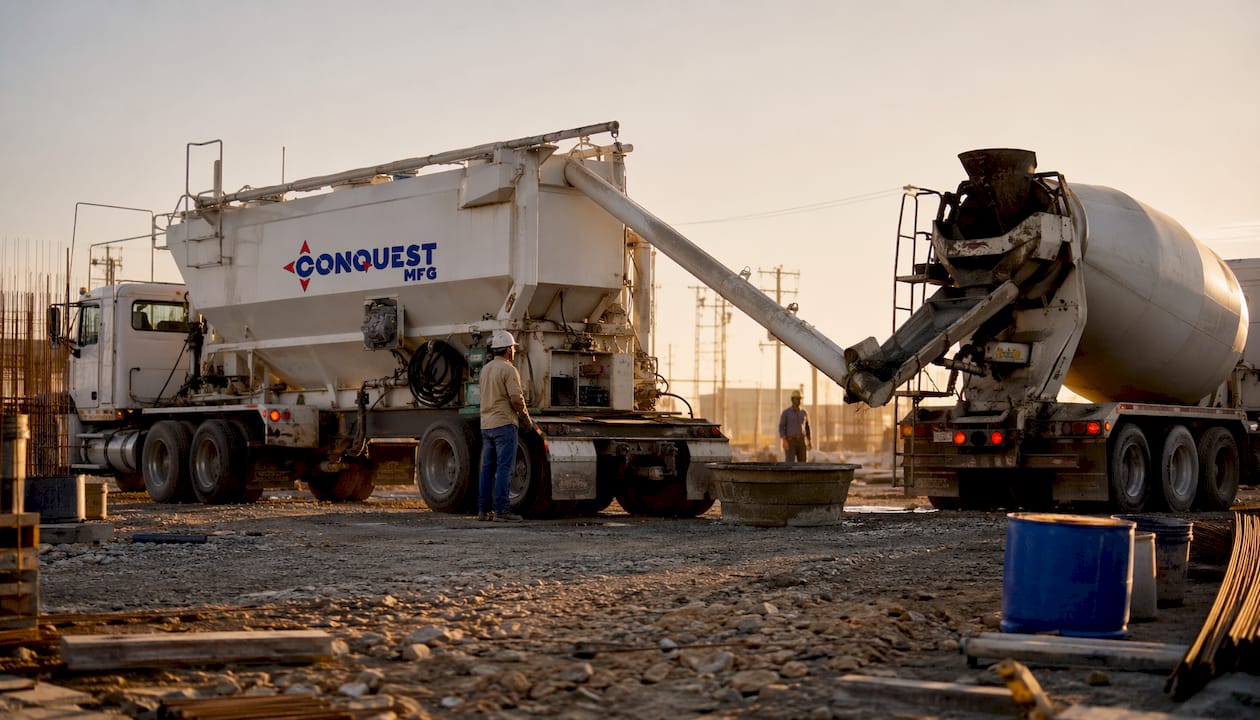
Portable cement storage pigs, commonly called guppy pigs or cement pigs, are horizontal silo tank trailers built to store and protect large volumes of dry bulk cement on active construction sites. They move between job sites on standard semi-truck configurations, making them the preferred cement storage solution for high-volume projects where a fixed silo is not practical.
The leading models available in the US market right now include:
- Retesa 4100 CU FT Storage Pig Trailer: A 4,100-cubic-foot capacity unit with 7 BTI aeration systems, 6 hoppers with 45° cone slopes, and both diesel and electric blower package options. Built for large-scale concrete operations requiring fast, controlled discharge.
- Portable storage pigs (Cement guppy) by Conquest Mfg: Heavy-duty carbon steel horizontal silo trailers operating at 15 PSI, with front and rear pneumatic unloading systems and multiple loading connections. Designed for construction professionals who need reliable, mobile bulk cement storage with flexible unloading configurations.
- Trailers of Texas inventory: In-stock cement storage pig trailers with large capacity and rugged builds, available for immediate purchase and nationwide delivery across the US market.
- Bulk Material Services portable pigs: Industry-trusted horizontal silo trailers designed to protect dry bulk materials from the elements, with proven material flow efficiency and easy job-site maneuverability.
- Retesa cement storage pig trailers: Durable heavy-duty steel pigs with multi-port pneumatic connections, customizable power packages, and efficient discharge configurations suited to diverse project requirements.
All five models meet 2026 US construction industry standards for portable bulk cement handling, with pneumatic unloading systems and aeration provisions that prevent clogging and material degradation during storage.
Detailed comparison of cement storage pig trailers on the US market
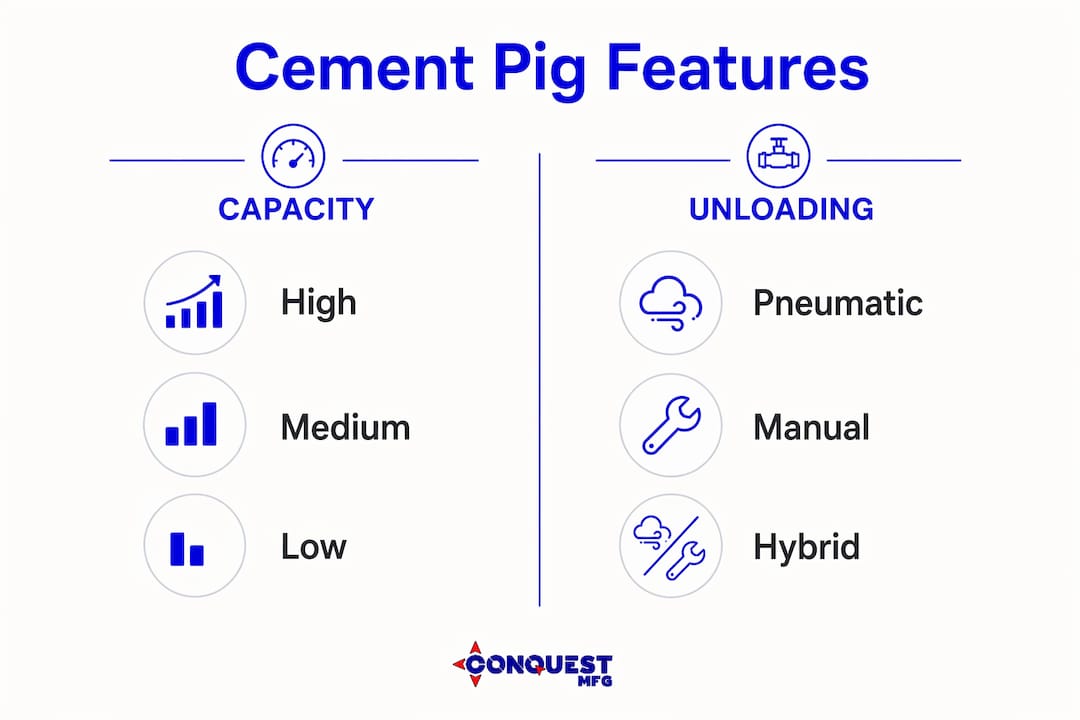
Five models currently serve the US market across the key dimensions that matter most to equipment managers: capacity, build quality, pneumatic features, mobility, and power compatibility.
| Model | Storage Capacity | Build Quality | Pneumatic Unloading | Power Package | Best For |
|---|---|---|---|---|---|
| Retesa 4100 CU FT Storage Pig Trailer | 4,100 cu ft | Heavy-duty steel, anti-corrosion primer | 7 BTI aeration systems, 6" discharge valves, front and rear 4" unload ports | Diesel and electric blower packages | Large-scale projects needing rapid discharge |
| Portable storage pigs (Cement guppy) | 4,100 cu ft (flagship models available) | Heavy-duty carbon steel, 15 PSI rated | Front and rear pneumatic unload systems, 5" discharge lines | Compatible with standard blower packages | Mobile, high-volume cement storage across multiple sites |
| Trailers of Texas inventory | 4,100 cu ft (models available) | Rugged steel construction | Standard pneumatic unloading | Call for options | Firms needing immediate in-stock availability |
| Bulk Material Services portable pigs | 4,100 cu ft (flagship models available) | Heavy-duty steel, weather-protected | Proven material flow efficiency, multi-port connections | Call for options | Protected storage with easy maneuverability |
| Retesa cement storage pig trailers | 4,100 cu ft (flagship model) | Heavy-duty steel, industrial paint finish | Multi-port connections, 6" discharge valves, aeration per hopper | Diesel and electric options | Flexible unloading configurations, diverse cement types |
Retesa 4100 CU FT Storage Pig Trailer
The Retesa 4100 is the most technically specified unit in this comparison. Its 7 BTI aeration systems per cone and 6 hoppers with 45° slopes deliver fast, consistent material flow without bridging or clogging. The dual 4" pressurized unload systems, both front and rear, give operators flexibility on tight job sites where truck positioning is constrained. Hutch suspension and 10 screw jacks with steel support pads make leveling on uneven ground straightforward.
Portable storage pigs (Cement guppy) by Conquest Mfg
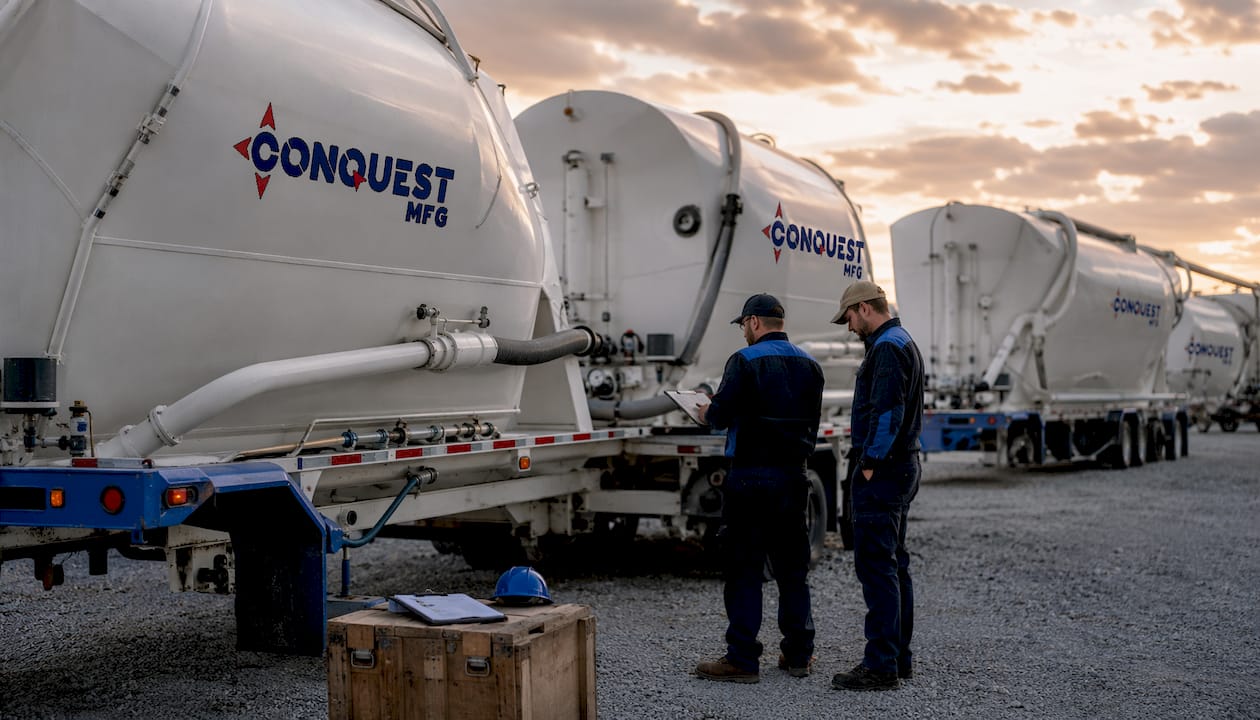
Conquest Mfg’s portable pig silos are built to 15 PSI operating pressure with heavy-duty carbon steel construction and front and rear pneumatic connections. The 5" discharge lines and multiple aeration systems per hopper prevent material compaction during extended storage. With over 35 years of engineering experience behind the design, these units are built for durability and ease of maintenance across demanding construction and oilfield applications.
Trailers of Texas inventory
Trailers of Texas stocks cement storage pig trailers ready for immediate purchase, with nationwide delivery. For construction firms that cannot wait on lead times, the in-stock availability is the primary advantage. Specific capacity and configuration details vary by unit in their current inventory.
Bulk Material Services portable pigs
Bulk Material Services positions its portable pigs specifically around material protection and flow efficiency. The trailers keep dry bulk cement shielded from moisture and contamination, and their multi-port unloading connections support efficient discharge across different site setups. A practical choice for projects where cement quality preservation is as important as throughput speed.
Retesa cement storage pig trailers (standard line)
Beyond the flagship 4100 model, Retesa’s standard cement pig line offers customizable aeration and unloading configurations to handle varying cement products, including those with additives. The heavy-duty steel construction and industrial paint finish provide long service life in high-use environments.
Pro Tip: When comparing units, ask the supplier specifically about the number of aeration points per hopper. A trailer with aeration only at the discharge cone will flow slower and clog more often than one with aeration distributed across each hopper section.
Cement pigs versus silos: which bulk storage option fits your site?
Portable cement pigs and vertical silos both store bulk cement, but they serve different operational realities. Understanding where each excels prevents costly equipment mismatches on your project.
| Factor | Portable Cement Pig | Vertical Silo |
|---|---|---|
| Portability | High: moves between sites on standard semi-truck | Low to moderate: monolithic silos require road transport; paneled silos require assembly |
| Setup time | Fast: park, level, connect | Longer: foundation prep, assembly, or crane placement |
| Capacity range | Typically 4,100 cu ft per trailer (current flagship US models) | Wide range; paneled silos reach up to 2,500 m³ |
| Purchase cost | Moderate | Varies: monolithic silos carry lower purchase cost but higher transport cost |
| Site flexibility | Excellent for multi-site projects | Better suited to fixed or long-term sites |
| Maintenance | Accessible; pneumatic systems serviceable on-site | More complex; height and fixed installation add difficulty |
Portable pigs win on job sites where cement demand is high but the project timeline is finite. A road construction crew working across a 50-mile corridor, for example, can reposition a pig trailer in hours rather than days. Vertical silos, particularly modular paneled designs, make more sense for permanent ready-mix plants or precast facilities where the storage location does not change.
The pneumatic unloading advantage of pig trailers is also worth noting. Front and rear discharge connections mean the trailer can feed a batch plant from either end, adapting to site layouts without repositioning the entire rig. Fixed silos typically discharge from a single bottom cone, which limits placement options relative to the batch plant.
Where silos hold the edge is raw capacity. A single paneled silo installation can store far more cement than a single pig trailer, which matters for large precast operations running continuous production. For most construction contractors moving between sites, though, the mobility and speed of a cement pig trailer outweigh the capacity advantage of a fixed silo.
How to choose the right cement storage pig for your construction site
Selecting the right pig trailer comes down to matching the unit’s specifications to your project’s actual operational demands, not just its stated capacity.
Key factors to evaluate
- Storage capacity vs. daily consumption: Calculate your peak daily cement draw and confirm the trailer’s capacity covers at least two to three days of production without a refill. Most leading US models offer 4,100 cubic feet capacity, handling large pours, but smaller projects may not require that scale.
- Pneumatic unloading configuration: Confirm the trailer has front and rear unload ports if your batch plant layout requires flexible positioning. Single-end discharge limits your options on constrained sites.
- Power package compatibility: Decide early whether your site has reliable electrical supply for an electric blower package or whether a diesel blower is the more practical choice. Both options are available on leading models, but retrofitting later adds cost.
- Build material and operating pressure: Heavy-duty carbon steel construction rated to 15 PSI is the current industry standard for reliable, long-service pig trailers. Lighter builds may cost less upfront but require more frequent maintenance.
- Aeration system density: More aeration points per hopper means faster, cleaner discharge. For cement with additives or in humid climates where material tends to pack, this specification directly affects your unloading speed.
Questions to ask before purchasing
- What is the trailer’s nominal capacity in cubic feet, and what is the maximum payload in pounds?
- How many aeration systems are installed per hopper, and what type (BTI or equivalent)?
- Are both diesel and electric blower packages available, and are they trailer-mounted or truck-mounted?
- What are the discharge line diameters, and do they match your batch plant’s inlet connections?
- What is the lead time for delivery, and is financing available?
- What maintenance intervals does the manufacturer recommend for the pneumatic system and aeration components?
- Does the trailer comply with current US DOT regulations for your intended transport routes?
Budget planning should account for more than the purchase price. Operational costs include blower fuel or electricity, periodic aeration system servicing, and any site preparation needed for leveling. A trailer with a higher upfront cost but lower maintenance requirements often delivers better total value over a three-to-five-year project lifecycle. For guidance on bulk cement transport operations, reviewing manufacturer-published operational standards before finalizing your selection is time well spent.
What operational advantages do modern cement pig trailers deliver?
The most consequential engineering advance in current pig trailer designs is the integration of independent blower packages, either diesel or electric, mounted directly on the trailer rather than relying on the delivery truck’s onboard system. This separation means the trailer can unload at any time, regardless of which truck is on site or whether the delivery truck’s compressor is operational. Downtime from equipment dependency drops significantly.
Modern pig trailers with independent diesel or electric blower packages allow construction sites to unload cement on their own schedule, without waiting on delivery truck availability. The result is tighter production control and fewer delays during high-demand pours.
Current pig trailers push cement through 5" and 6" discharge lines at rates that keep batch plants fed without manual intervention. The 7 BTI aeration systems found on units like the Retesa 4100 distribute airflow evenly across each hopper cone, preventing the bridging and rat-holing that plague older single-aeration designs. On a large infrastructure pour where timing is critical, that consistency translates directly to fewer interruptions.
Conquest Mfg’s independent pneumatic blower systems reflect over 35 years of engineering refinement focused on durability and ease of field maintenance. The front and rear loading and unloading connections on their pig silo trailers give equipment managers the flexibility to configure material flow around the site layout rather than the other way around.
Pro Tip: Schedule a full aeration system check every 90 days on active pig trailers. Blocked aeration pads are the most common cause of slow discharge, and clearing them takes less than an hour compared to the production delay a clogged hopper creates.
Maintenance on modern pig trailers is designed to be field-serviceable. Screw jacks, aeration pads, discharge valves, and blower connections are all accessible without specialized tooling, which matters on remote sites where a service technician cannot arrive quickly. For fleet managers overseeing multiple trailers, following dry bulk trailer safety protocols and keeping a spare aeration pad kit on each unit prevents minor issues from becoming production stoppages.
Key Takeaways
Portable cement pig trailers with independent pneumatic blower packages and multi-point aeration systems deliver the fastest, most flexible bulk cement storage and discharge available for US construction sites in 2026.
| Point | Details |
|---|---|
| Capacity benchmark | The Retesa 4100, Conquest Mfg, and other leading US portable pig trailers are available with 4,100 cu ft capacity, 6 hoppers, and 45° cone slopes for efficient discharge. |
| Pneumatic standard | Current industry-standard pig trailers operate at 15 PSI with front and rear unload ports and 5"–6" discharge lines. |
| Pigs vs. silos | Portable pigs suit multi-site projects for their mobility and fast setup; fixed silos fit permanent plants needing higher total storage volume. |
| Selection priority | Match aeration density, power package type, and discharge line diameter to your batch plant before comparing price. |
| Conquest Mfg option | Conquest Mfg’s portable pig silo trailers combine 35-plus years of engineering experience with customizable power packages and pneumatic configurations for US construction and oilfield applications. |
Conquest Mfg builds pig trailers engineered for your site’s demands
If you need a cement storage pig trailer built to your project’s exact specifications rather than a catalog unit, Conquest Mfg offers a direct path to that. Their portable pig silo trailers are manufactured with heavy-duty steel construction, independent diesel or electric blower packages, and customizable aeration and unloading configurations, covering the full range of US construction and oilfield applications.
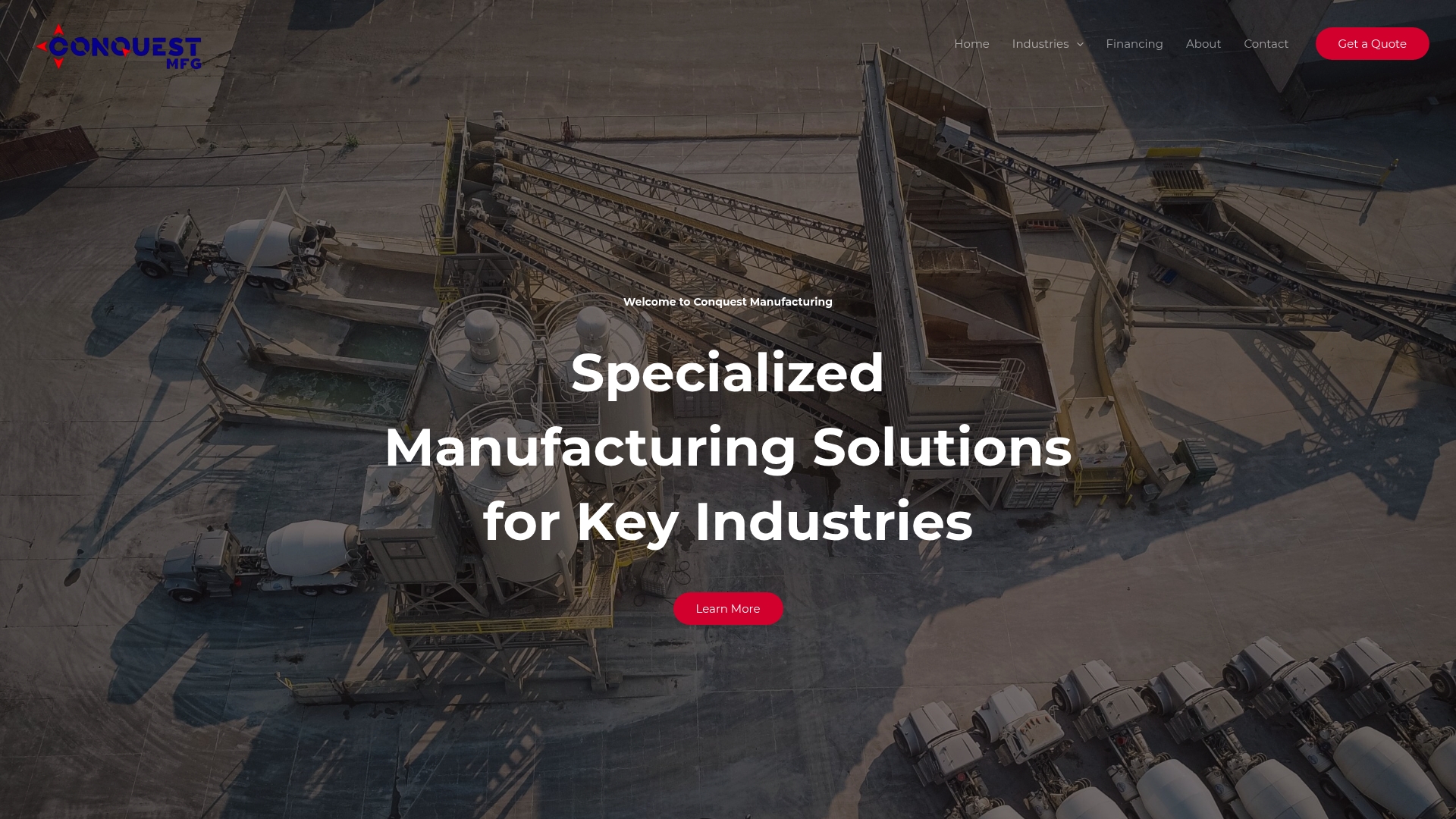
Unlike sourcing from a reseller’s in-stock inventory, working directly with Conquest Mfg means the trailer’s pneumatic configuration, power package, and discharge line setup are matched to your batch plant and site layout from the start. With over 35 years of engineering experience and financing programs available for a wide range of credit situations, Conquest Mfg is a practical alternative to the pre-configured units compared above. Contact their team directly to discuss capacity requirements, delivery timelines, and pricing for your next project.