
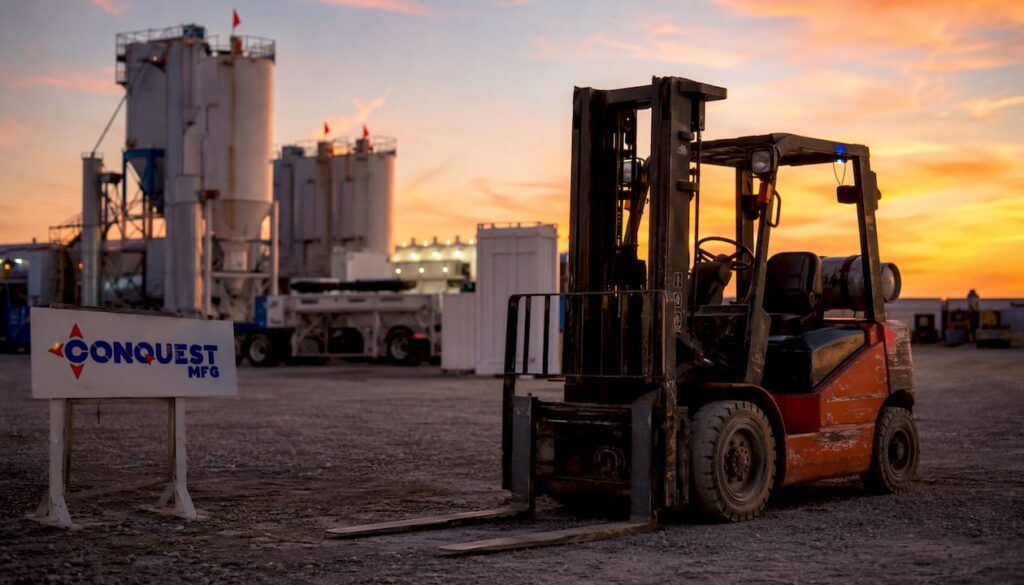
What oilfield bulk material storage actually covers
Oilfield bulk material storage is the structured management of dry and wet materials used in drilling and completion operations, governed in the U.S. by container type, volume thresholds, and design requirements set by the EPA and federal regulators. The EPA defines bulk oil storage capacity as oil held in aboveground storage tanks, containers, and associated equipment at a facility, with regulatory obligations tied directly to total stored volume. Understanding where your operation falls within that framework is the starting point for every compliance and engineering decision.
Key regulatory and classification points every engineer should know:
- Volume thresholds: Containers above 55 gallons typically trigger federal classification as bulk storage containers subject to design and inspection requirements.
- Container types under regulation: Aboveground storage tanks (ASTs), portable totes, liquid mud tanks, and bulk silos all fall within scope depending on contents and capacity.
- EPA oversight: The EPA’s Spill Prevention, Control, and Countermeasure (SPCC) rule applies to facilities storing oil above defined thresholds, requiring secondary containment and spill response planning.
- Dry vs. wet classification: Regulators and engineers treat dry bulk solids (cement, barite, bentonite) and wet bulk fluids (drilling mud, brine) as distinct categories with different containment and handling requirements.
- Design requirements: Bulk storage containers must meet structural integrity standards, include overfill protection, and carry appropriate safety alarms and level indicators.
Compliance is not optional. A missed threshold or an unregistered container can trigger enforcement action, operational shutdowns, and environmental liability.
Types of bulk material storage systems used in oilfields
Oilfield bulk systems divide into two primary categories: dry solids requiring moisture-free pneumatic handling, and wet systems using specialized mixing and agitation equipment. Each category demands a distinct engineering approach.
Dry bulk storage systems handle powdered and granular materials that degrade or clump when exposed to moisture:
- Cement silos: Standard bulk cement silos are equipped with pneumatic fluidization nozzles and load cells to monitor contents and support precise dosing during cementing operations.
- Barite and bentonite silos: These weighting and viscosity agents use cone-base silo designs with aeration panels to maintain material flow and minimize retained solids.
- Pneumatic conveying systems: Dry materials transfer from silo to mixing point via pressurized air lines, keeping the product sealed and contamination-free throughout transit.
Wet bulk storage systems manage fluid-based materials central to drilling fluid programs:
- Liquid mud plants (LMPs): Centralized facilities that store, mix, and transfer water-based and oil-based drilling muds using agitated tanks and centrifugal pumps.
- Brine tanks: High-density completion fluids require dedicated storage with corrosion-resistant liners and sealed fittings to prevent dilution or contamination.
- Surge tanks: Buffer vessels that regulate flow between mixing and pumping stages, preventing pressure spikes in the fluid circuit.
- Decanter centrifuges: Solids handling equipment that separates drill solids from recovered mud, returning usable fluid to the active system and reducing waste volume.
The choice between stationary silos, portable units, or big-bag systems balances space constraints, deployment speed, and product integrity during transfer. Mobile configurations are particularly valuable on pad-drilling sites where equipment repositions frequently.
Operational best practices that protect material integrity
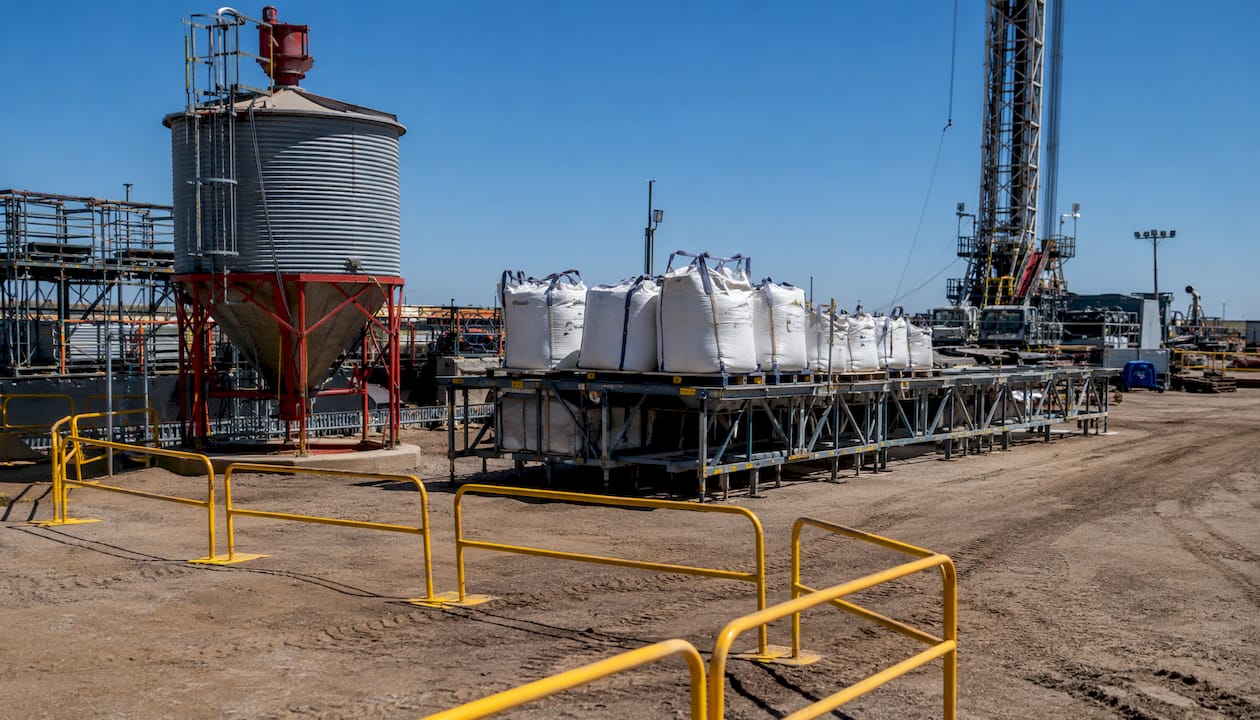
Proper engineering of material flow prevents the most common and costly storage failures. Bridging and clumping occur when dry powders compact inside a silo, blocking discharge and halting operations at the worst possible moment.
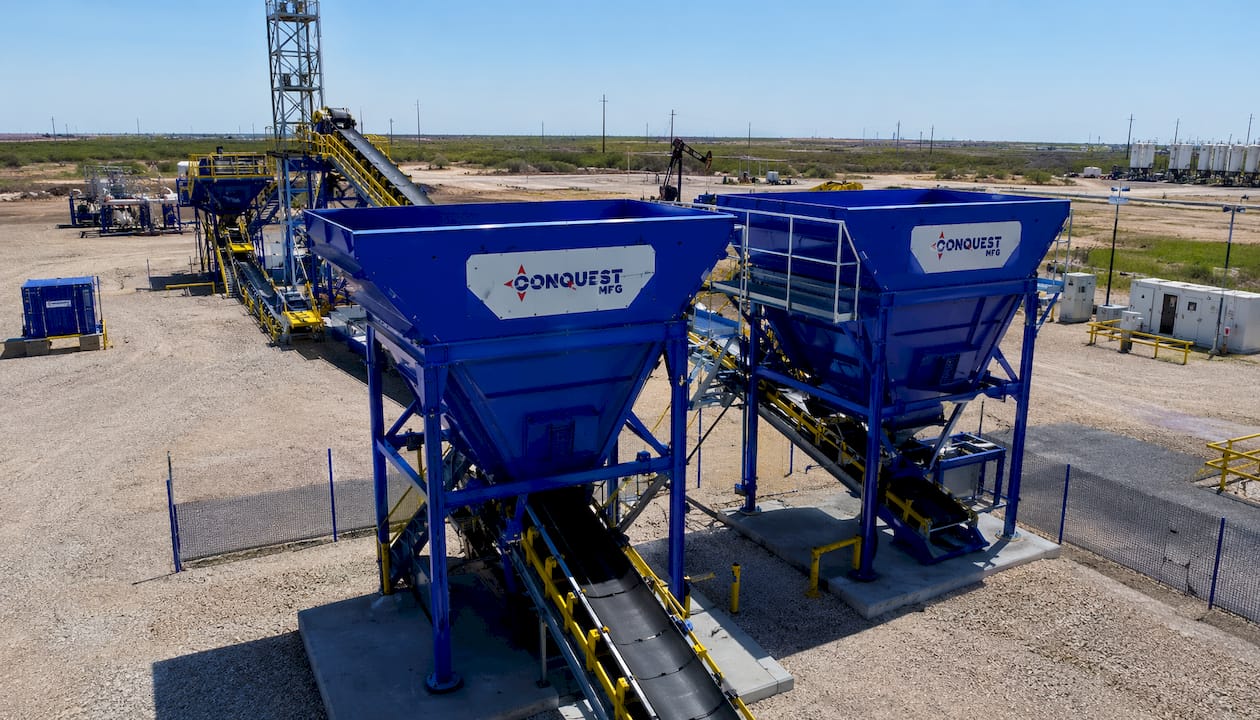
Pro Tip: Dedicate a compressed air dryer and filter to every pneumatic conveying line feeding cement or barite silos. High humidity in pneumatic air causes powder clumping that blocks discharge nozzles and forces costly manual cleanouts.
Critical operational practices include:
- Moisture control: Air dryers and desiccant filters on pneumatic supply lines keep cement and barite free-flowing, especially in humid Gulf Coast and offshore environments.
- Cross-contamination prevention: Mechanical interlocks and dedicated manifolding between bentonite and barite lines prevent fluid and cement batch performance from degrading. A single cross-connection can ruin an entire mud batch.
- Routine inspection: Maintenance protocols cover seal integrity, valve function, instrumentation calibration, and verification that no material has migrated between dedicated lines.
- Integrated system design: Storage systems engineered as process components rather than isolated vessels deliver far better flow reliability than vessels added piecemeal to an existing layout.
- Automation: Remote valves and real-time level monitoring reduce human exposure to dust and mechanical hazards while cutting material waste from overfills and transfer errors.
For a detailed look at dry bulk handling operations, the workflow from receipt to discharge follows a defined sequence that keeps every transfer auditable and repeatable.
Federal regulations and EPA compliance for bulk oil storage
The regulatory framework for bulk oil and material storage in U.S. oilfield operations draws from several federal authorities. The EPA’s SPCC rule under 40 CFR Part 112 is the primary driver for aboveground oil storage, requiring facilities above threshold volumes to prepare and implement a written spill prevention plan.
Key compliance requirements:
- SPCC applicability: Facilities with aboveground oil storage above 1,320 gallons in aggregate, or a single container above 660 gallons, must comply with SPCC requirements including secondary containment and certified engineering review.
- Design standards: Bulk storage containers must include high-level alarms, overfill protection, and structural supports rated for the stored material’s weight and chemical properties.
- Underground storage tanks (USTs): The EPA’s UST program under 40 CFR Part 280 governs any buried tanks storing petroleum, requiring leak detection, corrosion protection, and release response plans.
- Spill prevention protocols: Secondary containment sized to hold the volume of the largest single container, plus freeboard for precipitation, is the standard design requirement under SPCC.
- Inspection frequency: Operators must document regular inspections of tank integrity, containment systems, and transfer equipment, with records available for regulatory review.
Statistic callout: The EPA’s SPCC rule covers facilities storing petroleum products in containers above defined volume thresholds, with secondary containment requirements applying to all regulated aboveground storage tanks to prevent oil from reaching navigable waters.
Non-compliance carries penalties under the Clean Water Act, and enforcement actions have resulted in facility shutdowns and significant remediation costs across U.S. oilfield operations.
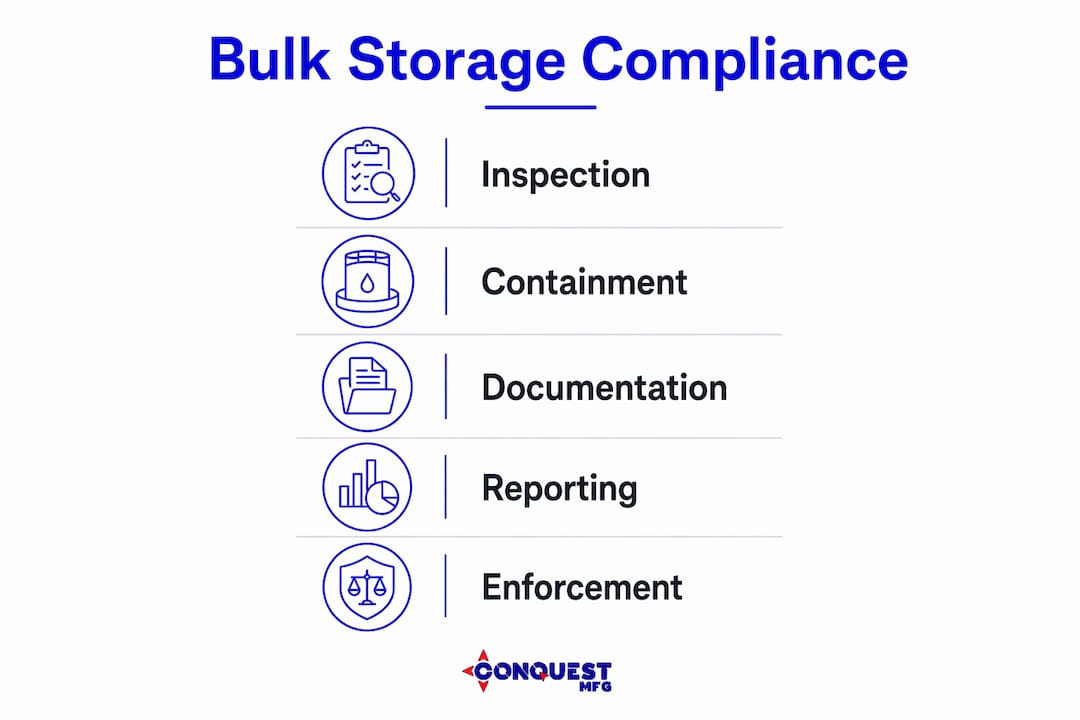
How Conquest Mfg supports oilfield bulk storage operations
Conquest Mfg brings over 35 years of manufacturing experience to the equipment challenges oilfield operators face every day. The company’s bulk cement handling equipment is built for the demanding conditions of U.S. drilling operations, from the Permian Basin to the Gulf Coast.
Key capabilities and design features:
- Portable cement pig silo trailers: Designed for rapid deployment and repositioning on active drilling pads, these units maintain material integrity during transport and discharge.
- Dry bulk pneumatic trailers: Built to transfer cement, barite, and bentonite without moisture ingress, with dedicated air systems and sealed transfer lines.
- Steel and aluminum vacuum tanks: Engineered for wet bulk recovery and fluid transfer, meeting structural and containment standards for oilfield service applications.
- Durability-focused construction: Every unit is built to withstand the mechanical stress, temperature variation, and chemical exposure typical of oilfield environments.
- Compliance-ready design: Equipment configurations account for SPCC containment requirements and federal design standards, reducing the engineering burden on your operations team.
Pro Tip: When selecting between stationary and mobile bulk storage configurations, factor in your pad-drilling schedule. Mobile units from Conquest Mfg can redeploy between wells without crane lifts, cutting rig-up time significantly on multi-well pads.
Conquest Mfg’s engineering team works directly with operators to configure systems that fit your site layout, material volumes, and regulatory obligations. Explore the full range of industrial storage solutions built for oilfield applications.
Key Takeaways
Oilfield bulk material storage requires integrated system design, EPA-compliant containment, and dedicated handling equipment for both dry solids and wet fluids to protect operations and meet federal standards.
| Point | Details |
|---|---|
| Regulatory volume thresholds | Containers above 55 gallons trigger federal bulk storage classification and associated design requirements. |
| Dry vs. wet system separation | Cement, barite, and bentonite require moisture-free pneumatic handling; drilling muds and brines need agitated, sealed tank systems. |
| SPCC compliance | Facilities with aggregate aboveground oil storage above 1,320 gallons must maintain a written spill prevention plan with secondary containment. |
| Integrated design over isolated vessels | Engineering storage as a connected process system prevents bridging, clumping, and cross-contamination failures. |
| Automation reduces risk | Remote valves and real-time level monitoring cut material waste and reduce personnel exposure to dust and mechanical hazards. |