
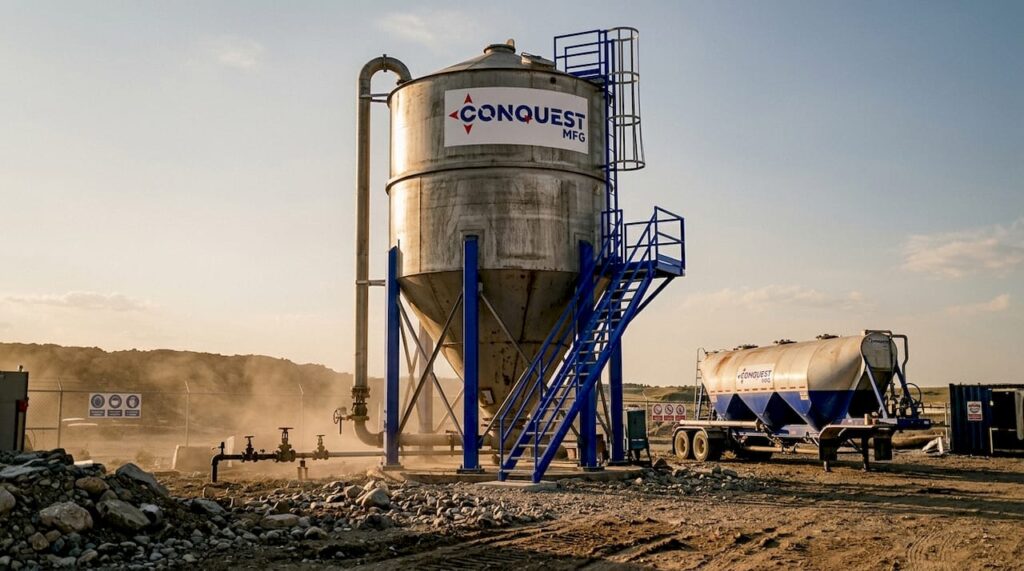
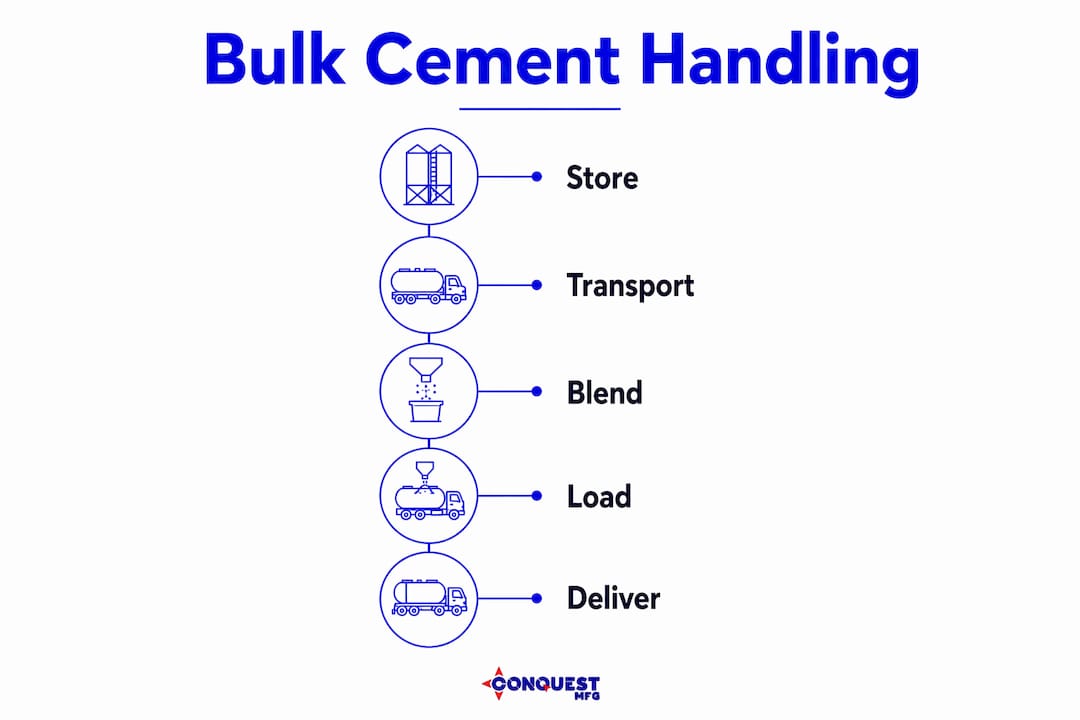
Bulk cement handling in oilfield operations is defined as the integrated process of storing, transporting, blending, and delivering dry cement materials to wellsites using pneumatic trailers, bulk plants, and specialized additives. This process sits at the core of oilfield cementing logistics, where downtime costs are high and material quality is non-negotiable. API-compliant systems govern how cement is stored and moved, setting the baseline for every responsible operator. The shift from packaged cement bags to bulk delivery has reduced per-well costs and cut non-productive time across high-activity basins. Understanding bulk cement handling oilfield explained in full means knowing the equipment, the additives, the procedures, and the logistics that hold it all together.
What equipment is used for bulk cement handling in oilfield operations?
The three core equipment categories in oilfield cement systems are dry storage silos, pneumatic trailers, and bulk cementing trucks. Each plays a distinct role, and none of them is optional on a well-run operation.
Dry storage silos hold bulk cement at the wellsite or staging yard. These units must meet API standards for dry bulk storage, which govern pressure ratings, venting, and moisture protection. A silo that fails to meet API compliance is a liability, not an asset.
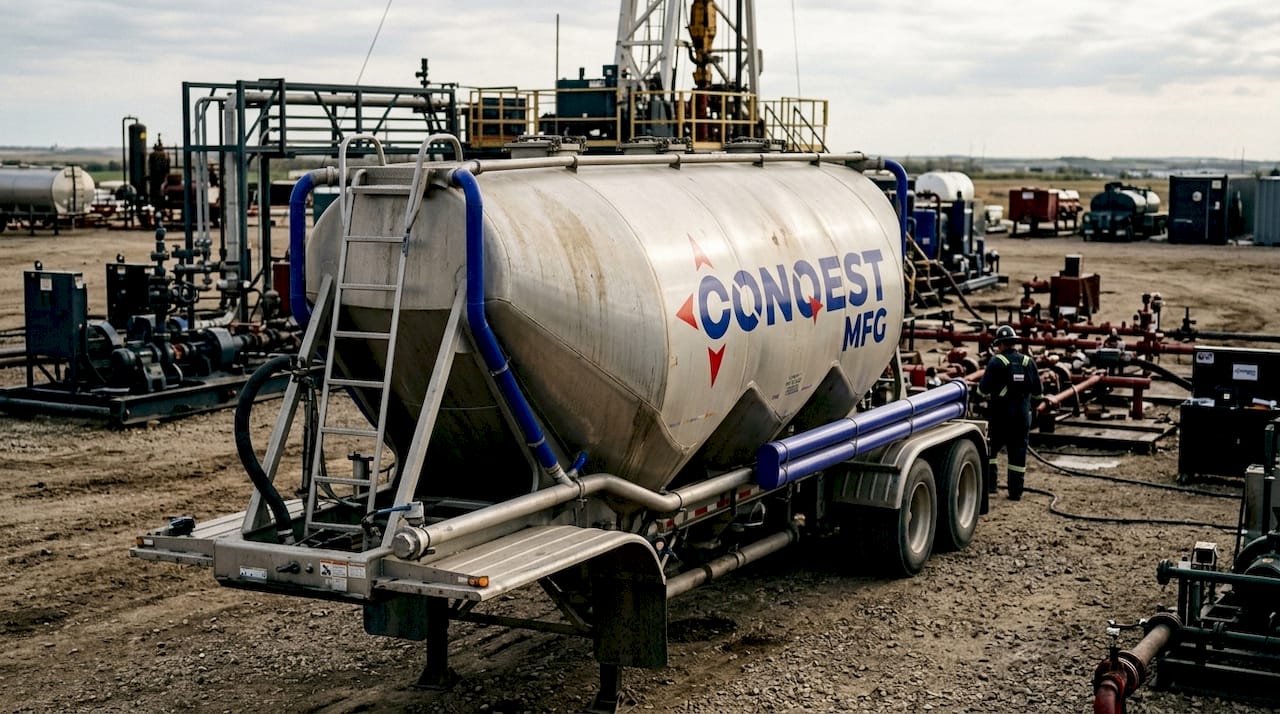
Pneumatic trailers handle the bulk cement transport leg. Pneumatic trailers use compressed air and gravity to load and unload dry cement safely and efficiently. Material enters through top manholes and discharges through cone-shaped internal hoppers at the base. This design keeps the cement dry and contained throughout the entire haul, which matters enormously on remote oilfield roads. For a deeper look at why this design wins on reliability, the pneumatic trailer advantages article covers the engineering in detail.
Bulk cementing trucks complete the chain. Modern cementing trucks combine triplex or quintuplex pumps, automated slurry mixing, and real-time density control for precise cement placement downhole. Automated mixing systems achieve ±0.02 lb/gal density control batch after batch. That level of consistency is what separates a successful primary cement job from a remedial one.
Key features to verify on any bulk cement equipment package:
- PLC controls for automated pressure and flow monitoring
- Rugged chassis construction rated for harsh oilfield terrain
- API-compliant storage compartments with proper venting and pressure relief
- Cone-shaped discharge hoppers for clean, complete unloading
Pro Tip: Verify that your pneumatic trailer’s air compressor output matches the silo’s rated fill pressure before every job. A mismatch here causes incomplete transfers and wasted time on location.
How are additives like Class F fly ash integrated into bulk cement handling?
Class F fly ash is a pozzolanic material produced as a byproduct of coal combustion. In oilfield cementing, it functions as a partial cement replacement that reduces slurry density and cost without sacrificing API compliance.
Class F fly ash can replace 20–40% of standard cement per well. That replacement margin translates directly to a cost reduction of the same proportion on the cement portion of the well program. On a high-volume drilling campaign, that saving compounds quickly across dozens of wells.
The blending process happens at the bulk plant before transport. Operators weigh out the fly ash and cement fractions, blend them to a uniform mix, and load the combined material into pneumatic trailers for delivery. Blending at the plant rather than at the wellsite gives quality control teams a controlled environment to verify mix ratios.
Critical quality control steps during additive blending include:
- Confirm fly ash classification as Class F per ASTM C618 before use
- Weigh each component separately before combining
- Monitor pneumatic pressures during blending to detect bridging early
- Retain a physical dry material sample from every batch
Every batch must have a retained dry material sample to support failure analysis. This is not optional. If a cement job fails downhole, the retained sample is the only physical evidence available for investigation. Bulk plants that skip this step lose their ability to defend their work.
What are the critical cement handling procedures to prevent failures?
Moisture is the single greatest threat to bulk cement quality. Humidity causes cement bridging and caking inside pneumatic lines and storage vessels, which blocks flow and forces costly cleanouts.
Operators prioritize maintenance of desiccants and air dryer systems above most other routine checks. A failed desiccant on a compressor allows wet air into the pneumatic system. Wet air plus dry cement equals a blocked line, and a blocked line on a cementing job means non-productive time.
Follow these steps to maintain moisture control across your bulk cement operation:
- Inspect desiccant cartridges before every job and replace on a fixed schedule, not just when they fail.
- Test air dryer output moisture levels at the start of each shift.
- Check all silo vent filters for blockages that could trap humid air inside the vessel.
- Monitor pneumatic transfer pressures in real time. A pressure spike during unloading signals a partial blockage.
- Document every inspection with a timestamped log tied to the specific trailer or silo unit.
Pro Tip: Keep a spare desiccant cartridge kit on every pneumatic trailer. Replacing a cartridge on location takes minutes. Clearing a bridged cement line takes hours.
Pressure monitoring during blending and loading is equally critical. Operators should establish baseline transfer pressures for each cement type and additive blend, then flag any deviation greater than 10% as a potential blockage indicator. Bulk plants function as high-precision chemical factories with retained sample protocols for traceability. That factory mindset, applied to every transfer and every batch, is what keeps failures off the job log.
How does bulk cement logistics reduce non-productive time in oilfield operations?
Direct bulk tanker delivery is the most effective method for reducing logistics overhead in oilfield cement supply chains. Direct bulk tanker delivery significantly reduces non-productive time compared to packaged chemical delivery. Packaged delivery requires unloading, counting, staging, and disposing of containers at the wellsite. Bulk delivery eliminates all of those steps.
Some operators handle over 1,000,000 liters of bulk chemical inputs annually per facility. That volume makes the logistics model a pipeline problem, not a purchasing problem. Treating the supply chain as a continuous flow rather than a series of discrete orders removes the bottlenecks that cause last-minute shortages and rushed deliveries.
| Delivery method | Container handling | Wellsite labor | Waste disposal | NPT risk |
|---|---|---|---|---|
| Packaged chemical | High | High | Drums, bags, pallets | High |
| Direct bulk tanker | None | Low | None | Low |
| Bulk with on-site silo | None | Minimal | None | Very low |
Eliminating intermediate containers like drums and consolidating deliveries also reduces environmental exposure. Fewer containers mean fewer spill points, fewer disposal costs, and a cleaner wellsite. Project managers in high-activity basins report that bulk handling removes supply chain bottlenecks and improves environmental safety simultaneously. For a broader view of how logistics equipment fits into field operations, the oilfield logistics equipment guide covers the full picture.
The last-mile delivery piece matters most. A bulk tanker that arrives at the wellsite gate but cannot connect to the silo quickly creates its own bottleneck. Standardized connection fittings, clearly marked fill points, and trained operators on both the delivery and receiving ends are what make bulk logistics actually work in practice.
Key Takeaways
Effective bulk cement handling in oilfields requires API-compliant equipment, moisture control, additive blending discipline, and a logistics model that treats supply as a continuous pipeline rather than individual deliveries.
| Point | Details |
|---|---|
| Equipment compliance matters | Silos, pneumatic trailers, and cementing trucks must meet API standards for safe, reliable operation. |
| Class F fly ash cuts costs | Replacing 20–40% of cement with Class F fly ash reduces per-well material costs by the same margin. |
| Moisture control prevents failures | Desiccant and air dryer maintenance is the highest-priority routine check on any pneumatic system. |
| Retained samples are non-negotiable | Every batch requires a physical dry material sample to support traceability and failure investigation. |
| Bulk delivery reduces NPT | Direct tanker delivery eliminates container handling, wellsite labor, and waste disposal at the source. |
What I’ve learned watching bulk cement operations evolve
The biggest shift I’ve seen in oilfield cement logistics is not the equipment. The equipment has been reliable for years. The shift is in how operators think about the supply chain.
Teams that still treat cement as a commodity to be ordered batch by batch are the ones calling for emergency deliveries at 2 a.m. Teams that model their cement supply as a pipeline, with flow rates, buffer volumes, and scheduled replenishment, rarely face that problem. The difference is not budget. It is planning discipline.
The other thing I keep seeing underestimated is moisture. Every experienced cementing engineer knows the theory. Far fewer have a written, enforced desiccant replacement schedule on their trailers. The ones who do have it written down and followed are the ones who finish jobs on time.
Automation through PLC controls has made density management far more consistent than it was a decade ago. But automation does not replace the retained sample protocol. A computer log tells you what the system measured. A physical sample tells you what was actually in the trailer. Both matter.
The oilfield material handling overview from Conquest Mfg is worth reading if you want a grounded, practical view of how these systems fit together on a real operation.
— Sam
Conquest Mfg equipment for oilfield cement operations
Conquest Mfg builds the equipment that oilfield cement operations depend on, including dry bulk pneumatic trailers, portable cement pig silo trailers, and batch plants designed for field conditions.
Every unit Conquest Mfg produces is built for the demands of remote oilfield environments, with rugged chassis construction, PLC control options, and configurations tailored to your operation’s volume and site requirements. Whether you need a batch plant for oilfield cementing or a pneumatic trailer fleet for bulk cement transport, Conquest Mfg works with your team to match equipment to your exact operational needs. View the full range of bulk handling equipment or contact Conquest Mfg directly to discuss your project requirements.
FAQ
What is bulk cement handling in oilfield operations?
Bulk cement handling is the integrated process of storing, transporting, blending, and delivering dry cement to wellsites using pneumatic trailers, bulk silos, and bulk cementing trucks. It replaces packaged bag delivery to reduce cost, labor, and non-productive time.
What does Class F fly ash do in oilfield cementing?
Class F fly ash replaces 20–40% of standard cement in a slurry blend, reducing material cost by the same margin while maintaining API compliance. It is blended at the bulk plant before transport to the wellsite.
Why is moisture control so critical in bulk cement systems?
Humidity causes cement to bridge or cake inside pneumatic lines and storage vessels, blocking material flow and forcing costly cleanouts. Desiccant and air dryer maintenance on compressors is the top-priority routine check to prevent this failure.
How do pneumatic trailers unload bulk cement?
Pneumatic trailers use compressed air and gravity to discharge dry cement through cone-shaped internal hoppers at the base of the vessel. Material is loaded through top manholes and discharged without mechanical augers, keeping the system simple and reliable.
How does bulk delivery reduce non-productive time at the wellsite?
Direct bulk tanker delivery eliminates container unloading, staging, and disposal steps that packaged delivery requires. Operators who consolidate deliveries and maintain on-site silo buffer volumes reduce NPT risk to its lowest practical level.