
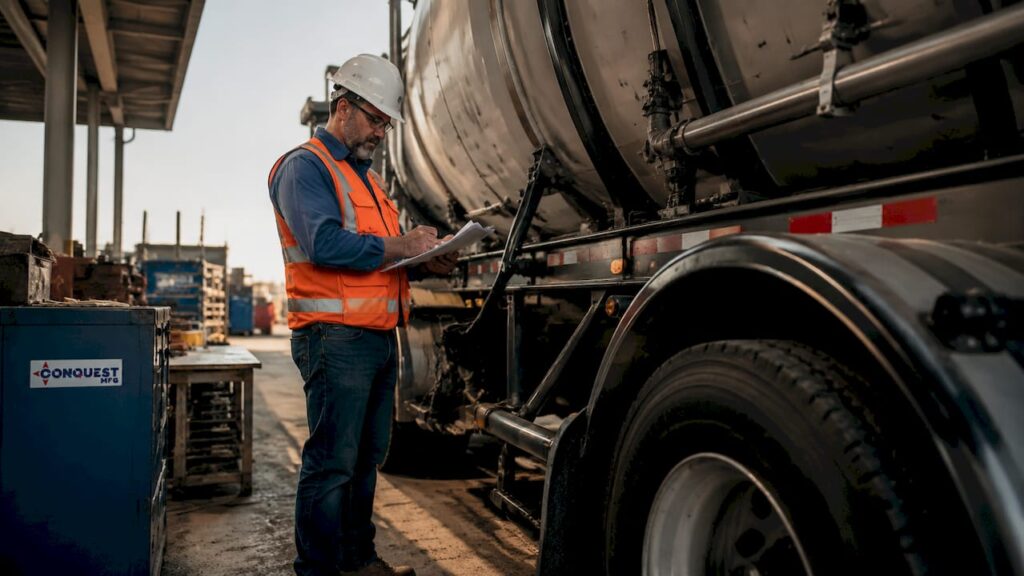
A vacuum tank trailer inspection checklist is the primary tool operators and managers use to maintain safety, meet DOT regulations, and prevent costly equipment failures. Known formally as a cargo tank inspection protocol, this checklist covers everything from daily pre-trip walkarounds to five-year hydrostatic tests. Structured maintenance protocols reduce downtime by 40% and incident rates by 67%. That means a well-run checklist for vacuum tank trailers is not a paperwork exercise. It is the difference between a compliant fleet and a grounded one.
1. What are the essential daily inspection items for vacuum tank trailers?
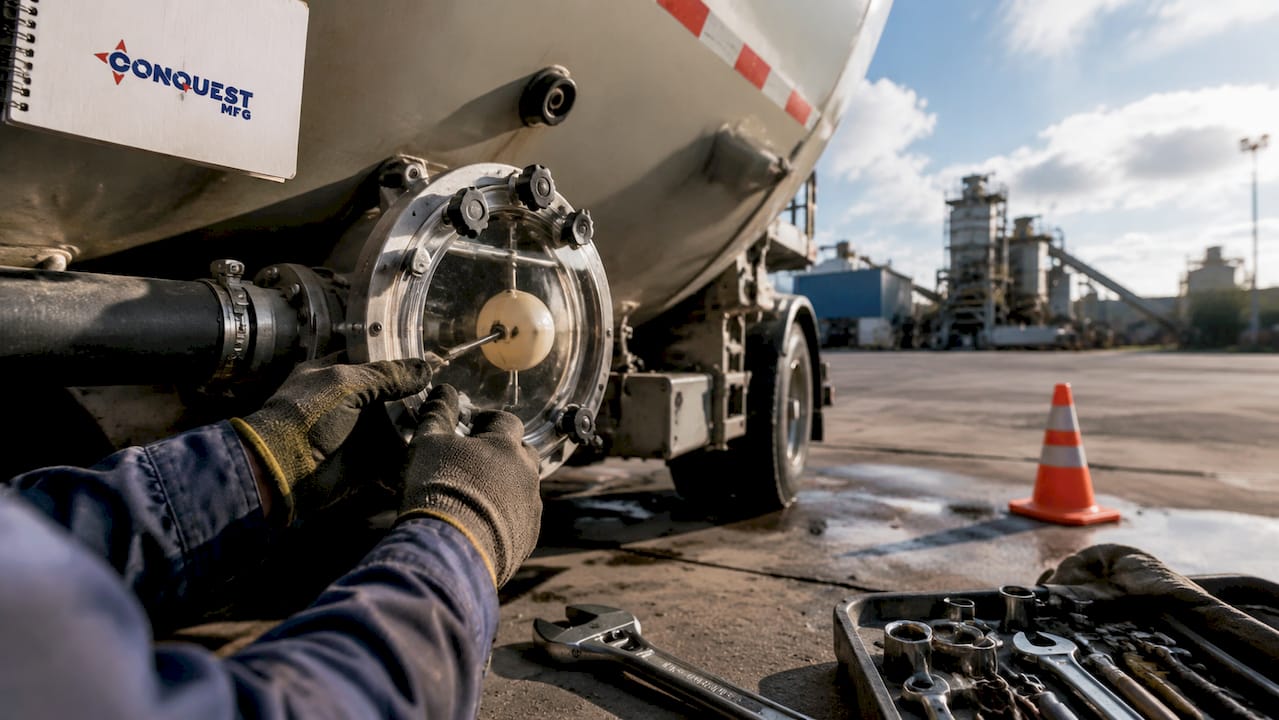
Daily pre-trip inspection is the first line of defense against equipment failure. Every operator should complete this check before the unit leaves the yard.
Vacuum system components:
- Confirm the relief valve functions correctly. A blocked or stuck relief valve risks tank implosion under negative pressure.
- Check vacuum pump oil level and condition. Low or contaminated oil accelerates pump wear.
- Inspect all hoses and couplings for cracks, abrasion, or loose fittings.
- Verify suction boom movement is free and unobstructed.
- Test pressure and vacuum gauges for accurate readings before loading.
Debris tank and safety equipment:
- Check float balls move freely inside the debris tank. Float balls act as a failsafe to block slurry from entering the vacuum blower. A seized float ball disables that protection silently, leading to expensive blower replacement.
- Inspect level indicators for correct operation.
- Confirm tires are properly inflated and free of visible damage.
- Check all brake systems, running lights, and turn signals.
- Verify PPE kit, fire extinguisher, and spill containment kit are present and accessible.
Pro Tip: Apply lockout/tagout procedures before any hands-on inspection of the vacuum system. This single step prevents the majority of operator injuries during pre-trip checks.
2. Which monthly and periodic maintenance tasks are mandatory?
Monthly maintenance goes deeper than the daily walkaround. These tasks protect pump longevity and tank integrity.
Monthly tasks:
- Change vacuum pump oil and replace the oil filter per manufacturer specifications.
- Inspect boom hydraulic lines for leaks, wear, and secure fittings.
- Check tank exterior surfaces for corrosion, pitting, or weld cracks.
- Lubricate all grease points on the boom and chassis.
- Test all safety relief valves under controlled conditions.
Regulatory inspection schedule under 49 CFR 180.407:
| Inspection Type | Frequency | Key Requirement |
|---|---|---|
| External visual inspection | Every 12 months | Check shell, welds, fittings, and markings |
| Internal visual inspection | Every 5 years | Full internal surface and structural check |
| Leakage test | Every 5 years | Pressure test at rated working pressure |
| Hydrostatic test | Per DOT schedule | Full pressure test of tank shell |
DOT-spec cargo tanks require annual external visual inspection and internal or leak tests every five years. Violations carry fines exceeding $10,000 per incident. That financial exposure alone justifies a structured inspection calendar.
Welding repairs to pressure-retaining parts must be completed by R-Stamp certified shops. Unauthorized repairs create direct liability and cause inspection failures. Always verify shop certification before authorizing any tank shell work.
Pro Tip: Store all inspection certificates, pressure test results, and repair records in a single digital folder per unit. Auditors expect organized, defensible records, and gaps in documentation are treated the same as missed inspections.
3. How to safely operate vacuum tank trailers within loading guidelines
Safe operation starts before the first valve opens. Operators who skip the operational checklist create risks that no inspection can catch after the fact.
Loading and capacity rules:
- Never exceed 80% of tank liquid capacity when loading. The remaining 20% provides surge space and prevents pressure spikes during transport.
- Understand the difference between CFM (cubic feet per minute) and inches Hg when setting vacuum levels. CFM measures airflow volume. Inches Hg measures vacuum depth. Running the wrong setting for the material type causes either slow filling or dangerous over-pressurization.
- Confirm the material being loaded matches the tank’s rated chemical compatibility.
Operational procedure checklist:
- Verify all valves are in the correct position before engaging the pump.
- Monitor gauges continuously during filling.
- Follow the written emergency response procedure for spills, overfills, and pump failures.
- Complete a post-unload inspection of hoses, valves, and the tank interior when carrying hazardous materials.
Safety guides must include specific operational limits for different hazardous cargo types and proper documentation for each load. A generic procedure sheet does not satisfy this requirement for regulated materials.
Operator training should be refreshed every two years. Key topics include emergency shutoff procedures, spill response, PPE use, and load limit verification. Refresher training is not optional for fleets carrying regulated waste.
Pro Tip: Post a laminated copy of the tank’s maximum working pressure, capacity limit, and emergency contacts inside the cab. Operators under stress default to what is visible, not what is memorized.
4. What are the most common mistakes in vacuum trailer inspection checklists?
The most expensive maintenance failures trace back to checklist gaps, not equipment age. These are the items operators and managers most frequently overlook.
- Skipping the relief valve check. Relief valve functionality is the most critical daily safety check on any vacuum unit. A valve that sticks open wastes vacuum. One that sticks closed risks tank implosion. Neither failure announces itself until it is too late.
- Ignoring float ball mobility. Float balls that seize inside the debris tank disable the blower protection system without triggering any alarm. The blower continues running and ingests slurry until it fails completely.
- Using the wrong vacuum pump oil. Incorrect pump oil causes premature pump failure through inadequate lubrication and early seizure. Always use the oil grade specified in the pump manufacturer’s manual, not a generic substitute.
- Dismissing minor corrosion. Surface rust on a tank shell progresses to through-wall pitting faster than most operators expect. Catching corrosion at the surface stage costs a fraction of a full panel repair or tank replacement.
- Delaying annual inspections. Waiting for audits or failures before addressing tank integrity leads to costly penalties and operational shutdowns. Proactive scheduling prevents both.
- Incomplete documentation. Every repair, pressure test, and incident must be logged with clear, defensible records. Missing entries are treated as non-compliance during DOT audits.
Fleets that treat the checklist as a formality consistently face the same failures: seized floats, blown pumps, and failed inspections. The checklist exists because these failures are predictable and preventable.
5. How do daily, monthly, and annual checklist items compare in impact?
Not all checklist items carry equal weight. Prioritizing by risk and regulatory impact helps managers build realistic maintenance schedules.
| Checklist Category | Frequency | Compliance Risk | Operational Impact |
|---|---|---|---|
| Relief valve and gauge check | Daily | Critical. Failure risks implosion or overpressure | Immediate shutdown if failed |
| Float ball and hose inspection | Daily | High. Blower damage is costly and sudden | Same-day repair required |
| Pump oil and filter change | Monthly | Medium. Gradual pump wear if skipped | Reduced pump life over time |
| Tank exterior visual check | Monthly | Medium. Corrosion catches early saves cost | Prevents escalation to structural failure |
| External DOT inspection | Annual | Critical. Fines exceed $10,000 per violation | Unit pulled from service if failed |
| Internal visual and leak test | Every 5 years | Critical. Legal requirement under 49 CFR 180.407 | Tank recertification required |
Digital auditing systems reduce DOT violations by 58% by automating inspection scheduling, storing certificates, and flagging overdue tasks. Fleets managing more than three units benefit most from moving off paper logs. Digital systems also create the audit trail that DOT inspectors expect to see.
The daily category carries the highest immediate risk. The annual and five-year categories carry the highest regulatory and financial risk. Monthly tasks sit in the middle but prevent the slow degradation that makes annual inspections fail.
Key takeaways
A complete checklist for vacuum tank trailers combines daily safety checks, monthly maintenance tasks, and DOT-mandated periodic inspections to keep fleets compliant, safe, and operational.
| Point | Details |
|---|---|
| Daily relief valve check | Test the relief valve every shift. A stuck valve risks tank implosion or wasted vacuum. |
| Float ball inspection | Verify free movement daily to protect the vacuum blower from slurry ingestion. |
| 80% capacity rule | Never load liquids beyond 80% of tank capacity to prevent pressure spikes in transit. |
| Annual DOT inspection | Schedule external visual inspections every 12 months. Fines exceed $10,000 per violation. |
| Certified repair shops | Use R-Stamp certified shops for all pressure-vessel welding to maintain DOT compliance. |
What I’ve learned from watching fleets skip the basics
The operators who run the tightest fleets share one habit. They treat the daily checklist as non-negotiable, not as a suggestion for slow mornings. The relief valve check and the float ball test take under five minutes combined. Yet those two items account for the majority of catastrophic failures I see in fleets that skip them.
The second pattern I’ve noticed is the documentation gap. Managers often assume their technicians are logging repairs. Technicians assume the manager is handling the paperwork. The result is a unit with no traceable service history heading into a DOT audit. Digital tools like FleetRabbit close that gap by making documentation automatic rather than optional. Fleets that adopt a structured maintenance workflow before an audit forces them to are the ones that pass without scrambling.
My honest advice: build your inspection schedule around the regulatory calendar, not around when equipment starts showing problems. Proactive scheduling costs far less than reactive repairs and far less than DOT fines.
— Sam
Conquest Mfg vacuum tank resources for operators and managers
Conquest Mfg builds steel and aluminum vacuum tanks designed for the demands of waste management and transportation fleets. The same engineering standards that go into the tank also inform the maintenance guidance Conquest Mfg provides to operators and managers.

Operators looking to tighten their inspection workflows will find detailed protocols in the vacuum tank maintenance guide on the Conquest Mfg website. The guide covers routine servicing, safety compliance, and documentation practices built around current DOT requirements. For managers evaluating tank specifications and material options, the professional buyer’s guide covers steel versus aluminum tank selection and the maintenance considerations that come with each. Conquest Mfg supports fleets across the USA with equipment built to perform and documentation to back it up.
FAQ
What does a daily vacuum tank trailer inspection cover?
A daily inspection covers the relief valve, vacuum pump oil level, hoses, float ball mobility, gauges, tires, brakes, lights, and safety equipment. The full check takes under 30 minutes and prevents the majority of in-service failures.
How often does a DOT cargo tank require a formal inspection?
DOT-spec cargo tanks require an external visual inspection every 12 months and an internal visual inspection plus leakage test every five years under 49 CFR 180.407. Missed inspections carry fines exceeding $10,000 per violation.
Why is the float ball check so critical?
Float balls inside the debris tank block slurry from entering the vacuum blower. A seized float ball disables that protection without any visible warning, leading to full blower failure and costly replacement.
What oil should I use in a vacuum pump?
Always use the oil grade specified in the pump manufacturer’s manual. Using an incorrect grade reduces lubrication, causes early pump seizure, and voids most manufacturer warranties.
Can any welding shop repair a vacuum tank?
No. All welding on pressure-retaining parts of a vacuum tank must be performed by an R-Stamp certified shop. Unauthorized repairs create liability exposure and cause failures during DOT inspections.