
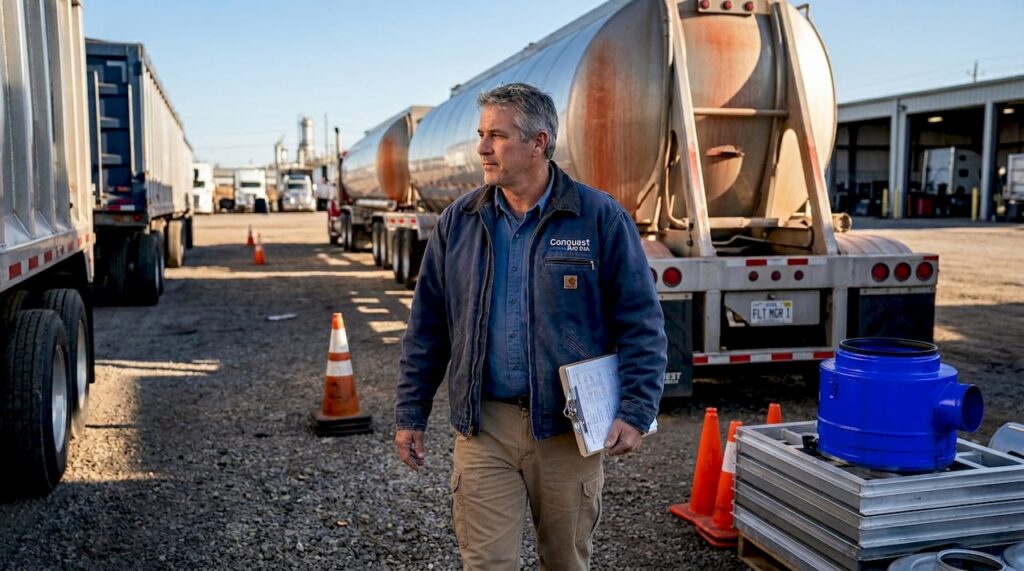
The 2026 regulatory landscape for bulk transportation has changed faster than most managers anticipated. New FMCSA mandates now require brokers to hold $75k in liquid assets, adopt the Motus USDOT system with Multi-factor Authentication, and implement electronic Driver Vehicle Inspection Reports for every fleet inspection. For construction and transportation managers running tight schedules and tight margins, these shifts demand more than awareness. They demand action, the right equipment, and a clear plan.
Table of Contents
- Key compliance changes for bulk transportation in 2026
- Innovative features to look for in bulk transportation equipment
- Comparing top bulk transportation equipment options
- Steps to ensure operational efficiency and compliance
- Why cutting-edge features aren’t enough—what actually secures long-term compliance
- Innovate your bulk transport strategy with industry-leading solutions
- Frequently asked questions
Key Takeaways
| Point | Details |
|---|---|
| 2026 compliance essentials | Major regulatory changes require digital inspections, asset minimums, and improved safety systems. |
| Innovative equipment musts | Choose equipment with modular designs, secure tech, and built-in inspection capabilities. |
| Smart selection process | Compare leading options based on capacity, compliance, and operational flexibility. |
| Beyond technology | Success depends on team engagement, ongoing training, and proactive management, not just hardware. |
Key compliance changes for bulk transportation in 2026
The new FMCSA framework for 2026 is not a minor update. It represents a full structural overhaul of how fleets operate, report, and maintain accountability across every tier of the industry.
The most talked about change is the broker liquid asset requirement. Brokers must now demonstrate $75,000 in liquid financial assets to maintain operating authority. This change aims to protect carriers and shippers from broker insolvency, which has historically left drivers unpaid after completed hauls.
The Motus USDOT system introduces Multi-factor Authentication, commonly called MFA, as a mandatory access control. MFA means that logging into fleet management systems now requires two or more verification steps, like a password combined with a text message code or biometric confirmation. This prevents unauthorized access to safety data and reduces the risk of fraudulent reporting.
The eDVIR mandate is arguably the most operationally significant change for daily fleet management. Electronic Driver Vehicle Inspection Reports replace paper logs entirely. Drivers now complete inspections digitally through approved devices, generating instant records that are time-stamped, stored, and immediately accessible by fleet managers and compliance officers.
The Safety Measurement System, or SMS, now uses a 12-month scoring window instead of the previous longer rolling period. This means violations accumulate weight faster and correct behavior improves your score more quickly. It is a double-edged shift: you can recover from a bad quarter faster, but you also cannot afford to let compliance slip.
Here is a clear snapshot of the key 2026 FMCSA compliance changes and their direct impact on bulk transportation:
| Regulation | Requirement | Impact on operations |
|---|---|---|
| Broker liquid assets | $75,000 minimum | Financial qualification hurdle for brokers |
| Motus USDOT with MFA | Mandatory system access | Secure fleet data management |
| eDVIR mandate | Digital inspections only | Faster reporting, real-time records |
| SMS scoring window | 12-month rolling period | Faster score recovery and consequence |
What this means for equipment purchasing: Every piece of bulk transportation equipment you add to your fleet in 2026 must be compatible with digital inspection systems. Equipment that cannot integrate with eDVIR platforms creates friction, delays, and compliance risk. Explore purpose-built transportation compliance solutions to see what equipment is designed to fit these new requirements from the start.
Key operational impacts across your fleet include:
- Mandatory digital inspection records for every vehicle every day
- Secure login credentials required for any USDOT system access
- Broker partnerships must now meet a verified financial threshold
- SMS violations from the past 12 months carry full weight at all times
- Equipment without telematics or digital reporting capability becomes a liability
With new regulations setting the baseline, the next priority is selecting equipment that actively supports compliance rather than simply tolerating it.
Innovative features to look for in bulk transportation equipment
Choosing the right bulk transportation equipment in 2026 is not just about payload capacity or axle ratings. The features that actually protect your operation now extend into digital systems, materials engineering, and remote monitoring.
The most critical feature for 2026 is automated eDVIR integration. Equipment built to interface directly with electronic inspection platforms means your drivers complete compliant inspections without extra steps, third-party apps, or manual data entry. This saves time at every stop and protects your SMS score automatically.
Remote monitoring and telematics have shifted from a premium add-on to an operational standard. Telematics systems track real-time location, load status, engine diagnostics, and pressure readings on pneumatic systems. For managers overseeing multiple vehicles across large project sites, this visibility reduces the guesswork and allows proactive maintenance scheduling before failures happen.

Modular and scalable designs are increasingly valuable as project demands shift throughout the year. Equipment that can be reconfigured for different bulk materials, such as cement, sand, or fly ash, reduces your fleet size and lowers your per-project cost. Modular trailers also simplify the compliance process because fewer unique vehicle types means fewer inspection profiles to manage.
Materials innovation matters more than most managers realize. Aluminum components reduce tare weight, increase payload, and resist corrosion from aggressive bulk materials like lime or dry chemicals. Smooth interior surfaces on bulk pneumatic trailers also reduce product buildup and make cleanouts faster and more thorough.
Secure system access features, tied to the innovative construction equipment now available, ensure your fleet data stays protected. Equipment-integrated access controls that align with MFA requirements mean your compliance posture is consistent from the cab to the back office.
Here is the feature checklist every manager should use when evaluating new bulk transportation equipment:
- Automated eDVIR compatibility with your existing fleet management platform
- Real-time telematics with load monitoring and engine diagnostics
- Modular design for multi-material or multi-project deployment
- Aluminum or advanced alloy construction for weight efficiency
- Corrosion-resistant interior surfaces for reduced maintenance cycles
- MFA-compatible access systems for secure data logging
The eDVIR mandate makes digital inspection compatibility non-negotiable. Any new equipment purchase that lacks this integration will require expensive aftermarket retrofitting or force your drivers into manual workarounds that create compliance exposure.
Pro Tip: When evaluating vendor proposals, ask specifically whether the equipment’s onboard systems support API integration with your current fleet management software. A yes or no answer to that specific question will save you weeks of troubleshooting after delivery.
Armed with this features checklist, the logical next step is comparing the specific equipment types that best fit your bulk transportation requirements.
Comparing top bulk transportation equipment options
Selecting the right equipment type for your fleet requires an honest comparison of specs, compliance readiness, and operational versatility. The three most widely deployed categories in bulk transportation for construction and industrial use are dry bulk pneumatic trailers, vacuum tank trailers, and portable cement silo trailers.
| Equipment type | Capacity range | Compliance features | Best application |
|---|---|---|---|
| Dry bulk pneumatic trailer | 1,000 to 1,800 cu ft | eDVIR-ready, telematics-compatible | Cement, fly ash, sand |
| Vacuum tank trailer | 5,000 to 7,000 gallons | Digital inspection ports, sealed systems | Industrial liquids, slurry |
| Portable cement silo trailer | 500 to 1,500 bbl | Modular design, remote monitoring | On-site cement storage |
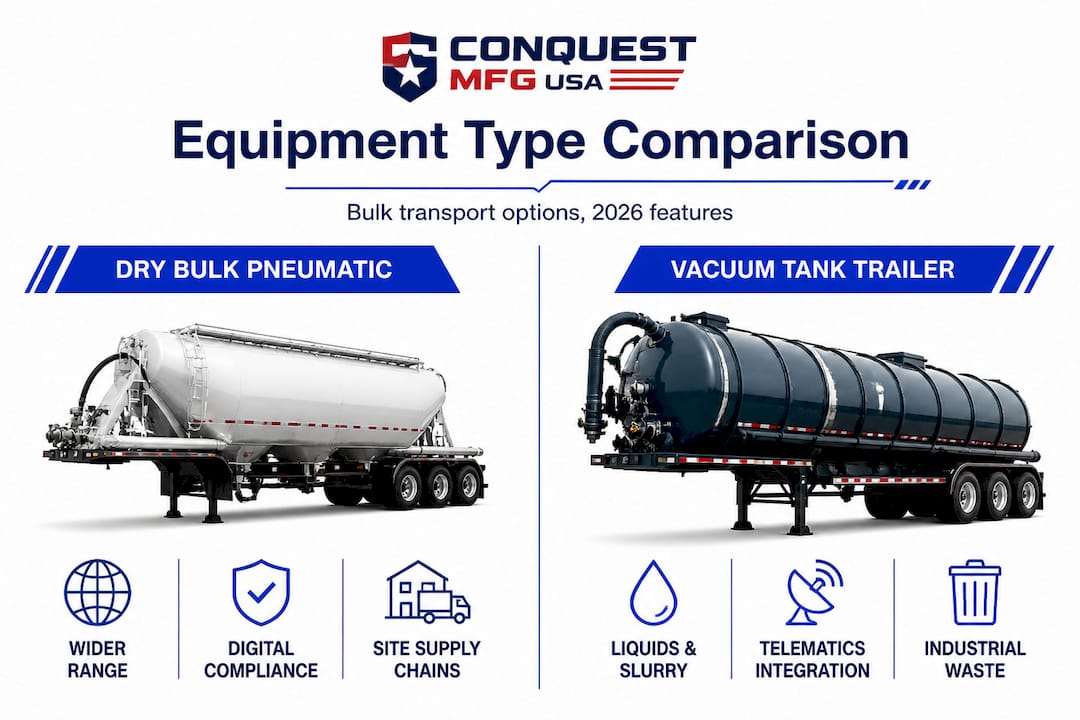
Dry bulk pneumatic trailers dominate construction site supply chains because they handle the widest range of powdered and granulated materials. The best models in 2026 include onboard pressure monitoring, tare weight sensors, and sealed discharge systems that connect directly to eDVIR platforms for instant inspection records.
Vacuum tank trailers serve a different but equally critical role. Steel and aluminum vacuum tanks handle liquids, slurries, and semi-solid materials that cannot be transferred through pneumatic pressure. The sealed systems reduce environmental spill risk and make inspection verification straightforward.
Portable cement silo trailers give project managers on-site material storage flexibility. Rather than coordinating continuous deliveries, you stage materials at the job site and pull from the silo as needed. This dramatically reduces delivery frequency and simplifies the SMS tracking burden per vehicle.
Choosing the right equipment from these three categories comes down to a clear three-step process:
-
Needs assessment: Define your primary bulk material types, delivery volumes, and project site constraints. A coastal infrastructure project with limited staging area has very different requirements than an inland highway expansion.
-
Feature matching: Cross-reference your operational priorities against the feature checklist from the previous section. Prioritize eDVIR compatibility first, then telematics, then materials and capacity.
-
Compliance evaluation: Verify that every equipment option under consideration supports the Motus USDOT system with MFA and generates eDVIR-compliant inspection records without requiring manual data transfer.
Dust management is another practical differentiator that affects both compliance and site safety. Advanced protective materials can reduce dust in bulk transport by up to 60%, which matters for OSHA site standards as much as it matters for material loss prevention.
For a broader view of how these equipment categories fit specific industry applications, review equipment solutions by industry to match your project type with the right configuration.
After comparing your options, the question becomes how to efficiently implement the right equipment for ongoing compliance and performance.
Steps to ensure operational efficiency and compliance
Purchasing compliant equipment is step one. Keeping it compliant through daily operations, seasonal project shifts, and regulatory updates is the ongoing work that separates high-performing fleets from those that accumulate SMS violations.
Here is the step-by-step rollout process we recommend for new bulk transportation equipment:
-
Pre-delivery compliance verification: Before your new equipment arrives, confirm with your vendor that all digital systems are configured for your fleet management platform. Request documented proof of eDVIR compatibility.
-
Driver onboarding and training: Schedule a dedicated training session before the equipment enters active service. Cover the digital inspection process, MFA login procedures, and the reporting chain for flagged inspection items.
-
First-week supervised operation: Run the first week of operation with a compliance supervisor on-site or monitoring remotely via telematics. This identifies configuration gaps before they generate violations.
-
Integrate into your preventive maintenance schedule: Use the telematics data from new equipment to establish baseline performance metrics. Set alerts for pressure deviations, weight anomalies, and engine diagnostics thresholds.
-
Monthly compliance audit: Pull eDVIR records monthly and cross-reference them against your SMS data. Patterns in inspection flags often predict equipment failures and regulatory issues before they escalate.
Pro Tip: Build your eDVIR audit into your existing monthly safety meeting rather than treating it as a separate process. When compliance review becomes part of regular operations, it stops feeling like an administrative burden and starts generating actionable maintenance data.
“Routine digital inspections using eDVIR reduce unplanned downtime by catching defects at the inspection stage rather than at the breakdown stage. The eDVIR mandate is, in practice, one of the most useful operational tools the FMCSA has ever introduced.”
Telematics is your real-time compliance safety net. When a driver misses an inspection flag, telematics often captures the same data point through sensor readings. Cross-referencing both systems creates a redundant compliance record that stands up under DOT audit review.
For managers evaluating the financial side of fleet upgrades, understanding your financing equipment strategies is critical. Phased equipment replacement tied to your compliance calendar keeps cash flow stable while progressively modernizing your fleet.
Understanding the compliant and efficient use of equipment opens the door to a broader perspective on what actually drives long-term results.
Why cutting-edge features aren’t enough—what actually secures long-term compliance
Here is what we have seen consistently across the transportation and construction industries: fleets that invest in the most advanced equipment still accumulate violations. Not because the equipment fails, but because the people operating it were never fully integrated into the compliance process.
Technology sets the ceiling for your compliance performance. Your team determines whether you actually reach it. This is the truth that gets overlooked in every equipment purchasing conversation. The most sophisticated eDVIR system in the industry produces zero value if drivers rush through digital inspections the same way they rushed through paper ones.
The compliance lapses we see most often trace back to three process failures: inadequate initial training, no clear ownership of compliance reporting, and inspection data that nobody reviews until there is already a problem. None of those failures are equipment failures. They are management and culture failures.
Smart fleets build what we call a compliance feedback loop. Telematics data feeds into weekly briefings. eDVIR flags get reviewed before they reach the SMS reporting period. Drivers who identify and report equipment issues early receive recognition, not friction. This culture shift is what separates a fleet that maintains a clean SMS score from one that is constantly reacting to violations.
The right equipment partner also matters more than most managers acknowledge. A vendor who understands the transportation industry and builds compliance-ready equipment from the ground up will support you through regulatory transitions with technical guidance, not just hardware. That ongoing relationship is an operational asset that does not show up in the spec sheet but absolutely shows up in your SMS score.
We believe that compliance is not a destination you reach by buying the right trailer. It is a standard you maintain by building the right habits, the right team alignment, and the right partner relationships around the equipment you invest in.
Innovate your bulk transport strategy with industry-leading solutions
At Conquest Manufacturing, we build equipment for managers who cannot afford compliance gaps or operational delays. Our product line is designed for the reality of 2026 requirements.
From dry bulk pneumatic trailers and vacuum tanks to portable cement silo trailers and intermodal chassis, every piece of equipment we manufacture is engineered for reliability, digital integration, and long service life. We understand what the eDVIR mandate, SMS scoring changes, and MFA requirements mean for your fleet, and we build equipment that supports your compliance posture from day one.
Our transportation industry solutions and construction industry solutions are available in custom configurations tailored to your specific material handling requirements. Whether you need a single specialized trailer or a coordinated fleet upgrade, we are ready to be your long-term equipment partner. Explore our full range of bulk transportation equipment options and contact us today for a consultation.
Frequently asked questions
What are the 2026 FMCSA requirements for bulk transportation brokers?
Brokers must hold $75,000 in liquid assets, operate through the Motus USDOT system with MFA, comply with the eDVIR digital inspection mandate, and maintain SMS scores calculated on a 12-month rolling window.
How does eDVIR help with operational efficiency?
The eDVIR mandate replaces paper inspection logs with instant digital records, reducing administrative time, catching maintenance needs at the inspection stage, and keeping your fleet’s compliance data current and audit-ready at all times.
Which equipment features are most important for 2026 compliance?
The highest priority features are eDVIR compatibility and MFA-ready system access, followed by real-time telematics, modular design for versatile deployment, and durable materials that reduce maintenance frequency and inspection failures.
How can dust be reduced during bulk transport operations?
Advanced bulk protective film and sealed modular trailer systems can reduce dust by up to 60%, protecting both material yield and site safety standards simultaneously.