
When your fleet is on the line, choosing between steel and aluminum vacuum tanks is not a minor purchasing decision. It is an operational choice that shapes your fuel costs, maintenance schedule, payload capacity, and long-term profitability. Many fleet managers assume one material is simply “better” than the other, but the reality is far more nuanced. The right tank material depends on your specific routes, the materials you haul, your regulatory environment, and your total cost expectations over the life of the equipment. This guide breaks down both options with clarity so you can make a confident, informed decision.
Table of Contents
- Understanding vacuum tank roles in construction and transportation
- Steel vacuum tanks: Strength, durability, and use cases
- Aluminum vacuum tanks: Weight savings, efficiency, and best-fit scenarios
- Steel vs aluminum: Head-to-head comparison for decision makers
- Cost of ownership and long-term ROI considerations
- A strategic takeaway: Why the right tank material drives operational excellence
- Find the right vacuum tank solution for your business
- Frequently asked questions
Key Takeaways
| Point | Details |
|---|---|
| Steel maximizes durability | Choose steel tanks when strength and impact resistance are top priorities for your jobs. |
| Aluminum saves on weight | Aluminum tanks cut vehicle weight, improving fuel efficiency and boosting payload potential. |
| Maintenance needs differ | Steel tanks need regular rust and corrosion checks, while aluminum requires careful handling to avoid dings. |
| Total ownership costs matter | Factor in fuel, repair, and resale over the tank’s lifetime to make the smartest investment. |
| Regulatory compliance essential | Either material can meet US transport standards if engineered and maintained properly. |
Understanding vacuum tank roles in construction and transportation
Now that you’ve seen how critical tank choice is, let’s clarify exactly what these tanks do for your operations.
Vacuum tanks serve as the primary containment and transport equipment for a wide range of liquid and semi-liquid materials. In construction, they handle slurry, drilling mud, and wastewater that accumulates on job sites. In transportation, they move liquid waste, industrial chemicals, food-grade liquids, and even bulk dry materials depending on configuration. The demands placed on these tanks vary enormously across industries and job types.
Vacuum tanks are widely used in both construction and transportation for hauling liquids, waste, chemicals, and more, with material selection directly influencing lifespan and regulatory compliance. That connection between material and compliance is something many buyers overlook until they face a failed inspection or an out-of-service order.
Key operational roles vacuum tanks fill include:
- Removing and transporting liquid waste from job sites, treatment facilities, and industrial plants
- Hauling industrial chemicals that may be acidic, caustic, or reactive
- Supporting hydro-excavation operations where pressurized water cuts soil and the vacuum collects it
- Transporting slurry and byproducts from drilling and boring operations
- Serving environmental cleanup operations requiring certified containment
“The material your tank is built from is not just a weight or cost issue. It determines how long the tank lasts, what it can carry, and whether it stays compliant with state and federal transport standards.”
Reviewing tank transport standards before purchasing is not optional for serious fleet operators. Compliance failures are expensive, and the wrong tank material for your cargo type can create liability that far outweighs any upfront savings.
Steel vacuum tanks: Strength, durability, and use cases
With the context set, we can dive into the strengths and situations where steel tanks excel.
Steel has been the standard material for heavy-duty vacuum tanks for decades, and for good reason. It delivers structural integrity that is difficult to match in demanding field conditions. Construction sites with rough terrain, heavy abrasive materials, and repeated impact stress are environments where steel consistently proves its value.
Steel vacuum tanks are preferred when maximum structural integrity is needed and may offer improved resistance to impacts and heavy use. This makes them the go-to choice for operations that routinely handle dense, abrasive, or chemically aggressive materials.
Where steel vacuum tanks deliver the most value:
- High-impact environments where tanks face physical stress from rough job sites or heavy loading cycles
- Dense material transport such as drilling mud, thick slurry, or heavy waste streams
- Chemical compatibility with materials that might react with or degrade aluminum alloys
- Long service life when properly maintained, steel tanks can serve fleets for 15 to 20 years or more
- Resale value in certain markets, steel equipment holds strong resale value due to its reputation for toughness
Understanding the vacuum tank benefits of steel versus other materials helps fleet managers align equipment with workload demands rather than just initial price tags.
Steel does have vulnerabilities you need to plan for. Corrosion is the primary concern, particularly when hauling acidic waste, saltwater, or materials with high moisture content. Without adequate protective coatings and regular inspection, rust can compromise structural integrity faster than operators expect.
Maintenance priorities for steel tanks:
- Inspect welds, seams, and connection points every 90 days minimum
- Apply protective coatings to the interior and exterior when wear is detected
- Flush tanks thoroughly after hauling corrosive or reactive materials
- Check pressure relief valves and baffles for corrosion annually
Pro Tip: Schedule a full interior inspection at least twice per year and after any job involving unusually corrosive or high-temperature materials. Catching early corrosion before it penetrates the tank wall saves thousands of dollars compared to emergency repairs or early tank replacement.
The pneumatic trailers advantages seen in industrial material handling also apply broadly to steel vacuum tanks: they are built to perform under sustained stress, and when they are maintained properly, they rarely let you down at critical moments.
Aluminum vacuum tanks: Weight savings, efficiency, and best-fit scenarios
With steel’s strengths covered, it’s equally important to see where aluminum proves itself as the right choice.
Aluminum vacuum tanks have transformed efficiency calculations for fleet operators who run high-frequency routes, navigate weight-restricted roads, or need to maximize payload on every trip. The weight difference between a comparable steel and aluminum tank is significant. A typical steel vacuum tank can weigh 30 to 40 percent more than an equivalent aluminum model, and that weight differential has direct consequences for operating costs.
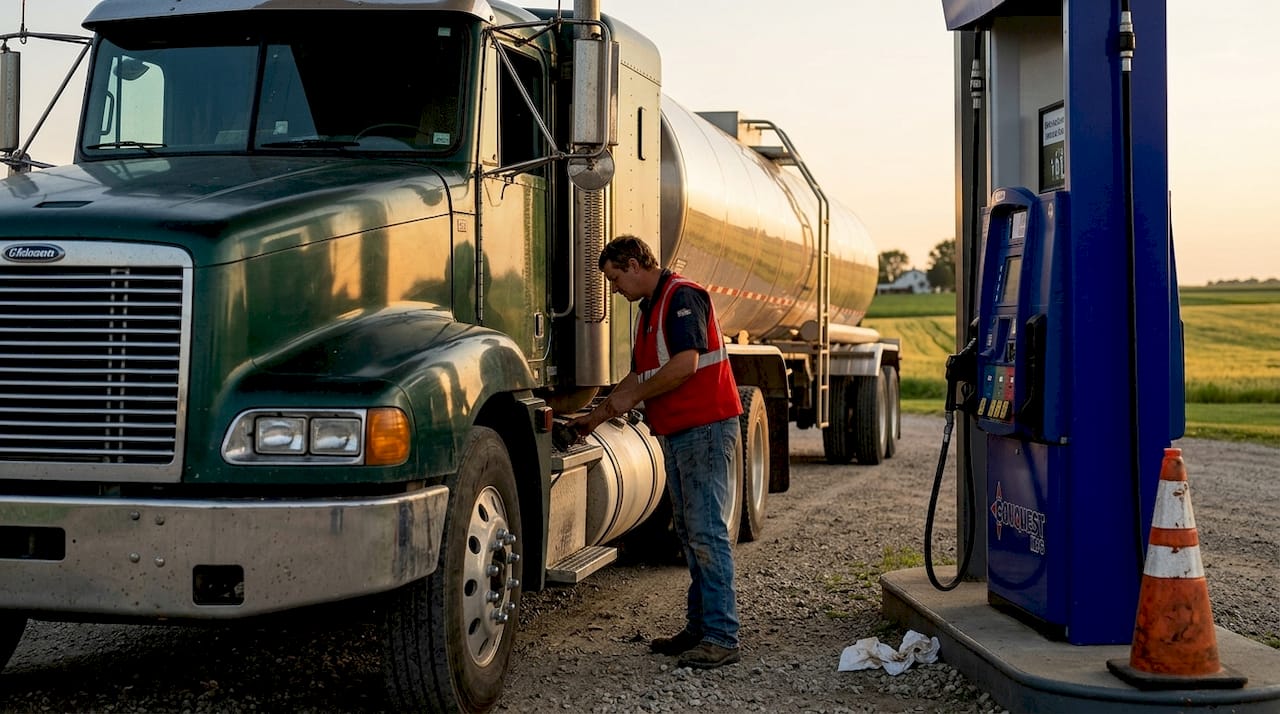
Aluminum’s lighter weight can significantly reduce vehicle wear, fuel costs, and increase payload for some routes. On a fleet running 50,000 or more miles per year, those fuel savings compound into a substantial budget line item. Many operators who switch to aluminum report diesel savings in the range of 5 to 10 percent per unit, depending on route profiles and load weights.
Core advantages of aluminum vacuum tanks:
- Payload increase by reducing tare weight, you carry more revenue-generating product per trip
- Fuel economy lighter overall vehicle weight reduces fuel consumption consistently
- Corrosion resistance aluminum naturally resists rust, reducing interior coating requirements for many cargo types
- Reduced axle wear lower gross vehicle weight means less stress on tires, brakes, and suspension systems
- Easier cleaning aluminum surfaces are generally smoother and easier to clean after each haul
Exploring aluminum tank scenarios reveals that transportation companies running municipal liquid waste contracts, food-grade liquid hauling, or water transport often see the fastest return on the premium that aluminum tanks can carry upfront.
However, aluminum is not without trade-offs. It is more vulnerable to puncture and localized impact damage compared to steel. Repairs to aluminum tanks require specialized welding skills and equipment, and improper repairs can compromise the structural certification of the tank. Operators working in rocky quarry environments or demolition sites with heavy debris may find that aluminum requires more frequent panel repairs than steel.
Best practices for maximizing aluminum tank life:
- Avoid direct contact with incompatible metals to prevent galvanic corrosion at fittings and connections
- Use appropriate sealants and gaskets rated for aluminum compatibility
- Inspect baffle supports and internal fittings regularly as these points can crack under repeated stress
- Work only with certified aluminum welders when repairs are needed
Pro Tip: If your routes cross multiple states, check axle weight limits along your most common corridors before committing to steel or aluminum. In states with stricter limits, aluminum’s weight savings can mean the difference between a legal load and a citation.
Steel vs aluminum: Head-to-head comparison for decision makers
Having looked at each material in isolation, let’s see how they stack up when compared side by side.
| Factor | Steel vacuum tanks | Aluminum vacuum tanks |
|---|---|---|
| Weight | Heavier (30-40% more) | Lighter, better for payload |
| Impact resistance | Superior | Moderate |
| Corrosion resistance | Lower (needs coatings) | Higher (natural resistance) |
| Fuel economy | Lower | Higher |
| Upfront cost | Generally lower | Generally higher |
| Repair complexity | Standard welding | Specialized aluminum welding |
| Service life | 15 to 20+ years (maintained) | 12 to 18 years (maintained) |
| Resale value | Strong in heavy-duty markets | Strong in transport markets |
| Chemical compatibility | Broader range | Dependent on alloy type |
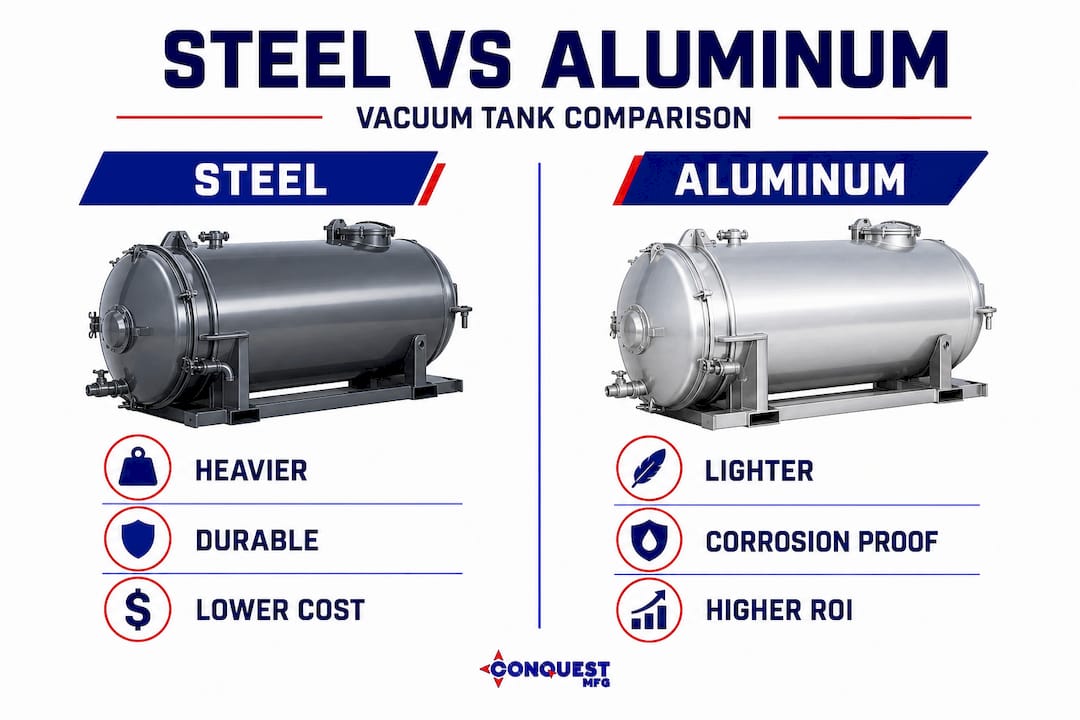
Material selection influences lifespan and ongoing operating costs, so companies should assess their priorities and workload before committing to either option.
Decision checklist: Align your selection to your business priorities
- Define your primary cargo type. Is it abrasive, corrosive, or chemically reactive?
- Map your routes and identify any weight restrictions or bridge limits.
- Calculate your annual mileage and estimate the fuel cost impact of each material option.
- Evaluate your maintenance team’s capabilities. Can they handle aluminum repairs in-house?
- Assess your typical job site conditions. Is impact and puncture risk high?
- Review your regulatory requirements for the cargo types you haul regularly.
- Consider your resale or fleet refresh timeline and how material affects asset value.
A key statistic worth noting: operators who complete a structured material evaluation before purchasing report significantly fewer costly mid-fleet changes than those who default to familiar choices without analysis. Taking the time to complete this checklist pays off directly in reduced operational disruptions.
Cost of ownership and long-term ROI considerations
The next logical consideration is the real-world cost over your tank’s life cycle, not just the day one price.
Total cost of ownership includes purchase price, maintenance, downtime, and potential resale value for both steel and aluminum tanks. Fleet managers who focus only on the purchase invoice are frequently surprised by the cost gap that develops over five to ten years of operation.
| Cost category | Steel tanks | Aluminum tanks |
|---|---|---|
| Purchase price | Lower upfront | 10 to 25% premium |
| Annual fuel cost impact | Higher | Lower |
| Interior coating/maintenance | Recurring every 3 to 5 years | Less frequent |
| Repair frequency | Lower in most environments | Higher in high-impact settings |
| Regulatory compliance costs | Moderate | Moderate |
| Resale value at 10 years | Moderate to strong | Moderate to strong |
Steps for evaluating your total cost of ownership scenario:
- Gather your current fleet’s annual fuel spend per unit and apply a projected 5 to 10 percent savings for aluminum.
- Estimate annual maintenance costs based on your current inspection and coating schedules for steel.
- Factor in average repair costs per incident for your typical operating environment.
- Project your downtime cost per day and estimate how each material affects your average repair turnaround.
- Identify your planned equipment lifecycle and calculate residual value at disposition.
- Compare the 10-year cumulative costs for both options before making a final decision.
Many construction companies operating in harsh, high-impact conditions find that steel’s lower upfront cost and greater durability in those environments deliver better 10-year ROI. Transportation companies running municipal or food-grade liquid routes, however, often see aluminum recover its price premium within three to five years through fuel and payload gains alone.
A strategic takeaway: Why the right tank material drives operational excellence
Having covered both data and practical considerations, it is worth pausing for a strategic, experience-driven viewpoint.
Here is something we see consistently in the industry: fleet managers who simply copy what their competitors run often end up with the wrong equipment for their specific operations. A competitor across town may run aluminum tanks because their routes are highway-dominant and weight-sensitive. If your fleet runs through demolition zones and quarry access roads every day, following their lead without analysis is a decision that will cost you in repair bills and downtime.
The reality is that both steel and aluminum are excellent materials when matched correctly to the job. The error is treating material selection as a convention rather than a strategic decision. We have worked with operators who switched from steel to aluminum because “everyone was doing it,” only to find that their specific cargo type was causing galvanic corrosion at the fittings within two years. We have also worked with operators who stuck with steel out of habit while running light liquid loads on weight-restricted highways, leaving payload capacity and fuel savings on the table every single week.
The most successful fleet operators we partner with share one common habit: they combine hard fleet data with a genuine understanding of material science and operational demands before making any equipment decision. They know their average daily mileage, their cargo chemistry, their maintenance team’s skill set, and their five-year growth plan. That combination of knowledge leads to confident purchasing decisions that hold up over the long run.
When you are talking to a tank provider, the questions that matter most are not just about price. Ask about wall thickness options and how each material performs under your specific cargo type. Ask about baffle configurations and how they affect cleaning efficiency. Ask about warranty terms and what repair support looks like in your region. And review how streamlining operations with vacuum tanks factors into your overall fleet efficiency strategy.
Find the right vacuum tank solution for your business
Ready to turn research into results? Here is where to find expertly engineered vacuum tanks that match your requirements.
At Conquest Manufacturing, we build both steel and aluminum vacuum tanks designed to perform in real-world construction and transportation conditions across the USA. Our equipment is custom-built to your specifications, not pulled from a generic catalog.

Explore our construction industry tanks for detailed specifications on aluminum solutions designed for payload efficiency and route performance. If your focus is on freight and liquid transport, our transportation industry tanks page covers options tailored for compliance and reliability on the road. For operations involving bulk dry materials alongside liquid hauling, our industrial material handling solutions give you a full picture of how our equipment supports demanding industrial operations. Contact us today to discuss your fleet requirements and get a quote tailored to your operation.
Frequently asked questions
Which is heavier: steel or aluminum vacuum tanks?
Steel vacuum tanks are significantly heavier than aluminum, often by 30 to 40 percent, which directly affects fuel use and payload capacity on weight-restricted routes.
Are aluminum vacuum tanks as durable as steel?
Aluminum tanks offer excellent efficiency and corrosion resistance for many applications, but steel vacuum tanks provide greater structural strength for heavy-duty, high-impact use cases where physical stress is constant.
Do steel tanks require more maintenance than aluminum?
Yes. Steel tanks typically require more frequent inspection and protective coating work because they are more susceptible to corrosion in wet, chemical, or saltwater environments compared to aluminum.
Which material is better for meeting US transport regulations?
Both materials can meet US transport regulations when properly engineered and maintained, since material selection influences compliance primarily through design standards and cargo compatibility rather than the material alone.
How do I choose the best tank material for my fleet?
Assess your cargo type, typical route conditions, payload requirements, maintenance capabilities, and long-term cost expectations before choosing between steel and aluminum. Working with a manufacturer who understands both materials and your industry gives you the clearest path to the right decision.