
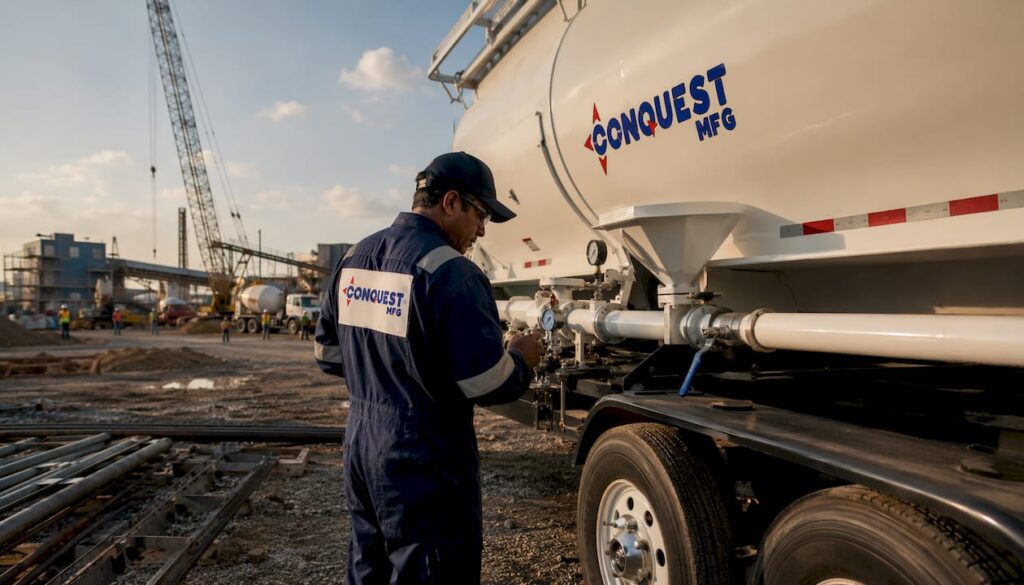
How the mobile silo trailer workflow runs from arrival to teardown
A well-executed mobile silo trailer workflow follows six sequential stages: transport arrival, site positioning and stabilization, material loading, pneumatic unloading, post-unload cleaning, and trailer disconnection. Getting each stage right protects your material, your equipment, and your crew.
Here is the core sequence at a glance:
- Stage 1 — Transport arrival: Verify delivery documentation, confirm the correct silo connection, and inspect the trailer for damage before entering the unloading area.
- Stage 2 — Positioning and stabilization: Park on a level, hard surface; apply brakes on both tractor and trailer before extending stabilizing legs; dump air from the suspension only after brakes are set.
- Stage 3 — Material loading: Load dry bulk through top manholes by gravity or pneumatic transfer from a dispatch silo; seal manholes and document chamber cleanliness.
- Stage 4 — Pneumatic unloading: Engage the PTO-driven compressor, build working pressure, open chamber valves sequentially, and monitor flow until the tank is clear.
- Stage 5 — Blow-through and cleaning: Run the blow-through step to clear residual material from manifolds and hoses before disconnecting.
- Stage 6 — Disconnection and departure: Close all valves, shut off the compressor, lower the tank to horizontal, depressurize, disconnect hoses and earthing cable, then retract stabilizing legs.
Pro Tip: Never apply brakes after the stabilizing legs are already on the ground. Wheel shift at that point puts the legs under torsion, which can bend or crack them and force an unplanned shutdown.
Table of Contents
- What technical specifications actually drive your silo trailer operations
- Safety features and operational precautions you cannot skip
- How silo lifting and trailer disconnection work step by step
- Best practices for workflow efficiency and risk management
- Conquest Mfg builds portable cement silo trailers for US construction sites
- Key Takeaways
What technical specifications actually drive your silo trailer operations
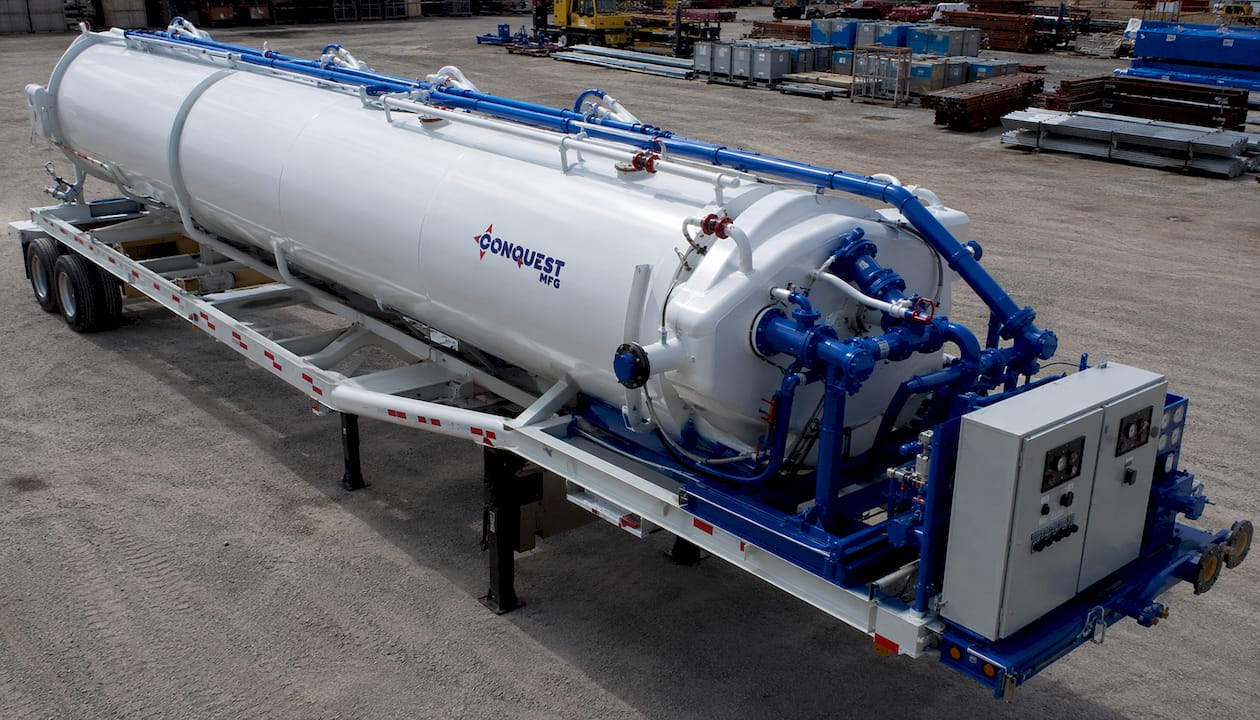
Understanding the specs behind your equipment is what separates a smooth shift from an unplanned delay. The table below covers the parameters that most directly affect how you plan and execute each delivery.
| Specification | Typical Range | Operational Impact |
|---|---|---|
| Tank volume | 55–65 m³ | Sets maximum payload per run |
| Payload capacity | 25–27 tonnes | Determines load scheduling and site silo sizing |
| Working air pressure | 1.8–3.5 bar | Varies by material density and receiving installation |
| Unloading time | 45–120 minutes for 25 t depending on conditions | Affects site scheduling and driver turnaround |
| Compressor output | 7.5–7.7 kW, 145 Nm³/h | Determines unloading speed and material fluidization |
| Valve types | Butterfly and ball valves, pneumatic or manual | Controls sequential chamber discharge |
Air supply comes from one of three sources: a screw compressor driven by the tractor’s PTO, an auxiliary engine mounted on the trailer, or a stationary compressed-air installation at the receiving site. PTO-driven compressors are the most common on US construction sites because they eliminate the need for a separate power source. Dry-running rotary compressors require no oil changes, which reduces maintenance stops during high-volume operations.
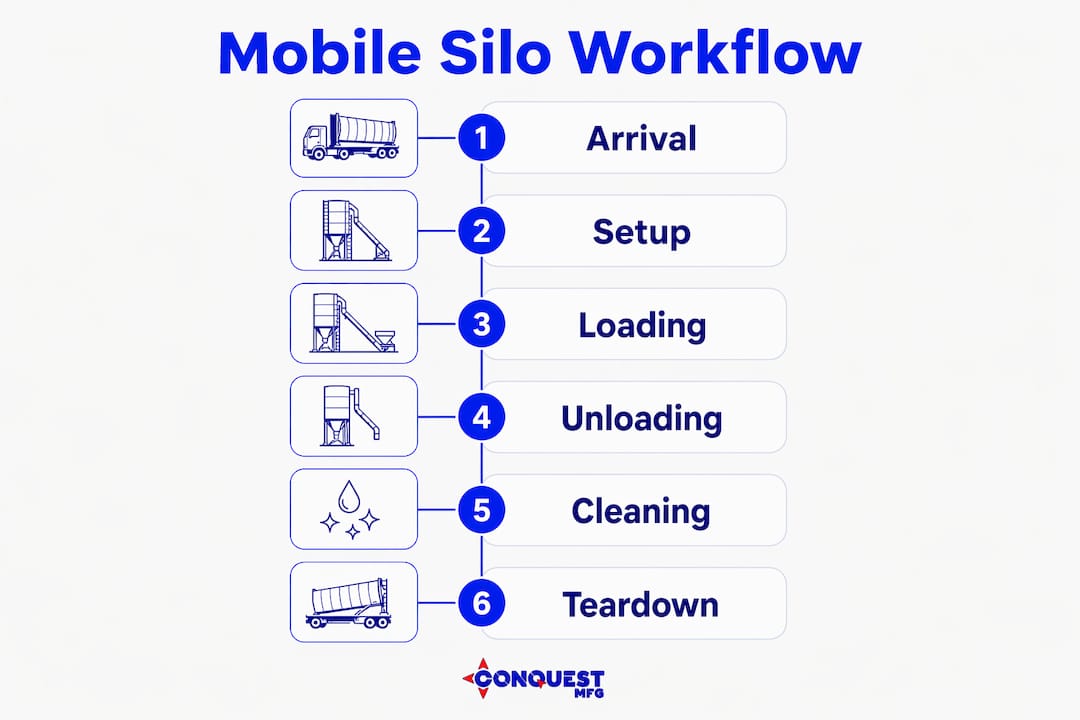
Valve systems are equally critical. Butterfly and ball valves open successive chambers in sequence, while air split valves regulate the balance between bottom aeration and the top pressure cushion. Opening all valves simultaneously disrupts that balance and stalls material flow.
Safety features and operational precautions you cannot skip
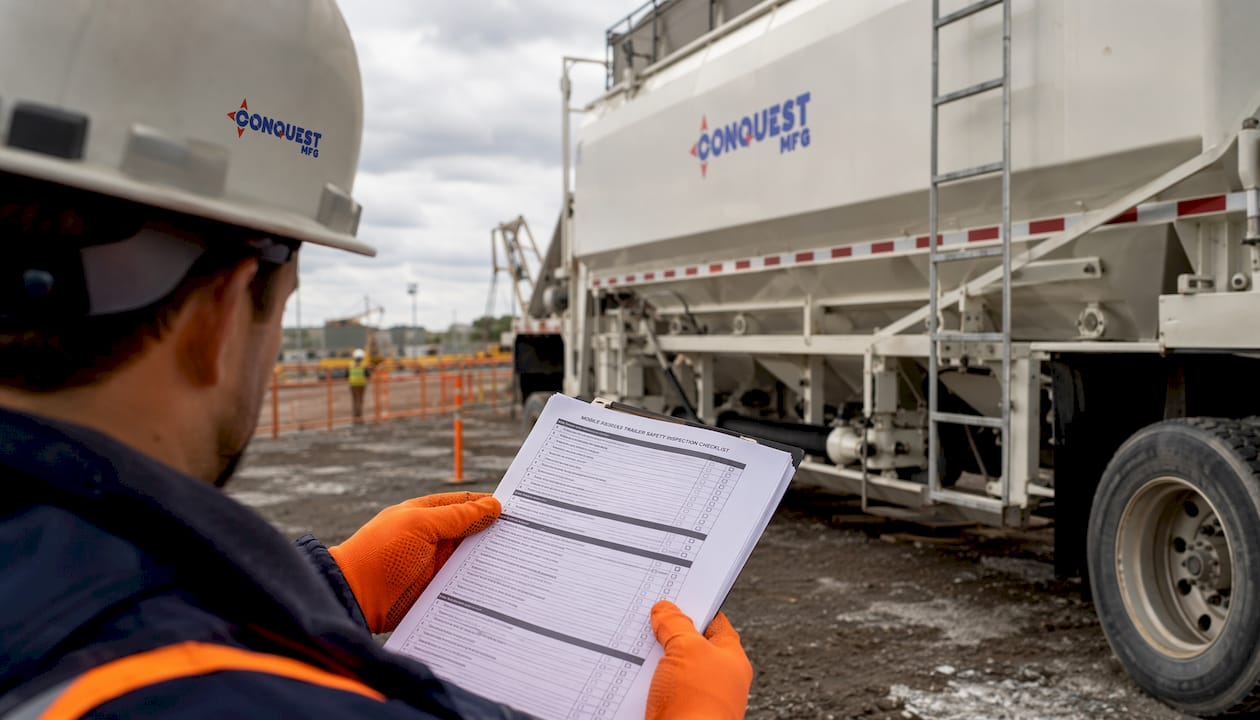
The ECTA Best Practice Guidelines require every unloading site to complete a formal risk assessment before tipping begins. That assessment must account for the danger zone around the tipped trailer, floor condition, overhead clearances, weather, and the specific material being unloaded.
Key precautions your team must enforce on every shift:
- Stabilizing legs: Visually inspect for wear, cracks, and deformation before each unload. Legs must sit at approximately 90° to the ground with no torsion.
- Dead man’s switch: The tipping mechanism requires constant operator engagement. This function must never be bypassed.
- Driver positioning: Drivers stay in the reduced risk zone at all times during tipping. Entry into the danger zone is permitted only to operate the tipping switch, adjust compressor pressure, or check hydraulic equipment, and the driver must return to the safe zone immediately after.
- Weather awareness: High wind or lightning requires stopping the unload, informing the site operator, and lowering the tank to a horizontal position.
- Overhead clearances: Confirm no power lines, piping, or structural obstructions exist above the trailer before raising the tank.
- PPE compliance: Drivers must wear all site-required personal protective equipment before entering the unloading area.
- Spill response: Any spilled material must be cleaned up immediately and disposed of per applicable regulations. Spills must never enter drains or sewer systems.
Driver training on unloading procedures, site-specific risks, and emergency protocols is mandatory, not optional. Pair that training with proper fleet visibility standards to reduce collision risk in active unloading zones.
How silo lifting and trailer disconnection work step by step
Raising and lowering the silo tank is where most mechanical incidents occur. Follow this sequence precisely.
- Confirm pre-tip checks are complete: Brakes applied, stabilizing legs extended and level, earthing cable connected, hose secured to the correct silo inlet with safety clamps installed.
- Begin tipping in stages: Raise the tank progressively to keep the center of gravity low. For free-flowing granulates, do not raise to full height at the start. For powders with avalanche risk, tip to maximum height immediately.
- Monitor throughout: Watch the pressure gauge and hydraulic system continuously. If anything looks wrong, stop tipping and lower the tank before investigating.
- Complete unloading: Run the blow-through step, then close the unloading valve and shut off the compressor.
- Lower the tank: Return the tank to horizontal before disconnecting anything. Lowering a loaded or partially loaded tank requires extra caution due to forces in the tipping ram.
- Disconnect auxiliary components: Remove conveying blocks, discharge augers, and any modular attachments before transport. Auxiliary components left attached during transit sustain mechanical damage from road vibration.
- Depressurize and disconnect: Release all pressure, disconnect hoses and earthing cable, retract stabilizing legs, and verify the trailer is road-ready before moving.
Pro Tip: Manufacturers provide transport checklists that specify exactly which modular parts must come off before each run. Keep that checklist in the cab and sign off on it before every departure.
Best practices for workflow efficiency and risk management
Formal risk assessment before every tipping operation is the single most effective way to prevent incidents. Generic checklists are not enough. Your assessment must be site-specific, accounting for floor load ratings, proximity of other workers, and the material’s flow characteristics.
The blow-through technique deserves particular attention. After the main unload, residual material in the manifold and hose must be cleared by carefully balancing top overpressure and bottom aeration while opening valves in sequence. Opening everything at once causes pressure spikes and leaves material behind. That residue contaminates the next load if not cleared.
Cleaning and documentation are non-negotiable when changing material types. A cleaning certificate is required before loading a different material, and both the filling inlet and internal tank must pass a visual inspection by the driver and terminal personnel. For dry bulk transport safety, maintaining a documented cleaning record protects both material quality and regulatory compliance.
Maintenance integrated into the workflow, rather than scheduled separately, keeps equipment reliable. Check aeration pads, valve seals, and hose couplings at the end of each shift. Pneumatic trailer advantages are only realized when the air system stays clean and leak-free.
Conquest Mfg builds portable cement silo trailers for US construction sites
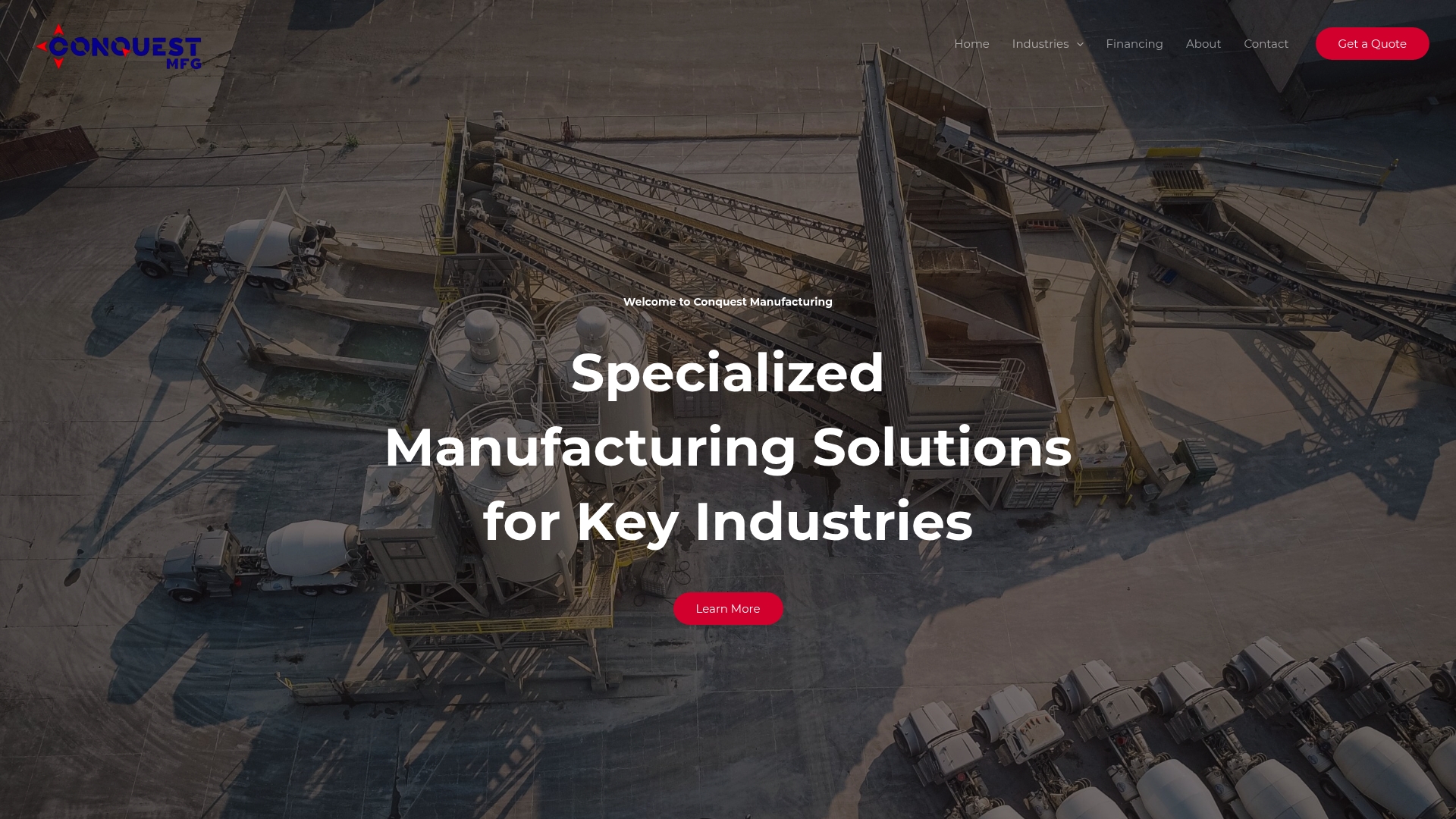
Conquest Mfg designs and manufactures Portable Cement Pig Silo Trailers built specifically for the demands of US construction and industrial operations. With over 35 years of engineering expertise, Conquest Mfg delivers equipment that is ready to work from the moment it arrives on site, with the durability to handle high-cycle workflows without mechanical surprises.
Where generic trailer suppliers offer off-the-shelf configurations, Conquest Mfg tailors each unit to your site conditions, material type, and operational volume. That means the right air system, the right valve configuration, and the right capacity for your specific job. Our construction industry equipment line covers portable cement silo trailers alongside mobile and stationary concrete batch plants, dry bulk pneumatic trailers, and custom industrial solutions. Contact Conquest Mfg to get a quote tailored to your operation.
Key Takeaways
A well-managed mobile silo trailer workflow requires precise valve sequencing, formal site risk assessments, and documented cleaning protocols to protect material quality and crew safety on every run.
| Point | Details |
|---|---|
| Sequential valve control | Open chamber valves one at a time and balance top pressure with bottom aeration to maintain steady material flow. |
| Staged tipping protocol | Raise the tank progressively for granulates; tip to maximum height immediately only for powders with avalanche risk. |
| Mandatory risk assessment | Complete a site-specific risk assessment before every tipping operation per ECTA guidelines, covering the danger zone, floor condition, and overhead clearances. |
| Cleaning documentation | Require a cleaning certificate and visual inspection of the filling inlet whenever the material type changes between loads. |
| Conquest Mfg silo trailers | Conquest Mfg manufactures Portable Cement Pig Silo Trailers tailored to US construction and industrial site requirements, backed by 35+ years of engineering experience. |