
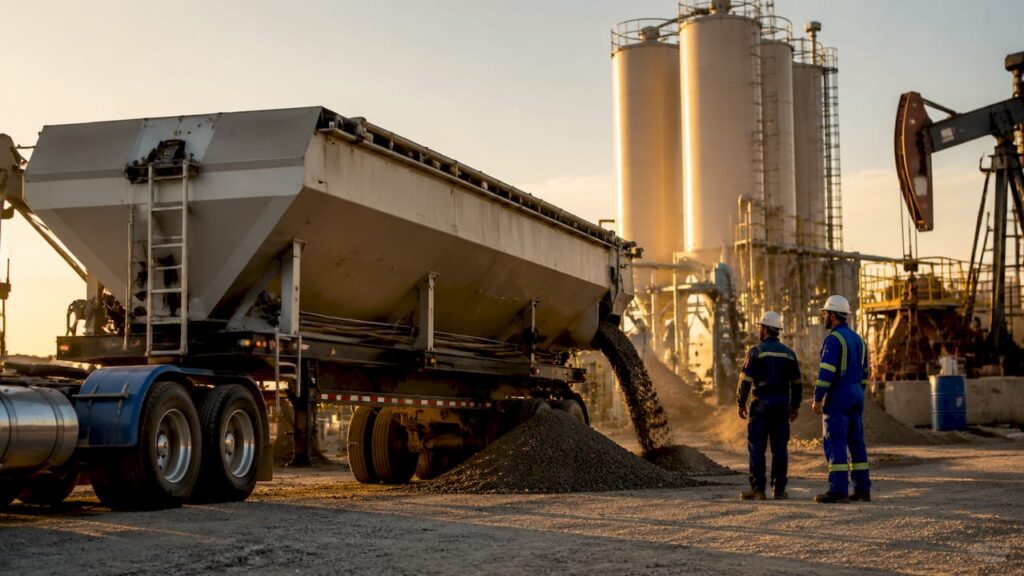
Bulk transport in drilling operations is the process of moving large volumes of critical materials, including drilling fluids, cement, barite, and fuel, directly to and from the rig site to maintain uninterrupted productivity. This is the recognized industry term for what logistics managers often call bulk handling in drilling operations. Without reliable bulk logistics, even a well-planned drilling program collapses under supply shortfalls. The role of bulk transport in drilling ops extends beyond simple delivery. It determines rig uptime, cost control, and the safety of every material that reaches the wellsite.
How does bulk transport impact drilling operation efficiency and uptime?
Rig downtime costs thousands per hour the moment supplies run out. That single fact defines why bulk transport significance drilling professionals cannot afford to underestimate. Drilling fluids and fuel are continuous-consumption materials. The rig burns through them constantly, and there is no buffer if a delivery fails.
Fuel supply is the foundation of drilling operations. Disruptions halt drilling, delay projects, and drive up costs in ways that compound quickly in remote oilfield environments. A single missed fuel delivery can idle an entire crew and all associated equipment simultaneously.
The consequences of poor bulk supply chain management include:
- Drilling fluid shortfalls that force an immediate stop to rotary operations
- Cement delivery delays that push casing programs back by days
- Fuel interruptions that shut down generators, mud pumps, and top drives at once
- Barite and weighting material gaps that prevent proper mud weight control
Effective bulk material transport workflow planning treats each of these materials as a critical path item, not a secondary logistics concern. The rig schedule is only as reliable as the supply chain feeding it.
What logistics and equipment enable efficient bulk transport in drilling?
Platform Supply Vessels (PSVs) are the primary delivery mechanism for offshore bulk materials. PSVs deliver liquids via hoses into platform tanks using segregated bulk tanks designed specifically for mud, cement, barite, bentonite, and water. Each tank is labeled, isolated, and dedicated to a single product to prevent cross-contamination during transit.
The typical bulk cargo carried on a PSV or road tanker to a drilling location falls into five categories:
- Liquid drilling mud — water-based or oil-based, delivered via hose transfer to rig mud pits
- Dry cement and barite — discharged pneumatically through pressurized lines into storage silos
- Completion brines — high-value fluids requiring strict manifold segregation
- Bulk diesel fuel — transferred directly to rig fuel storage tanks
- Freshwater and brine — used for mixing, dilution, and wellbore control
Pneumatic discharge systems are the standard for dry bulk materials like cement and barite. Pressurized air pushes the material from the trailer or vessel tank through a hose into the rig’s storage silo. This method eliminates manual handling, reduces contamination risk, and speeds up transfer times significantly.
One factor that many logistics managers underestimate is fluid stability during transport. Wave motion causes barite redistribution in drilling fluid tanks, creating density variations that compromise mud weight accuracy at the rig. Inline mechanical shearing systems keep drilling fluids mechanically active during transit to maintain quality. This is not optional on longer offshore transits. It is a technical requirement.
| Equipment type | Primary function | Key bulk materials handled |
|---|---|---|
| Platform Supply Vessel | Offshore delivery via hose and pneumatic lines | Mud, cement, barite, fuel, brine |
| Dry bulk pneumatic trailer | Onshore delivery to rig silos | Cement, barite, fly ash, bentonite |
| Vacuum tank trailer | Fluid recovery and transfer | Spent mud, produced water, waste fluids |
| Inline shearing system | Fluid conditioning during transit | Weighted drilling fluids |
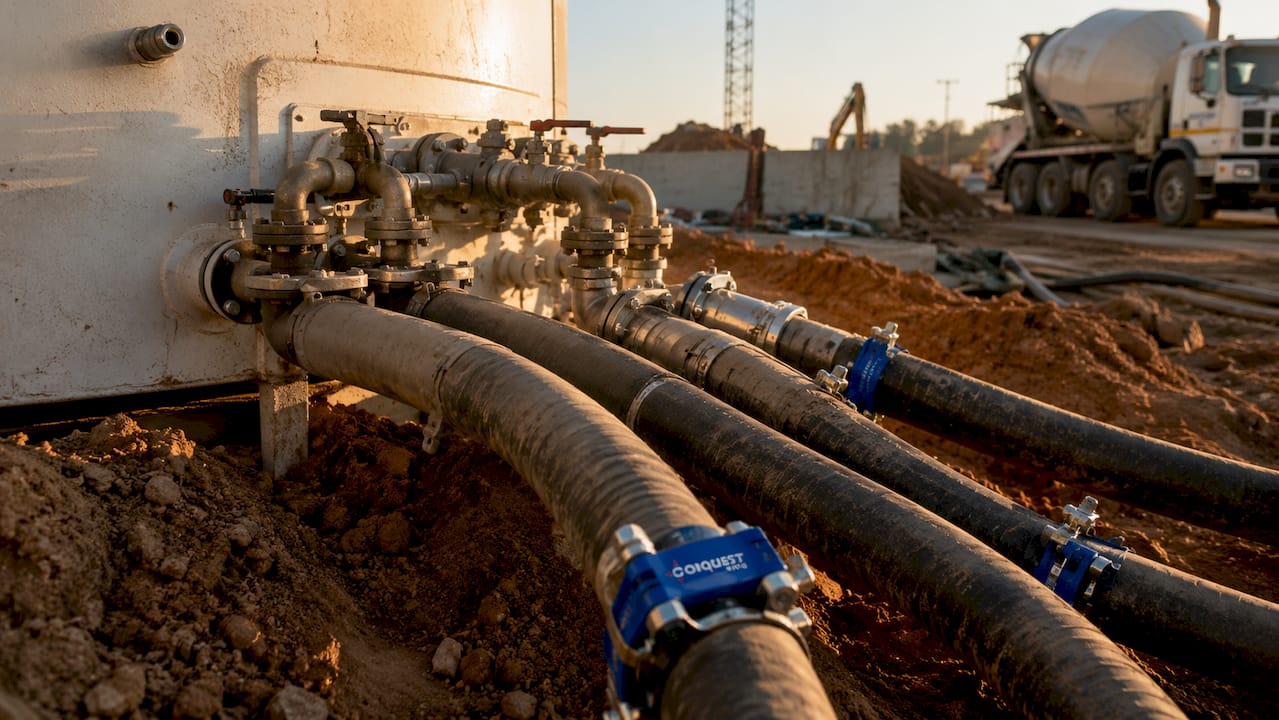
Proper pipe sizing and flow rates in the transfer hose and manifold system directly affect how fast bulk liquids move from vessel to platform tank. Undersized lines create bottlenecks that extend vessel time alongside, which costs money and exposes the operation to weather risk.
What are the common challenges and risks in bulk transport for drilling?
Cross-contamination is the highest-consequence failure in bulk handling in drilling operations. Contaminating calcium bromide with drill water can cause six-figure losses and halt drilling until replacement fluid arrives. The fix is strict manifold labeling, dedicated hose sets for each product, and a signed cleanliness verification before every load.
Six verification factors prevent cargo rejection and costly delays:
- Loading and unloading compatibility — confirm the receiving tank can accept the product being delivered
- Tank cleanliness — inspect and document tank condition before loading
- Moisture protection — dry bulk materials like cement must be sealed against humidity
- Weight distribution — improper loading shifts center of gravity and creates handling hazards
- Regulatory compliance — all materials must meet DOT and applicable offshore authority requirements
- Destination readiness — confirm the rig has storage capacity before the vessel departs
Skipping these six checks leads to cargo refusal at the rig, return trips, and project delays that ripple through the entire drilling schedule.
Load sequencing is the second major risk area. Mis-sequenced deck loads cause crane delays at the rig, wasting weather windows and costing thousands per hour. When the first item the rig needs is buried under three other loads, the crane operator must shuffle cargo in deteriorating weather. That is an avoidable operational failure.
Pro Tip: Build your load plan backward from rig consumption priority. The first material the rig needs at arrival should be the last item loaded on the vessel or trailer, placing it on top and accessible immediately.
How does optimizing bulk transport reduce costs and environmental impact?
Bulk transport reduces costs through economies of scale. Moving large volumes in a single trip cuts the cost per unit of material delivered, reduces packaging waste, and lowers energy consumption compared to multiple smaller deliveries. This is the core financial argument for investing in proper bulk logistics infrastructure.
The “empty carriage” problem is a significant and often overlooked cost driver. Load sequencing prevents empty cargo spaces by coordinating outbound and return loads. A vessel or trailer that returns empty from the rig is a wasted asset. Coordinating return loads of spent drilling fluid, waste materials, or recovered barite turns a cost into a partial offset.
| Approach | Trip frequency | Packaging waste | Energy per unit |
|---|---|---|---|
| Optimized bulk logistics | Low | Minimal | Low |
| Uncoordinated smaller deliveries | High | High | High |
The environmental impact of bulk transport optimization is direct. Fewer trips mean lower fuel burn and fewer emissions per ton of material delivered. For drilling programs operating under environmental performance agreements or carbon reporting requirements, this is a measurable and reportable benefit.
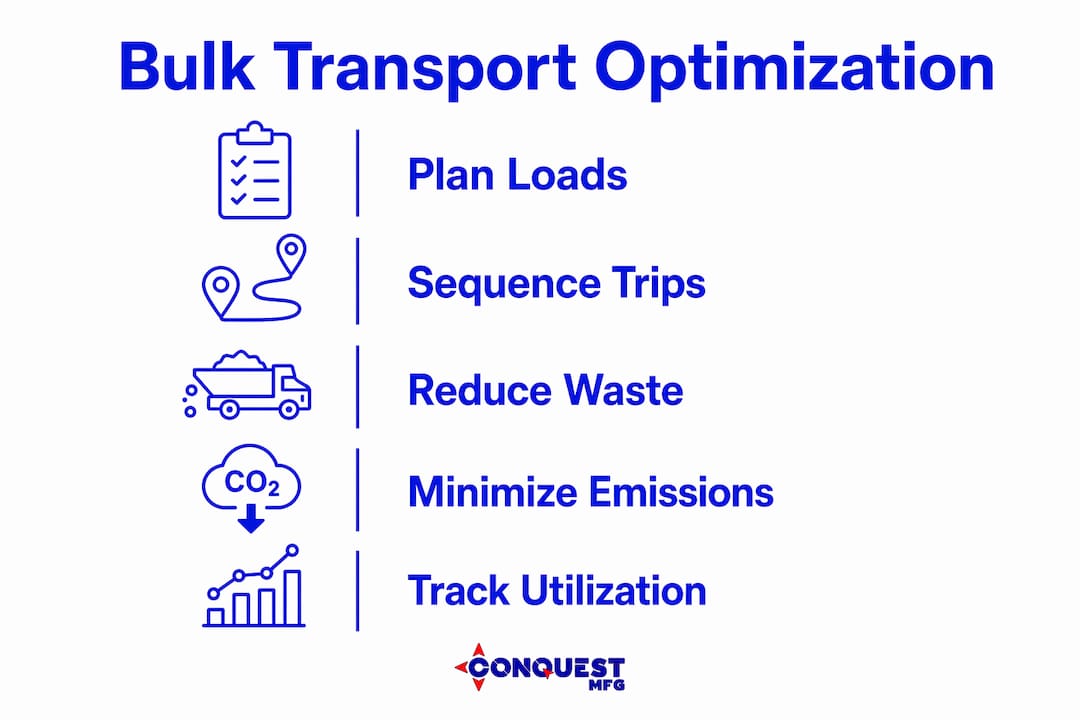
Pro Tip: Track your return cargo utilization rate alongside your delivery performance. If more than 30% of your return trips are empty, your load planning process needs a formal review.
Key takeaways
Bulk transport is the single most controllable variable in drilling uptime, and failures in logistics sequencing, contamination control, or equipment selection create costs that dwarf the investment in getting it right.
| Point | Details |
|---|---|
| Downtime cost is immediate | Rig downtime costs thousands per hour when bulk supply fails, making logistics reliability non-negotiable. |
| Contamination causes six-figure losses | Strict manifold labeling and dedicated hose sets prevent cross-contamination of high-value fluids. |
| Load sequencing drives efficiency | Aligning deck loads with rig consumption priority eliminates crane delays and wasted weather windows. |
| Fluid stability requires active management | Inline shearing systems maintain drilling fluid density during transit, preventing wellbore control issues. |
| Bulk consolidation cuts costs and emissions | Optimized loads reduce trips, packaging waste, and energy consumption across the full drilling program. |
What I’ve learned about bulk transport that most plans miss
The logistics plans I’ve seen fail most often look perfect on paper. They account for volumes, schedules, and equipment. What they miss is the human coordination layer between the shore base, the vessel crew, and the rig’s materials coordinator.
The load plan is only as good as the communication confirming that the rig’s storage tanks are actually ready to receive. I’ve watched vessels sit alongside for hours because nobody confirmed the cement silo was empty before departure. That is not a logistics problem. It is a communication protocol problem dressed up as a logistics problem.
The other thing most plans underestimate is equipment condition. A pneumatic trailer with a worn compressor or a hose with a marginal fitting does not fail in the yard. It fails at the rig, at 2 a.m., in the middle of a critical cement job. Maintenance schedules for bulk transport equipment need to be treated with the same rigor as the drilling equipment itself.
The operations that run well treat oilfield material handling as a discipline, not a support function. When the logistics team has the same standing in the morning meeting as the drilling engineer, supply chain failures drop sharply. That cultural shift is harder to implement than any equipment upgrade, but it delivers more consistent results.
— Sam
Conquest Mfg equipment built for drilling bulk logistics
Conquest Mfg designs and manufactures specialized bulk transport equipment for oilfield operations across the United States, including dry bulk pneumatic trailers, portable cement pig silo trailers, steel and aluminum vacuum tanks, and semi trailers built to handle the demands of active drilling programs.
When your operation depends on reliable bulk delivery of cement, barite, drilling fluids, and fuel, the equipment carrying those materials has to perform without failure. Conquest Mfg builds semi trailers for oil operations and bulk handling systems to your exact specifications, reducing downtime risk and keeping your rig on schedule. Explore the full range of oilfield bulk transport equipment or contact Conquest Mfg directly to discuss your project requirements.
FAQ
What is the role of bulk transport in drilling ops?
Bulk transport in drilling operations is the system for delivering large volumes of drilling fluids, cement, barite, and fuel to the rig site without interruption. It directly controls rig uptime because drilling stops immediately when any continuous-consumption material runs out.
Why does load sequencing matter in bulk drilling logistics?
Mis-sequenced loads force crane operators to shuffle cargo at the rig, wasting weather windows and costing thousands per hour in vessel time. Load plans must align with the rig’s immediate consumption priority to avoid idle time.
How does cross-contamination happen in bulk transport?
Cross-contamination occurs when incompatible materials share a tank, hose, or manifold connection without proper cleaning between uses. Mixing completion brines with drill water can cause six-figure losses and halt drilling until replacement fluid is sourced and delivered.
What equipment is used for dry bulk delivery to drilling rigs?
Dry bulk materials like cement and barite are delivered using pneumatic trailers and PSV bulk tanks, then discharged through pressurized hose lines directly into rig storage silos. Conquest Mfg manufactures dry bulk trailers specifically designed for oilfield applications.
How does bulk transport reduce drilling program costs?
Bulk transport uses economies of scale to cut the cost per unit of material delivered by consolidating loads, reducing packaging waste, and minimizing trip frequency. Coordinating return loads of spent fluids or recovered materials further reduces the cost of empty carriage.